
 By
By These are exciting times to be an audiophile. It wasn’t long ago that really good-sounding equipment was financially out of reach for many of us. Value-oriented companies such as Schiit, Topping, Benchmark and countless others have been pushing back against this old paradigm for several years now. Ferrum is a quasi-newcomer that can be added to this value/performance list. Ferrum is a Polish audiophile manufacturer that has been receiving a growing amount of praise for offering superb-value, high-performance audio gear.
The Wandla HP DAC reviewed here is the flagship DAC from Ferrum, with a high-performance headphone amplifier. While I am not an avid wired headphone user, I can certainly appreciate them when I have auditioned high-end setups at Can Jam. I will be focusing on the DAC portion of the Wandla HP in a more traditional two-channel audiophile configuration. Priced at under $3,000, this is a very tempting entry into the often-crazy world of high-end audio.
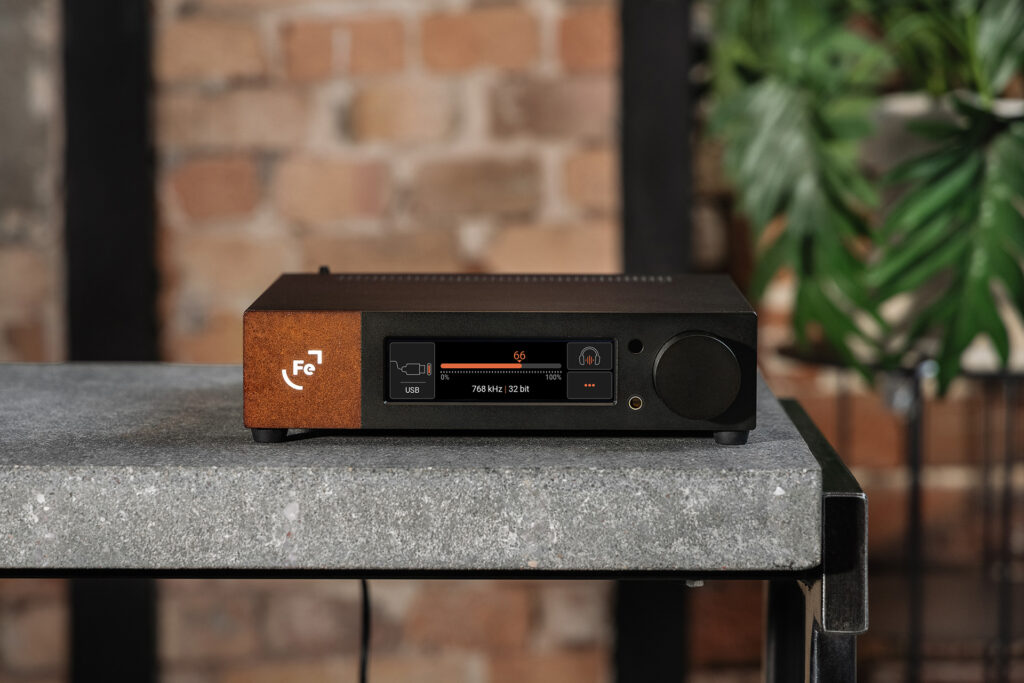
What Makes the Ferrum Wandla HP DAC So Special?
- The Ferrum Wandla HP DAC uses the ESS Sabre 9038 Pro DAC chip, which is found in many audiophile DACs, including my former and quite fantastic Weiss Helios, which is far more expensive. The engineers at Ferrum have developed a unique current-to-voltage circuit that offers many advantages over typical implementations, giving the Ferrum DAC a unique sonic signature.
- The Ferrum Wandla HP DAC offers five up-sampling interpolation digital filters. Four of these were designed by digital filter specialist Signalyst, which also developed the HQPlayer. The HQ filters include HQ Gauss, HQ Apodizing, HQ Apodizing MP (Minimum-Phase) and HQ Short. HQ Gauss is designed to optimize time-frequency response and the one I preferred for most recordings. HQ Apodizing is tuned for “modern” recordings, optimized to help extract spatial cues. HQ Apodizing MP is suited to optimize transient attack information. HQ Short is suited for jazz or bluesy material. There is also the ESS filter of the Sabre 9038 Pro DAC chip. The ESS Linear Phase filter uses a steep slope outside the audio band and is a good all-around filter. All incoming audio is upsampled unless it is already 352.8 kHz or 768 kHz.
- The Ferrum Wandla HP DAC offers resolution up to 768 kHz/32-bit and DSD 512 via I2Sand USB. As expected, the other inputs offer lower capabilities. AES/EBU, optical, and coax top out at PCM 192 kHz/24-bit.
- MQA decoding is provided on all digital inputs. While MQA decoding and rendering was all the talk for a short while, it seems to have lost all its mojo. It’s still fun to explore, and the Wandla HP has you covered if this somewhat dead digital audio format is something that is part of your legacy music collection.
- The Wandla HP DAC has full preamplifier functionality. Purists will typically complain about an audiophile DAC doing anything more than the conversion but, in reality, it’s really smart to include a preamplifier. The Wandla HP has plenty of digital inputs to switch as expected, but what’s not expected is a pair of analog inputs. Who knows what you may plug into it, but it’s nice to have just in case. The volume control lets you drive an amplifier directly from either RCA or XLR outputs.
- The Wandla HP DAC offers analog and digital input trims so that your various sources can all be normalized to each other.
- The Wandla HP DAC has a powerful headphone amplifier. While I am not a wired headphone user, for those who are, the Wandla HP offers 3.5 Watts at 50 ohms (balanced).
- The engineers at Ferrum built an optional external power supply, HYPSOS ($1,395). While my review sample did not include HYPSOS, many reviews I’ve read say that it brings a significant upgrade to performance and, with digital audio, this is almost always the case. Better power supplies almost always make great products better. It’s great that there is a very reasonably-priced upgrade path for those who want more performance.
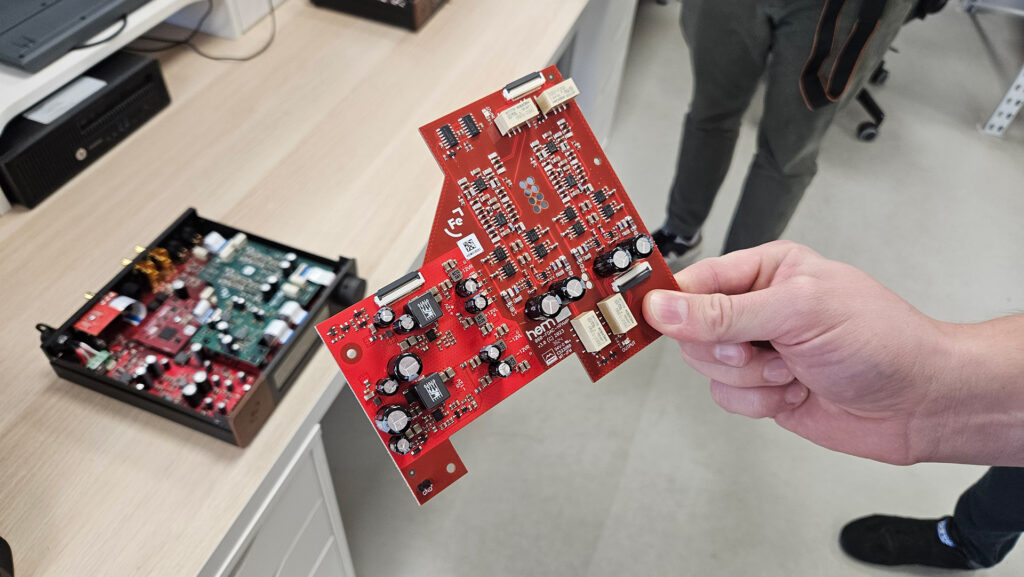
Ferrum Wandla HP DAC, Preamp & Headphone Amplifier Specifications
| DAC Chip | ESS Sabre ES9038PRO |
| Resolution | PCM to 768 kHz/32-bit; DSD512 |
| Digital Inputs | USB-C, AES/EBU, optical, coaxial, HDMI ARC, I2S |
| Analog Input | RCA |
| Line Outputs | Balanced XLR and RCA |
| Headphone Output | 4.4 mm Pentaconn balanced; 3.5 watts into 50 ohms balanced, 1 watt single-ended |
| Headphone THD | 0.00016% (balanced, 10 mW into 50 ohms) |
| Frequency Response | 10 Hz to 200 kHz (±0.1 dB) |
| Dimensions (W x D x H) | 8.6 x 8.1 x 2.0 inches |
| Weight | 4.2 pounds |
Why Should You Care About the Ferrum Wandla HP DAC?
If you’re looking for a digital audio Swiss Army knife that happens to come from Poland, the Ferrum Wandla HP may be right up your alley. It comes loaded with features and performance at a reasonable price in a time when uber-high-end audiophile digital stacks can cost as much as a nice home.
The Ferrum Wandla HP offers a custom implementation of the excellent ESS Sabre 9038 Pro DAC chip. It includes five filter options (think: EQ) to fine-tune the sound for different genres of music or recordings. Yes, they can all be easily disabled for purists. The Ferrum Wandla HP is also a full-function preamplifier with home theater pass-through, and includes a killer headphone amplifier. This little guy can do it all and sound great doing it.
Some Things You Might Not Like About the Ferrum Wandla HP DAC
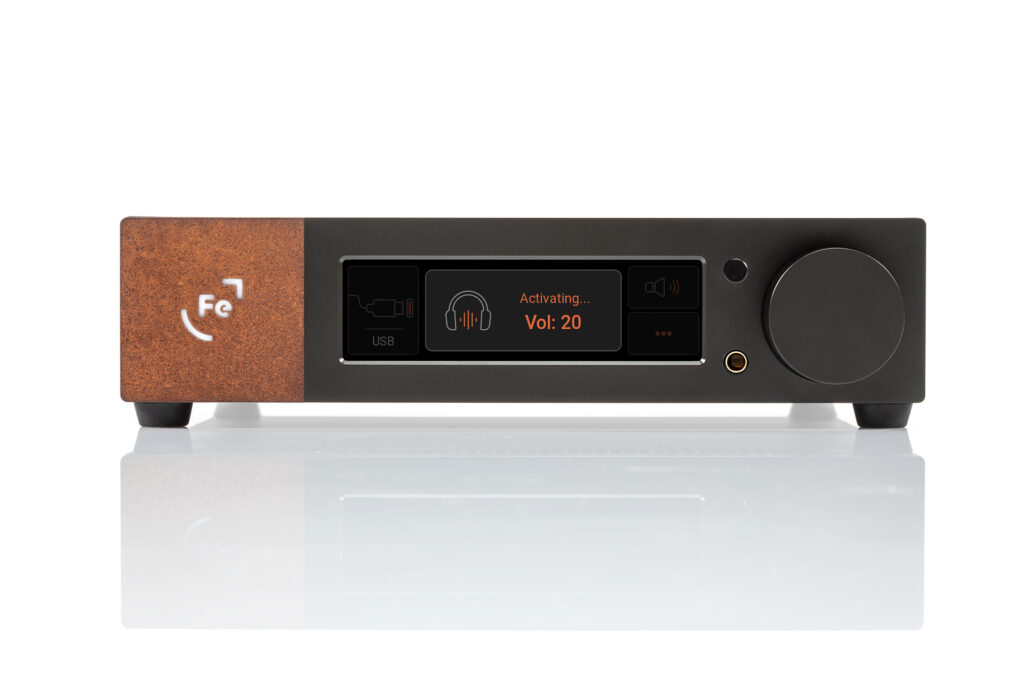
- The remote control for the Ferrum Wandla HP DAC is basically an Apple TV remote, which isn’t very fancy. While a simple remote is not necessarily a bad thing, mine interacted with my real Apple TV. Certain buttons on the Wandla HP remote would do things like change the audio setting of my Apple TV. It could be that it’s unique to my older Apple TV, but it was still frustrating.
- The Ferrum Wandla HP DAC, like most competing budget-friendly components, is not a full-sized unit. While I understand the cost savings of a smaller box, I would be willing to pay a little more for a standard-sized enclosure.
- While I typically hate controlling things with an app on my phone, the Wandla HP could benefit from it. It would be very convenient to be able to toggle the various filter settings without having to squint to see the display using a remote. My eyes just aren’t up for it anymore.
Listening to the Ferrum Wandla HP DAC
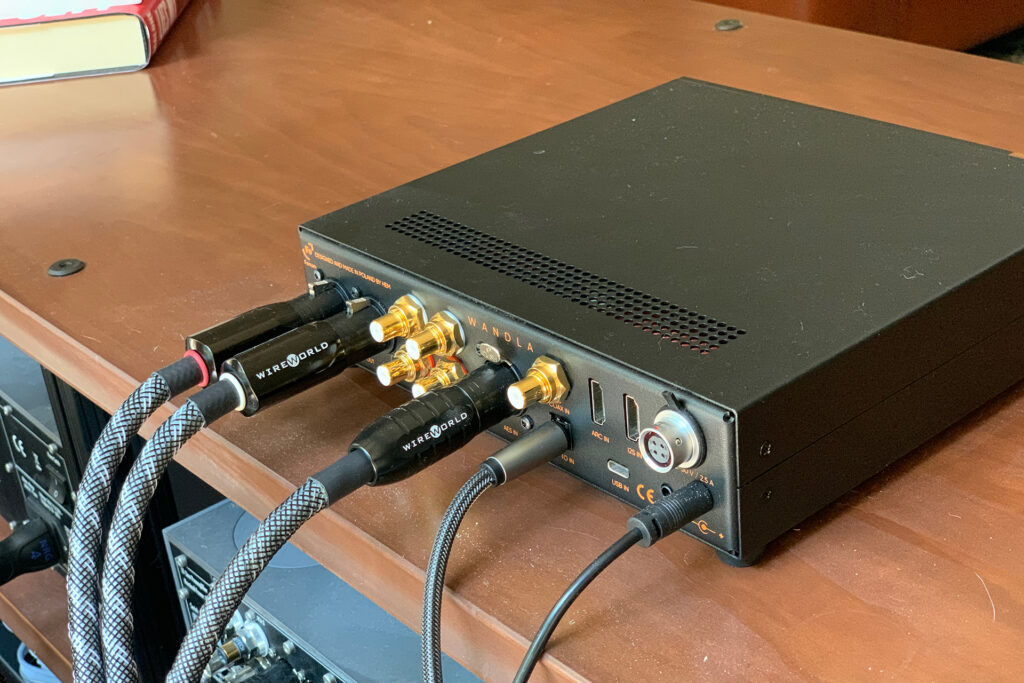
My reference system as of late includes the Wattson Madison streamer DAC, with Power S external power supply as my digital source reference. The rest has remained unchanged, with the CH Precision L1/X1 Preamp preamplifier, CH Precision M1.1 power amplifier, and Rockport Avior II loudspeakers. I still have my old trusty Lumin U1 mini-streamer, which I used to feed the Wandla HP DAC. All the cabling is Wireworld, with a mixture of platinum- and gold-level cables.
Having just returned from a week at the beach, it was appropriate that the first track was “Hot in the City” by Billy Idol. What first struck me was the solid bottom end from the bass and kick drum making up the rhythm section. It was deep, articulate and powerful. Idol’s vocals were centered and projected slightly in front of the speakers. Drums were positioned well behind the vocals, creating a realistic stage. Steve Stevens’ unmistakable power chords sounded heavy and angry, just as they should. When compared to the more expensive Wattson DAC, images weren’t as clearly defined and the soundstage wasn’t quite as deep, which is all to be expected with the price difference. Idol is anything but audiophile music, and the fact that it sounded so engaging and musical on this mid-level audiophile component left me feeling really good about the overall performance – especially for the money.
“She’s a Beauty” by the Tubes was the next song I queued up. At its heart, this is a rock and roll song with lots of synth effects and reverb used to create a unique sound. Not to mention, I still think it has one of the best music videos of the ‘80s. Not as bass-heavy as “Hot in the City,” but the drums were still punchy, tighter and more realistic than on the Idol track, which clearly had some extra juice added to it. The soundstage of “She’s a Beauty” is deeper, too, with bassist Rick Anderson coming from way out back. The Wandla HP did an excellent job extracting all the funky grooves that Anderson plays. Vocals were clear and focused, especially backing singers, which were easily discernable from each other.
Will the Ferrum Wandla HP DAC Hold Its Value?
The Ferrum Wandla HP DAC falls into the hotly-contested category of affordable high-performance components dominated by Chi-Fi manufacturers (learn more here). The fact that Ferrum is not Chinese makes it a little bit more desirable in my mind. Not that there is anything wrong with Chinese high-value audiophile products, but there is a higher level of pride of ownership for products made elsewhere, at least for me. Mark this a positive for the Wandla HP. The relatively low cost of entry is actually something of a negative when you speak of resale value. As with my Lumin U1 mini-streamer, most people would rather just buy a new one with a warranty than risk buying used when there simply isn’t that much room for depreciation. That’s the reason I still have my Lumin. My point is that this is not a phenomenon specific to Ferrum, but to all budget-minded (and some mid-level) gear. I think most owners of the Wandla HP will find it’s better to hang onto it if they get the upgrade itch and use it in a second office or bedroom system.
What is the Competition for the Ferrum Wandla HP DAC?
Benchmark is a brand that is a pioneer of value-priced, high-performance products. Their $2,399 DAC3 HGC recently reviewed is a worthy competitor to the Ferrum Wandla HP. Like the Ferrum Wandla HP, it also uses an ESS Sabre DAC chip, but it’s the ES9028Pro as opposed to the ES9038Pro in the Ferrum Wandla HP. It also offers preamplifier controls and a headphone amplifier. The Benchmark DAC3 HCG (buy at Amazon) is designed and built in the USA, which is a nice perk in my opinion. It does not include MQA decoding and rendering like the Ferrum but does have a solid pro audio following. Reviewer Michael Zisserson describes the sound of the Benchmark DAC3 HGC in the following way: “The ability of the DAC3 HGC to keep the integrity of instruments, and the recording, make the listening experience one of honesty, rather than an experience that is euphonic and romantic.”
The Schiit Yggdrasil is another DAC that would be on my list to compare to the Ferrum Wandla HP. The Yggdrasil is available in a few different options from the $2,299 base Less is More, $2,699 upgrade More is Better and $3,499 top of the line Singular. Each upgrade level brings higher-performance DAC chips. The Less is More uses four TI DAC8812 16-bit chips. The More is Better uses four ultra-precision TI DAC11001B 20-bit chips. The Singular uses a custom FPGA DAC, as well as all in-house-designed accompanying components, such as the USB input, the filter, output stage and more. The More is Better version is closest in price to the Ferrum Wandla HP and also offers preamplifier capability. The Yggdrasil MIB supports up to 24-bit/192 kHz on all inputs. It does not, however, offer a headphone output. The Schiit DAC is designed and built in the United States and includes a five-year warranty. The Yggdrasil is also upgradeable, so you can start with the affordable base model and go all in down the road for the Singular.
Look at what Ferrum’s importer Vana is doing at AXPONA.
Final Thoughts on the Ferrum Wandla HP DAC
The Ferrum Wandla HP is a unique DAC in an audiophile world awash in all sorts of various DACs. If you’re a headphone person, then the Wandla HP is a no-brainer to have on your audition list. While I am not a headphone user, I saw that it got rave reviews from the major headphone writers. With that said, headphone performance is likely not why most of you are reading this review.
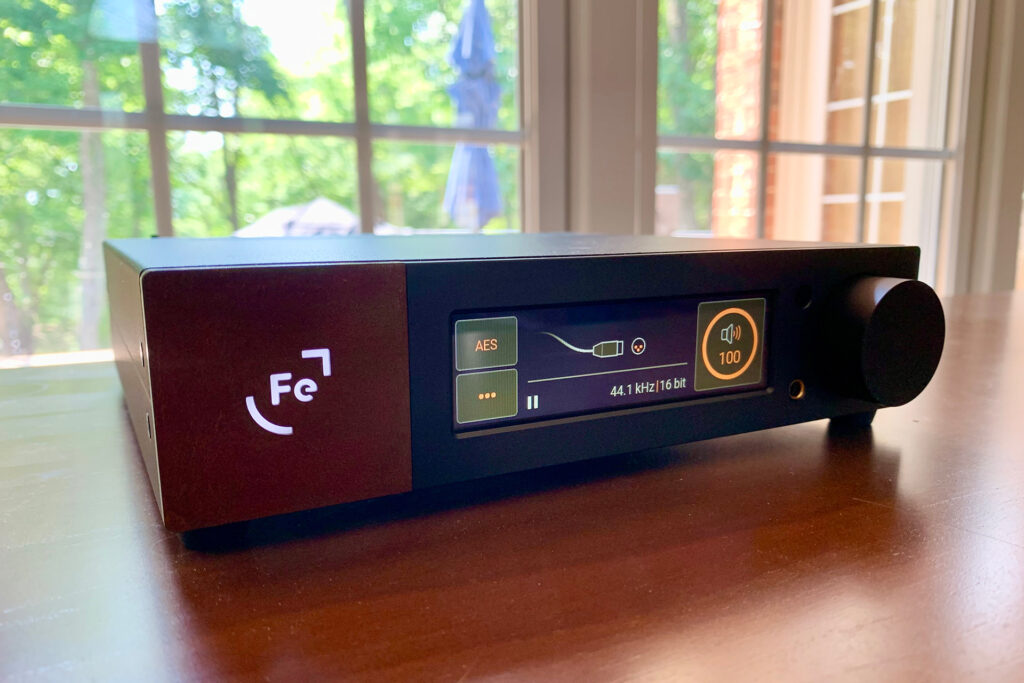
In my system, the Wandla HP was a pleasure to use. The touchscreen was logically laid out and simple to use. There were no glitches in the software, and it offered lots of cool filter options to play with to suit the sound you’re after. For those who are always looking for the next upgrade, like me, it’s wonderful that Ferrum has an external power supply option to take the performance up a notch.
What really matters is how it sounds, however, and I was highly impressed by this DAC for what you get sonically for the price. It does everything you could ask from it at a very reasonable price, perfect for an audiophile looking to build a reasonably-priced and great-sounding system into the world of higher-end audio.



