
 By
By Onkyo as a brand is in a time of resurgence. After being somewhat dormant for a few years while the company was for sale, Onkyo has re-remerged with the ICON product line in 2025 with the M-80 amplifier, the P-80 network preamplifier, and the A-50 integrated amplifier, before releasing the C-30 (buy at Crutchfield) CD player in early 2026. Few brands hold the longevity that Onkyo has as, depending on your age, it is possible that three generations of your family have purchased their products with the company dating back to 1946.
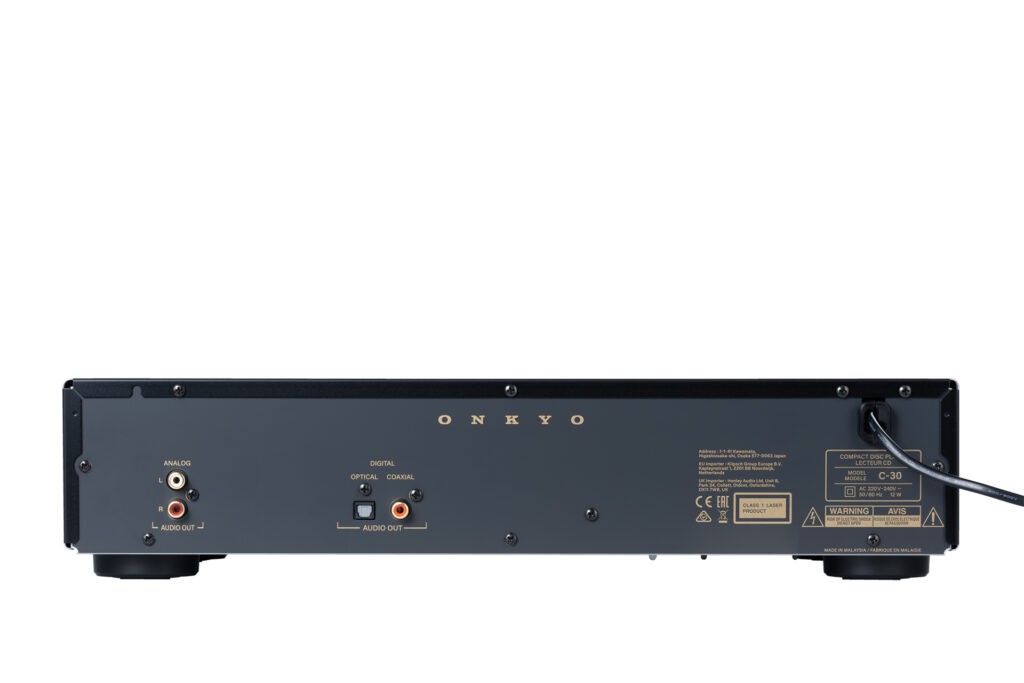
The Onkyo ICON C-30 CD player, as you would imagine, comes with all the things you would expect from a CD player in this price range. It features an analog output, as well as a digital coaxial output if you wish to use the player as a transport. Inside the ICON C-30, it is a little different. It uses the AKM 4452 chipset, which Onkyo has paired with their VLSC (Vector Linear Shaping Circuit), which is designed to reassemble the analog signal between sampling points to remove the noise that can cause error-correction stutters in digital filters. While it would seem that most audiophiles have moved their listening over to streaming in recent years, RIAA’s 2025 year-end report showed that there were 29.5 million Compact Discs sold in the United States alone last year, so the format isn’t dead just yet. Let’s see if maybe this is the right CD player for your system.
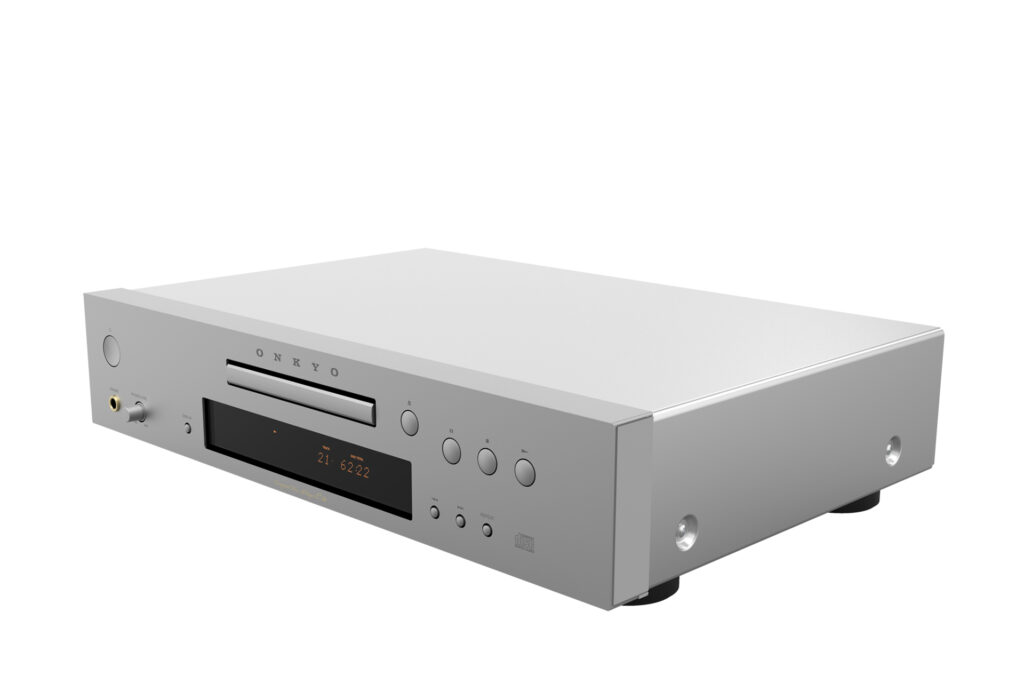
What Makes the Onkyo ICON C-30 Compact Disc Player So Special?
- The unit is able to play the often difficult-to-read HDCD discs from the late 1990s and early 2000s. As a person who has been buying Compact Discs for 35 years, I have lots of older discs, and it is frustrating when you want to play one of them and it can’t be read consistently, or the music doesn’t sound right. The Onkyo C-30 was able to play those discs with ease, which was both exciting and refreshing. I suspect this is due to the VLSC technology that Onkyo used with the player as, even when I employed my external DAC, the tracks played properly.
- The remote control fits in your hand easily. While the remote is plastic, it is still quite solid and contains all the features that you would want, with not just on/off, eject, play, pause, and stop, but random, repeat, and search as well.
- The disc tray was smooth and quiet. While lots of audiophiles don’t love disc trays, as they are prone to breaking down over time, the tray was smooth and didn’t feature any noticeable grinding sounds when the eject button was pressed.
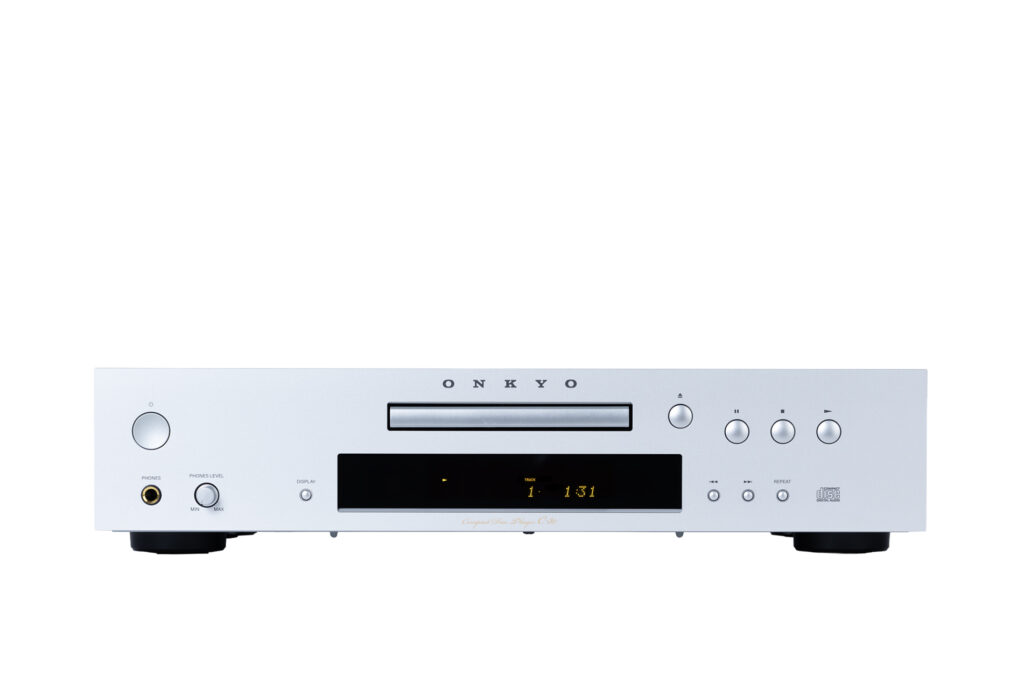
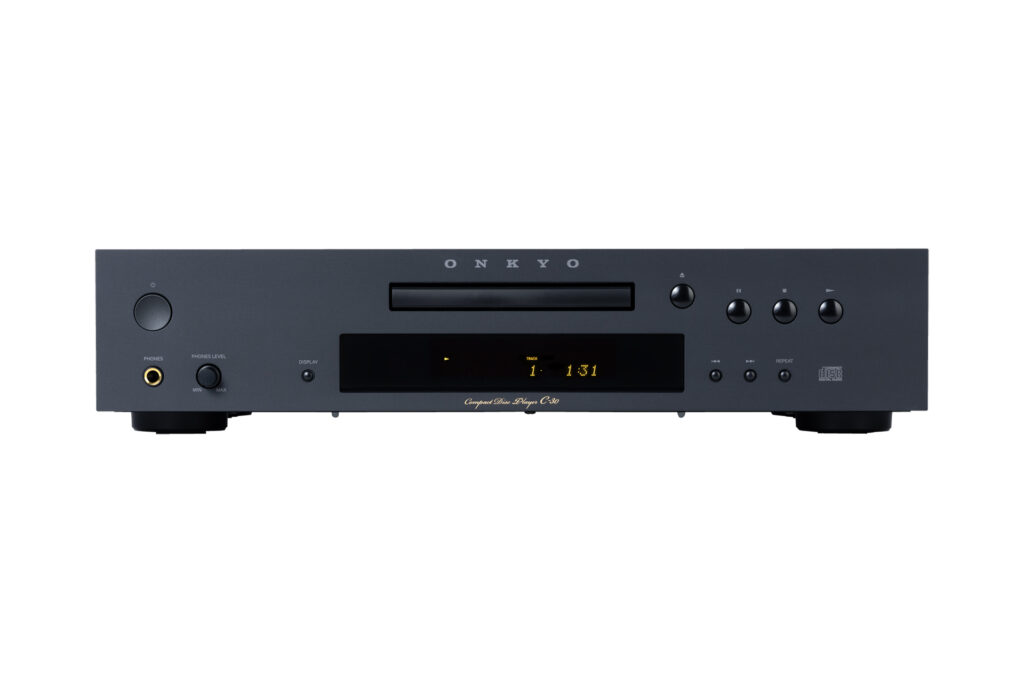
- The Front of the C-30 CD player has a headphone jack with its own volume knob. This struck me as a unique feature, as I wouldn’t have thought to use a CD player as headphone amplifier, but the Onkyo C-30 can be used that way.
Onkyo Icon C-30 CD Player Specifications
| Formats | CD, CD-R/RW, MP3, WMA |
| Frequency Response | 4 Hz to 20 kHz |
| Signal-to-Noise Ratio | 105 dB |
| Dynamic Range | 100 dB |
| THD | 0.004% |
| Analog Output | 2 volts RMS (RCA) |
| Digital Outputs | Optical and coaxial |
| Power Consumption | 12 watts |
| Dimensions (W x H x D) | 17.1 x 3.9 x 12 inches |
| Weight | 11.7 pounds |
| Price | $400 at review |
Why Should You Care About the Onkyo ICON C-30 CD Player?
If you’re someone like me who can have inconsistent wi-fi, having a solid CD player that can handle collections of Compact Discs both old and new is essential. Sure, the CD format isn’t all that sexy anymore, but the numbers don’t lie. People are still buying them today, and they still hold certain advantages over streaming, as the music is less compressed and, once you own it, you never have to worry about the music being dropped from a streaming service.
Some Things You Might Not Like About the Onkyo Icon C-30 CD Player
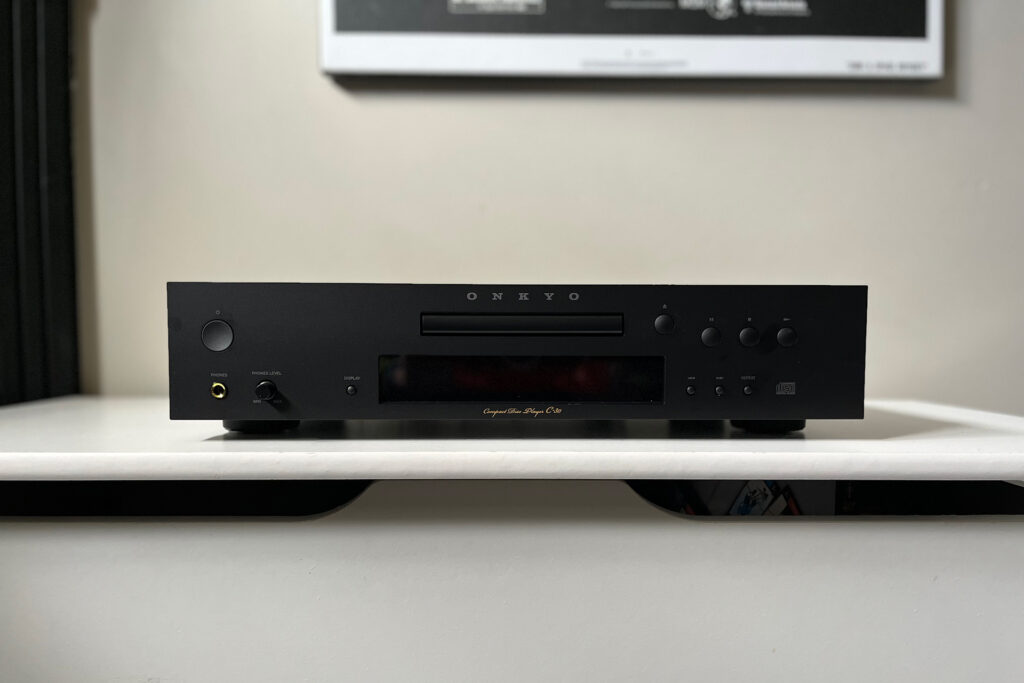
• The Onkyo ICON C-30 lacks the visual appeal of its ICON brethren. For whatever reason, Onkyo chose to have the C-30 CD player look like a player that might be much older than something made in 2026. It doesn’t look bad or awkward by any means, it just lacks the design aesthetic of the other units in the ICON line.
• The CD player is physically large by modern audiophile standards. The unit measures 17.1 inches wide, 3.9 inches high, and 12 inches deep. That is roughly twice the height of my reference Music Hall CD25.3. This is also unlikely to be a deal-breaker for most people, but it is something I expect will be noticed.
• The power cable is oddly hard-wired. This is a small gripe. However, I do like being able to upgrade the power cables, as I have found they can provide a small sonic upgrade.
• The silver disc player only plays Compact Discs. Yes, this is completely stated in the name, but many audiophiles are looking to play their SACDs or DVD-Audio discs, and the Onkyo ICON CD-30 CD player won’t be able to do that for you.
Listening to the Onkyo ICON C-30 CD Player
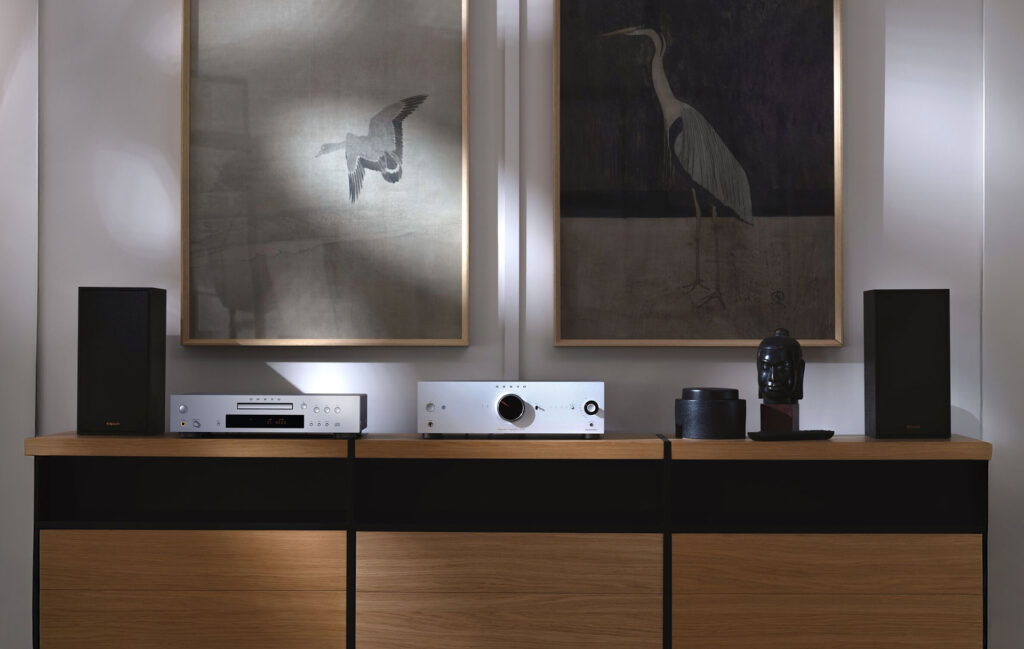
I tested the Onkyo ICON C-30 CD player with Paradigm Premier 700 floorstanding speakers, the SPL Elecktor preamplifier and the Anthem MCA 225 Gen 2 Amplifier. The Onkyo ICON C-30 CD player was connected to the SPL Elektor using Wireworld cables. I used the Music Hall CD25.3(read the review) CD player as a comparison for testing purposes.
When testing CD players, one of the tracks I enjoy playing is “Moving in Stereo” from The Cars.This track comes from their 1978 self-titled album. This is the HDCD version of this album, which I had previously thought was a waste of money when I first bought it and tried to use it with my reference Music Hall 25.3 CD player. The Onkyo was able to play the full disc without issue. The track sounded very fluid, as the synth pulses had me tapping my feet almost immediately, which speaks to the musicality of the CD player.
Another track that is great for testing out speakers is “Nutshell” from Alice in Chains’ 1994 EP Jar of Flies. This is actually the first compact disc I ever bought, and I believe I paid around $10 for it back in 1994 at Sam the Record Man, which was the Canadian equivalent of the historic Tower Records. What is notable in this track is Jerry Cantrell’s acoustic guitar. Some CD players can cause some of his higher frequencies to sound bright, but the Onkyo was able to handle this challenge with relative ease. The acoustic guitar sound was clear, realistic and well-defined. In comparison to the Music Hall, the Onkyo’s reproduction allowed the guitar to sound fuller and not quite as dry. The Onkyo ICON CD-30 brought back why this CD has been a treasure to me for so many years.
The last track I used was “Xanadu” by Rush. This track comes from the famed trio’s 1977 album Farewell to Kings. Like so many tracks from Rush in this era, “Xanadu” is as much an epic at 11 minutes and 12 seconds as it is a song. What makes this useful for testing purposes is the opening two minutes. You could hear the birds chirping in the background and the knocking of the woodblocks, as well as the bells being played and how their sound degrades. There is so much to enjoy and hear inside this epic track and, when it is reproduced well, it keeps you coming back to find something new.
Will the Onkyo ICON C-30 CD Player Hold Its Value?
The Onkyo ICON C-30 is a classic example of something that isn’t likely to hold value long-term. It is difficult to anticipate how much longer people will use compact discs. The good news is that, at $400, you’re not going to be out too much if the Compact Disc format completely disappears, and there is a decent chance that, 10 years from now, people will still use CD players and they will be hard to find, which means the value should largely stay intact.
What is the Competition for the Onkyo Icon C-30 CD Player?
The Denon DCD-900NE ($599 – buy at Crutchfield) is a little more expensive but you do get a few extra features for that money. Most notably, it has a USB-A input, so you can attach an external hard drive to play any files you have backed up onto it. It can also play CD-R, CD-RW and AAC CDs if you have backed up your files onto discs or if you still have a mixed CD that you made around 20 years ago.
You may also consider the NAD C538 ($499 – buy at Crutchfield). This is probably the most direct competition to the Onkyo ICON C-30 CD player. The NAD is within $100 of the price and offers similar features. The most obvious difference between the two is that the NAD uses a Wolfson DAC and has an optical output, whereas the Onkyo only has the coaxial output. I reviewed the NAD C538 back in 2023 (read the review) and came away from it with a positive experience.
Lastly, the Cambridge Audio CXC v2 ($599 – buy at Crutchfield) is also a little more expensive than the Onkyo, but where the Cambridge Audio is different is it is a CD transport instead of a CD player. So, if you already have an external DAC that you like, this could represent a really nice value, as CD transports are typically priced closer to $1,000. I have reviewed several Cambridge Audio products and I have always come away with a positive experience, so I wouldn’t expect anything different here.
Check out this Metronome DST CD Transport (read the review) for a higher end, audiophile option.
Final Thoughts on the Onkyo ICON C-30 CD Player
The ICON C-30 from Onkyo isn’t likely to be viewed as the last stop on anyone’s audiophile journey, and I doubt that is why Onkyo chose to make the product. The Onkyo ICON C-30 (buy at Crutchfield) represents a strong value for people with an existing Compact Disc collection who needs a player that will handle it, or someone who is looking to give the medium a try but isn’t looking to invest a lot of their hard-earned cash. This is a player that I will happily add into my system as an upgrade from my previous CD player, as it does a supreme job of doing the things that good CD players do. They play the discs and play them accurately, and you realistically can’t expect much more from it than that.
Compare it with our reviews of the NAD C 538, Shanling CR60 and Panasonic DP-UB820. Comparing options? See our audiophile CD player reviews from FutureAudiophile.com.
“They play the discs and play them accurately, and you realistically can’t expect much more from it than that.”




I’m looking at the photo in the story, and the Onkyo has both a coax and an optical SPDIF output. But you state that it only has coax output.
I’ve got the ancient Onkyo C7030 and I swear they’re using the same exact externals for it as they have for the C30! I just took a pic and compared them…exactly the same minus the highlighting of ONKYO badging.
Mine is a fine CD player. And it has a pretty doggone good headphone, described as a “differential headphone amplifier circuit”. It’s a plus.
Also, it has two digital output, coax and toslink (optical).
Add to that the Onkyo’s Vector Linear Shaping Circuitry (VLSC) which just means its digital-to-analog conversion is continuously sampled for cleaner throughput. I by-pass this, using this unit as a transport but it seems this was more the standard for Onkyo at this level of player years ago.
Mine is good enough that I haven’t replaced it in such a long time that there would have to be a considerable delta with something new for me to switch.
All that said, I’m glad to see Onkyo re-entering the audiophile market again. I had one of their great receivers in the mid-70s and an amp of theirs in the early 80s. They once were really good. Let’s see if they can get back there.
I bought an Onkyo 7030 CD player ten years ago. It sounded good & worked fine but the drive quit after two years & replacements were not available. I now use a Sony BDP-S1700 Blu-ray player, a Rasp-PI HDMI LCD display & the player’s coax output connects to my system DAC. It plays: Blu-ray, DVD, CD, SACD & MP3 (from disc or flash drive). Being Blu-ray with high optical resolution, its ability to play thru disc defects is top notch. The coax digital output was recently tested by ASR & found to be near perfect.
It has a classic look to it (it won’t look outdated in a few years). In 2026 dollars the price is reasonable too. I’d put it on the list to check out.
I viewed your other suggestions, but this Onkyo has the game changer imo — headphone jack and volume control. Exactly what I need in a small apartment with thin walls.
It is funny how a little feature here or there can change the value of a product for some buyers.
The Onkyo stuff is great. I love the industrial design. Priced fairly.