
 By
Canadian-based Kanto has established itself as one of the more recognizable names in the affordable audio world in recent years by sticking to a basic formula: clean, attractive design, modern connectivity, and legitimate HiFi performance. I was first exposed to the original Kanto TUK powered speakers (read the review) in 2018 at AXPONA Audio Expo before formally reviewing them for Future Audiophile several years ago. I came away impressed by their incredibly dynamic, powerful and energetic air motion tweeters (AMTs), impressive imaging, and authoritative and lively bass performance. The fact that they could compete with passive speakers costing hundreds more was genuinely impressive.
The Kanto TUK Gen II powered speakers (Updated October 2026: the Kanto TUK is no longer sold, so we now link to its replacement, the Kanto TUK G2 (buy at Crutchfield).) (buy at Crutchfield when available) revisit and tweak that winning formula rather than abandoning it completely. Kanto retained the same AMT and 5.25-inch aluminum woofer architecture, but the second-generation model introduces a refined AMT waveguide and a reworked 5.25″ aluminum concave woofer aluminum woofer material, revised DSP and crossover tuning, updated cabinetry, and considerably more modern connectivity. And, better yet, the TUK Gen II is priced at $899.99 per pair, the same price as the first-generation TUK.
The bigger question for this review is not simply whether the TUK Gen IIs are good powered speakers. The original TUK already established a pretty high bar. Instead, I wanted to investigate whether Kanto’s sonics, connectivity, and design changes amount to a meaningful generational upgrade and, more importantly, how much better the Gen IIs actually sound, compared with the original version I reviewed and enjoyed so much. Let’s dive in.
What Makes the Kanto TUK Gen II Powered Speakers So Special?
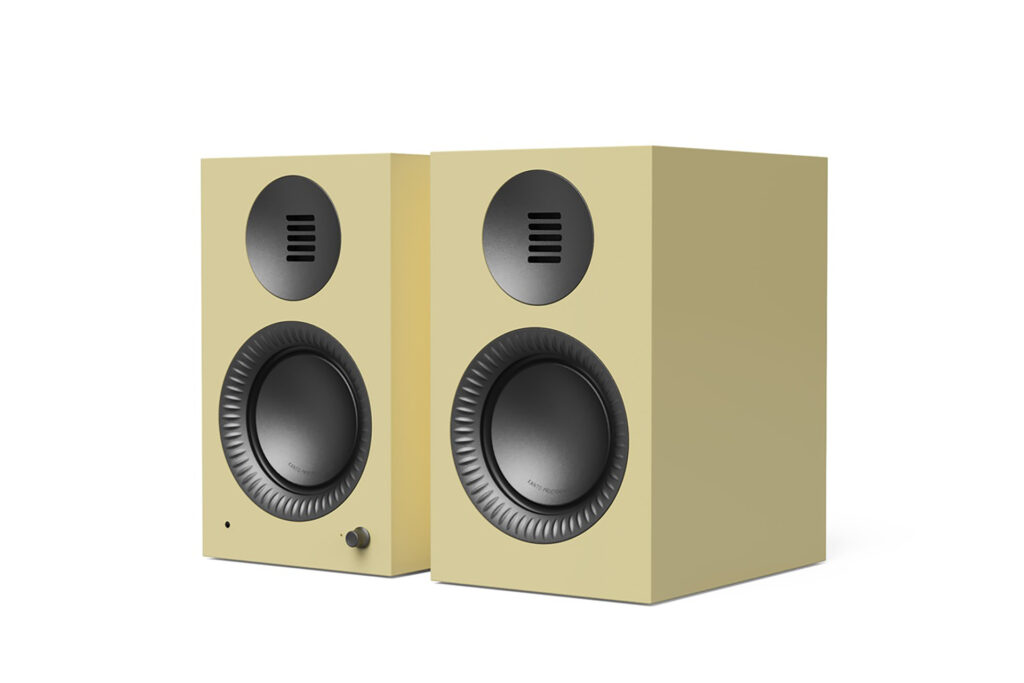
· One of the most meaningful changes is the revised driver system and acoustic tuning. The TUK Gen II retains Kanto’s 28 mm × 35 mm AMT tweeter format, but pairs it with a refined waveguide designed to preserve detail, clarity, and tonal balance across a wider listening area. This is particularly interesting because the original TUK already impressed me with its spacious presentation and strong imaging.
· The 5.25-inch woofer has also been reworked. Kanto now uses its reworked 5.25 inch aluminum concave woofer plainly aluminum woofer, which the company says provides greater depth, clarity, and dispersion than the driver used in the original TUK. It also looks and feels higher-end than the previous iteration.
· DSP and crossover tuning have been revised for the second generation. This should result in more natural and balanced sound than the original, with improved vocal realism and instrumental separation.
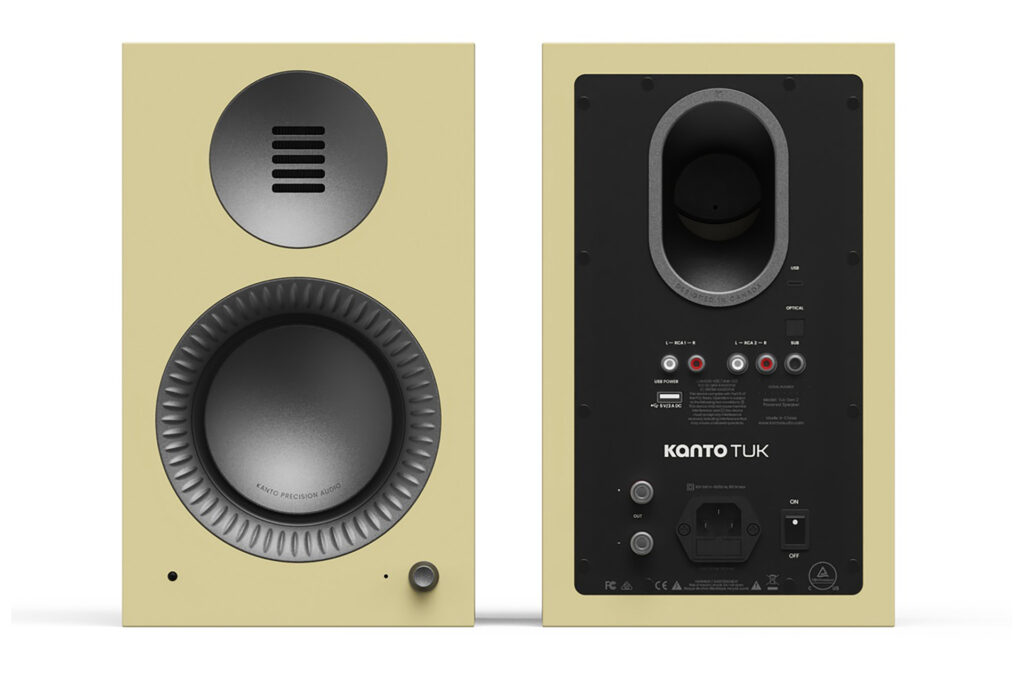
· Power output remains strong at 130 watts RMS and 260 watts peak – more than enough juice for most reasonably-sized listening spaces. A selectable 80 Hz high/low-pass filter is also included for subwoofer integration.
· Connectivity underwent a significant modernization. Bluetooth has been upgraded from Bluetooth 4.2 on the original TUK to Bluetooth 5.4 with aptX Adaptive, while USB-C replaces the older USB 2.0 Type B connection and supports audio up to 24-bit/96 kHz. Optical TOSLINK, dual RCA line-level inputs, a subwoofer output, and a 5V/2A USB charging port round out the connection options on the new Kanto TUK Gen II.
· Combined with increased cabinet volume and revised tuning, Kanto says the Gen II TUK delivers deeper, more controlled low-frequency performance without excessive boom or bloat. It is rated down to 50 Hz (the same as the original TUK), suggesting that the improvements are more about bass quality and control than significantly deeper extension.
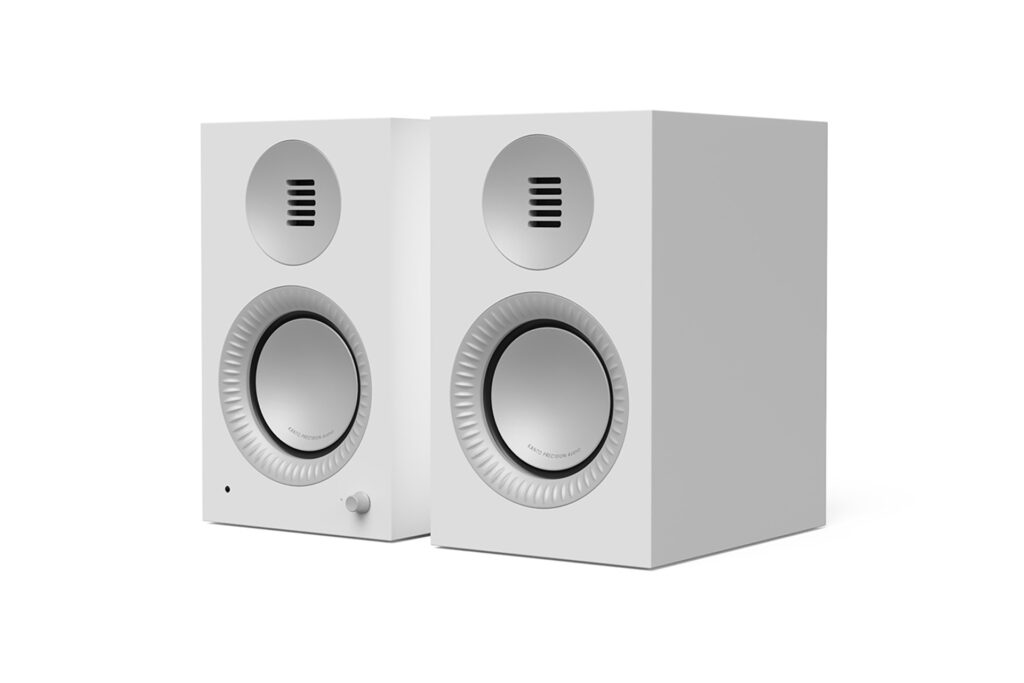
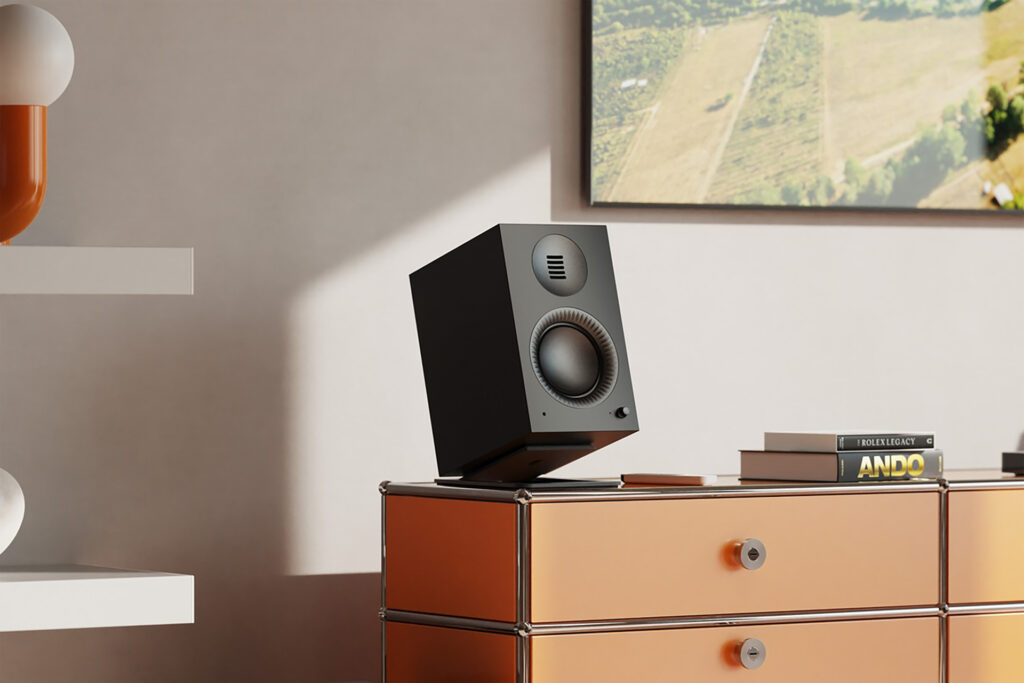
· The cabinetry and finishes have also been refreshed. Kanto used high-density acoustic MDF, real wood veneers and hand-polished lacquer, along with metallic waveguides and laser-engraved aluminum cones on the new TUK. The cabinet is also much more squared off, compared to the subtly rounded edges of the original TUK, and it’s slightly bigger, at around one inch taller and two inches deeper. The TUK Gen II is available in five high-end finishes: Matte Black with Gunmetal, Matte White with Aluminum, Gloss Butter with Gunmetal, Matte Burl with Gunmetal, and Matte Walnut with Rose Gold. This is definitely a more luxurious speaker, inside and out.
· The new remote control has been completely reworked and is a nice upgrade over the first generation. It is slimmer, slightly longer, and considerably more attractive, with a cleaner layout and more premium feel that better matches the TUK Gen II’s upgraded aesthetic.
· The Kanto TUK Gen II powered speakers come with a solid two-year warranty. Kanto has also earned a strong reputation for excellent customer service, adding some additional peace of mind for buyers.
Why Should You Care About the Kanto TUK Gen II Powered Speakers?
Kanto has a wide variety of audio products, ranging from the pint-sized but seriously capable ORA desktop speakers (read our review) to the new TUK and Tuk Grand. The new TUK (and its larger sibling, the Tuk Grand, which is bigger, and priced at $999 per pair) appears poised to push Kanto further into the premium powered speaker conversation. At 7.2 inches wide, 10 inches deep, and 12 inches tall, the TUK Gen II remain manageable on a desk or bookshelf, but 130 watts RMS of amplification and 5.25-inch woofers gives it enough power and heft to make sense in a dedicated two-channel setup or a medium-sized room.
That versatility makes the TUK Gen II particularly appealing to listeners who want legitimate HiFi performance without the space, expense, or complexity of a traditional system with separate components. There is considerable appeal in having amplification, DAC functionality, Bluetooth, tone controls, and subwoofer integration built into the speakers themselves. Listeners looking to build a relatively minimalist system around a computer, streamer, turntable with a phonostage, or other source component can essentially add the TUK Gen II and be done shopping. A subwoofer can always be added later for those looking for a little more low-end oomph.
For owners of the original TUK, however, the case may be more nuanced. The Kanto TUK Gen II doesn’t offer an increase in power output, HDMI ARC, or changes to the basic driver sizes or AMT configuration. Instead, Kanto has concentrated on refining the original product with revised acoustics, a reworked woofer, a refined AMT waveguide, updated DSP, more premium cabinetry, and much newer digital connectivity. That makes the Gen II an easier recommendation for newcomers to the TUK family than an automatic upgrade for existing owners, although we’ll find out during my listening tests whether the sonic improvements are significant enough to change that equation (more on that later).
Some Things You Might Not Like About the Kanto TUK Gen II Powered Speakers
- The continued absence of HDMI ARC feels like a missed opportunity. Optical provides an easy enough way to connect a television, but HDMI ARC has become increasingly common on powered speakers, including Kanto’s own less-expensive REN. HDMI ARC, paired with Consumer Electronics Control (CEC), allows users to control speaker volume with their TV remote, a particularly useful feature when replacing a soundbar or using powered speakers for both music and movies. At $899.99 per pair, I would have loved to see it included here, particularly since the TUK Gen II has enough output and bass capability to make for a pretty compelling soundbar alternative.
- Kanto has also eliminated a couple of useful features found on the original TUK. The original included a built-in phono preamp and front-mounted headphone output, while the TUK Gen II replaces the phono input with a second line-level RCA input and does away with the headphone jack altogether. Neither omission is necessarily a deal-breaker, but they do make the Gen II slightly less of an all-in-one solution for vinyl and wired headphone listeners. On the plus side, many modern turntables already include a phonostage, and an external phono preamp isn’t particularly difficult or expensive to add.
- At $899.99, the TUK Gen II also faces considerably more competition than the original TUK did when it first arrived in 2018. The powered speaker market has exploded in recent years, with options offering HDMI ARC, WiFi streaming, room correction, app control, and other modern conveniences. Kanto has instead focused much of its attention on improving sound quality, build quality, and connectivity where it matters most. Whether that’s the right tradeoff will largely depend on whether listeners prioritize traditional HiFi performance or having every modern feature imaginable. Interestingly, as previously mentioned, Kanto’s own REN powered speakers seem designed for the latter, offering HDMI ARC and a more living-room-friendly, soundbar-replacement feature set at a lower price.
Listening to the Kanto TUK Gen II Powered Speakers
During my initial setup and casual listening, I was immediately struck by how natural the Kanto TUK Gen II powered speakers sounded. This played particularly well for me as a speech-language pathologist who loves listening to different vocal textures. Tracks where the little idiosyncrasies of a person’s voice are on full display are absolute ear candy for me. So. naturally, I started with Sienna Spiro’s “Visitor,” which puts her incredible raspy, sultry voice front and center.
From the opening notes, the Kanto TUK Gen II powered speakers did exactly that. As I increased the volume, Spiro’s vocals became increasingly detailed and powerful, remaining firmly planted in front of the mix while somehow surrounding and enveloping my fairly large rectangular listening space. The sense of scale extended far beyond what I expected from a pair of moderately-powered bookshelf speakers, with the improved depth and dispersion Kanto promises from the TUK Gen II certainly seeming to be on display here.
As the track progressed, the TUK Gen IIs’ dynamic prowess – reminiscent of the original TUK – was also on full display, helping the finale of the song explode before quickly falling back into its quiet conclusion. I was equally impressed by how well the speakers handled both extremes. There was plenty of punch and scale when the track demanded it but, as the arrangement settled back down, the subtle textures and little imperfections in Spiro’s voice remained clear and easy to pick out. It was an impressive demonstration of the TUK Gen IIs’ ability to deliver both power and finesse, and an excellent start to my critical listening and assessment of the new TUK.
Wanting to give Kanto’s reworked AMT tweeter and waveguide a proper workout, I turned to Radiohead’s “Weird Fishes/Arpeggi,” off the album In Rainbows. (buy at Amazon). The track is loaded with the kind of intricate, shimmering detail that should play directly to the strengths of an AMT, with interlocking guitar lines, crisp percussion, and cymbals that seemingly float above the increasingly complex mix.
While the original TUK’s AMT tweeter could get a little lively at times, the Gen II immediately struck me as more controlled. That familiar sparkle and energy were still there in spades, but the revised tuning and new waveguide seemed to rein things in just enough, particularly as I pushed the volume. Cymbals remained crisp and airy without becoming overly sharp, while the overlapping guitar lines retained their individual textures and positions within the increasingly dense soundstage.
The prominent bassline was another highlight. It had plenty of weight but remained smooth and well-blended within the mix, rather than calling unnecessary attention to itself. Even as the track became more layered and complex, the bass stayed easy to follow without stepping on the guitars, percussion, or vocals.
Will the Kanto TUK Gen II Powered Speakers Hold Their Value?
As with most powered speakers, I wouldn’t purchase the Kanto TUK Gen IIs expecting them to appreciate in value and end up as a family heirloom. I don’t anticipate seeing a pair pop up on Antiques Roadshow in 2075 with their owner shocked to discover Grandpa’s old Kanto TUKs are worth $25,000. Unlike traditional passive speakers, powered designs incorporate amplifiers, DACs, DSP, Bluetooth hardware, and other electronics that can eventually become outdated or fail. That additional complexity tends to work against long-term resale value, compared with a well-made pair of passive speakers that have fewer moving parts and potential points of failure.
That said, the original TUK enjoyed a relatively long run in Kanto’s lineup and developed something of a cult following among younger audiophiles. The Gen II arrives with some meaningful updates that should help keep it relevant for quite some time, with both aesthetic and technological upgrades that should expand its appeal. Kanto has also become a recognizable name in the powered speaker market, which should make finding a buyer easier than it might be with a more obscure brand.
At $899.99 per pair, some depreciation is inevitable, but I would expect the TUK Gen IIs to hold their value reasonably well over the next decade or so. More importantly, the combination of modern (and futureproof) connectivity with USB-C, quality construction, and legitimate HiFi chops should keep them useful long after the next Bluetooth standard inevitably comes along.
What is the Competition for the Kanto TUK Gen II Powered Speakers?
The KEF Coda W ($999.99 per pair, buy at Crutchfield) is one of the more obvious direct competitors to the Kanto TUK Gen II. For just $100 more, the Coda W uses KEF’s 5.25-inch 12th-generation Uni-Q driver array, with a one-inch aluminum tweeter positioned in the acoustic center of the woofer. Each speaker gets 100 watts of dedicated Class-D amplification, while frequency response is rated at an impressive 41 Hz to 20 kHz. Connectivity is also impressive, with Bluetooth 5.4 with aptX Adaptive and Lossless, USB-C, optical, HDMI ARC, line-level RCA, a built-in MM phono stage, and subwoofer output. The inclusion of HDMI ARC and a phono preamp give the KEF an advantage in outright versatility, while its distinctive Uni-Q architecture makes it an especially interesting alternative for listeners who value wide dispersion and imaging and prefer KEF’s signature sound.
The SVS Prime Wireless Pro (buy at Crutchfield) takes a decidedly more connected approach at exactly the same price as the TUK Gen II. The SVS Prime Wireless Pros incorporate a 24-bit/192 kHz DAC along with WiFi streaming, AirPlay 2, Chromecast, Spotify Connect, Bluetooth, HDMI ARC/eARC, optical, analog and Ethernet connectivity. There’s even a front-mounted OLED display and app control. A subwoofer output automatically engages an 80 Hz high-pass filter, making the Prime Wireless Pro particularly easy to integrate with a sub. The Prime Wireless Pro powered speakers are a little more futuristic/industrial, consistent with SVS’ design language, and their extensive streaming and connectivity options make them a versatile choice for users looking for an all-in-one entertainment system. The TUK Gen IIs, on the other hand, seem more focused on pure audio performance, with Kanto putting greater emphasis on premium cabinetry, their AMT tweeter and new waveguide, and acoustic refinement through tweaked DSP and a reworked woofer. Which approach is more appealing will largely come down to whether listeners prioritize features and streaming flexibility or a more traditional audiophile experience.
The ELAC Debut ConneX DCB61 powered bookshelf speaker ($899 per pair, buy at Crutchfield) is another compelling alternative, and one I know particularly well. The larger sibling to the DCB41, the DCB61s combine traditional powered-speaker simplicity with modern features including HDMI connectivity, Dolby Digital decoding, Bluetooth LC3, and a built-in phonostage. Much like the TUK Gen II, the ELAC is designed to provide legitimate two-channel performance without requiring a rack full of additional electronics. Having spent considerable time with the DCB61s, I found their smooth, balanced presentation and excellent imaging particularly impressive, making them natural competitors to the new Kanto TUK Gen II powered speakers.
Final Thoughts on the Kanto TUK Gen II Powered Speakers …
I think Kanto accomplished exactly what it needed to with its second-generation TUK. Rather than completely reinventing a product that was already very good, Kanto focused on addressing some of the original’s shortcomings while refining the things that made it special in the first place.
Most importantly, the TUK Gen II retain the lively, dynamic character that made the originals so much fun to listen to. The AMT tweeter still has plenty of sparkle, speed, and detail, but sounds more controlled and refined, with better dispersion this time around. The reworked woofer, revised DSP, larger cabinet, and new waveguide may not result in dramatically different numbers on a spec sheet but, collectively, they make the TUK Gen II sound like a more mature and polished version of the speaker I enjoyed so much several years ago.
Kanto also deserves credit for keeping the price at $899.99. These are high-end powered speakers designed with sound quality first and, frankly, Kanto probably could have charged more. They offer much of the simplicity and convenience that make powered speakers appealing, while delivering the imaging, dynamics, detail, and overall scale expected from a legitimate HiFi system.
So, should owners of the original TUK rush out and upgrade? That’s up to each individual owner to decide. The original remains an excellent powered speaker, and Gen II doesn’t fundamentally change the formula. But for new buyers, or original TUK owners looking for a more refined version of a speaker they already love, the Kanto TUK Gen II powered speakers are easy to recommend. Kanto took an already successful design, sanded down some of its rougher edges, modernized it where it mattered, and somehow kept the price exactly the same. Sometimes evolution is considerably smarter than revolution, and I’m here for it.



