
 By
By The mission statement at this publication is to bring younger and more diverse people into the audiophile hobby. While there are audiophiles who are solely into the stereo components, the real enthusiasts start with a deep love of music. That love of music develops over time and is part of a lifelong education that has to start somewhere. Thankfully, today’s technologies allow us to have basically unlimited access to nearly every recording ever made at a price that even the most financially challenged young person can reasonably afford if he or she wants. Just like falling in love with cool audio, finding new music that emotionally moves you requires access and information.
So, where do we start? How about instead of searching by artists or albums as we would when, say, buying vinyl or Compact Discs at the record store, we lean into the idea of searching using more advanced methods, and digging deeper into metadata that is juicier and more tempting. One place where I have been doing really well is searching by notable record producers. I came to Los Angeles 33 years ago with the goal of being a record producer myself and, while I’ve executive-produced a movie, I haven’t yet gone down the record producer path. I have had the chance to meet the likes of Quincy Jones and Sir George Martin (amazingly at the same time, at a party in Beverly Hills, hosted by Universal Music way back in the day), as well as go randomly CD shopping with Rick Rubin at the old Tower Records on Sunset Boulevard. Perhaps, in my new life (post-fires and in my early 50s), I will find the opportunity to work with some cool artists but, for now, looking to the giants of the music production world has been a way to creatively discover or rediscover jams I truly love and that sound great at the same time. Imagine how connecting the musical dots will work for younger music fans and how that will build enthusiasm.
Roon is a Great Tool to Start With in this Musical Journey
Nobody needs yet another death-by-a-thousand-cuts subscription charge on their credit card, but music streaming software Roon is specifically fantastic at searching for music, using advanced metrics and metadata. There has been a lifetime subscription fee for Roon and that is likely worth doing if you want to avoid a monthly charge, along with the value of a respectable interconnect. Brian Kahn did a full rundown on how to use Roon (read it here). Being able to take a classic jazz album and unraveling a musical thread like listening to other records that drummer “Philly” Joe Jones played on can be a fun rabbit hole to go down. Obviously, this strategy is by no means limited to classic American jazz but also extends to any and all parts of the musical world. Using a record producer as a springboard can lead to more unexpected outcomes and musical finds.
Exploring the Produced by Quincy Jones Playlist on Amazon Music
Quincy Jones’ career was long-ranging, musically game-changing and completely fantastic. From being the leader of Count Basie’s Orchestra dating back to Rat Pack-era Frank Sinatra to producing bubble gum hits in the 1960s to Thriller – this only scratches the surface of what Q could do. Michael Jackson is always a relatable place to start in presenting music to a young audio fan, as everybody likely knows a big King of Pop song such as “Billie Jean.” “Human Nature” is a personal audiophile favorite of mine from Thriller, as there is a lot to listen to on that track in terms of subtle musical cues, but the bigger hits are often a better place to go. Moving into the “We Are the World” era comes with tie-ins to the fantastic recent documentary and opens threads and stories with all sorts of artists who were involved, as well as ones who were not. For example, supposedly Prince was invited to do a duet on the title track of “Bad” but refused because of the opening line of “your butt is mine,” as he didn’t like any vaguely homosexual references. That’s pretty absurd, considering some of the subject material from Prince’s early catalog, but I digress.
It is unclear if a younger music fan would know the Leslie Gore smash hit “It’s My Party” from the 1960s, but the melody is very, very familiar. Music degree in tow – I didn’t know Jones produced this hit, but you learn something new every day. Another well-known track that is a soul classic but with more modern hip-hop overtones is “Strawberry Letter 23” by The Brothers Johnson. Most would know the melody, but how many know that Jones produced it? I learned that the bass player from the song also worked with Jones on Thriller, thus the musical tie-in makes even more sense, as this project is all about making new musical connections, and there are so many to discover. Liner notes, respectfully, have nothing on what we are doing here.
Another familiar track for any movie or comedy fan is the iconic “Soul Bossa Nova” performed by Jones and made beyond-famous in the Austin Powers movies. Musically, this is another familiar place to show a young audiophile all the places that one can go musically with Quincy Jones at the center of your musical universe. Oh, I am not done … Younger people love themselves some Yacht Rock, and musically dialing in your iPad playlist for “Baby Come to Me” from Patti Austin and James Ingram is another total jam of a duet that also sounds really good by modern audiophile standards. Did you know that Jones produced “Give Me the Night” by George Benson? This jazzy disco hit is a total jam that appeals to all ages of music lovers.
By no means is this the end to the musical threads that one can explore, and the Amazon Music Quincy Jones playlist is an easy and fruitful place to get started.
Digging Into the Music of Rick Rubin
Last year, I read famed record producer Rick Rubin’s book, as I love adding rock and roll stories to my working knowledge of music. The funny thing was that the book had no rock and roll stories in it. It was the most Zen book ever, all about the creative process and how people/bands/talent come to Rubin to get the most out of themselves creatively. When you read the discography of Rick Rubin (check this out, as it is IMPRESSIVE), it is hard to argue with his process, as he is a driving force behind so many different genres of music – much like Quincy Jones. To recap the entire list would be to use up my word count, but Rubin was behind Beastie Boys, Andrew Dice Clay, (later) Johnny Cash, including his cover album, Slayer, The Cult, and he was even behind Mr. Hankey “The Christmas Poo” from South Park. To say Rubin is versatile is to understate the matter.
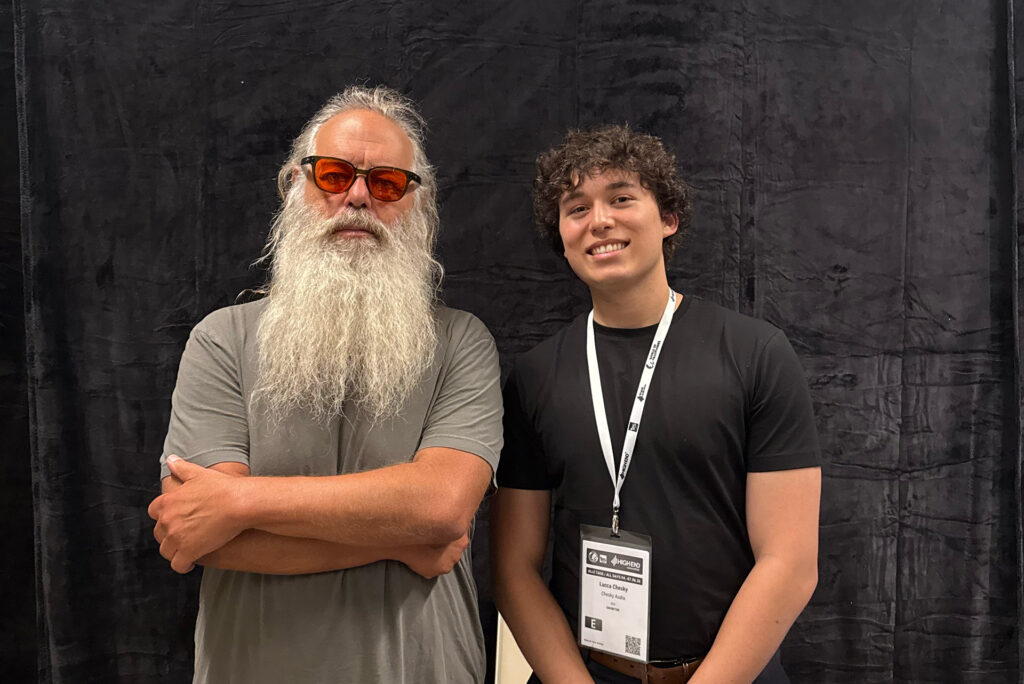
There are so many places that you can go with the music of Rubin, and its appeal is specifically designed to appeal to today’s young audiophile. Young Lucca Chesky of Chesky Audio got to meet Rubin at HIFI Vienna a few weeks ago, as Rubin is into audio as well as being a super-producer. Unlike Jones, you need to do a little bit more work to find all the music of Rick Rubin as a playlist but, with that said, I might just make one for Qobuz that we all can share on the French streaming platform.
Taking on the Musical Legacy of Record Producer Ted Templeman
I would bet good money that most young audiophiles aren’t that well-versed on the legacy of record producer Ted Templeman but, with a little guidance, one can see his music and overall influence have created a far-reaching musical legacy that is 100 percent audiophile-tastic. Templeman gained fame working with The Doobie Brothers in the 1970s and had befriended Warner Brothers’ records head Mo Ostin, so when he heard this wild act from Pasadena playing at The Starwood in Hollywood based around two brothers called Van Halen, he had the greenlight to sign the flamboyant band. When Diamond David Lee Roth was let go by the Brothers Van Halen after the critically acclaimed 1984 album, Templeman produced Roth’s solo work, featuring Steve Vai on guitar. Ironically, Templeman had also worked with Sammy Hagar before the Van Hagar era. Templeman worked on hit Eric Clapton records and many others.
An odd fact is that the deep track on 1984 “I’ll Wait” was written by Yacht Rock icon and Doobies singer Michael McDonald. Talk about a musical cross-reference, but note how, when you look at the connection from the tree of Ted Templeman, how it makes perfect sense, considering that he worked with the Doobies and signed Van Halen.
Using AI To Search for More Music
AI is anything but perfect at this stage, but it is an absolutely amazing tool to look for musical threads and to find new places to explore. For example: when looking at songwriting credits for Van Halen, any music fan can see how the band evenly splits their songwriting credits. In the case of Michael McDonald on “I’ll Wait,” they brought him in as a fifth writer on the song and shared the love that way. This was designed to keep conflict low in the band. That was an ambitious goal and ultimately a failed one, but a worthy endeavor for one of the biggest, most powerful bands in rock and roll history. If nothing else, it is fun trivia and/or a talking point that makes really great music just a little bit more relevant to the new or curious audiophile.
For those looking to dig deeper into a producer’s musical legacy – a window to an AI app (or browser) can open you up to a whole new world of songs to listen to that will get you right out of a dreaded musical rut. If you like the way that a producer sounds, you might find that there are many more tracks that might appeal to you that you may not have known were out there. Curated playlists are far easier, but they aren’t always readily available. A quick look at Wikipedia and/or AI (AI is better), and you can be off to the musical races and into some new and exciting musical territory.
Learn about what FutureAudiophile.com did at Harvard with its donation of a major audiophile system in February 2026.
Some Final Thoughts on Searching for New Music by Record Producer …
All music lovers and audio enthusiasts reach that point where we feel like we’ve heard every song that is out there that we may like. That, of course, isn’t true and modern technology makes it easier to find new jams that are both great songs and audiophile-grade recordings, but that isn’t where we have to stop. Being able to look to previously unexplored avenues for music that moves us is not just good for the established audiophile but one that can be used to show younger audiophiles a pathway to finding new music that is meaningful and compelling.
Exposure to the audiophile hobby is our biggest challenge in growing. The next frontier after that is to have audiophile engagement and finding new music that we both love and that sounds great is the key to said engagement.
Are there any record producers that you specifically love who we should follow? Are there other ways that you do deeper searches for music that you can share? We will post your comments ASAP in the moderated posts below. We LOVE to hear from you!




RE: When Diamond David Lee Roth was let go by the Brothers Van Halen after the critically acclaimed 1984 album, Templeman produced Roth’s solo work, featuring Steve Vai on guitar.
I was in BOY SCOUTS with David Lee Roth! Troop 18, at the Pasadena Jewish Center on Altadena Drive. (It burned to the ground in the Altadena fire.)
In about 1966, he brought his acoustic guitar to a Scout meeting one day, and asked me if I could “electrify it” so he could plug it into his dad’s stereo. We went to my house after the meeting, and I half-assed attached a phono cartridge to the guitar so the stylus poked into the guitar body. It kinda worked! And the rest is history!! No B.S.!
“The real enthusiasts start with a deep love of music”. It starts and finishes here.
…This article makes me PROUD to be part of the Future audiophile team. Music is what it is about, not equipment, not click bait. I rarely see any publication going into depth like this anymore when they once all did. Thanks Jerry!
Brian Eno is a producer who’s work I enjoy. In addition to playing with Roxy Music and Fripp and others there is also his solo music. Produced Bowie, Devo, Talking Heads, James, Ultravox, Coldplay. Oh yeah, and then Eno kind of invented ambient… Daniel Lanois is another interesting guy, his own producing work like P. Gabriel’s “So” and he also worked with Eno on U2’s albums.