
 By
Perhaps one of the more frustrating aspects of the audiophile hobby is when the system’s sonics are compromised. We hear some sort of buzzing sound, which negatively affects the enjoyment an audio system should deliver. Oftentimes, we scratch our heads, curious as to what to do next. In this article, we will look at some of the more common problems that result in these dreadfully unwanted sounds, and highlight ways they may be removed. While the cause of the problems listed herein are not the only ways ground loops and the resulting buzzing may occur, and the remedies are not the only ways they may be eliminated, both are some of the more popular causes and corrections.
Grounds Loops and Buzzing – the Most Hated Sounds in Audio
- By definition, a ground loop (learn more here) in an audio system occurs when two or more pieces of equipment are connected to ground through more than one electrical path, creating a closed loop. The simplicity and frequency with which these unwanted sounds occur is remarkable. Creating them is simple. Getting rid of them is not. What results is an unmistakable 60 Hz humming sound, and that is not good in the audiophile world.
- Analog, particularly a phono cartridge, is universally expert at picking up unwanted low-frequency sounds. If your turntable has a dreaded 60 Hz buzzing sound, better known as a ground loop, be sure you are using the proper cable from the cartridge to your phonostage. An analog cable for a turntable should contain a left and right cable, usually with an RCA connection at both ends, and also a third wire – the ground cable. Grounding the cartridge is paramount in preventing a ground loop. Be sure both ends of this ground cable are securely attached to a ground screw. One will be at the back of the tonearm and the other one will be on the rear of the phonostage. If an integrated amplifier with a built-in phonostage is being used, some type of ground lug or chassis ground will be available for the ground cable. Be sure the terminals at both ends of the ground cable are clean and shiny, and do not contain corrosion. If not, clean them with Deoxit. Tightly secure both ends to ground screws.
- It is never a good idea to place a turntable in close proximity to anything with a transformer. When I brought in my AudioQuest Niagara 7000 power purifier (read the review), I took the lazy way out in regard to placement. I already had a nice big empty space in my audio rack. Only one problem – it was directly beneath the turntable. My rack is very sturdy, and each compartment has a three-quarter-inch piece of granite sitting in an MDF base and a Sorbothane insulator. I was certain this would shield the Niagara from the turntable. I was wrong. The very first LP I played had a very prominent 60 Hz buzzing sound. I did not want to completely rearrange where the components were in my rack, so I did the next best thing: I stopped playing albums. Eventually, I did rearrange my entire rack and moved the Niagara to the bottom left slot, as far away from the cartridge as my audio rack would allow. Guess what? Problem solved. Always remember, cartridges are experts at picking up unwanted sounds and converting them to ground loops. And transformers, which basically every component in an audio system contains, are prominent culprits. Ever wonder why some people mount a turntable on a wall-mounted shelf all by itself? Ground loops and isolation, that’s why.
- Be mindful of where large floorstanding speakers and subwoofers are in proximity to a turntable. Here again, low, powerful bass may be picked up by the cartridge and manifest as a ground loop. Realistically, this is not likely to happen, but the possibility does exist, depending on the system.
- How and where the system’s cabling is run may also be a possibility. This applies to more than just a phono setup, but if the phono cable runs parallel and is touching a power cord, for instance, the signal in the power cord may bleed into the phono cable and manifest as a ground loop. I have eliminated several such issues just by moving a cable to a different position. It is best for all cables in an audiophile system to never touch. If this cannot be helped, which is almost always the case, try to be sure they only touch 90 degrees to each other, never parallel. If two cables must cross each other, it usually helps to separate them physically. I use one-half-inch pipe insulation I got at a home store. I typically cut a two-inch-long piece, wrap it around one cable where two intersect, and secure the insulator to the cable with electrical tape. In fact, I have done this with all the cables behind my audio rack. Does it look silly? Yes, it absolutely does. But I don’t have any ground loops. I’d like to also think this admittedly silly exercise improves my sonics, albeit marginally. However, I have zero evidence to support such a conclusion. One can hope, right?
Sometimes, Components Themselves Can Be the Problem
- About 20 years ago, I had a very disturbing ground loop hum, which surprisingly had never before appeared. I could not figure out why, all of a sudden, I had this highly annoying buzzing sound whereas, for years before, I did not. After some experimentation, I found the problem. The week before, I had connected the cable box from my TV to the back of my integrated amplifier by means of a TosLink cable. I wanted to watch programming on TV and play the audio through my system. Great idea, for sure. One day, I decided to go all out and find out why I had this terrible buzzing sound. I unplugged, one at a time, and reconnected every component in my system and nothing eliminated the hated buzzing. Finally, in what I remember as desperation, I unplugged the TosLink cable from my amplifier. The buzzing stopped. I was shocked by this, because I never would have thought the cable box could cause such a problem. Basically, the voltage of the ground in a cable box is different than the voltage of the house ground and, when combined with the deficiencies of TosLink, the ground loop occurred. Immediately, I removed the cable box from my audio system. I vowed to never combine the two again unless it was by means of a dedicated home theater setup, something my system at the time was not. My main system today is not, either. I also promised myself I would never use TosLink again, a commitment I have maintained. I consider TosLink an inferior technology for a two-channel audio system. It may have practical uses elsewhere but, for a dedicated two-channel system, there are simply too many better cable options. There are also ground isolators that physically break the connection between the cable box and the audio system, thereby removing the ground loop.
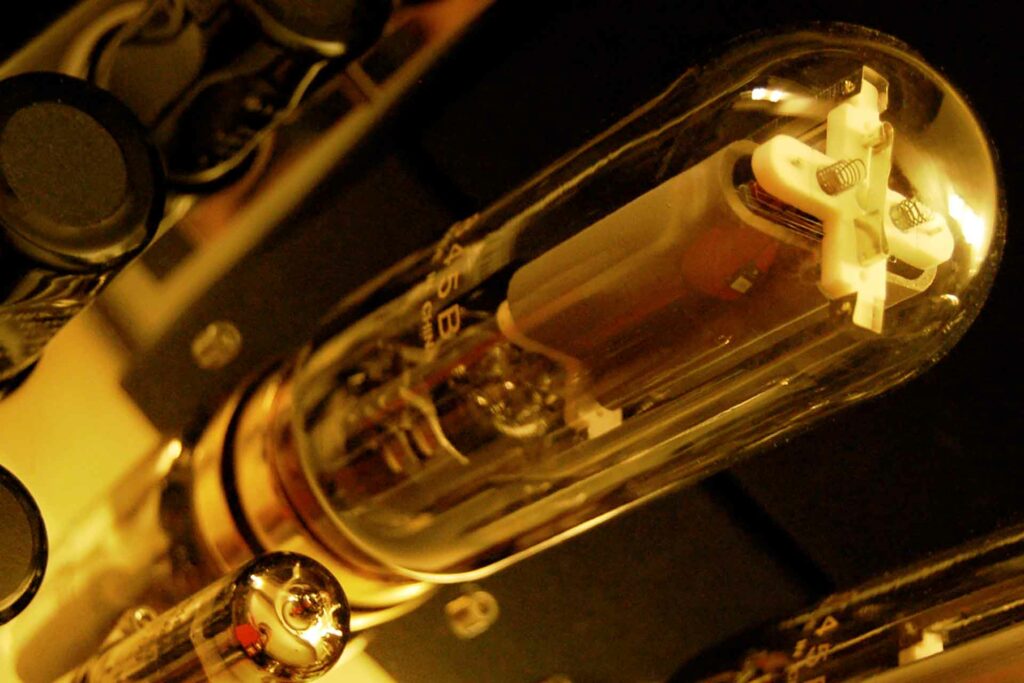
- Anyone with tube-based equipment, especially tube amplifiers and, to a slightly lesser degree, preamps, should be aware of a condition called “microphony.” This is where the tubes themselves tend to act as microphones. They pick up externally-created sounds from a close-by component and pass them along as a signal. To test the degree to which this applies to any one component, turn on the component in question, turn up the volume just slightly, in fact, well below normal listening levels, and lightly tap on the housing of the tubed component. If you hear the tapping sound through the speakers, what you are hearing is microphony. The more loudly the tapping is heard, the worse the problem. Never tap on the tubes themselves, only the chassis. In this instance, ground loops may be the result of a tube acting as a microphone. Many audiophiles with this problem use specially-made tube dampers, a rubber-type product that covers the tube and helps prevent microphony. And, of course, the two components causing the humming can just be moved, also eliminating the problem.
More Buzzing Problems Caused by Electrical Wiring in the Home
- It is always a wise practice to have an audio system on a dedicated electrical circuit. I was fortunate: my audio room is technically the bonus room above the garage. A licensed electrician made short work of running a dedicated circuit from the wall in the audio room to the panel box in the garage. Having nothing on the circuit besides the audio system is never a bad idea.
- If a dedicated circuit is not possible, then be mindful of what else is on the circuit that connects to your audio system. If anywhere on the circuit there is an appliance with a motor, such as a refrigerator or a bathroom ventilation fan, a hum may occur every time the motor is turned on. Obviously, the refrigerator cannot be eliminated. In this instance, the most practical solution is some type of grounding system for the stereo. Bathroom ventilators will only run for a short time, so they are usually not too much of a problem.
- Dimmers for lighting fixtures may be a particular annoyance. It is not uncommon for a dimmer to cause a ground loop when the dimmer has been set to dim the lights. Dimmers alter the 60 Hz waveform in a lighting circuit. This manifests as noise and can travel throughout the entire circuit. While this has nothing but a pleasing effect on ambient lighting, it may be catastrophic for the sonics of an audiophile system. If the dimmer cannot be removed, then the next best course of action is to have the light fixture at full intensity and not dimmed while playing music. This is especially true with traditional incandescent bulbs and dimmers. The more popular modern-day LED configurations are actually worse than their incandescent cousins. LED uses a switch mode power supply, which converts AC to DC and may create EMF/RFI interference in the circuit. An LED dimmer may potentially make things worse, because of how an LED bulb and dimmer interact on the electrical circuit. Likewise, using a dimmer on any light on the same circuit as an audiophile system is not recommended.
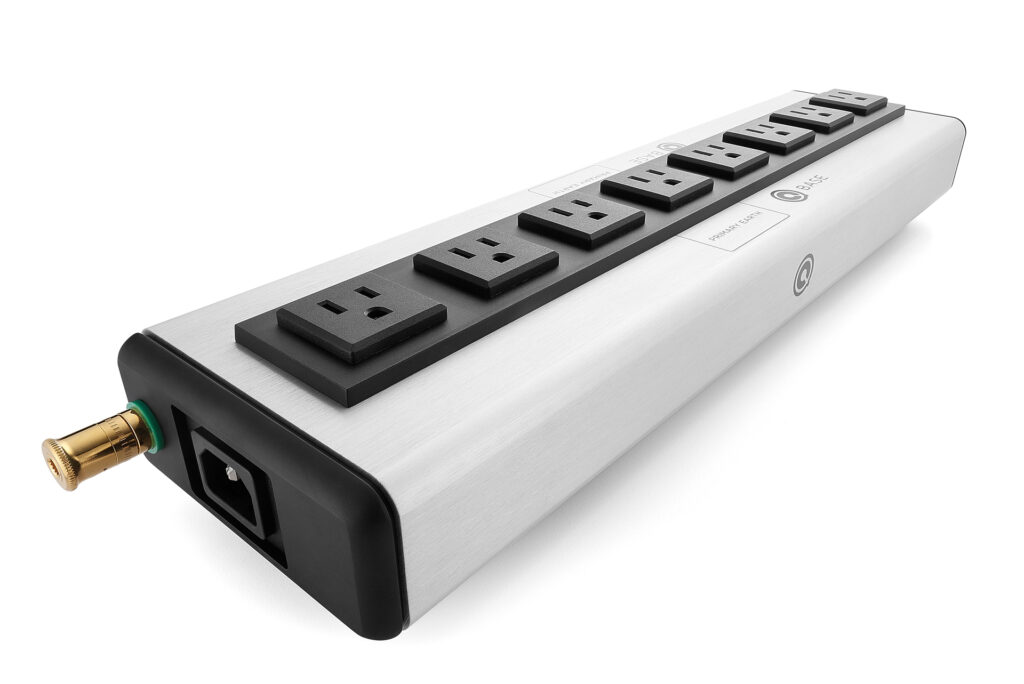
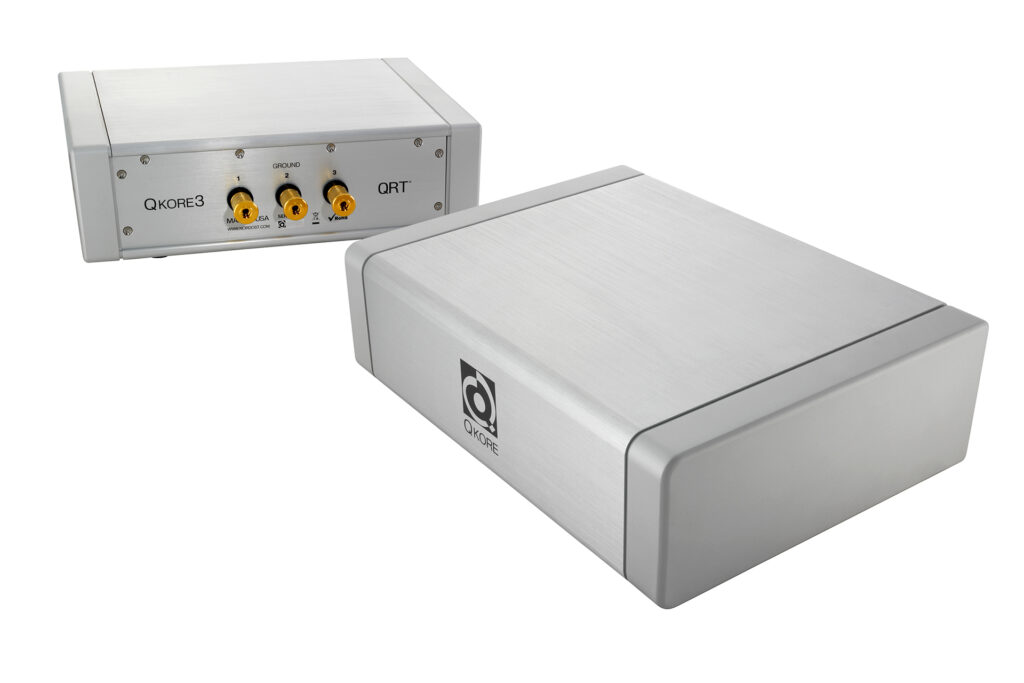
- Grounding is a vital part of improved sonics in a high-performance audiophile system.There are any number of grounding devices aimed at improving the ground connection, which leads to a reduced noise floor and the goal we all seek: improved sonics. Products range from a power conditioner to purpose-built products, such as the family of power products from Nordost. These include the QBase power strip and the QKore Grounding device.
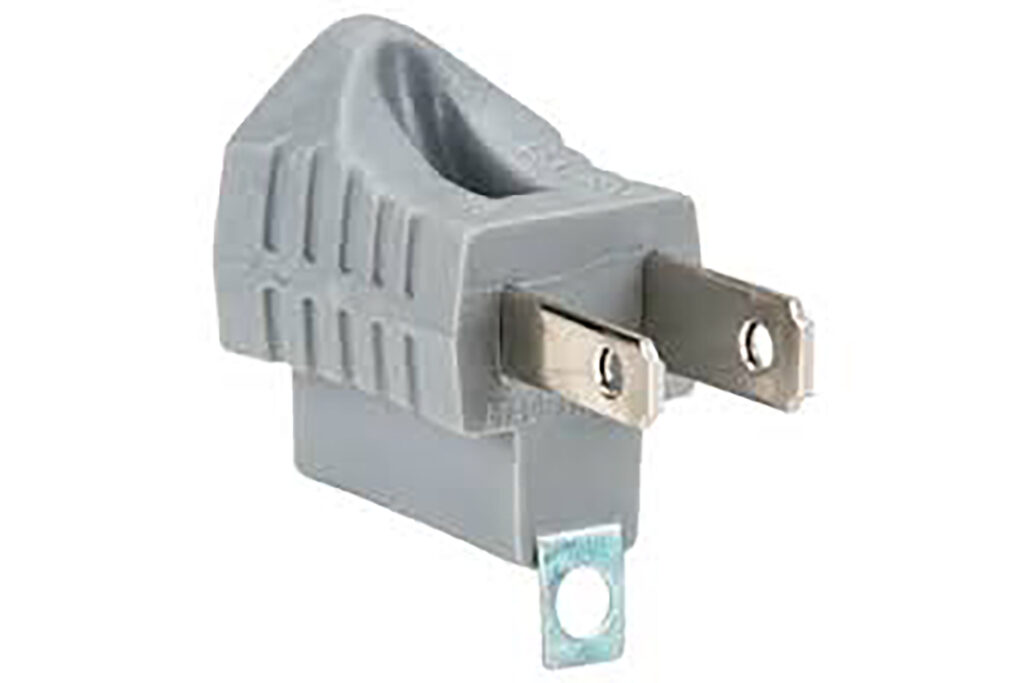
- Another method to deal with ground loops is using a “cheater plug.” The official name for this is actually a ground lift adaptor. In essence, it is an adaptor that converts a three-wire plug, with two conductors for power and a third for the ground, to a two-wire configuration with the ground removed. In many cases, this will effectively remove a ground loop and the resulting hum. However, be forewarned, this arrangement is seriously ill-advised. What is really happening is the ground path from the component to the Earth is eliminated. Any sort of electrical problem – a wire with the insulation burned away, a failed capacitor or any type of short – has the potential to actually energize the enclosure itself with no path to an Earth ground. Touch the metal case in this scenario and electrocution is a potential hazard. For this reason, it is never advised to use a three-wire plug to a two-wire adaptor (a cheater plug) as a means to solve a ground loop problem. Audio is not worth dying over.
Some Other Things That May Help Sonically
There are any number of ancillary devices intended to lower the noise floor and improve sonics. Most common are footer devices and platforms. They are designed to bleed off the vibrational energy created by transformers and circuit boards in the system components themselves, and convert this unwanted energy to heat. Many of these devices use constrained layer dampening to eliminate unwanted energy. I use them under every one of my components, and also my speakers.
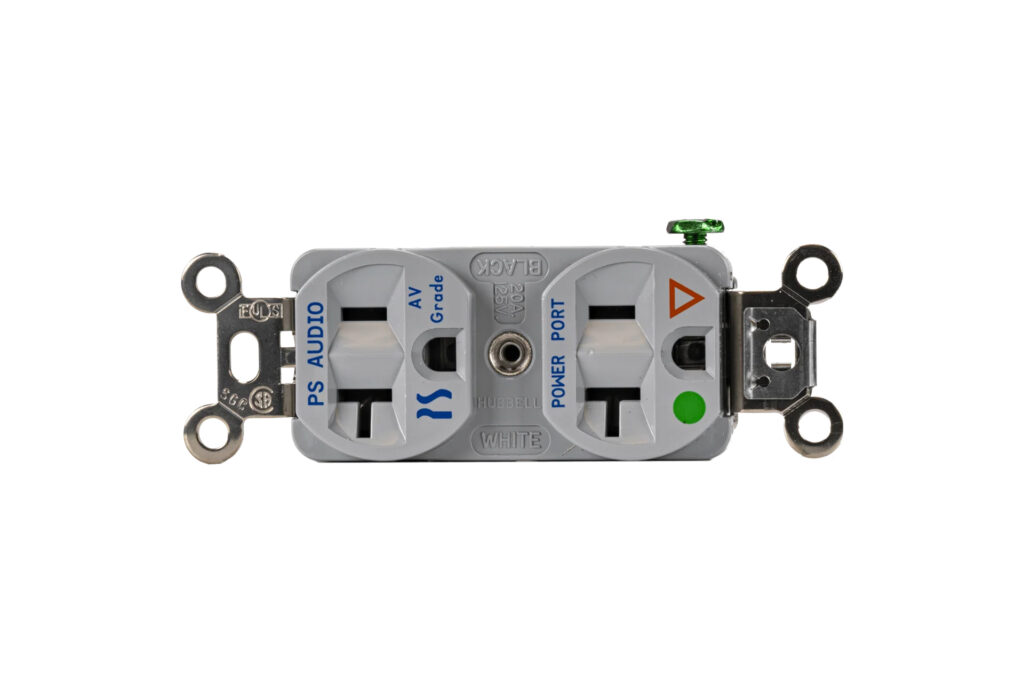
Some audiophiles use an RF filter, which is a round cylinder designed to fit around a cable. Like most of these types of products, only using one or two may not deliver any measurable results. Use them on every cable and maybe they can make an improvement. Some audiophiles replace the AC receptacles into which a system is connected. The standard builder-grade outlet is replaced with something far better. Some use a hospital-grade outlet, others use purpose-built ones designed for an improved AC signal. I use one from Furutech. Bottom line: there are a host of devices aimed at making a system sound better. They may make a more noticeable difference if they are used throughout the system. Again, be forewarned, some of these products do little more than take your money.
Read this resource on the future relevance of tubes in the audiophile experience written by FutureAudiophile.com editor, Paul Wilson.
Final Thoughts on Ground Loops and the Humming They Create
Ground loops are an annoyance and, when they occur, they typically do not go away on their own. They have to be investigated, and a system change is required to eliminate them. Sometimes the fix may be as simple as moving a cable a few inches. Other times, it may mean dismantling an entire system to make things right. And, unfortunately, this insidious problem will very possibly occur for most audiophiles. When it happens, be calm, take a breath, work with a quiet determination to discover the culprit, and take steps to solve the problem. Don’t do what I have done in the past and curse my audio system while fighting the temptation to throw the whole system out the window into the street. While getting rid of a ground loop may well be a difficult task, it can be done. Normally, solving the problem is not simple but, when it is solved, the gratification is immediate and the joys of an audiophile system are returned.
Have you ever had to deal with an AC power problem or, more specifically, a ground loop issue? How did you solve it? Was it hard to track down and solve or did you get a good resolution quickly? Let us know and we will post your experiences in the comments here.



