
 By
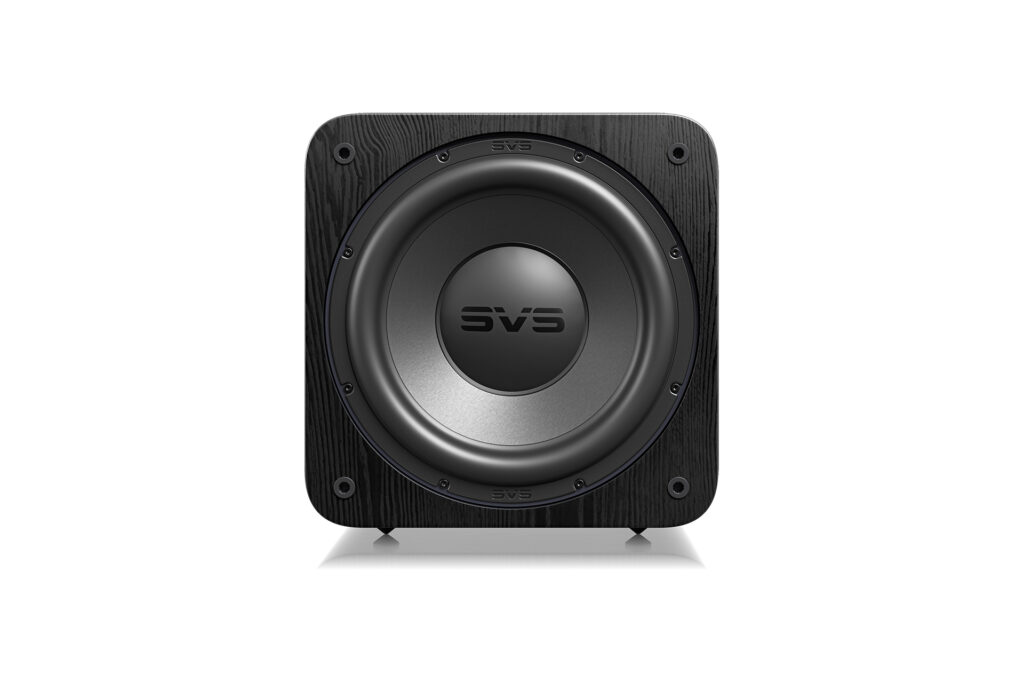
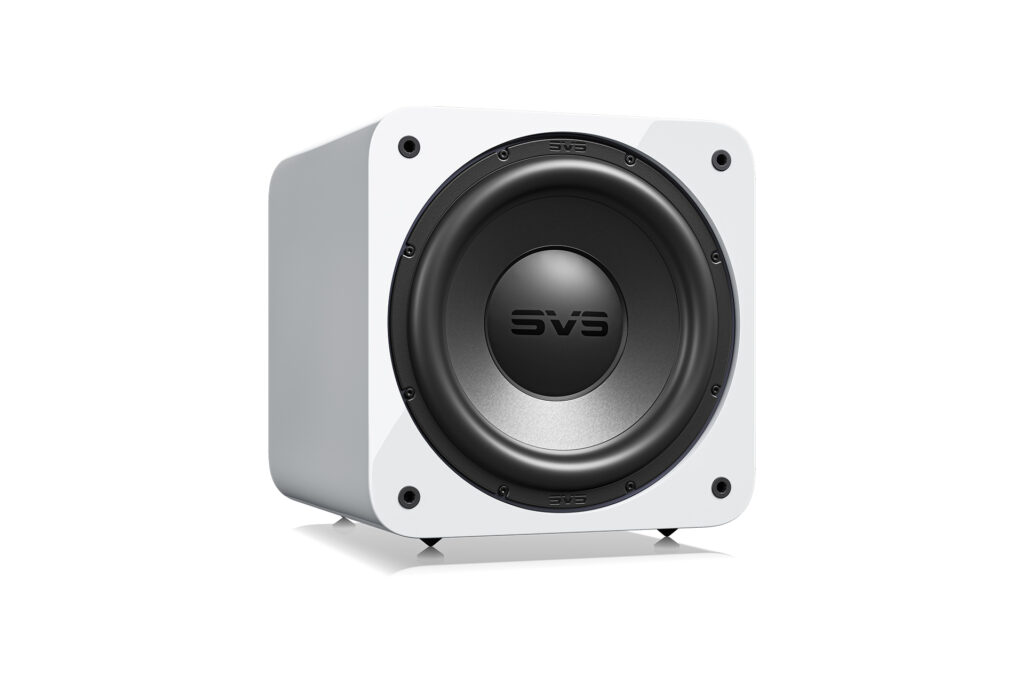
Known for high-performing and cost-effective speakers and subwoofers, U.S. firm SVS has been on a roll lately, introducing new and upgraded products. Their Ultra Evolution speakers have attracted praise in audiophile circles (see Jerry Del Colliano’s review of the SVS Ultra Evolution Pinnacle and Eric Forst’s review of the Ultra Evolution Bookshelf, for example). In their subwoofer line, SVS has updated several models to their new R|Evolution design framework, starting with the top-of-the-line 17-Ultra series (see Paul Wilson’s review of the SB17-Ultra R|Evolution), the 5000 series, and now the 3000 series. Today’s review is of the SVS SB-3000 R|Evolution (buy at Crutchfield), a sealed-box, powered subwoofer with a 13-inch driver and specified response of 17-230 Hz, ± three dB. Its U.S. MSRP is $1,299.99 in black ash finish, $1,399.99 in black or white piano gloss, with a five percent discount available when ordering a pair. The 3000 Series offers a balance of cost, size, and performance that is attractive to many audiophiles (including this one).
I have been using original SVS SB-3000 subs (read my review) for years and, being intrigued by the changes in the SB-3000 R|Evolution, I asked SVS to send a pair for review. Here, we’ll examine the ins and outs of these new subs, including their upgraded DSP features and how they compare to the previous version in a real-world environment. Let’s see if the SB-3000 R|Evolution might be the right subwoofer for you.
What Makes the SVS SB-3000 R|Evolution Subwoofer Special?
- The SB-3000 R|Evolution is a refinement of SVS’s most popular sealed subwoofer, with a far more powerful DSP engine and a re-engineered driver. The original SB-3000 offered a lot of high-performance bass for the money, so any improvement is noteworthy. The new model’s specs show considerably lower distortion, more extensive EQ options, and a little more bass extension.
- As with other SVS subs, you can configure the SB-3000 R|Evolution from your Android or Apple smartphone or tablet, using the free SVS app. Many, but not all, settings also can be made on the sub’s back panel. Besides its convenience, having an app as the configuration tool lets you hear changes right away, which is quite helpful. When you’re satisfied, three presets (configurations) can be stored in each sub and recalled via the app.
- The SVS SB-3000 R|Evolution has powerful digital processing. For equalization, phase adjustment, driver protection, and other tasks, the SB-3000R uses a 295 Mz Analog Devices DSP processor, about six times as powerful as the chip in the original SB-3000. The sub’s internal DACs have signal-to-noise ratio better than 120 dB, excellent by any measure.
- Parametric equalization (PEQ) has been upgraded significantly. Thanks to the new DSP processor, the number of user-adjustable PEQ points has increased from three to six, which should be particularly useful in acoustically-challenged rooms. The icing on the cake? SVS has added a new Auto-EQ function that can flatten the sub’s response at the listening position automatically, a quick and easy process. Manual PEQ can be added on top of the Auto EQ, if desired, for final response touch-up. This is an excellent set of EQ features.
- Specified at 1,200 watts of continuous power (4,000 watts peak), the amplifier in the SB-3000 R|evolution exceeds its predecessor (800 watts continuous, 2,500 watts peak) and many comparable subs on the market. This should cover bass power needs – and then some – in just about any system.
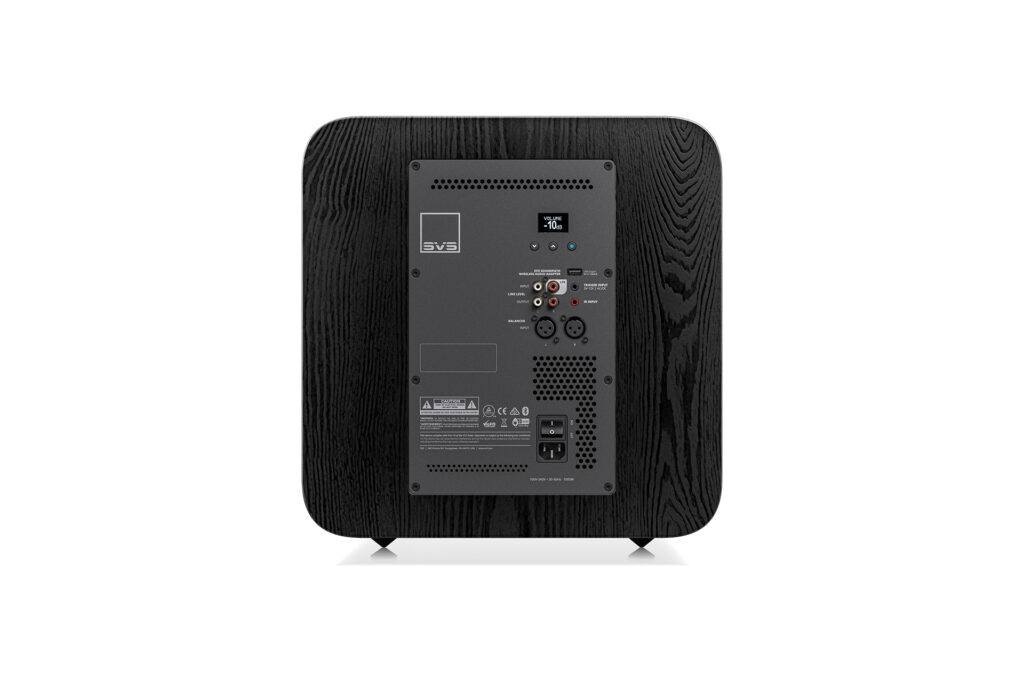
- The SVS SB-3000 R|Evolution has both balanced (XLR) and single-ended (RCA) inputs. Although single-ended connections remain common in the audiophile world, balanced connections are less likely to pick up hum from ground loops or noise from radiated interference. With more audiophile equipment supporting balanced connections, it’s good to see them here.
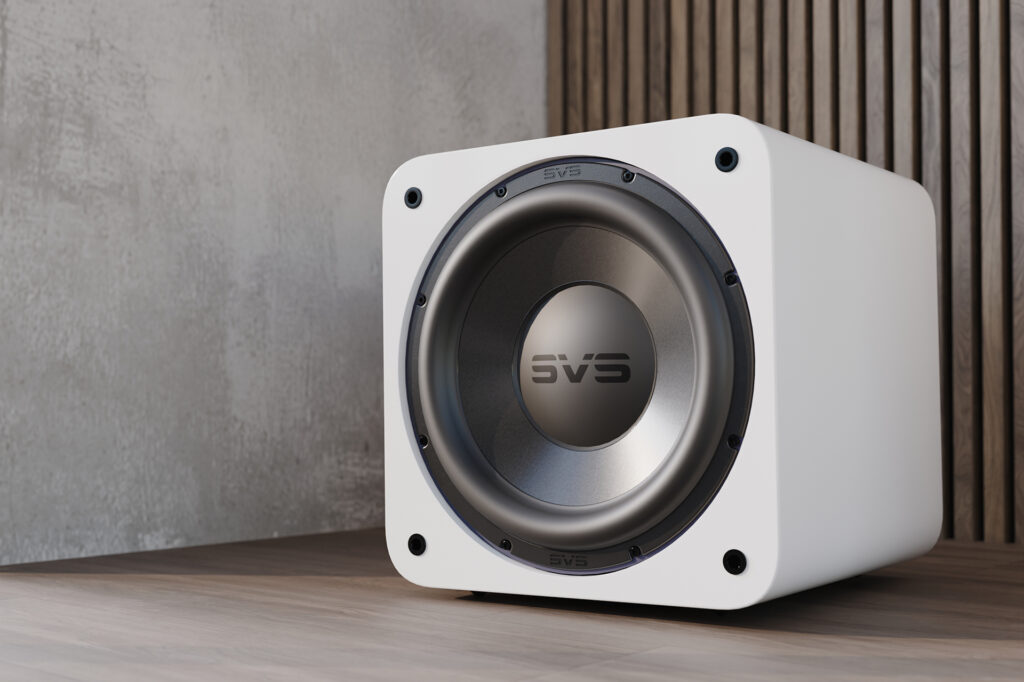
- The SVS SB-3000 R|Evolution runs cool, is relatively light, and is compact for its driver size. Weight is 55 pounds; dimensions are 15.6 × 15.2 × 16.8 inches (H × W × D); standby power consumption is half a watt. This is a sub that doesn’t require two people to move it around and of a size that allows for more placement flexibility.
- SVS offers some of the best customer service in the business. Even before I was a reviewer, I found SVS tech support answered my inquiries faster than just about any other company, and was quick to make little problems disappear.
Why Should You Care About the SVS SB-3000 R|Evolution Subwoofer?
The audiophile who wants serious bass extension without breaking the bank will find the SB-3000 R|Evolution a strong choice. Like any subwoofer, this one can be placed to fill gaps in bass response caused by room nulls in the main speakers’ response, as well as to add extension. Can some larger or more expensive subs go a little deeper and provide even more drive? Of course, but with a pair of SB-3000Rs in my setup, there was plenty of clean and tuneful bass for any genre, and a bass dip at about 40 Hz was well-filled by the subs. The model’s price is reasonable enough that an audiophile who buys one now can consider a second down the road.
Experienced audiophiles know that a system with sub(s) will sound best with careful sub integration, including good placement. Here, the SB-3000 R|Evolution shines. It is far easier to move and place than a monster sub. The app’s fine-grained control of parameters like phase, EQ, volume, and low-pass frequency, and the bonus of Auto-EQ, help you configure your sub so its blend is great and it’s not locatable by ear. (Of course, if you want to hear the sub kick in, you can arrange that, too.) This is a sub for the real-world audiophile who wants powerful and tuneful performance, compact size and weight, and extensive control via app, all at a highly competitive price.
Some Things You Might Not Like About the SVS SB-3000 R|Evolution Subwoofer
- The SB-3000 R|Evolution has no speaker-level inputs. Such inputs are used when your preamp or integrated amp doesn’t have extra output jacks and you don’t want to use Y cables. To accommodate this, SVS offers their Soundpath Speaker-Level Subwoofer Adapter (about $100), which will let you drive the SVS SB-3000R, or any other sub with line-level inputs, from your amp’s full-range speaker outputs.
- Backups, please! User presets are saved to the sub’s plate amp (amplifier module), and I haven’t lost one yet. Still, I’d love the ability to save all settings to a phone, tablet, or USB flash drive, so they can be restored in case of disaster. I have not yet found a sub offering external backup, so this is hardly a ding on SVS. I just wish the industry were more attuned to robust backup strategies.
Listening to the SVS SB-3000 R|Evolution Subwoofers …
For listening evaluations, I placed the subwoofers in right-front and left-rear corners of the room, a good setup for running them in mono; for stereo subs, I’d want them symmetrically placed with respect to the room’s long axis, perhaps along the sidewalls. I then ran the SVS Auto EQ program on each sub, using my iPad and the dedicated SVS Auto EQ mic ($45). Auto EQ also can be done with the smartphone or tablet’s built-in mic, in which case, the app calibrates that mic first – clever! When I asked SVS when the dedicated Auto EQ mic would be preferred, they told me, “We are seeing excellent results with the on-board mic in the smartphone, and for most users it will produce a noticeable improvement … With that said, using the external SVS Auto EQ mic does deliver an even more accurate EQ correction of the subwoofer. It will produce better results in nearly any setup. So, for high-end systems and demanding applications, where the user wants the very best results, we recommend using the external SVS Auto EQ mic.”
Associated equipment, with our reviews linked here, included my custom Roon server feeding a NAD M66 DAC-preamp via our home network. From there, audio went to the subs under review and to a pair of Orchard Audio Ultra Premium monoblocks driving the main speakers, Janszen Valentina P8 electrostatic hybrids.
I typically use Dirac Live to smooth bass response in my low-ceilinged listening room; to match levels of subs and main speakers; and to adjust phase relationships, thus minimizing cancellation among subs and mains. With a bit more effort, this all can be done with a measurement program like REW (Room EQ Wizard). Some audiophiles swear they can do this by ear, but I’ve never been able to get good results without measurements.
After running SVS Auto EQ, and before running Dirac Live, the measured listening-position responses of the SB-3000 R|Evolutions were notably smoother and flatter than they had been, showing that SVS’ Auto EQ had reduced room-induced problems. Those who don’t use a digital room correction (DRC) program like Dirac Live will benefit most from Auto EQ but, since DRC programs tend to work best when they have least to do, even audiophiles using DRC are likely to hear improvements from Auto EQ.
A treat for lovers of upright bass, the 2024 album But Who’s Gonna Play the Melody? is a series of duets by bassists Christian McBride and Edgar Meyer. In their take on “Bewitched, Bothered, and Bewildered,” Meyer steps away from his bass to play piano accompaniment behind McBride, who carries the melody on his bass. Without subs, I thought track sounded great, but with subs, it was remarkably better, with new solidity in the bass range. The impression of space around the two musicians was more convincing as well. I’ve not heard either McBride or Meyer live, so I can’t compare recorded timbre to live, but I can say that, with the subs playing, the double bass’ sound was more redolent of wood and rosin: more real in that sense.
By now a classic pop tune, Amy Winehouse’s “Back to Black,” from her album of the same name, remains a wonderful example of the late singer’s vocal talent. When I switched in the two SB-3000 R|Evolutions, the bass line of the song became more solid and relentless, fitting the lyrics. Presented so well, the bass guitar became an equal among the instruments in cementing the song’s emotional effect. At around 1:05, the soundstage expands, and then continues to expand, changes far more effective with the subs in play.
Organist Cameron Carpenter, often sparkly and always imaginative, is the soloist in Sony’s 2019 release of Francis Poulenc’s Concerto for Organ, Strings, & Timpani. For organ music, I often use the SVS app to notch up the subs by three decibels, as I did here. Focusing on the dramatic fourth movement, I found the sound with subs far more expansive and far more representative of a live organ in a performance space than without. Much of that was the solid bass extension that almost no main speakers can provide: low organ parts barely heard via my main speakers became integral to the presentation. Here, as in other organ music I tried, the SVS SB-3000 R|Evolutions repeatedly demonstrated that subs can add an extra octave, or two, or three, to your sound, while preserving the midrange quality of your main speakers. Not all music needs such bass extension, but pipe-organ music benefits enormously from strong, extended bass.
Will the SVS SB-3000 R|Evolution Hold Its Value?
I’ve seen used SVS 3000-series subs (SVS’ most popular) sell quickly for about half the original MSRP, a good price for any used audiophile component. Given SVS’ large market share, excellent reputation for customer service, and extensive dealer network, most sub buyers will be well aware of what SVS subs can offer, all of which helps in the used market. If you ever want to let go of your SVS SB-3000 R|Evolution, you are likely to find a buyer willing to pay a reasonable price.
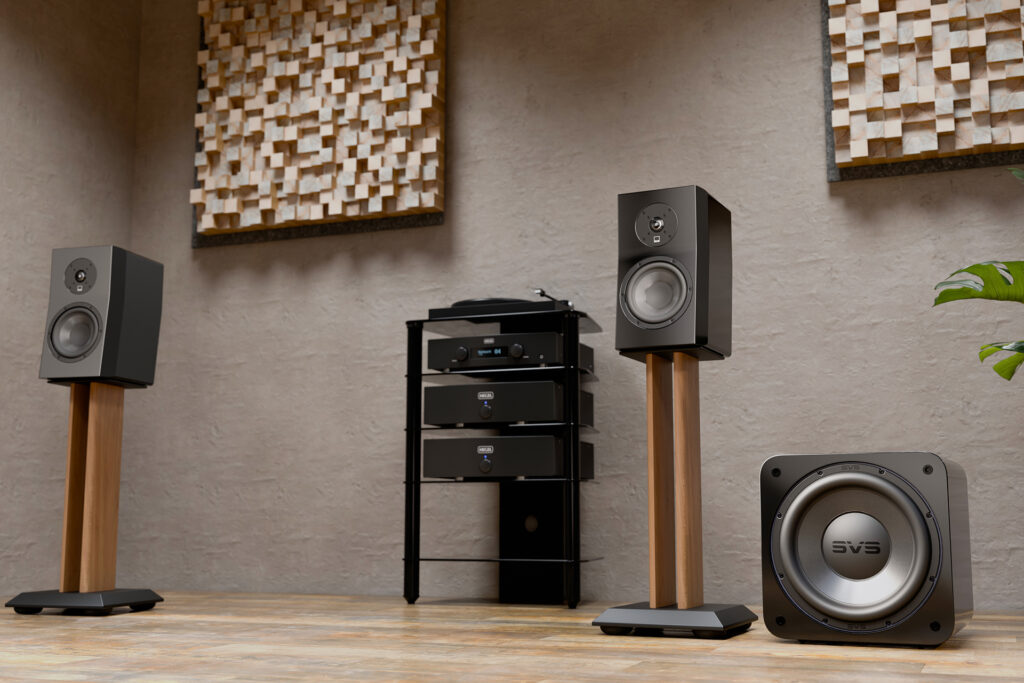
What is the Competition for the SVS SB-3000 R|Evolution Subwoofer?
In their 3000 series, SVS also offers the PB-3000 R|Evolution (buy at Crutchfield), their ported-box sub with the same 13-inch driver, at $1,799.99, available in black ash only. Often, sealed subs are recommended for music and ported subs for home theater, but that’s certainly not a hard-and-fast rule. Brian Kahn certainly liked the top-of-the-line ported SVS PB-17 Ultra R|Evolution (read Kahn’s review). Be aware, at 21.9 × 18.3 × 24.7 inches, the PB-3000 R|Evolution is considerably larger than the sealed-box version reviewed here.
The REL T/7x ($1,299; buy at Crutchfield) takes quite a different path from most competing subs. This model, with an eight-inch driver, offers no DSP, no user EQ, no app, and control of polarity only (phase at zero degrees or 180 degrees only). Unlike most other sub makers, REL recommends that you use speaker-level inputs, though the T/7x also has line-level inputs on RCA jacks. With that eight-inch driver, the REL T/7x (reviewed by Greg Handy) is smaller and lighter than the SVS SB-3000 R|Evolution. Its Class-AB amplifier is specified at 200 watts continuous; frequency response is 30-120 Hz, with the 30 Hz point specified as six dB down. I have long wondered if perhaps REL rolls off their subs at both low and high frequencies to reduce room issues and phase conflicts with main speakers. Whatever the reasons for their unique engineering, REL subwoofers bear a cherished name and are well-respected in the audiophile world.
The Martin-Logan Abyss 8 subwoofer ($1,399.99; buy at Crutchfield) is a model rivaling the SVS SB-3000 R|Evolution in configurability, with an app to fine-tune numerous settings. The sub also is compatible with Anthem Room Correction (ARC), though the user must buy a special microphone (about $50) to use ARC. This sub can connect to your system wirelessly via the included source-side wireless adapter. Jerry Del Colliano reviewed the Martin-Logan Abyss 8 and appreciated its build quality and performance. The sub has one active eight-inch driver and two eight-inch passive radiators; its amp is rated at 500 watts continuous power. Frequency response spec is 23-200 Hz.
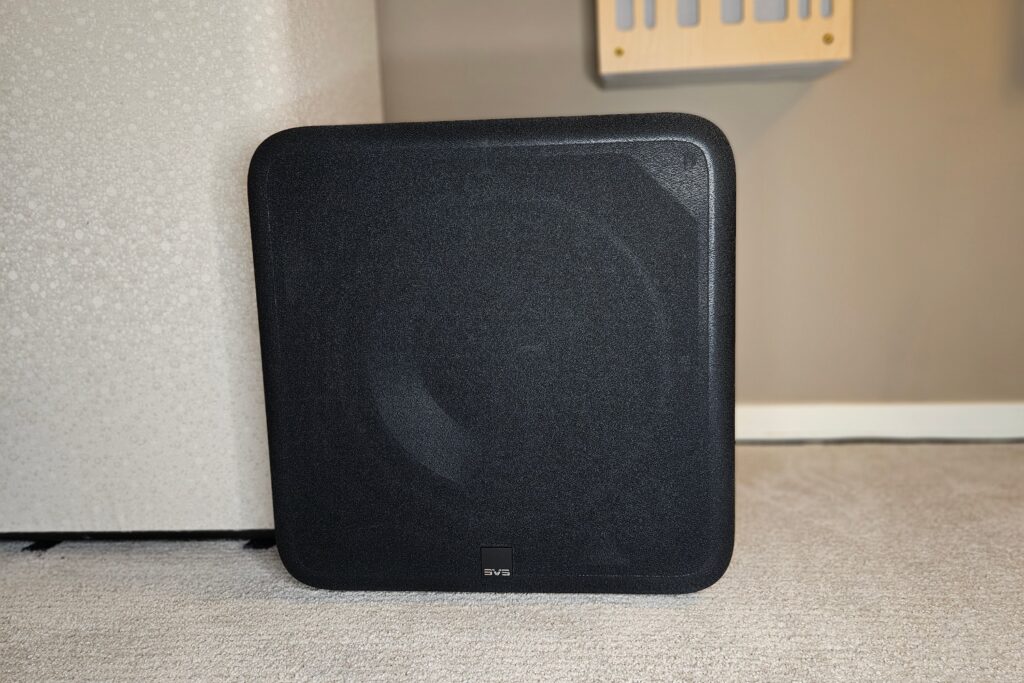
Final Thoughts on the SVS SB-3000 R|Evolution Subwoofer …
I’ve used SVS subs in my setup for five years now. When I swapped in SB-3000 R|Evolutions in place of my two SB-3000s, I noticed a moderate but distinct improvement in bass clarity. I believe I was reacting mainly to lower distortion in the new model, but I also may have done a better configuration job with the new model’s upgraded EQ options. I surely appreciated the new Auto-EQ feature, which saves time and is far simpler than running REW or similar measuring programs.
Another improvement, this one minor, was reduction in depth by about an inch, due to a simpler grille. Though an inch isn’t much, the result was subs that blended into my space better. Since I’d rather be admiring music than gear, I appreciated that.
The SB-3000 R|Evolution represents a marked evolutionary improvement over its predecessor, the SB-3000, which had performance remarkable in its price and size class. Though each of the improvements from the SB-3000 could be considered incremental, their sum does justify the R|Evolution moniker – this is certainly an even better sub than the old model. If you own the SB-3000, I don’t think this is a must-have upgrade, but if you do upgrade, I expect you’ll be happy you did.
Because the system in which I auditioned these subs uses main speakers that play down to 20 Hz, my review may have understated the large improvement that most audiophiles will hear when adding a SB-3000 R|Evolution (or two) to their systems. If you have small or medium stand-mount speakers, or even many floorstanders, adding a sub can give you bass lines as you have not heard them before. If you have small speakers, like the Harbeth P3ESRs in my desktop system, adding a sub can transform your listening experience completely, making most music sound larger, fuller, and more natural. Even listening to unamplified acoustic guitar music, you should hear the body of the instrument more, as you do live. In short, in most systems, the added bass extension of the SVS SB-3000 R|Evolution will make a very large improvement in musicality.
The SVS SB-3000 R|Evolution has plenty of power and finesse for most audiophile needs, along with the configuration options to help you set it up. After listening for a few months, I bought the review pair. Need I say more?



