
 By
By Just like most kids don’t get a V-8 Ferrari for their sixteenth birthday, most audiophiles don’t start their loudspeaker journey with a pair of Wilson Audio or Stenheim speakers. We often start with more modest, smaller-in-size bookshelf (aka: stand-mount) speakers for many reasons. The first and best reason is cost. Bookshelf speakers cost a fraction of what floorstanding speakers do but represent more than the majority frequency range performance of a full-range speaker. For what is missing, there is an easy-to-add and low-cost subwoofer option that makes bookshelf speakers more and more appealing.
For this publication, our Bookshelf Loudspeaker category page is our most read and most popular, and we have reviewed some real audiophile gems, too …
| Speaker | Price/Pair | Best For | Reviewed By | Buy |
|---|---|---|---|---|
| Klipsch RP-600M II | $449 | Low-power amps and playing loud | Nasim | Crutchfield |
| Dali KUPID | $600 | Living rooms, desktops and bedrooms | Eric | Crutchfield |
| ELAC Debut Reference DBR62 | $700 | A first real audiophile speaker | Nasim | Crutchfield |
| SVS Ultra Evolution Nano | $899 | Desktop systems paired with a sub | Eric | Crutchfield |
| Chesky Audio LC1 | $999 | Big bass from a small, 3D-printed box | Eric | Sold direct |
| Paradigm Premier 200B | $1,000 | Real rooms with real furniture | Nasim | Crutchfield |
| GoldenEar BRX | $1,499 | Folded-ribbon tweeter air and detail | Eric | Crutchfield |
| MartinLogan Motion XT B100 | $1,600 | MartinLogan’s top end in a box speaker | Nasim | Crutchfield |
| Wharfedale Super Linton | $2,699 (stands included) | Retro looks, modern sound | Mike | Crutchfield |
| MoFi SourcePoint 8 | $2,750 | Point-source imaging | Steven | Crutchfield |
| Bowers & Wilkins 705 S3 | $3,399 | One bookshelf speaker you never replace | Jerry | Crutchfield |
So, here are the best bookshelf speakers of 2026 …
Note: some of the products on this list are sold through our partners with affiliate links that provide us with a small commission. It doesn’t change the price you pay or what we think.
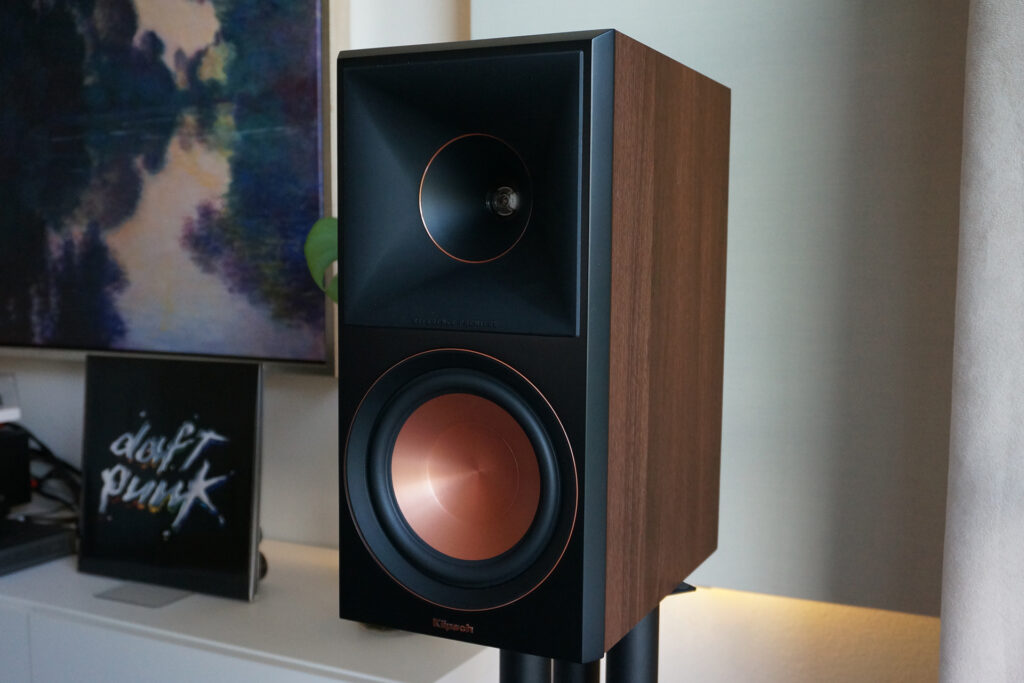
Klipsch RP-600M II $449 per pair (non-advertiser – buy at Crutchfield)
I will start with the speaker that gets more traffic on this site than any other bookshelf speaker we have reviewed, and there is a reason for that. The Klipsch RP-600M II (read Nasim Abbu-Dagga’s review) is an energetic, dynamic and fun speaker that still has audiophile appeal. Klipsch has been making or designing horn-loaded speakers in Arkansas since Paul Klipsch built the first Klipschorn in 1946, and the Reference Premiere line brings that sound down to a price that a college kid can swing. The remarkable 94.5 dB sensitivity means you can drive these with a $200 integrated amp, an entry-level AV receiver, or even a little tube amp with single-digit “flea” watts, and they will play loud enough to piss off the neighbors. The second-generation version of these speakers fixed most of what people griped about with the original, specifically the crossover and the tweeter.
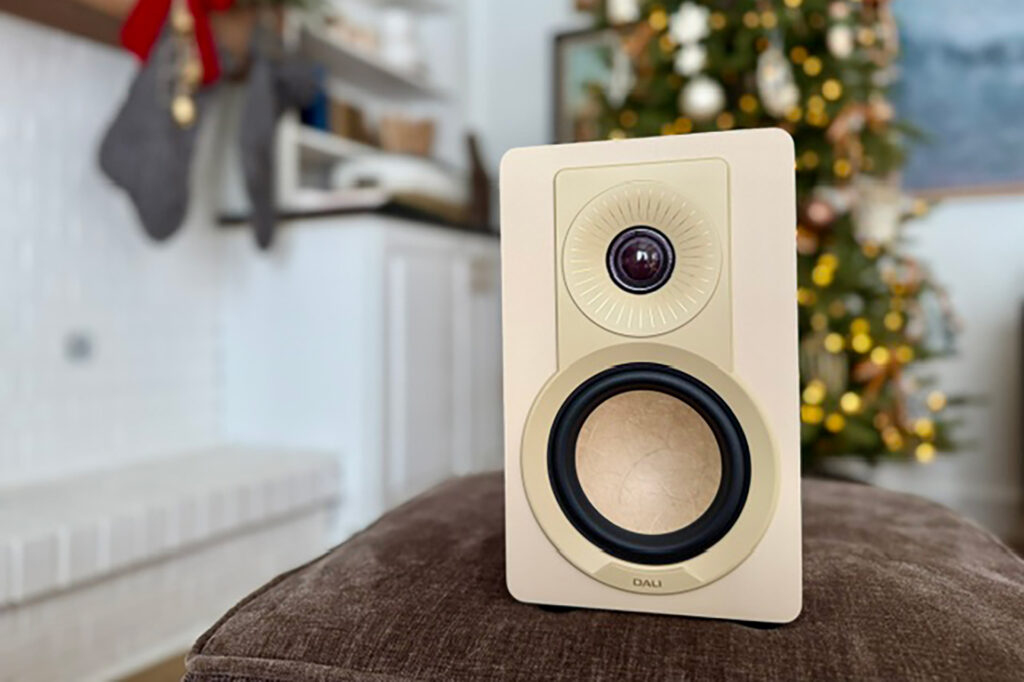
Dali KUPID $600 per pair (advertiser – buy at Crutchfield)
Danish company Dali doesn’t get the attention in the United States that it gets in Europe and ever since I visited them in Denmark (learn more about my trip) in June, I have been trying to change this perception. The Dali KUPID (read Eric Forst’s review) is a small, well-made and, more importantly, good-looking speaker that solves a problem that the audiophile business has ignored for decades, which is that most bookshelf speakers look like butt-ugly black rectangles. The Dali KUPIDs come in finishes that a normal human being would put in a living room without any argument. Like the Klipsch speakers above, the Dali KUPIDs are easy to drive and also easy to place, which Eric made a point of, as most speakers in this price range are fussy about the back wall. They are perfect for a desktop system, a bedroom setup and beyond. Some of the best speaker drivers in the world come from Denmark, and Dali is one of the few companies that actually make their own drivers. They have very slick magnets that help reduce distortion in the driver’s performance, which really makes them unique.
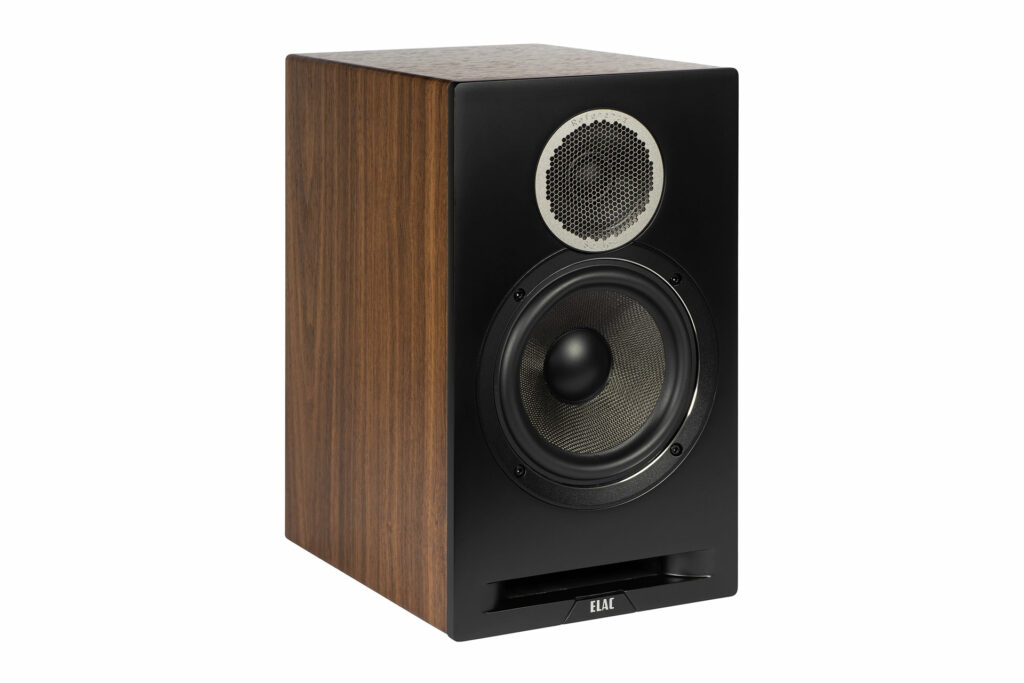
ELAC Debut Reference DBR62 $700 per pair (non-advertiser – buy at Crutchfield)
Andrew Jones is the most important speaker designer of the past 25 years, and I don’t think that is a controversial statement. The man designed $80,000-per-pair TAD speakers and then went to ELAC and designed a $300 speaker that made the audiophile world fall in love. The ELAC Debut Reference DBR62 (read Nasim Abbu-Daggar’s review) is the grown-up version of that idea. It is the step up from the Debut line, with a better cabinet, a better tweeter, and a more refined crossover, and it sounds like a speaker that should cost twice as much. Nasim was struck by how much clarity these speakers pull out of a recording at this price, and by a soundstage that is balanced and detailed in ways that $700 speakers usually aren’t. If somebody asked me for one speaker to give to a young person to start them off in the hobby, this is the one I would likely hand them; I would tell them to add a subwoofer later and never look back.
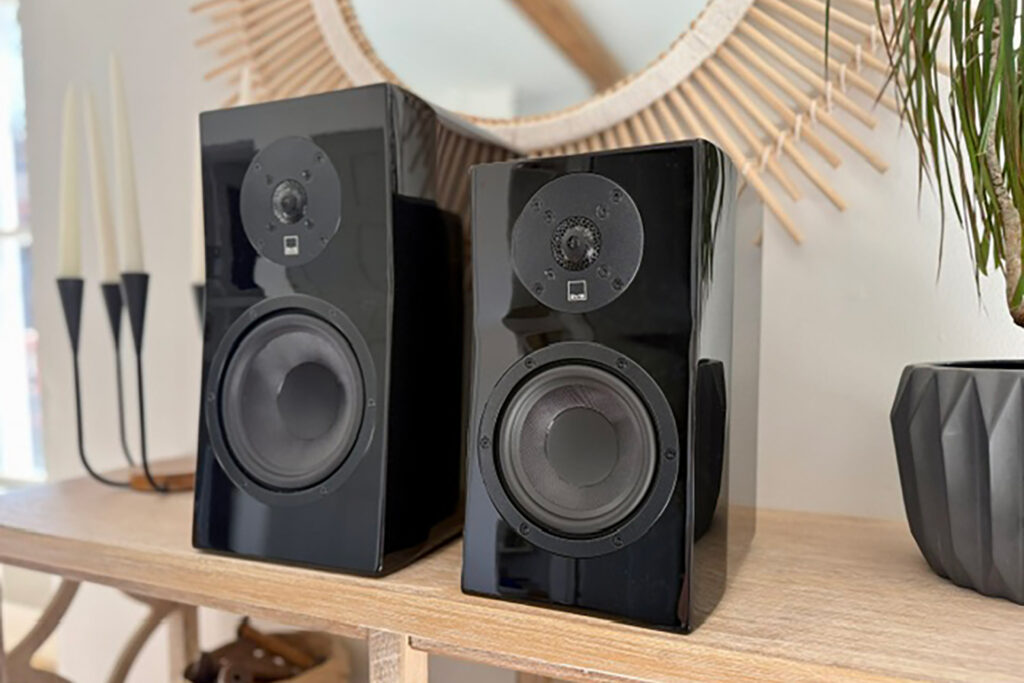
SVS Ultra Evolution Nano $899 per pair (advertiser – buy at Crutchfield)
SVS built their brand’s amazing reputation making audiophile subwoofers, and when they started making full-range loudspeakers, a lot of people in the business quietly rolled their eyes. They stopped rolling them pretty quickly after they heard what could be done, and for a relatively low price. I had the $5,000-per-pair SVS Ultra Evolution Pinnacle (read my review) in my room at the same time as $20,000 floorstanding Estelons and $22,500 Stenheims, and the SVS speakers were the ones that impressed me most overall. We also gave a pair of the SVS Ultra Evolution Pinnacles (buy at Crutchfield) away to Harvard to match with a pair of SVS SB-17 subwoofers (buy at Crutchfield), which was a killer, large audio system. The SVS Ultra Evolution Nano (read Eric Forst’s review) takes the same driver technology and the same design thinking, and puts them in a box that fits on a desk. For $899, you get trickle-down parts from a $5,000 flagship, a 45-day in-home trial, free shipping both ways and customer service that actually answers the phone. Pair them with an SVS SB-1000 Pro (read Andrew Dewhirst’s review), and you have a world-beater of a system for well under $2,000.
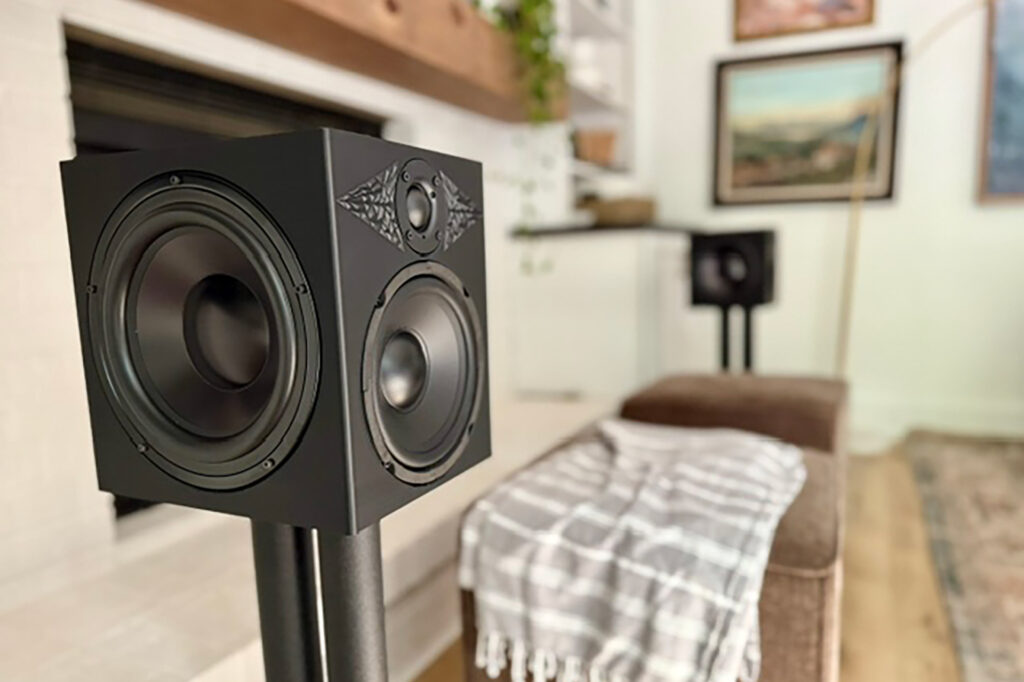
Chesky Audio LC1 $999 per pair (non-advertiser – sold direct)
Lucca Chesky was 18 years old when he designed the Chesky Audio LC1 (read Eric Forst’s review), and it might be the most Future Audiophile product ever made.The cabinet is 3D-printed at the VPI Factory in New Jersey. These speakers use ultra-premium drivers and components that you really don’t see at this low a price. The look is like nothing else on this list, or any list. Sandy Gross, who co-founded Polk, Definitive Technology and GoldenEar, and knows more about speakers than nearly anybody alive, was one of the first people to tell me to pay attention to this young man, and he was absolutely correct. Eric says the bass from a box this size will make you check to see if there is a subwoofer hidden somewhere in the room. Hint: there isn’t. Chesky Audio sells direct, so there is no dealer and no affiliate link here, just a website and a speaker that deserves the attention it is getting.
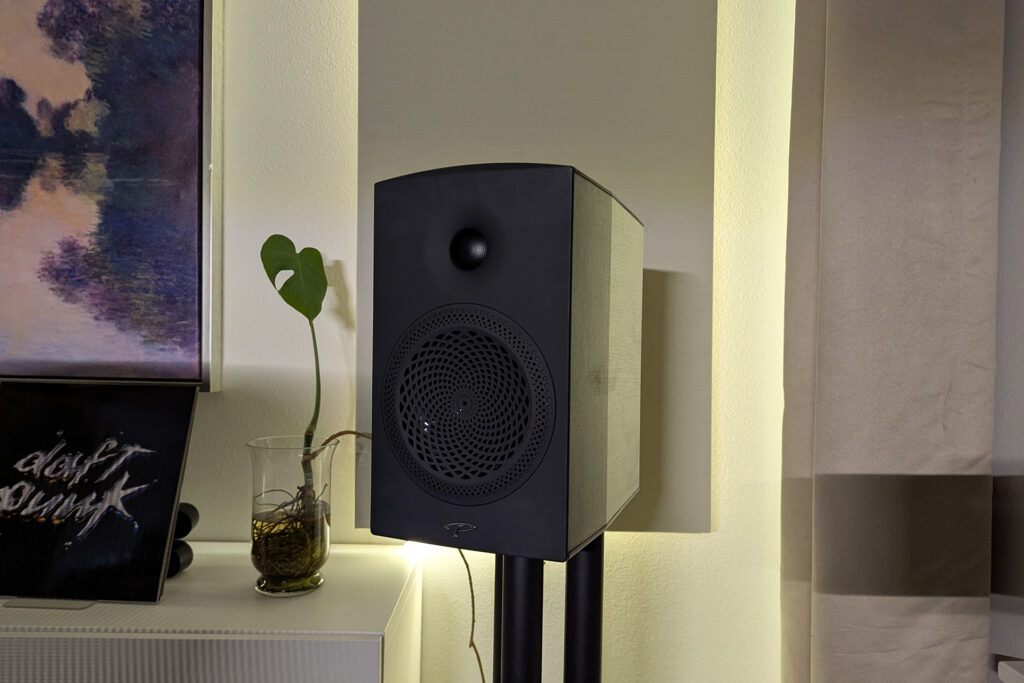
Paradigm Premier 200B $1,000 per pair (advertiser — buy at Crutchfield)
Paradigm is one of the best value players in the audiophile speaker game, which is no news story to savvy audiophiles. The Paradigm Premier 200B (read Nasim Abbu-Daggar’s review) is a refined, well-balanced speaker with real engineering behind it, and it comes from the same family as Anthem and MartinLogan, which are two of my reference brands. This isn’t a flashy speaker, as it doesn’t have fancy tweeter technology or an origin story right out of a Marvel movie. What they do offer is a smooth, dynamic and open sound that works in a real room with real furniture, and a brand with enough distribution that you can actually hear it before you buy it.
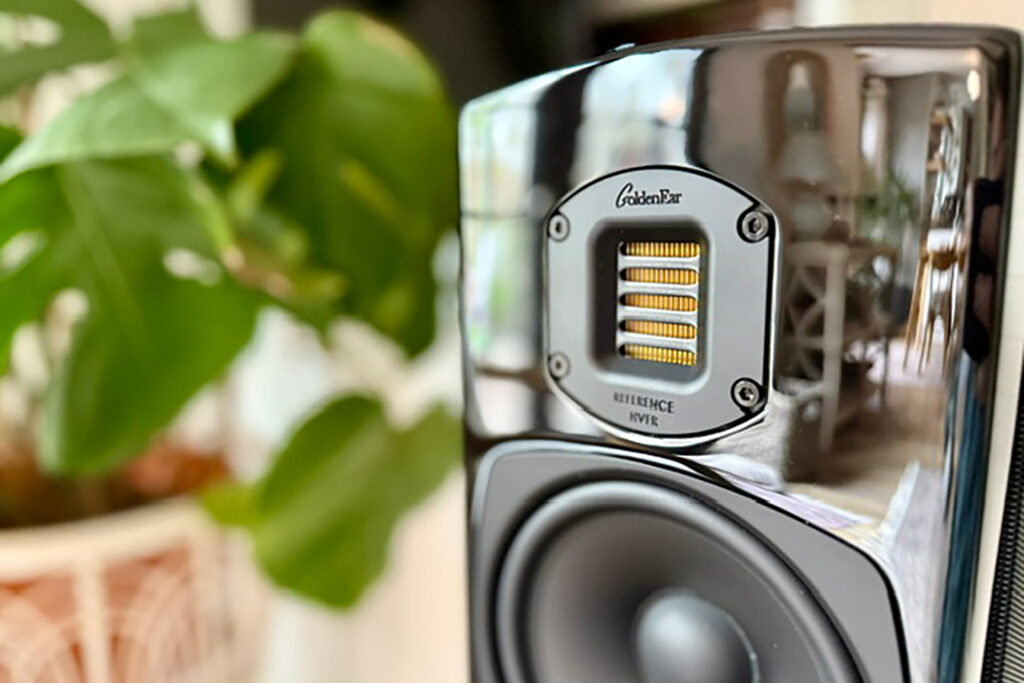
GoldenEar BRX $1,499 per pair (advertiser – buy at Crutchfield)
I have a soft spot for a folded-motion tweeter, and so does Eric Forst, which is why I sent him the BRX. The GoldenEar BRX (read Eric Forst’s review) uses the same high-velocity folded ribbon tweeter that GoldenEar puts in their $12,500 Triton Reference towers, and you can hear it in the first 10 seconds. There is an air of openness to the high frequencies of this speaker that a dome tweeter simply can’t replicate. The aforementioned Sandy Gross founded GoldenEar and AudioQuest (the cable company) bought it and, respectfully, didn’t know what to do with it. Thankfully, Paradigm now owns GoldenEar, which makes me feel a lot better about where the brand is headed. The BRX is the speaker on this list for the person who might love hearing not just the jazz being played, but also the acoustics of the room where it was recorded, as they are just thar refined.
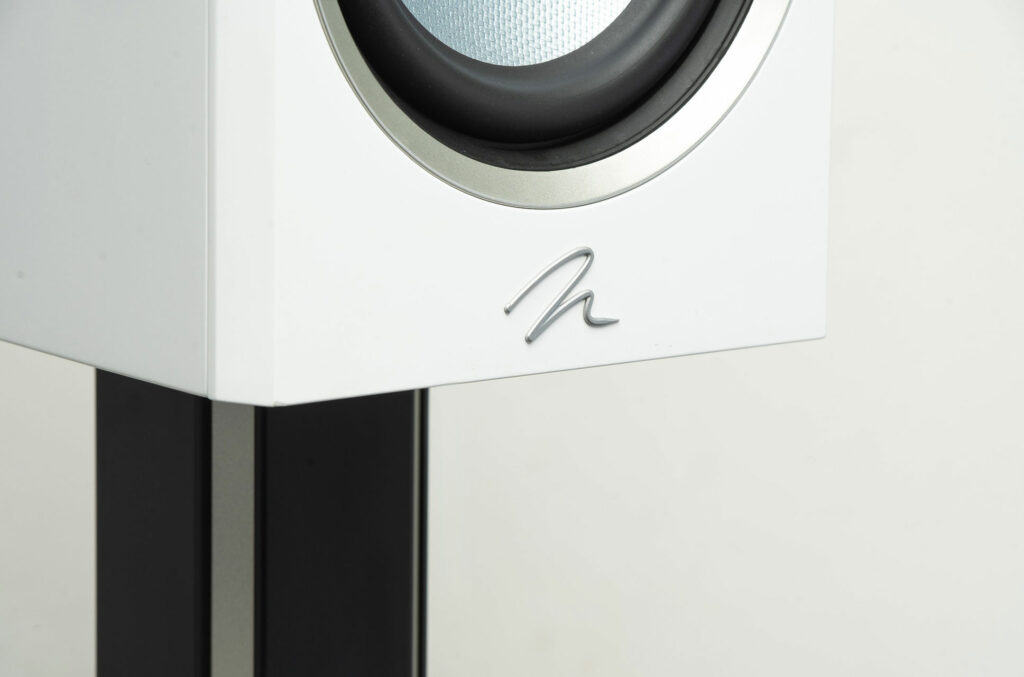
MartinLogan Motion XT B100 $1,600 per pair (advertiser — buy at Crutchfield)
Everybody knows MartinLogan for their big, curved ESL electrostatic panels, and they are iconic for good reason. They also come with a sweet spot the size of a dinner plate and they fall apart when you stand up. The MartinLogan Motion XT B100 (read Nasim Abbu-Daggar’s review) gives you the open, fast, see-through top end that made MartinLogan famous, from a box speaker with an AMT tweeter that works when you are sitting, standing or walking through the room. I reviewed the floorstanding version of this design, the Motion Foundation F2 (read my review), and I said then that the AMT tweeter was the reason to buy it.
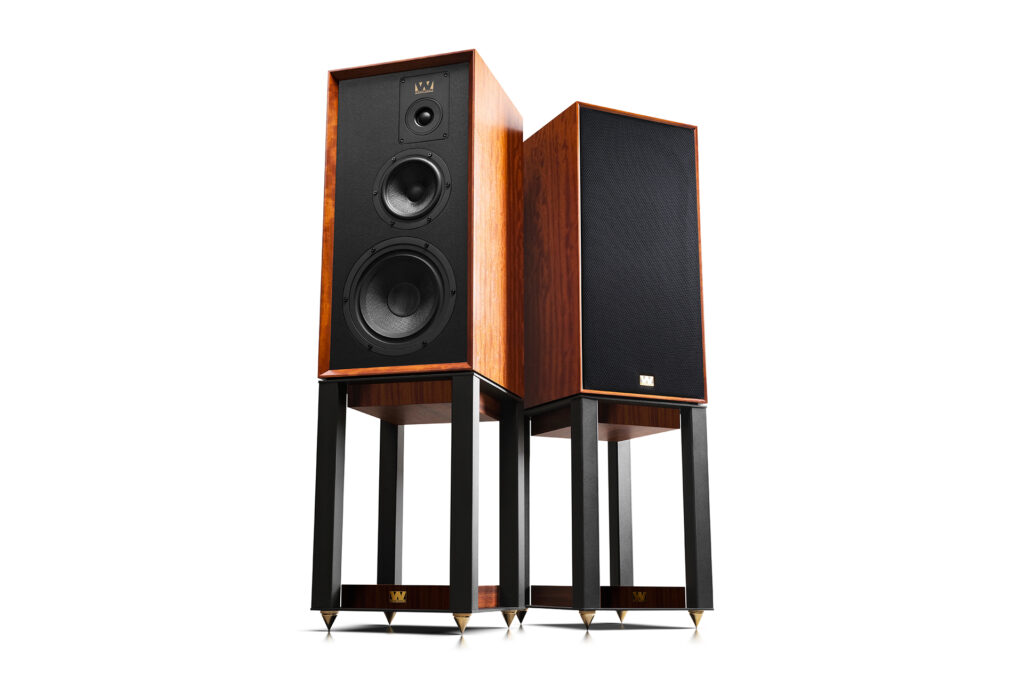
Wharfedale Super Linton $2,699 per pair, stands included (advertiser – buy at Crutchfield)
The original Wharfedale Linton was the surprise hit of the retro speaker revival, and it deserved to be. The Wharfedale Super Linton (read Mike Prager’s review) is what happens when a British company with a more than 90-year history takes its best idea and spends more money and design energy on it. Bigger cabinet, better drivers, a three-way design that most speakers on this lofty list can’t match. One cool detail is that the stands come in the box, which changes the math on the price, as compared to other bookshelf speakers. Mike found that these speakers image and resolve detail at a level above their price, and that the bass is a little lean, which is exactly what you want from a speaker that you are going to pair with a sub anyway. Yes, these speakers look like 1968, but they sound like 2026. If you want speakers that your father would recognize and your kid would kill for – these are them.
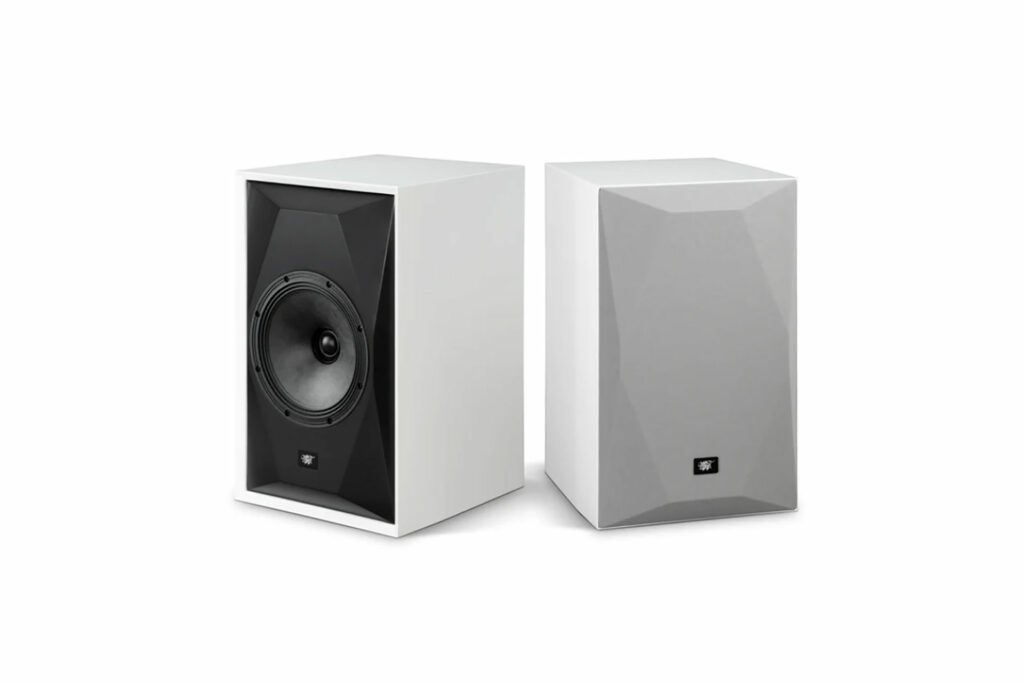
MoFi SourcePoint 8 $2,750 per pair (advertiser – buy at Crutchfield)
Yes, Andrew Jones again, because when one of the best speaker designers alive goes to work for a company with the resources of Mobile Fidelity, audiophiles take note. The MoFi SourcePoint 8 (read Steven Stone review) uses a concentric driver, meaning the tweeter sits in the center of the woofer, so the whole speaker acts as a single point source. That is a very Andrew Jones-type design. The result is imaging that is coherent in a way that a speaker with the tweeter sitting above the woofer can’t quite do.
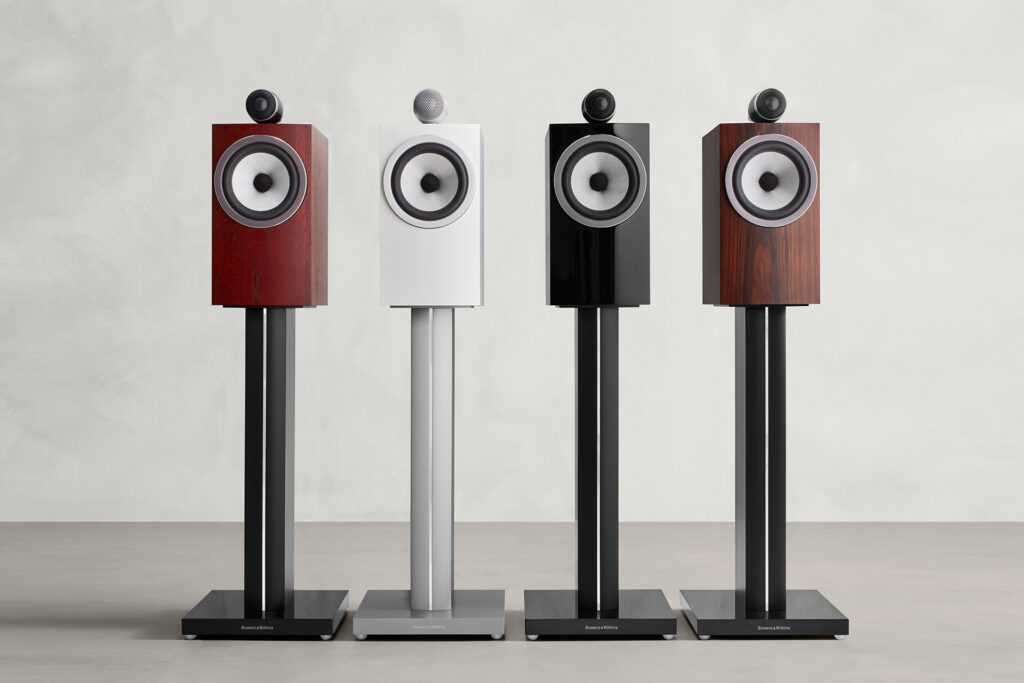
Bowers & Wilkins 705 S3 $3,399 per pair (non-advertiser – buy at Crutchfield)
If you asked me to pick one speaker from this list and never think about bookshelf speakers again, this is the one. The Bowers & Wilkins 705 S3 (read my review) takes the top-mounted tweeter design from the 800 Series speakers that live at Abbey Road Studios and Skywalker Ranch, swaps the diamond dome for carbon, and puts it on a speaker that a working audiophile can afford. The Continuum midrange driver has the same technology that replaced the yellow Kevlar in past Bowers speakers. The cabinet is finished to a level that nothing else on this list touches. And the vibe is that Bowers & Wilkins “in-the-studio” sound, meaning what is on the recording is what you get, nothing added and nothing taken away.
OK, we are going to be missing some players here. That is where you come in. Post in the comments below with the bookshelf speakers that you think belong on this list and why. We will post your thoughts and/or order up some more speakers for review in 2027. We can’t wait to hear from you.



