
 By
By There’s been a whole lot of change in my life personally in recent times. A needlessly ugly divorce, kids living far away, injuries post-Palisades Fires that are thankfully and finally healing up only start the conversation. One of my big hippie-ass goals is to be “more present” in life. My friend and executive coach Suzanne Bryant helps a lot of enlightened tech execs in Los Angeles find these goals. When my good industry friend, Jason Zidle from Dali Loudspeakers, called me and asked me if I would travel to Denmark on Mother’s Day to come visit the factory, that would have been a very likely NO in the past. In the new world, the answer was, “Let me see what the flights look like,” leading to an enthusiastic YES. There is no beating the concept of Home Court Advantage (their home court, not mine) when traveling to see audio companies. You meet the people who make and love the product. You see how the special sauce is made. You get to hear gear in its native environment. This is all plus-business, so why not go to Denmark? That was my thought process.

Traveling to Denmark from Los Angeles
Have you looked at the prices of airfare since Mr. Trump started the Iran war to protect the petro dollar? I just looked at booking my standard (very nice) Polaris Class seat on United to Washington D.C. for Capital Audiofest this fall. The price is up to $3,300 from $1,700 last year and $1,450 the year before. $11 a gallon jet fuel will do that, as well as knowing that when you mismanage your airline that the Federal Government will bail you out (or you won’t order more Boeing aircraft), but I digress.
I called in my secret (I will tell you) Millennial Travel Ninjas and got things booked in the most creative of ways. Points.me is a crazy site that, if you like to travel, is a must email sign-up. They ask you where you live and then send you periodic emails with opportunities for how to use (and also creatively earn) miles at levels that are jaw-droppingly amazing. 52,000 miles for a one-way business class ticket from Los Angeles to Tokyo (with return flights available, too) for example. They have people who will do the actual booking for you, too, for a mere $200. Even if you just want to dream about travel, this is a worthy sign-up. I use them all the time, including for my upcoming Vienna HIFI show trip in June, as they got me a miles ticket from L.A. to Heathrow on Virgin Atlantic in First for a little over 100,000 miles. That is a solid value.
For Denmark, I used another travel arbitrage move, which is to fly from the West Coast to Istanbul on Turkish Airways. First off, what a high-end experience on Turkish. Kobe Bryant (no relation to Suzanne) was their spokesman, and he was a big client of my travel agent. Both being from Philly, we used to trade Eagles stories and travel tips from a distance. Turkish has a really good product at a very good value. They take Capital One points, which I get from business spending (two times the miles for every dollar spent, thus they add up) and, even if you are doing a cash ticket (meaning paying without miles – just bucking up for the fare), they are often the best deal in town. You have to add an extra hour to your trip and connect to Istanbul, but who cares, right? They have a one-day, stay-over deal, but I couldn’t make that work. I would have loved to see more of Istanbul, but I ended up spending three hours in the Turkish Business Class Lounge, which lived up to the hype of being on the Top 10 Airport Lounge List. Virgin’s lounge at Heathrow is supposed to be up there, too. I will report back on that one in a later update.
After a connecting flight to Copenhagen (the Billund, Denmark flight got canceled because of the war) and a pretty long train ride, I got to Aahaus, Denmark, the nation’s second-largest and a fast-growing modern city. Where we stayed was about 45 minutes away by car from the rural factory for Dali Loudspeakers.
Audiophile Roots Grow Deep in Denmark
I’ve been in the audiophile business professionally since I was 16 years old in 1990. I’ve bought, sold, owned and loved so many cool audiophile components from all over the world. For some reason, it never dawned on me just how many audio companies are Danish. There are a ton of them. Dali is one. I went to see uber-high-end company Gryphon (pronounced Griff-INN), which wasn’t too far from Dali, but also a tech company out in the sticks of Denmark. Dynaudio, AAVIK, Scanspeak (drivers), B&O, Boresson (and Aavak), Vitus Audio – and I am just getting started.
When I asked about audio in Denmark and why it is so popular, there were a number of key influences. Some of the first loudspeaker designs ever came from Denmark, which set a good foundation. The socialist nature of their government helps, too, in that, unlike the student loan financial slaves in the United States, you can study as much as you want in Denmark without cost. Often, those studies are that of acoustics and, tangentially, audio. As the industry grew in Denmark, there became more and more higher-paying jobs in the field, thus a positive feedback loop started. Denmark is reportedly one of the happiest countries in the world, despite the cold and often dreary weather (I liked it, as it was very different than 70 and sunny in L.A., but I am weird like that). People are happy to pay big taxes to have nice jobs and do something fun for a living. “Socialist” is not a bad word in Denmark. If you like Social Security, Medicare and/or Medicaid, it isn’t a bad word in the United States, either.
Women Working in Audio in Denmark
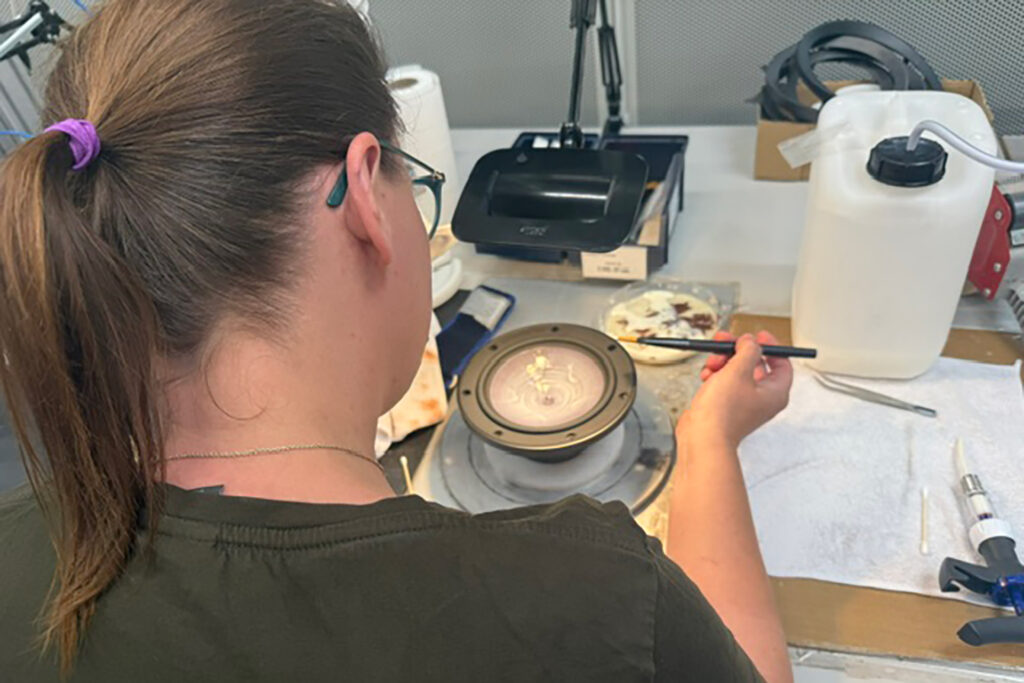
I’ve toured loudspeaker factories all over the world, and there are a lot of things they have in common. One is that most of the workforce is often predominantly male, but that is not the case in Denmark. Women craft speakers with careful hands and an artisan’s touch. Women are not just in the public relations or marketing department, they are testing speakers, attaching drivers, soldering connections – doing all sorts of work.
While not limited to women, the entire work force at Dali as well as Gryphon were cared for well. Lunch was nicely catered with healthy, local food (we had some open-faced sandwiches on rye bread that were very good at our lunch). There were lively conversations when they took breaks. Foosball tables were available for a little sporting competition before going back to work. Plants brought some green to the well-lit, modern and shockingly clean factory. These were really nice places to work.
Dali Makes Their Own Speaker Drivers
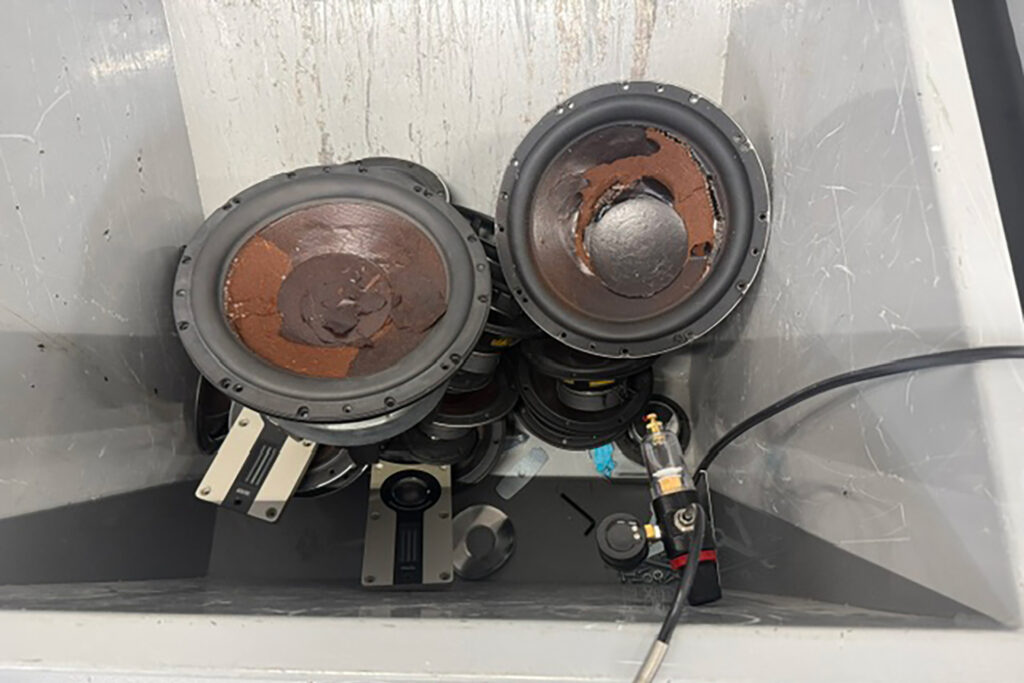
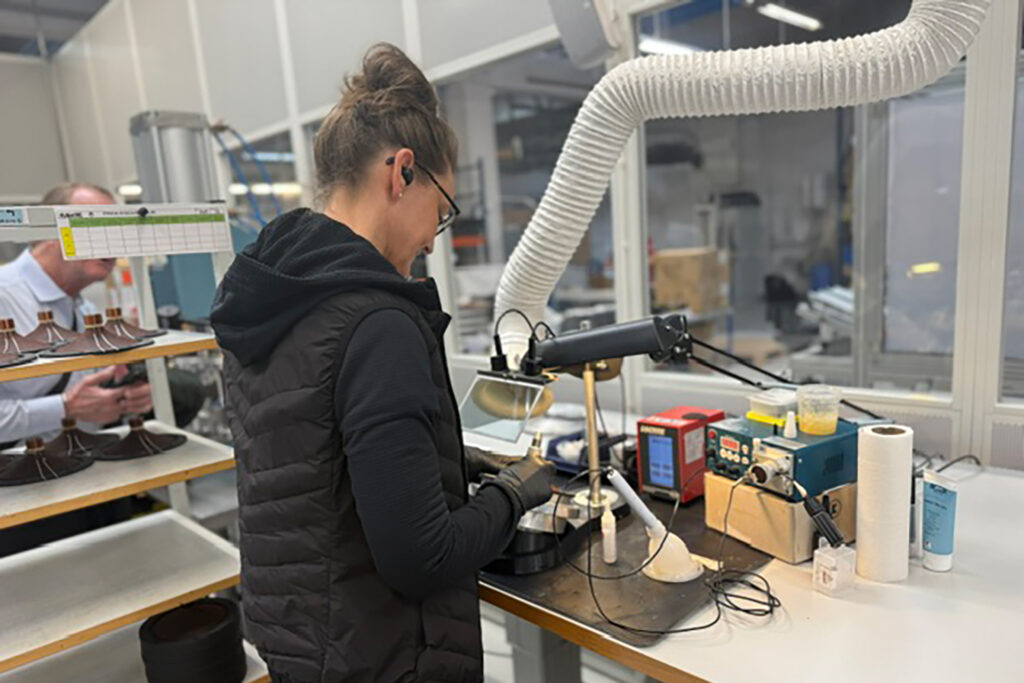
It might seem crazy with ScanSpeak nearby, but Dali makes most of their own drivers. Their higher-end products use a unique, patina-looking paper driver that is a brown version of a visually differentiated driver, reminiscent of the old Kevlar drivers used by Bowers & Wilkins for 25 years in the past. The Dali drivers, with their wood-like look, stand out both visually and sonically.
Dali’s drivers are made by hand in Denmark, which is rare, although Bowers & Wilkins, Paradigm, Harman, Dynaudio, Focal and a few other speaker companies also do this. Most use off-the-shelf drivers are fine by all means, but being able to make your own drivers allows designers to get exactly the specs that they want without much compromise. This is a luxurious way to design a high-performance speaker.
What is SMC (Soft Magnetic Composite) and Why Should You Care?
SMC is Dali’s special sauce for loudspeaker/driver design. SMC is soft magnetic composite, which is a crazy material to use for speaker driver magnets. SMC is a very heavy, very processed powder that, when used in a speaker driver, can yield wildly improved results. We had Dali’s CEO show us a simple test on a number of mid-range/bass drivers, from a stock Chinese-type driver to entry-level Dali drivers, and then ones with more and more SMC. The more SMC, the better the driver performed. SMC isn’t cheap (or light), but to have drivers that can perform this well on their own is a huge advantage and one that Dali doesn’t brag about enough – so I will do it for them.
Audiophile Speaker Cabinets Made in Denmark?This is a Heading Example
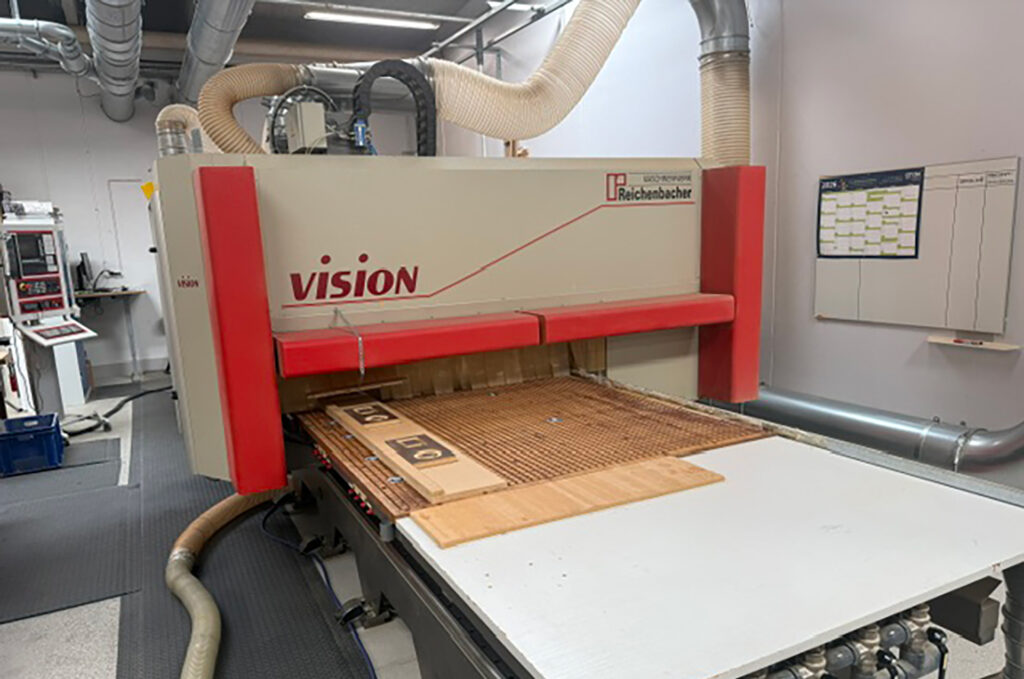
Dali makes more speaker cabinets in-house than I expected. They have many a costly CNC machine making folded boxes (that’s how speakers are normally made, with five angles of cuts and then glue for the boxes as they are assembled). Dali’s more expensive speakers are more organic in their form factors, and they showed us how they take 18 layers of veneer and make them into more rounded and organic shapes for loudspeaker cabinets. Paint colors are offered in vibrant stock colors. Custom colors are also available. Custom wood finishes are possible, with a significant increase in cost and wait, but if you want it – you can have it with Dali.
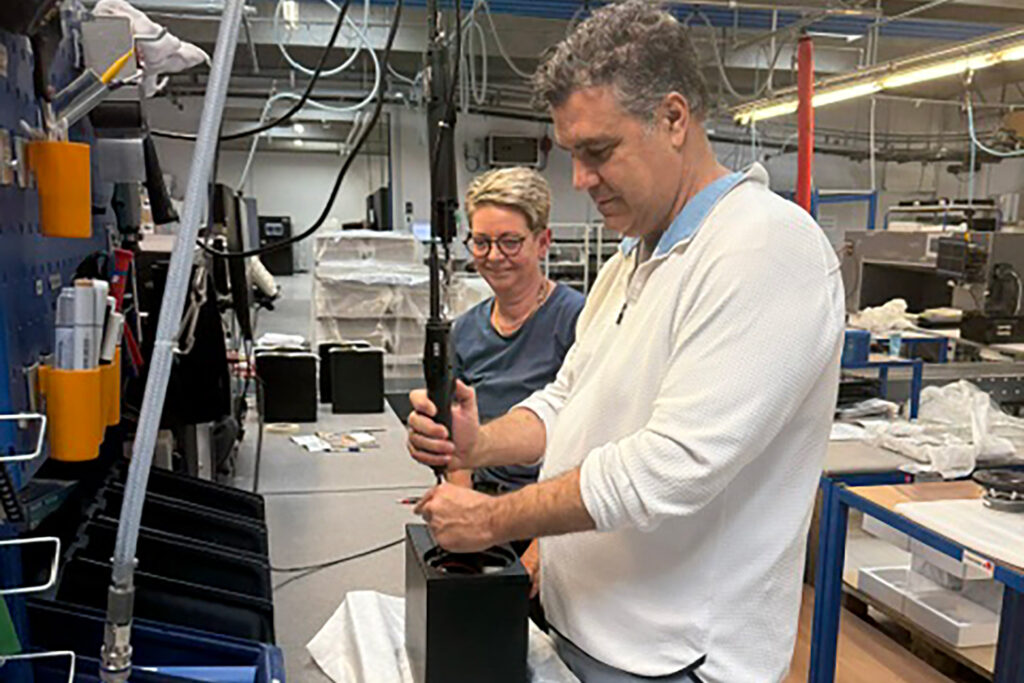
Why Did Dali Have Me Make My Own Speakers?
I have no skill for this, but with the help of their in-house master craftspeople (women, in this case), I was able to assemble a pair of the most basic Dali bookshelf loudspeakers. Driver connections were made. Screws were tightened with cool tools hanging from the ceiling. I even signed the pair that I worked on. I hope no consumer gets stuck with my handiwork, but I had a fun time making my own Dali speakers, and being able to have my hands on the product really helped understand the overall design and build process of the Dali brand.
Day Two: Visiting Gryphon
Gryphon isn’t too far from Aarhus, Denmark, but it’s in a different direction. Like many other companies, these high-tech firms pop up in middle-of-nowhere Denmark with modern factories that rise from the pure Danish countryside. Dali and Gryphon have this in common. The house of Gryphon is a where the Danish company tests, stores and makes their electronics. At the time that I visited, they were testing their new Gryphon $59,000 Hyperion power amp and packing up $100,000 speakers to send to the Vienna HIFI Show in a few weeks.
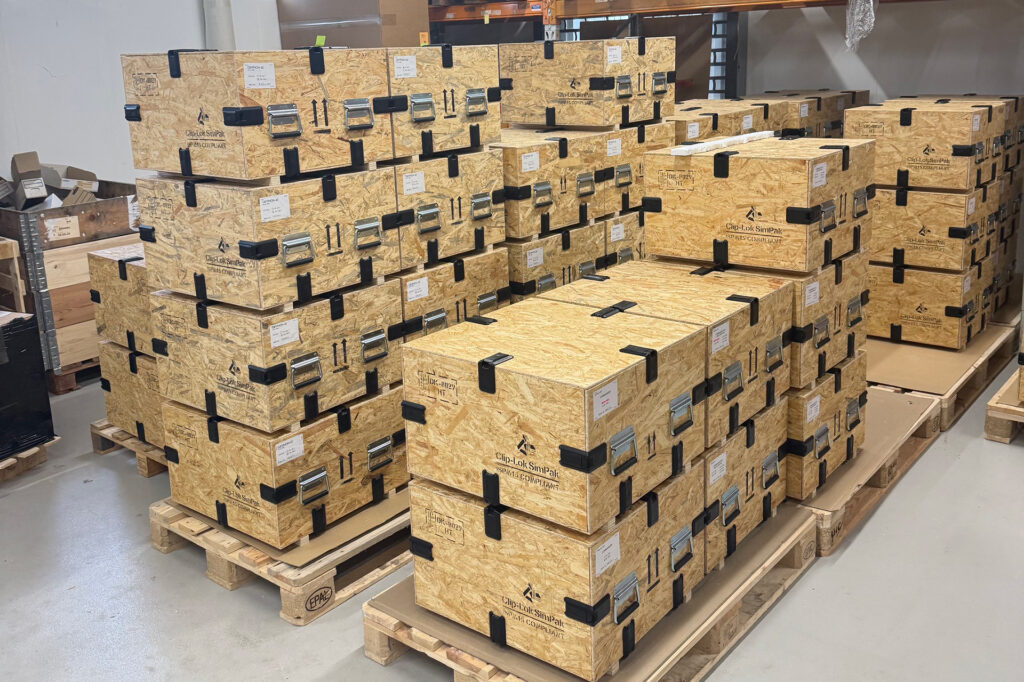
So Much Inventory for Such a Rare Audiophile Product
Gryphon is a limited-quantity, boutique uber-high-end audiophile company. It was amazing to see how much inventory they had ready to ship, considering the scarcity and cost of the product. I met their international salesman, and he was busy moving product like Gryphon’s 40th Anniversary integrated amp, which had perhaps 36 just sitting there in inventory. That’s a lot of $30,000 integrated amps, my friends.
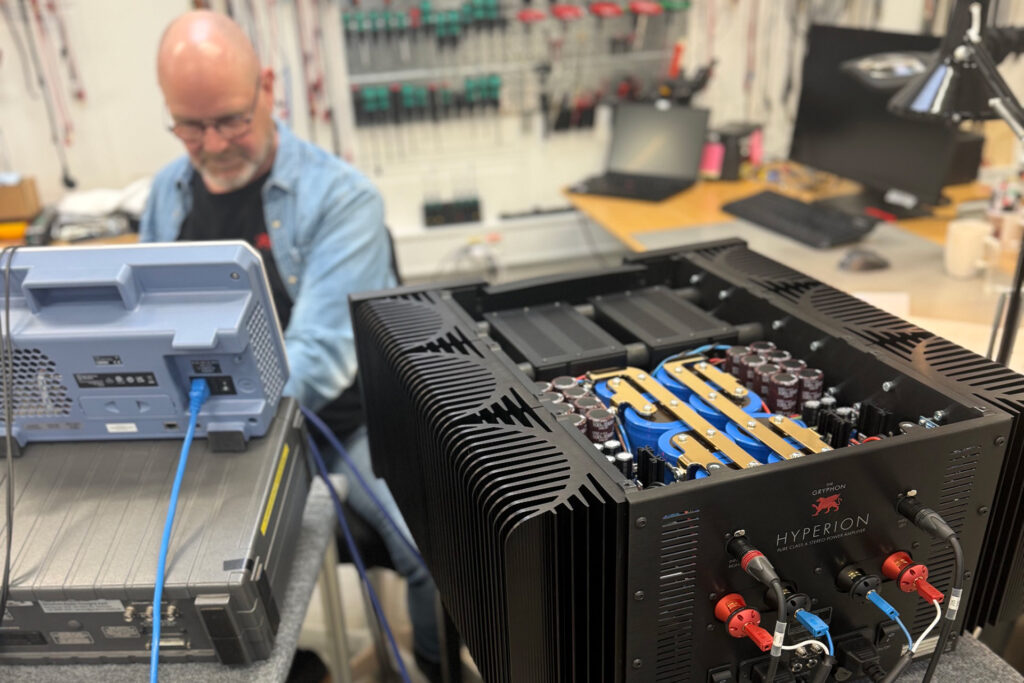
Listening at The House of Gryphon
We spent some time listening to a big Gryphon system, including one of their 400-pound Apex amps (you can get them in monos, but you might want to call your structural engineer regarding the floor in your home as to whether it can accommodate the weight of such heavy power amps) in an all-Gryphon system. They even make their own higher-end turntable, which was amazing as we listened to an entire side of Kind of Blue while talking about audio and so much more in Denmark.
The resolution and dynamics were amazing at The House of Gryphon in the reference system. The room was well-treated, but they tell me that they will be redoing the entire room soon to have even better acoustics. Acoustics are a big deal in Denmark.
I was able to use Roon to stream in some of the tracks that I have been listening to most at home lately. The level of detail was most impressive. The bass control was excellent, but the imaging took your breath away, as the non-toed-in speakers presented a very wide and outside-the-box presentation that you don’t get on lesser audiophile systems.
Can You Tour Factories in Denmark?
Like most audiophile companies, with a call from a dealer, or if you just ask nicely, you likely can get a tour of what these various exciting audiophile companies are doing, and it is eye-opening. Denmark is fun to visit, even if you need to work a little bit to get to Aarhus as a base of operations. The travel effort was well worth it. The food, hospitality and technology were all very well worth the time and effort from my viewpoint. If you want to get the Gryphon experience in the United States, my dear friend Joseph Cali (who most consider the best stereo salesman ever) has a Gryphon showroom in the Pacific Design Center in West Hollywood, where he is doing an even more complex and exotic demonstration of the Gryphon product in the state. All you need to do is to call Joe’s place, tell him Jerry Del Colliano sent you, and you are hooked up – guaranteed. If you think you might want to go to Denmark, there is so much audio to hear that you couldn’t do it all in a week, if you tried. There is a real hotbed of high-end audio design in that nation.
Final Thoughts on the Audiophile Scene in Denmark
This trip was a blast, and I learned a lot about just how Dali and Gryphon make their gear. The food was great. The country was friendly, with English spoken everywhere, thus it was super-easy to get around. Everything was clean, new and high-tech, and I was very impressed. This was my first trip to Denmark, but I doubt it will be my last, as there is just so much to explore for the curious audiophile.
Have you ever done an audiophile factory tour? Where did you go? What did you see? What did you learn? Share with us and we will post your comments right here. We love to hear from you.




Very enjoyable article
Love this, Jerry.
There are DALI YT videos showing tests of SMC drivers & the resulting distortion reduction. While some speaker designers insist that distortion in well designed drivers is not audible, it’s good that DALI has exposed the mechanism & developed a cure!