
 By
By Rosso Fiorentino is an Italian loudspeaker brand that’s not as familiar to some enthusiasts as Sonus faber, but my recent experience with their stand-mounted Arno 20 model leads me to encourage anyone interested in a high-end, stand-mounted speaker to investigate the brand further. The company was founded in Florence in 2007 by CEO/designer Francesco Rubenni and named after Italian Renaissance painter Rosso Fiorentino, who was also from Florence. All the company’s models are designed, engineered and manufactured in Florence.
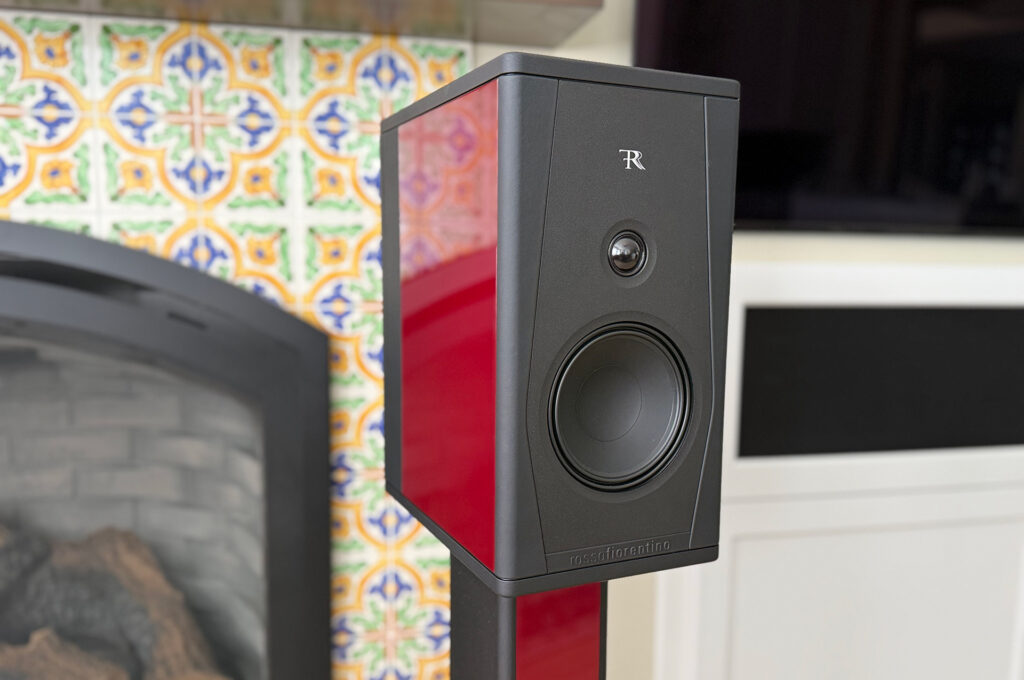
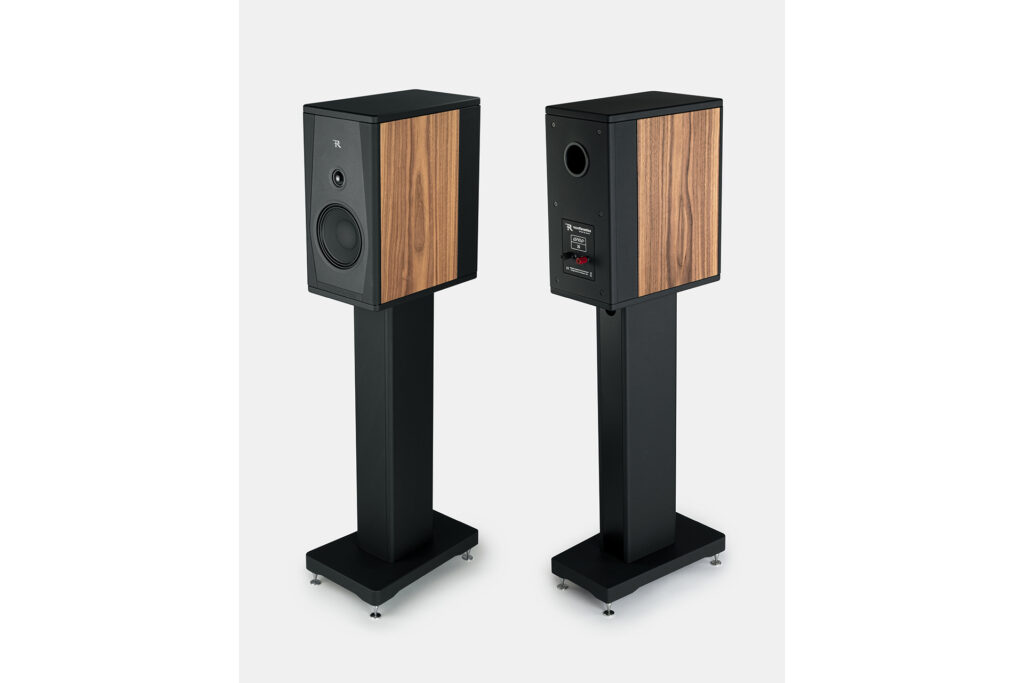
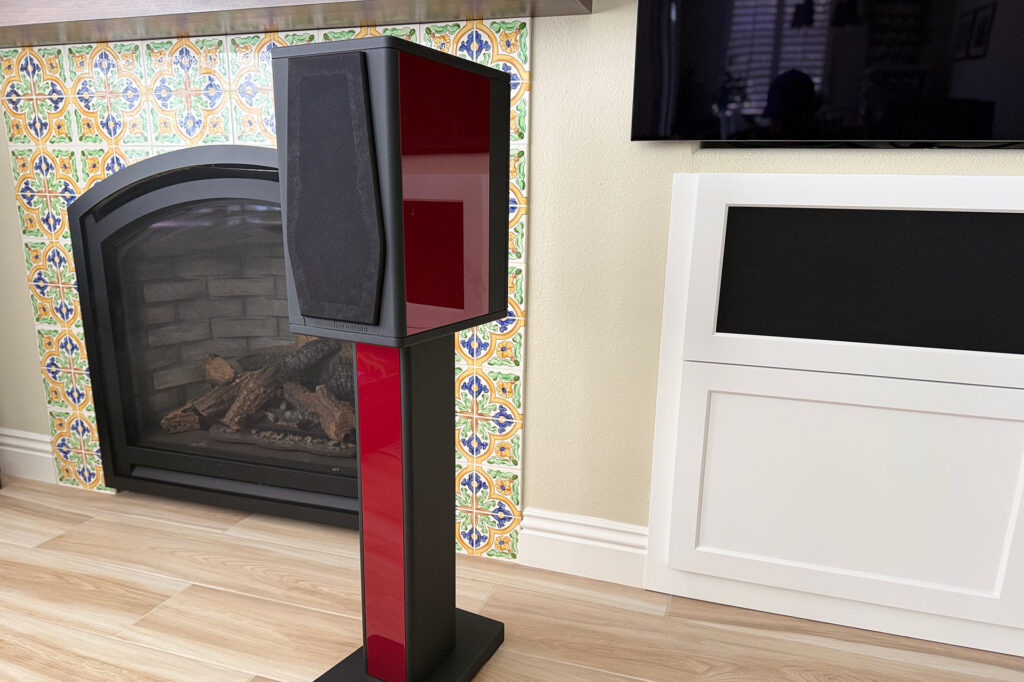
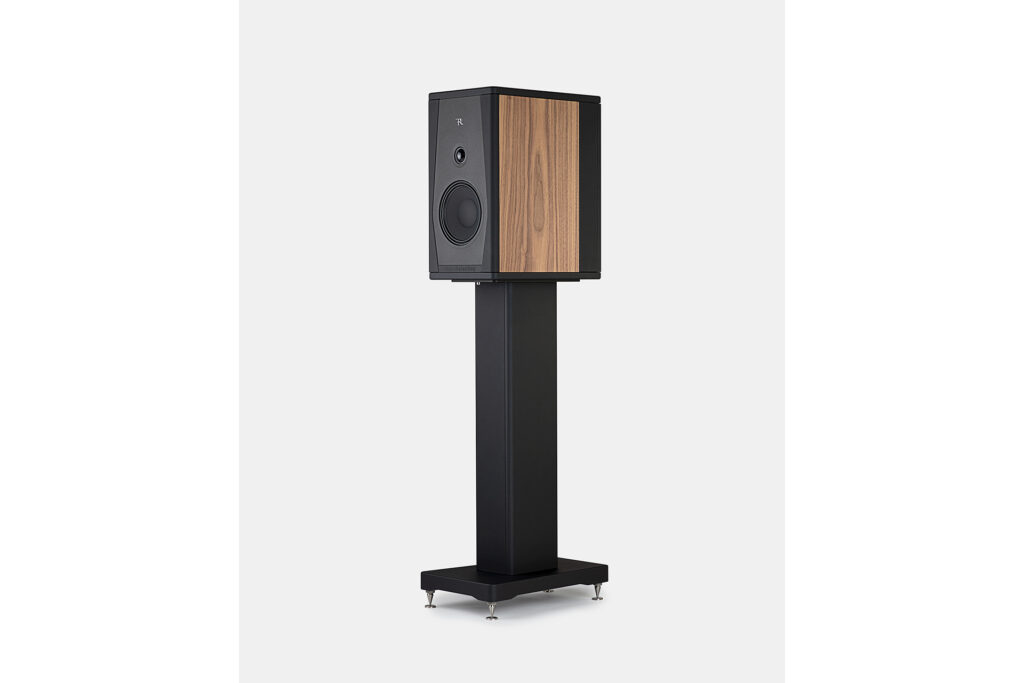
My initial thought upon unboxing the speakers was that the Rosso Fiorentino Arno 20 is a solidly-built (think heavy) minimalist design, manufactured with high-end materials and textures that provide a sophisticated aesthetic. The Rosso Fiorentino Arno 20 is a two-way rear-ported design with a 1.1-inch silk dome tweeter and multi-layered 6.5-inch paper diaphragm woofer. The Rosso Corsa gloss-red lacquer finish of the sidewalls on the review samples was exquisite. The speakers were accompanied by the dedicated Rosso Fiorentino S-A20 stands with the same Rosso Corsa finish down the front of the post, complimenting the speakers perfectly. The stand can be fastened to the speaker cabinet base for a rigid mechanical coupling that provides a solid platform for the speakers. The stands have marble microgranules added to their front chamber to dissipate structural vibrations. The stand adds an additional 26.5-pound foundation to the already heavy 35.3-pound speaker cabinet. Over 60 pounds total for this speaker and stand combination, they are hands-down the most solidly built that I’ve ever reviewed.
What Makes the Rosso Fiorentino Arno 20 Loudspeakers So Special?
- Precise imaging and the ability to present a holographic soundstage that is both wide and deep are key strengths of the Rosso Fiorentino Arno 20 stand-mounted speakers. This speaker rivals the best brands when it comes to imaging. I’d put it right up there with the likes of Magico and YG Acoustics in that regard.
- The Rosso Fiorentino Arno 20 is a bit of a unicorn speaker in that, while it has a slightly warm, laid-back sound that is both engaging and tonally balanced overall, it also hasexcellent imaging and soundstage capability. Those two attributes are not normally found in the same speaker. While the Arno 20 doesn’t present quite as warm and lush a sound as, say, its Italian competitor Sonus faber, in my opinion it outperforms Sonus faber in terms of its imaging and soundstaging capability. I didn’t find the Arno 20 speaker’s high frequencies provided by its silk dome tweeter to ever be bright or harsh, unless those qualities were inherently included in the recording. The woofer provides a better-than-average amount of well-controlled lower-frequency impact without any boominess. I found the speaker to live up to its rated lower-frequency response of 45 Hertz (+/- three dB). Indeed, it goes low enough to reproduce all the included lower-frequency information on most recordings. I could listen to the speakers all day with zero listener fatigue, whether for critical evaluation or just as background music.
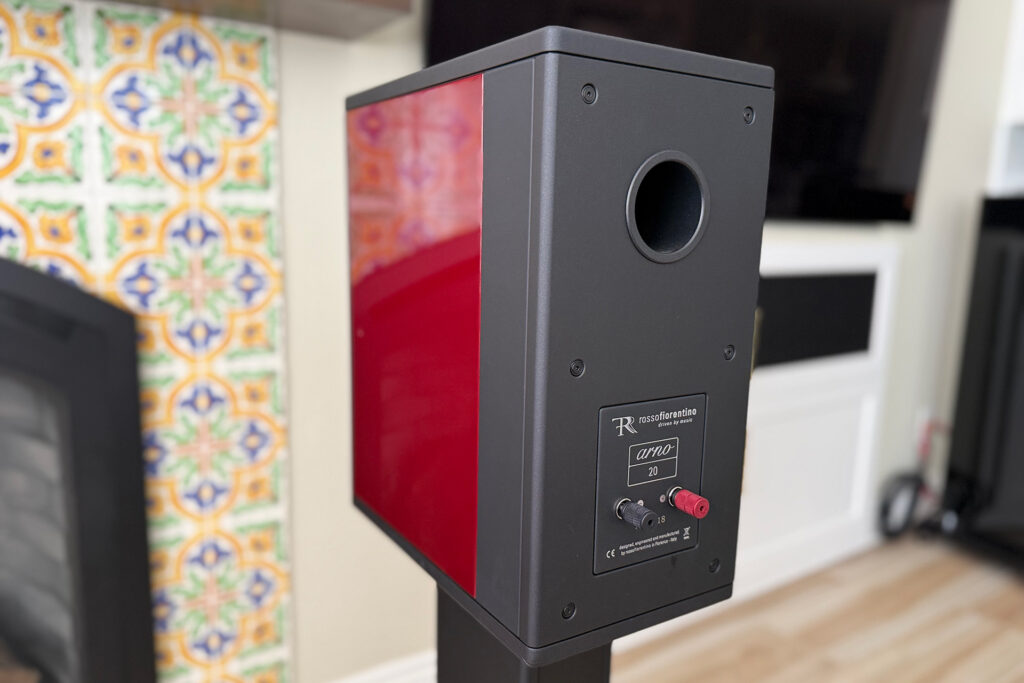
- It’s evident that attention to detail is a cornerstone of the Rosso Fiorentino design philosophy, both structurally and aesthetically. Nearly every component of the Arno 20 is designed and manufactured in-house with an eye toward extreme build quality and an elegant, minimalist aesthetic. Few companies go to the extremes that Rosso Fiorentino does. The rear port is manufactured from a solid billet of aluminum. The aluminum plate used in the front baffle is 0.33 inches thick. Internal cabling is sourced from the Dutch high-end speaker cable manufacturer Van den Hul. The custom high-end binding posts are made by Rosso Fiorentino. There is a wide rear cable channel thoughtfully built into the speaker stand to provide practical cable management. The high-end binding posts are designed and manufactured in-house to accommodate any type of connector. The speakers have a look and feel that exudes quality. The only exceptions to the exclusively in-house approach are some crossover circuit components and the drivers. Some crossover components are sourced externally, but the crossovers themselves are designed and built internally. The proprietary drivers are designed in close collaboration with B&C Speakers, located just outside of Florence. B&C Speakers supplies a big percentage of the global pro audio market with drivers. The design of the high-frequency driver was directly derived from Rosso Fiorentino’s flagship Siena speaker. I always appreciate trickle-down technology.
- Rosso Fiorentino is obsessed with minimizing vibrations from both its Arno 20 speaker cabinets and its stands. The speaker cabinet is constructed with multiple layers of high-density fiberboard (HDF), rubber and aluminum sandwiched together utilizing a process known as constrained-layer damping to minimize cabinet vibration. Constrained-layer damping is a technique commonly used in soundproofing floors, walls and ceilings. The S-A20 stands have marble microgranules added to a front compartment in the post that is said to help dissipate structural vibrations by transforming kinetic energy into heat. In addition, the speaker can be mechanically attached to the stand, ensuring a solid platform for the speaker.
- The Rosso Fiorentino Arno 20 speakers can image for days with precision and rock-solid stability. The soundstage is discernibly deep and wide, provided the two-way, rear-ported design is allowed to breathe. I found when I placed the cabinets at three feet from the front wall and two feet from the side walls of my listening room, the soundstage really opened up, developing a noticeable increase in depth. Imaging of vocals and instruments was precise and stable, while the soundstage extended beyond and behind the speakers themselves when playing appropriate tracks.
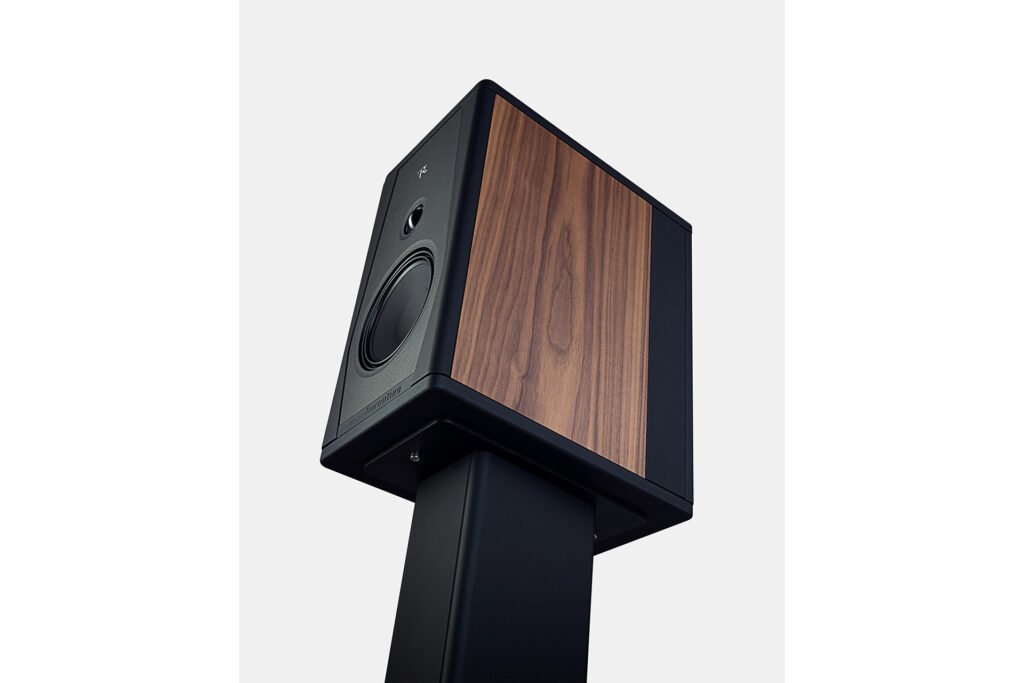
- The Rosso Fiorentino Arno 20 speakers are available in a variety of side panel colors and finishes, including leathers, lacquers, natural walnut, and even a carbon fiber finish to compliment nearly any room decor. And if that’s not enough, for an upcharge, buyers can provide their own custom color finish to Rosso Fiorentino for application to their speakers for a truly one-of-a-kind look. Any finish material and color chosen for the speakers can be also be matched on the front post of the speaker stands for a uniform look.
- In the Arno lineup, Rosso Fiorentino offers the matching Arnocc, a 2.5-way center-channel speaker, as well as the Arno Sub. That’s great news for those wanting their speakers to serve both two-channel and home theater duties.
Why Should You Care About the Rosso Fiorentino Arno 20 Loudspeakers?
For those enthusiasts who prioritize precise imaging and a big soundstage in a stand-mounted design, the Rosso Fiorentino Arno 20 successfully competes with more expensive brands known for their imaging prowess, like Magico or YG Acoustics.
The Rosso Fiorentino Arno 20 speakers are also well-suited in small to medium-sized listening spaces, while being less obtrusive than floorstanders. I can’t name another speaker that has the Rosso Fiorentino’s level of imaging and soundstaging capability, while also sounding slightly warm and laid-back in presentation. So, if you are an imaging-driven audiophile who has a taste for well-made speakers and/or Italian design – you are barking up the right tree here.
Some Things You Might Not Like About the Rosso Fiorentino Arno 20 Loudspeakers
- Enthusiasts who place high-frequency detail as a top priority will likely find the Rosso Fiorentino a bit too warm and laid-back for their tastes.
- Bass-heads will likewise want to consider other brands. The Rosso Fiorentino Arno 20 has well-controlled bass down to its rated frequency response, but it’s not boosted for emphasis as are some other speakers. The Arno 40 provides more bass for more money as an alternative option.
- For those listeners who don’t have the flexibility to pull their loudspeakers out into the room from the front wall a few feet, soundstage depth will be reduced from the speaker’s full potential.
- Enthusiasts with large listening rooms may find the Rosso Fiorentino Arno 20 insufficient in filling their space with adequate power and low-end impact. If that’s your situation, you may want to look at the larger Rosso Fiorentino Arno 40 floorstander instead, with its three bass drivers in addition to one mid-bass driver. There are center speakers and subs for enthusiasts looking to go into a more surround sound speaker configuration.
Listening to the Rosso Fiorentino Arno 20 Loudspeakers
I assembled the Rosso Fiorentino S-A20 stands, added the spikes, and then mounted the Arno 20 speakers to the stands using the included bolts. After some experimenting, I positioned the speakers four feet from the front wall and about seven feet apart, with a slight toe-in to optimize the soundstage. Classé Delta Series electronics were used to drive the speakers. Sources included an Esoteric CD/SACD player and a dedicated Mac Mini music server, with Roon (learn more here) for streaming from Qobuz and Tidal. With a rated 87 dB sensitivity, an eight-ohm impedance and a minimum impedance of about five ohms, I found the Rosso Fiorentino speakers relatively easy to drive.
Because I still had the Bowers & Wilkins 705 S3 Signature stand-mounted speakers (read review here) on hand from my just-completed review, I took the opportunity to do some back-to-back comparison listening with the Rosso Fiorentina Arno 20 speakers during my evaluation.
I listened to several familiar male and female vocal tracks from a variety of genres to get a sense of the Arno 20s’ sonic attributes. The Rosso Fiorentino Arno 20s consistently served up a slightly warm, laid-back presentation. The speakers didn’t seem to emphasize any one part of the sonic spectrum more than another, like most speakers do. I would characterize the Arno 20s as balanced overall in their presentation. But I found the Arno 20 speakers to be a bit of a conundrum. My experience has always been speakers with a warm, laid-back sound aren’t the first ones I think of when talking about excellent tonality and imaging, or big soundstages. But the Rosso Fiorentino Arno 20 speakers have altered my sonic model of what’s possible in that regard.
As an example, listening to Shelby Lynne’s “Just A Little Lovin’” from her album by the same name (Lost Highway – IGA), I found her vocals were portrayed with tremendous tonal accuracy.Imaging was just fantastic, too, with both vocals and the individual instruments having clear definition and stability within the soundstage. And there was discernible depth to that soundstage, bringing that vital third dimension to the presentation. When I experimented with moving the speakers much closer to the front wall, I heard that image depth definitely collapse quite a bit. So, having the ability to pull the speakers out from the front wall is a must in order to experience the Arno 20s’ full soundstaging potential. There was solid bass impact and texture provided by the bass guitar and double bass in the recording without any bass boost. During the quiet passages, the speakers were just dead silent. There was never any harshness detected from the high notes. Overall, the presentation was slightly warm-sounding and a bit laid- back, with Lynne’s vocals a bit more recessed in the soundstage than I’ve heard from other speakers. In comparison, when listening to the track through the Bowers & Wilkins 705 S3 Signature speakers, I found more emphasis in the upper frequencies evident, with the vocals having a bit more grain and texture. I attributed that to the decoupled carbon dome tweeter in the Bowers & Wilkins speakers, versus the silk dome tweeter in the Rosso Fiorentino. While the emphasis on upper frequencies of the Bowers & Wilkins resulted in a more forward sound, their bass depth and impact were slightly less than with the Arno 20s.
Similar characteristics were also observed when listening to Chris Stapleton’s “Death Row” from his From A Room: Volume 1 album, as well Alessia Cara’s “I’m In Trouble” from her Love or Lack Thereof album.
To test imaging, soundstaging and tonal accuracy, I listened to Haevn’s “Promise (Symphonic Version)” from their album Symphonic Tales II (Nettwerk Music). The track enabled me to hear a variety of instruments both individually and collectively, all within a single fairly large recording space. While the track starts off softly with the violin, cello and double bass string instruments playing collectively, the Rosso Fiorentino Arno 20s created a truly holographic soundstage that had real depth and width, extending beyond and behind the speakers. Because of the excellent imaging precision, I could easily place individual instruments such as the harp, piano, xylophone and tympani within that soundstage as the track went on. I could also hear smaller details, such as the harpist’s fingers plucking across the strings, the percussionist softly striking the drum while the strings played loudly, or the soft notes being played on the piano. Everything sounded tonally accurate, as though I was at a live performance. The speakers disappeared with the rich soundstage extending from wall to wall. There were no parts of the presentation that sounded overly forward or “in your face.” Rather, it seemed like a warm blanket enveloping me.
A track that I’ve listened to hundreds of times over the years to gauge imaging, soundstaging and tonal accuracy is The Eagles’ “Hotel California” from their Hell Freezes Over album (Geffen). Listening using the Ross Fiorentino Arno 20s, I could clearly hear Don Felder’s fingers sliding on the guitar strings as well as the attack and decay of high notes on Joe Walsh’s guitar. The bass guitar and drums had good bass note weight and impact, but not overly so. It was easy to place all the performers accurately within the soundstage, both left to right and front to back. The soundstage was really wide, again making the speakers disappear. They remained locked into place throughout, with definite space between each of them. The clapping of the audience had a sharp crack but wasn’t artificially bright. Everything just sounded right, coming together to create an engaging performance.
Learn how to position your audiophile speakers better with help from editor, Paul Wilson.
Will the Rosso Fiorentino Arno 20 Loudspeakers Hold Their Value?
While not as well-known as larger European loudspeaker companies like Sonus faber, Focal, or Bowers & Wilkins, the Rosso Fiorentino brand is gaining a foothold in popularity and respect among audio enthusiasts. The high-end build quality and pleasing design aesthetic should appeal to enthusiasts opting to purchase through the resale market. I expect that the challenge will be in finding them available for resale at all, as most owners will likely hold onto them to enjoy for several years. Therefore, I would expect the Arno 20 stand-mounted speakers to command a good portion of their original value, whether purchased used from a private party or as a trade-in from an audio retailer.
What is the Competition for the Rosso Fiorentino Arno 20 Loudspeakers?
I’ve reviewed several stand-mounted speakers in the last couple of years. As I previously mentioned, I recently reviewed the Bowers & Wilkins 705 S3 Signature stand-mounted loudspeakers (read review here). Given their similar driver sizes and high-end design, the Bowers & Wilkins 705 S3 Signatures (priced at $5,200) are an obvious choice as a competing model to the Rosso Fiorentino Arno 20s. I’ve already spoken about the differences in sound characteristics from the Rosso Fiorentino Arno 20. For listeners who are after a bit more detailed, forward-sounding high frequencies, the Bowers & Wilkins 705 S3 Signature speakers are worth a comparison.
Another competitor to the Rosso Fiorentino Arno 20 that I was very favorably impressed by is the Alta Audio Alyssa bookshelf speaker (priced at $6,000 per pair; read review here). It’s a stand-mounted speaker of similar size, but which employs a combination of transmission line and tuned port technologies that result in the clearest, deepest bass we’ve heard from a speaker of its size. This speaker can really reach down to 30 Hertz, delivering clean, clear base with impact, which is almost unheard-of from a stand-mounted speaker. The Alta Audio Alyssa sports a Fountek aluminum ribbon tweeter, combined with a midrange/woofer manufactured by Morel. So, if really deep bass is a top priority for you, the Alta Audio Alyssa may be a consideration.
For those who value high-frequency detail as a top priority, the Focal Sopra No1 bookshelf speaker(priced at $6,499 per pair) is worth auditioning. Its beryllium inverted dome tweeter is known to deliver plenty of high-frequency excitement and detail, and is among the best at delivering high-frequency sweetness. The fit and finish on the Focal is stunning, which matches the excellent engineering and overall sound.
Final Thoughts on the Rosso Fiorentino Arno 20 Loudspeakers
A speaker with a warm, laid-back, never-bright sound with exquisite imaging that’s precise and stable. An Italian design speaker that’s balanced across the audio spectrum possessing tremendous tonal accuracy and bass control without the mid-bass bump of its Italian counterpart Sonus faber. A speaker that casts a large, holographic soundstage with real depth on well-recorded tracks. A minimalist Italian design that’s robustly built with luxurious materials and textures and yet minimalist, creating a truly high-end aesthetic. This is the Rosso Fiorentino Arno 20 stand-mounted speaker. No, it’s not the last word in high-frequency detail or bass emphasis. But the Rosso Fiorentino Arno 20 is a speaker that’s so engaging it invites the listener to relax, kick back, and listen for a while longer.



