
 By
By Onkyo is one of the audiophile brands that has not just a long history but mainstream access and appeal. Its history dates back to 1946, when the company was founded by Osaka Denki Onkyo K.K in Osaka, Japan. The release of the ICON series is one that acts largely as Onkyo making a resurgence after being purchased by Voxx’s subsidiary Premium Audio Company and Sharp Corporation. Rough times, seem to be in the past for the legendary brand. The Onkyo ICON P-80 (buy at Crutchfield) (or P80) network preamp is part of that comeback.
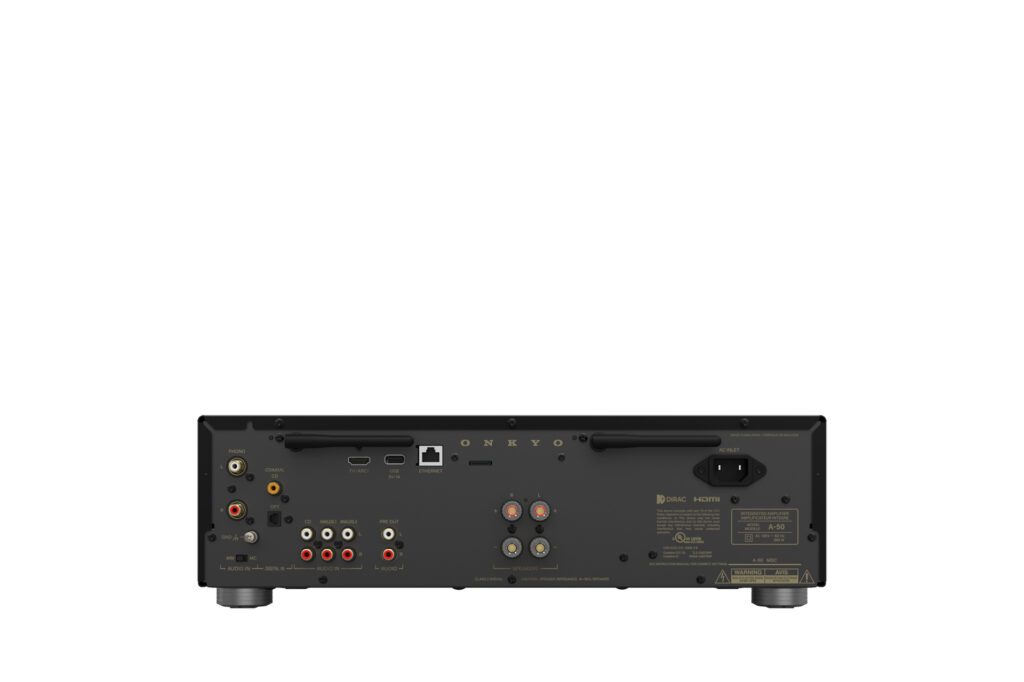
The Onkyo ICON P-80 (buy at Crutchfield) network preamplifier has all the makings of what could be an affordable heavyweight in the audiophile community. It is packed full of modern technology. It has DIRAC Live room correction streaming built in, with Spotify Connect, Qobuz Connect, Tidal Connect, etc. also built-in, as well as a wide array of inputs that feature HDMI ARC, coaxial, and optical on the digital side. Additionally, it has three unbalanced inputs, a moving magnet and moving coil phono input, and two dedicated subwoofer outputs. This preamplifier is a full-width component, measuring 17.1 inches wide by 5.3 inches high by 14 inches deep, and weighing 26.5 pounds. For its DAC, Onkyo chose the AKM AK4452 chipset, which supports digital files up to 32-bit/768 kHz, and is being used by other brands, such as TEAC, SMSL and FiiO. Onkyo’s ownership, like that of so many of the most revered audio brands, is changing hands as the audiophile landscape continues to transform. Onkyo has put together a compelling package with this preamplifier, especially at $1,999. Let’s take a look to see if you should be considering the Onkyo ICON P-80 Network preamplifier for your system.
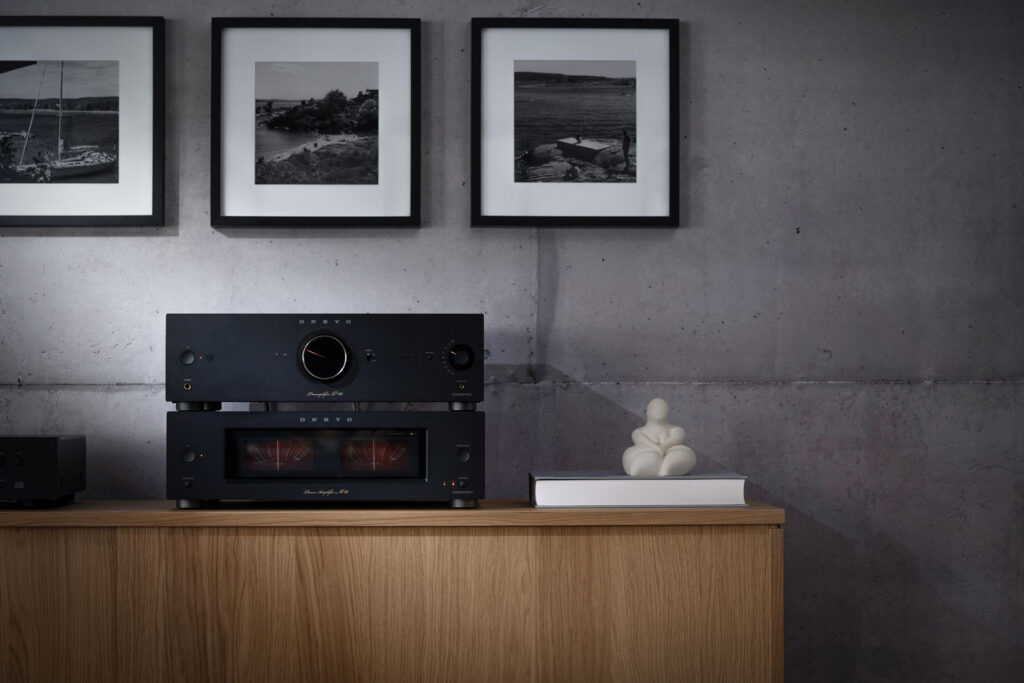
What Makes the Onkyo ICON P-80 Network Preamplifier So Special?
- Having Dirac Live Room Correction built in is a huge plus for any preamplifier. As we all know, there are no perfect rooms for audio, so having room correction built in makes a huge difference in most rooms (you can read Paul Wilson’s article about it here). I would be surprised if most audiophiles didn’t view room correction as table stakes for a digital preamplifier in the next few years, if they don’t already today.
- Having streaming built in represents a huge value for many audiophiles. You will be hard-pressed to find many audiophiles today who don’t stream at least some of their music. Having this feature built into your preamplifier represents somewhere between $219 (if you’re looking at a WiiM Pro Plus; read Michael Zisserson’s review here) and $700 (if you’re looking at a Bluesound Node; read Jerry Del Colliano’s review here).
- Having a moving magnet and moving coil phono stage built in will appeal to those who enjoy (or who aspire to) vinyl. While it isn’t uncommon to find moving magnet phono stages built in, moving coils are more rare. This represents another value add for the Onkyo ICON P-80 preamplifier, as you would easily be looking at spending another couple hundred dollars to add an external phono stage to handle the moving coil cartridges.
- The Onkyo ICON P-80 is a handsome audiophile component. I really enjoyed the look of the ICON P-80 network preamplifier. My review unit came in black, which allowed the orange LED that shows on the volume knob and the input switching knob to really stand out. I also liked that there were no LED screens, as it made the overall look of the preamplifier to be cleaner overall.
- You can adjust the treble, bass and balance from the remote – a rarity. Being able to make adjustments to the simple EQ items from the listening position is a huge plus. You can do this either from the remote control, or from a larger suite of settings you can tinker with from the Onkyo app.
Onkyo ICON P-80 Network Preamplifier Specifications
| Frequency response | 10 Hz–100 kHz (Direct) |
| THD+N | 0.008% |
| Analog inputs | Three RCA, MM/MC phono |
| Digital inputs | Coaxial, optical, HDMI ARC |
| Outputs | RCA and XLR pre-outs, subwoofer, optical, headphone |
| Streaming | Wi-Fi, Ethernet, Bluetooth 5.1 |
| Dimensions (W x H x D) | 17.1 x 5.3 x 14 inches |
| Weight | 20.9 pounds |
| Price | $1,999 at review |
Why Should You Care About the Onkyo ICON P-80 Network Preamplifier?
If you’re looking to update your preamplifier, or if you’re setting up your first system with separate preamplifier and amplifier, the ICON P-80 could be an ideal fit. With streaming, room correction, and HDMI, it makes it a great fit for so many audiophiles, and almost any room. I know when I was putting my first system together, I would have loved to have had a product like this on the market, as it represents such great value due to the all-in-one nature of the preamplifier.
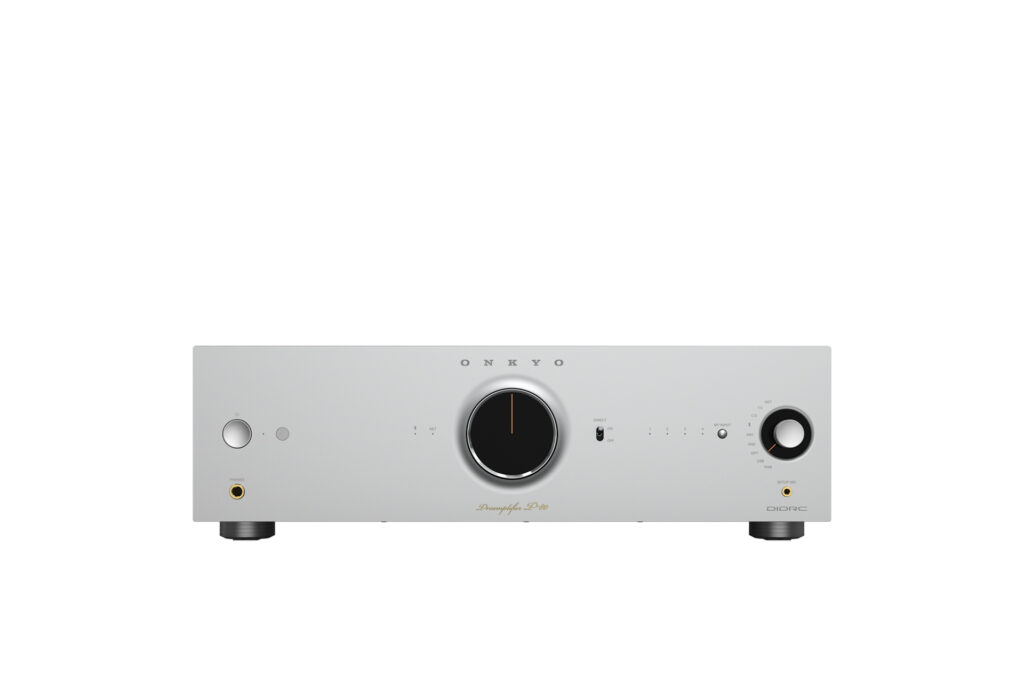
Some Things You Might Not Like About the Onkyo Icon P-80 Network Preamplifier
• Reconnecting the network applications can be a challenge. The Internet in my home isn’t always the most rock-solid stable, which means that I needed to reconnect the Onkyo ICON P-80 Network Preamplifier to my network on a few occasions. Sometimes it was as simple as reconnecting through the app, but other times I needed to unplug the preamplifiers for a few minutes and plug it back in so it would connect.
• It would be nice to have balanced analog inputs. The only feature I really found to be missing was the lack of balanced analog inputs. For some, this is a small complaint, but others could see this as a missing upgrade path. This is a pie-in-the-sky request, because in order to make a truly balanced preamp with these features at $1,999 might be just impossible.
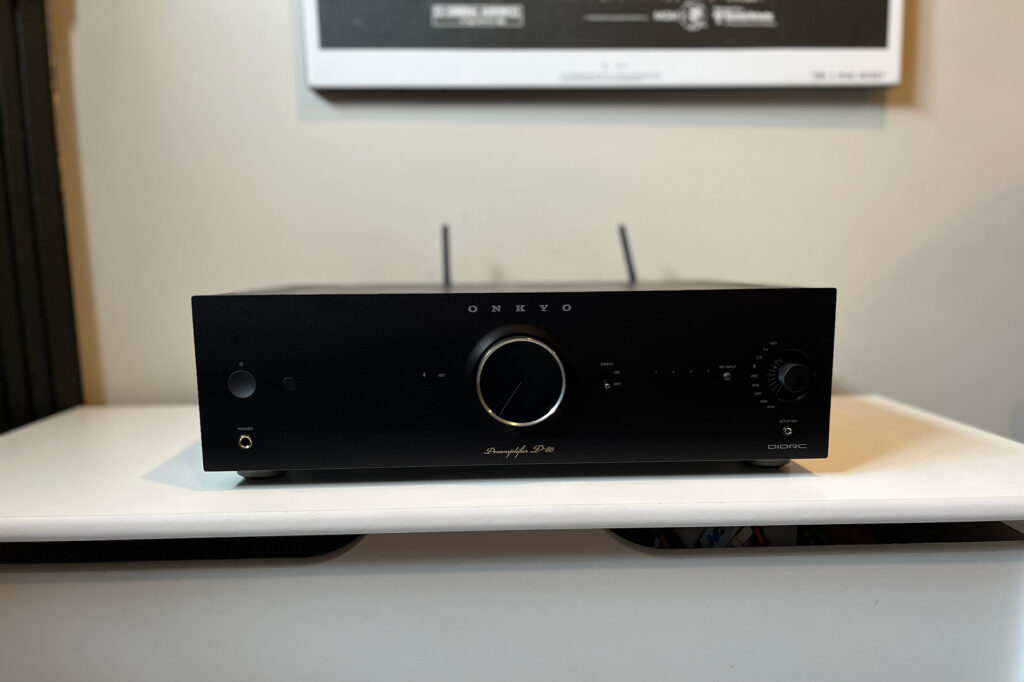
Listening to the Onkyo ICON P-80 Network Preamplifier
I tested the Onkyo ICON P-80 Network preamplifier with Paradigm Premier 700 floorstanding speakers, the Anthem MCA 225 Gen 2 Amplifier and a Pro-Ject X1 turntable. The Anthem amplifier was connected to the Onkyo ICON P-80 preamplifier using the balanced output from the Onkyo, and the Project X1 was connected directly to the ICON P-80 preamplifier using the built-in phono stage of the Onkyo. All the listening samples were performed with room correction turned off.
When testing preamplifiers, one of the tracks I enjoy playing is “A Plea” (Qobuz 44.1 kHz) from Flea. While Flea is best known as the bass player for The Red Hot Chili Peppers, he has been a part of many other bands and is a known lover of jazz and a lifelong trumpet player. This track features his electric bass, trumpet and he lends his voice as well to what is what I think of as an avant-garde jazz track. When I listened to this track through the Onkyo ICON P-80 preamplifier, there wasn’t any noticeable added noise or distortion as I raised the volume, all of the instruments sounded clean, and were easy to place in the arrangement.
An iconic track that is great for testing out speakers is “The Chain” from Fleetwood Mac’s album Rumours (Qobuz 96 kHz). This hit from Fleetwood Mac, like so many, requires no introduction to even young audiophiles. These 1977 recordings are still so common that it is likely hard for you to find a millennial who hasn’t heard “The Chain” at least once before. This track really shows off the personality of the ICON P-80 network preamplifier. The vocals usually sound a little bit behind the instruments, whereas with my reference system, the vocals were placed slightly in front of the instruments.
The last track I used was “Any Major Dude Will Tell You” by Steely Dan (Qobuz 196 kHz). This track comes from Steely Dan’s 1974 album Pretzel Logic. While this isn’t the most popular track from this famed band, I feel like “Any Major Dude Will Tell You” has the quintessential Steely Dan sound, with the Rhodes piano and the smooth layering of acoustics and electronics. When played through the Onkyo ICON P-80 network preamplifier, I didn’t detect any brightness coming through the acoustic guitar at any time, including the solos, and the track had the neutrality that you seek from a preamplifier.
Will the Onkyo ICON P-80 Network Preamplifier Hold Its Value?
Despite Onkyo’s recent corporate issues, we are still talking about a blue-chip brand here. This is also a slick-looking, great-sounding audiophile preamp, drenched in modern and relevant technologies that will give the ICON P-80 a lot of appeal into the coming years. The Onkyo ICON P-80 is also not terribly expensive comparatively, so that, as normal depreciation happens, the ICON P-80 becomes even more tempting on the resale market.
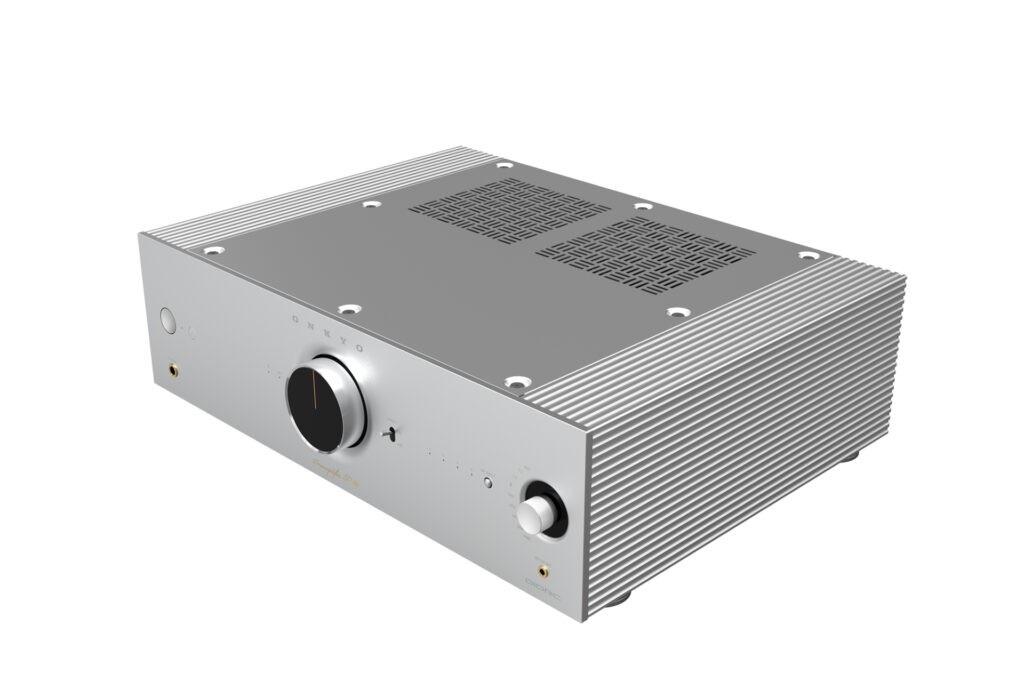
What is the Competition for the Onkyo Icon P-80 Network Preamplifier?
The Anthem STR Preamplifier ($4,299 – buy at Crutchfield) was the first thing that came to my mind, maybe because of the immense value that it also provides with room correction, a DAC, and so many other things built in. The thing that separates the Anthem from the Onkyo ICON P-80 Network preamplifier is that the Onkyo has streaming built in, while the Anthem STR has multiple balanced inputs. The other difference is that Anthem uses their ARC room correction software (which is free of charge), while the Onkyo uses Dirac Live, which has a $99 fee if you want to access the full feature set.
You may also consider the NAD C 658 preamplifier ($2,299 – buy at Crutchfield). The NAD C 658 likely represents the closest competition to the Onkyo. They have nearly all the same features, with the exception that the NAD doesn’t have an HDMI input. What the NAD does have, though, is BluOS support, which lets you stream a wider array of streaming services than the Onkyo does. This will be particularly notable for people who primarily use Amazon Music as their streaming service of choice.
Lastly the HiFi Rose RS451 ($3,295 – buy at Crutchfield) at over a thousand dollars more has a lot of the same functions as the Onkyo ICON P-80 Network Preamplifier. The RS451 uses RoseOS to allow you to use all your favorite streaming apps, including Apple Music, instead of using the Connect functionality that the Onkyo makes utilizes. It also features an 8.8-inch-wide touchscreen, has HDMI in, coaxial and optical input, and a single unbalanced input as well. There is no phono stage included, so if you are looking at this unit and you use vinyl, you will need to have a separate phono stage. I have had the pleasure of reviewing a few components from HiFi Rose and I have been impressed each time, so I wouldn’t expect the RS451 to be anything less than solid. However, it is a sizable price difference.
Final Thoughts on the Onkyo ICON P-80 Network Preamplifier
The Onkyo ICON P-80 network preamplifier represents what I feel many new audiophiles should be seeking in a preamplifier. With nearly every function, you could possibly want built in, you will be hard-pressed to find anything that comes close to this unit from a value perspective. You could easily spend $1,000 just to get streaming, room correction, and a phono stage as separates, and I think for the audiophiles who are newest to the community, that is a magnificent place to start. You get a preamplifier like this, and then you can start to customize the sound as you feel the urge, or as the money becomes available. All things considered, this is a great re-entry to the market for Onkyo and, if they continue to build components like this, it should keep them in the market for many more decades to come.
“The Onkyo ICON P-80 network preamplifier represents what I feel many new audiophiles should be seeking in a preamplifier.”



