
 By
By As I type, I am flying over Calgary and Edmonton enroute back to my home in Los Angeles from a business trip to Amsterdam. I just spent the whole week in Europe seeing clients – specifically Dali Loudspeakers – who are clients as part of the Lenbrook Group. I was invited to go to Denmark for my first time, definitely not my last, to see the Dali factory with a handful of top Canadian audiophile dealers. At dinner in Aarhus, Denmark, the second largest city in the country and a very cool town, we got into some deep conversations. We talked about how John Pax, Harvard’s 33-year-old PhD director and audiophile enabler in the music school, has never once stepped foot in a traditional stereo store (read that story here). This is mind-blowing but true: he’s bought Maggies and McIntosh with his Harvard audio budget but he’s never bought them the way that most of us have. Not in a stereo store.
Is It Possible That Traditional Stereo Stores Are Now Just Obsolete?
Overhead is a killer in the audiophile world, especially for dealers. The concept of “build it and they will come” is a globally proven historical failure. Building a bigger, fancier, more acoustically-treated, more custom-installation store is just not a smart business move. This concept has been tested in Beverly Hills, Oslo, Philadelphia, Japan and elsewhere with a zero percent success rate. Just having everything in stock or on display doesn’t make it more tempting to buy for audiophiles. If building the ultimate audiophile store is a proven failure.
Rent Needs to Be Considered a Marketing Expense in a Modern Stereo Store
Audiophiles with experience know how to buy gear. They know how to buy things used. They know how to buy things out of state with no tax. They have every trick in the book wired. Many know that they really should support their local dealer if they want to keep one or two around in their area, but this support is often done under protest by weary consumers.
Every audiophile dealer aspires to sell to lifestyle customers but, other than lip service, what do they do to find said well-heeled folks? One place to look is rent. Rent is evil, but if you put a retail (or some form of hybrid) store in a location where wealthy people shop, that brutal monthly nut becomes more of a marketing expense than a sheer overhead play. When I was growing up, there was a boutique grocery store in Cherry Hill, New Jersey (home of no cherry trees and no hills, by the way), called Zagara’s. This place was magic in its day. They had the best produce that us I-talians love. They also had a great butcher. They had an equally great fishmonger. Everything on the shelves was curated, and the smell of fresh baked Italian bread permeated the air. The place was glorious. One spot down from Zagara’s in Marlton, New Jersey was a traditional stereo store. This was long, long ago, and they would get legitimate walk-in traffic from Philly sports athletes and other folks capable of spending real money on audio and video. Both retailers are gone now, but they thrived for decades in a symbiotic win-win retail relationship. Perhaps reinventing how a dealer looks at rent could change the outlook for their business?
We Are Suggesting That Traditional Stereo Stores Need to Be Fully Reinvented
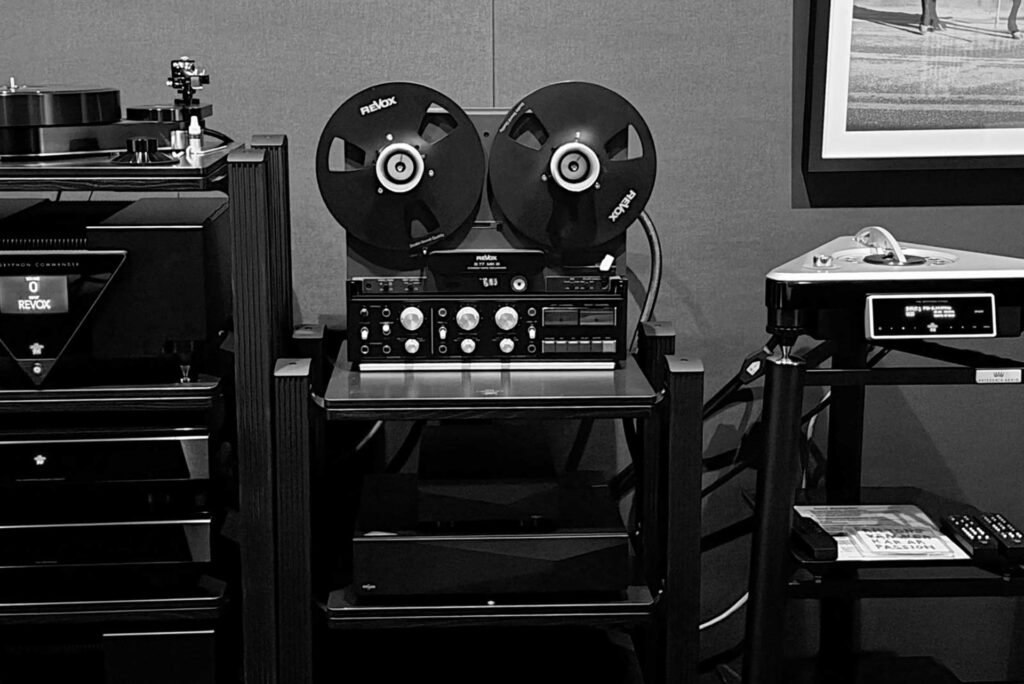
Joe Cali, the consensus greatest stereo salesman in world history (as well as my old boss at Cello Music and Film Los Angeles, along with Mark Levinson, in the 1990s) has a new retail store built around the Danish brand Gryphon. I just visited The House of Gryphon this past week in Denmark, and their gear is stunningly high-end and sonically delicious. What Cali did that was so smart was to locate his showroom inside another custom installer (Cali does the custom installation for Hollywood’s celebrities – like ALL the really big ones – it is a crazy list) at The Pacific Design Center. If you’ve never heard of the PDC, it is a giant shopping mall for uber-expensive interior design elements: $30,000 sofas, $400-per-yard fabrics, crazy expensive stuff – like Gryphon – sell like they aren’t all that crazy inside the walls of the Blue Whale, as it is known. The PDC is supposedly all “to-the-trade” but uber-rich people walk the halls. You never know who might present themselves out of nowhere, and a huge, life-changing sale can happen out of nowhere. Joe is onto something here.
I would argue that this is the case. Traditional retailers look down on custom install guys because they don’t have a store per se, but the CI guy is using his client’s money to buy the gear, thus never has to “floor” much or “inventory” much with their own money. This is a key reason why CI guys often drive Ferraris but they get in trouble with that act, too, when they show up at their wealthy client’s home and forget that they are a subcontractor, not an upper-class one-percenter (plus).
There are creative ways to go about selling audio that could merge the earlier concepts without blowing up your overhead. Here are some ideas that I would look into if I ever were to become an audiophile retailer …
I don’t go to the San Fernando Valley very often, but the best reason to do so is to fly somewhere on a private jet from Van Nuys – the most trafficked private airport in the world. Real estate isn’t crazy expensive at airports, especially FBOs (fixed-base operation) for private jets. Imagine if you had a cool setup of world-class headphones, eye-catching turntables and vinyl on display at the FBO that, say, NetJets flies from? The guy who can afford $500,000 for a fully consumable jet card can afford any audiophile turntable that he desires. So can most of the people on his jet going to God-knows-where. The issue with this client is accessibility and awareness. It isn’t like he is going to miss his flight when he’s paying $8,000 an hour to fly somewhere. The plane will wait for that track from Dark Side of the Moon to finish.
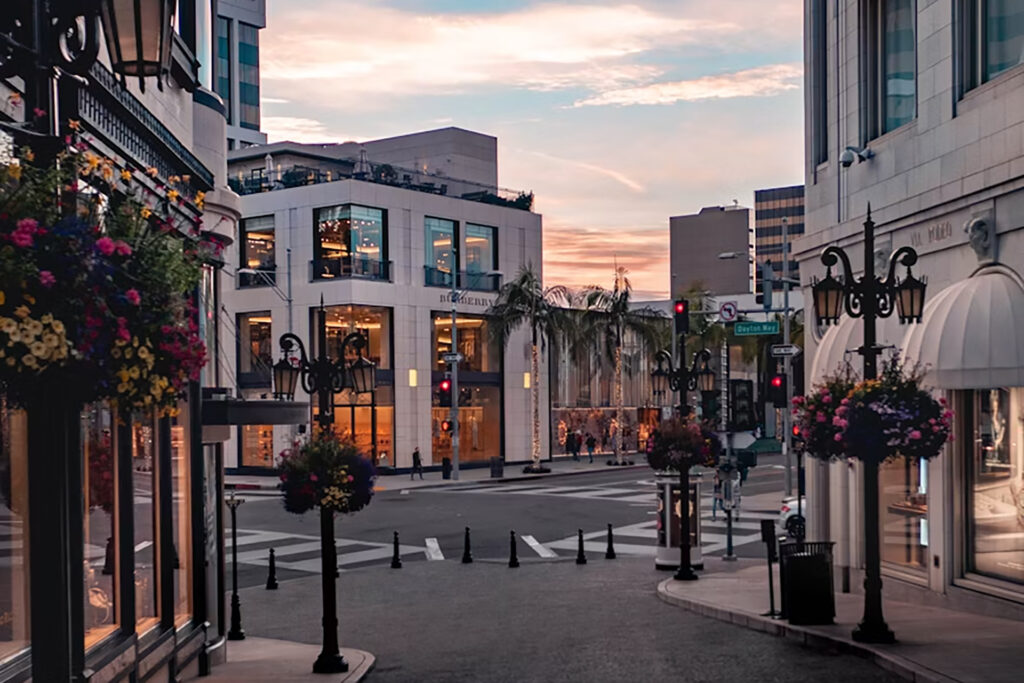
My friend Raman Dooman ran the Brioni Store on Rodeo Drive, which is how I was fortunate enough to get men’s suits well above any price that I could ever afford. Dooman had a display at The Peninsula Hotel in Beverly Hills and made sure some of the key executives were taken care of well. If the concierge gets someone looking for higher end men’s clothes, where are they sending him? There are even little clothing boutiques in the hotel that quietly do well. Could an audio store thrive with a little listening room at The Peninsula? It is possible, based on the rent. I can tell you that the old guy who I met (one-half of an adorable couple) who drove his 1936 Bugatti sedan with his wife to tea at The Peninsula can respectfully buy anything he or his wife wants. She likes the harp player, so perhaps they want that experience at home? That can be done in this nontraditional audiophile retail model.
Is Traditional Retail the Wrong Way to Look at Modern Audiophile Stores?
There are other successful audiophile models like the one followed by Sunil Merchant at Sunny Components in Covina, California. He is the top CH Precision dealer in the country, but his industrial building is near train tracks in a nearly all-Asian neighborhood, about 30 miles east of downtown Los Angeles. Merchant sells just as many million-dollar audiophile systems as Joe Cali at the PDC or Maier Shadi at The Audio Salon in Santa Monica. Merchant’s model is to offer great sound and a great experience that requires you to drive there. This is the opposite of the FBO or Zagara’s model, but this low-overhead model works, too.
Final Thoughts on New School Audiophile Retail Stores
In February, I was talking with the impressive young Lucca Chesky, before the two of us presented at Harvard University how to get a killer job in the audio business. Lucca is 18 years old and he had already figured it all out. His made-in-America speaker business is cranking out 3D-printed high-value speakers as fast as they can to keep up with the mighty demand so good for Lucca. What he told me that was mind-altering was that he gets all his news from TikTok. What? That’s Chinese spyware, dude. The kids don’t care and the ways that we’ve always done things are different now. We need to accept that and adjust accordingly.
Change is not a concept that traditional audiophiles thrive on. Those who can’t adapt will be lost, simply put. The way we consume goods, specifically luxury goods, and media is all different now and it is not going back to the old way. FutureAudiophile.com is killing it on Instagram in 2026 (thank you, Eric Forst), but I am now looking at how to make authentic videos for TikTok. Adapt or die, right? The same goes for audiophile retail. The times they are a-changin’ and we are in an evolve or die model. The good news is that change and evolution might be hard, but they come with a really big upside.
Would you consider buying your audio gear from a non-typical audiophile dealer? Where do you normally buy your audio gear? Where do you see yourself buying your gear in the future? Share your two cents on this matter and we will post your comments ASAP.




I’ve been rethinking the traditional dealership model and see strong potential in a more strategic, experience-driven retail footprint. Instead of relying solely on standalone showrooms, brands could meet customers in high-traffic, high-intent environments.
Major hub airports, for example, could host premium listening lounges—similar to high-end airport clubs—with paid access. These spaces might include a large, curated listening room with pre-programmed music, alongside smaller private rooms that users can reserve to audition systems using their own streaming accounts.
In urban centers and luxury travel destinations, upscale hotels present another compelling opportunity. A small number of suites or dedicated listening rooms outfitted with high-end systems could introduce guests to the experience in a relaxed, aspirational setting.
Luxury auto dealerships offer a natural partnership as well. Customers waiting for service could spend time in acoustically treated rooms exploring audiophile systems—an aligned, lifestyle-oriented extension of the brand experience.
Finally, temporary installations at major music festivals could serve as powerful awareness drivers. While not immediately transactional, these spaces would expose new audiences to true high-fidelity sound, planting the seed for future interest and demand.
Isn’t one of the tenants of this website to bring audio to a wider audience and (attempt to) de-snob-ify it? While the topic itself is relevant and interesting, all the solutions are for the “1 percent plus”. How about plays on places where young people and music mix, vs. the Uber-wealthy? Vinyl Shops (CDs and cassettes too), listening bars and coffee shops to name a few?
A lot of snobbery comes from the wanna-bees more than the rich. People with money are the untapped market.
Would you consider buying your audio gear from a non-typical audiophile dealer?
Yes
Where do you normally buy your audio gear?
Online
TMRAudio
Audio Advice
Turntable Lab
Crutchfield
Upscale Audio
Directly from manufacturer
Buchardt
Tekton Design
US Audiomart
Ebay
Audiogon
Our local custom installer store: Bjorn’s
Where do you see yourself buying your gear in the future?
Same as above; it all depends on the brand and the item I am interested in
You suggestions about re-facing the HiFi dealer seem to be ideas ONLY for the luxury market. How about the NON luxury market of HiFi which I assume is more abundant in mere prospect customer numbers?
I have heard that Schiit was going to open a shop in San Antonio, TX a la B@O. Maybe that is a model that could work for the mainstream if the HiFi can afford it.
I have also dealt with dealers that work from their homes and have a display room at their houses and it is by appointment ONLY. This might be the new retail model to come…..?
Yo Jerr! As a Philly guy that was wandering the King of Prussia mall this past weekend with his wife it hit me that, this would be an ideal spot for a HiFi showroom, amongst Louis V, Tiffany, Porsche, etc it’s where the well to do in the area pop in for a physical looksie and feelsie before dropping some dough.
It’s funny you mention the PDC. My daughter was interning in Cali this past spring as an Interior Design student and went there on an install because the $20K couch that was ordered for an ultra high-end penthouse in Beverly Hills wouldn’t fit around the corner of the front door. She said the place (PDC) was insane!
I think you’re right though, the traditional B&M just doesn’t seem to cut it anymore.
Bill
The rent is WAY WAY WAY WAY TOO HIGH there.
I would put my Philly audio store in like Fishtown so that I could buy Tranq and Heroin but keep my rent down.
Overhead is a killer.
Haha! But to your point, that rent gets you eyeballs and traffic!
Maybe something like what World Wide Stereo is trying out in Wayne – more of a showroom design center than a traditional store is the ticket? We shall see…
If the high end audio manufacturers were smart they would turn every raving fans home into a mini-store. If I could earn a 10% commission by selling a Magico, DanD or a dCS product I have in my listening room I’d be out there hustling.
If you love audio and can sell AND you are willing to work on commission – you will have NO SHORTAGE of places that will hire you to sell Dan D (first review just came in) Magico etc…
When I was a kid in college I made $150,000 a year (like 1994) selling expensive Cello gear on this exact model.
Agreed, I’m retired now, but 40+ years ago, I worked at Tech Hifi (mid fi) through high school and Nuts About Hifi (Krell, Apogee, Cello, Classe, etc) through college.
I was really excited about Future Audiophile when I first came upon it. Now it appears that your future is just audio for 1%ers. Don’t they get enough already? Private Airports? Yes that’s where I buy all of my audio give me a break! You have painted a bleak future!
Nonsense. Well run retail works. Stereo Unlimited in San Diego. No attitude. Sells $300 and $30,000 turntables. Lots of Vandersteens and Macintosh. Re-sells gear he sold originally when the customer passes away. Has 2 rooms of vinyl. Does installation work. No attitude. Located in a busy area but in a very plain small strip retail. Next to a paint shop and a reptilian pet shop. No Attitude. Did I mention that yet?
The reason traditional stereo stores might be failing, especially at this exact point in time, seems pretty damned obvious to me: the vast numbers of true audiophiles who, all else being equal, would spend half their lives and most of their disposable income in stereo stores, are today feeling the squeeze of a failing economy and, therefore, are now less likely to drop the kind of cash involved, to buy what is, in essence, simply a new bunch of toys. Simply put: watch is their spirits.Would like to comma in practice fewer people anymore can AFFORD the stereo equipment they’d like to have, and that stores are trying to sell.
I know the feeling: I rarely had any money for such purchases as a kid, and had to save up for several years to buy the Pioneer receiver and cassette deck that constituted my most recent purchase of brand-new stereo equipment for myself — circa 1978! Since then, the speakers and cassette deck have failed and been discarded (couldn’t get anybody to even TRY to repair the cassette deck), and the receiver has a few minor problems that I’m currently working around by using external switch boxes and relabeling the source selectors on the receiver, even AFTER somebody supposedly “repaired” it a few months ago.
Several of those sources are a literal stack of used cassette decks gleaned from Goodwill, garage sales, etc. — each of which has a different flaw: one of them will play, but not rewind, another will rewind but not play, and so on. I’m always on the lookout for a good, solid, even-semi-still-working, cassette deck, mainly so that I can play my 400 cassettes one last time each, and digitize them, before working cassette decks become completely unavailable.
You’d think with the resurgence of music releases on cassette, somebody would get wise and start remanufacturing affordable cassette decks — but no. The only brand-new cassette-capable device I’ve seen on the market had a sticker price of over $1,500, which is hilariously too expensive for me; even a TENTH of that price would be on the hairy edge of affordability and justifiability, in this house! My only hope is that I’ll live long enough for purchasers of this device to eventually sell it off at their own garage sales, etc., ten or fifteen years from now, at a price point I can accept.
Ditto decent, working, analog turntables, which I recently saw priced at between $300 and $1500 — in a used record store in Missoula, Montana, of all places. I suppose there is a certain “whatever the market will bear” factor here, such that some people are wealthy and desperate enough to pay those kinds of prices — but those guys have got to be few and far between, and not enough to keep a stereo store afloat. Cut prices by 90%, though, and watch the customers roll in! I’d be there with bells on.
Hey Jerry, did Raman have his picture on billboards for the Brioni store. I think I saw one near Century City once.