
 By
By Thankfully, there has been an increase in the amount of active speakers entering the audiophile market over the past few years. I figured it was about time that I reviewed an active speaker from ATC, one of the companies that has been doing this longer than most. I had a passing familiarity with ATC from seeing them at audiophile shows and better stereo stores for decades, but only recently did they really catch my attention. ATC was started by Bill Woodman in 1974 to manufacture drive units for professional speakers. After making drivers for approximately a decade, ATC released two models of active speakers in 1984. ATC’s speakers have been understated in appearance and, in typical British form, the company itself is reserved. This has allowed them to fly under the radar of many listeners. Even those familiar with the audiophile market who may have heard of the company might not be familiar with their speakers.
ATC is one of those audio companies that tends to mean more to people who already know what they are listening for. Unlike brands that build their reputation on visual drama or audiophile fashion, ATC’s standing has been earned quietly over decades in professional studios, broadcast environments, and mastering rooms. Their products are designed to do a job first, and to do it consistently, day after day, while staying true to the signal. That philosophy carries over directly into their domestic loudspeakers, and nowhere is it more clearly expressed than in the ATC SCM20ASL.
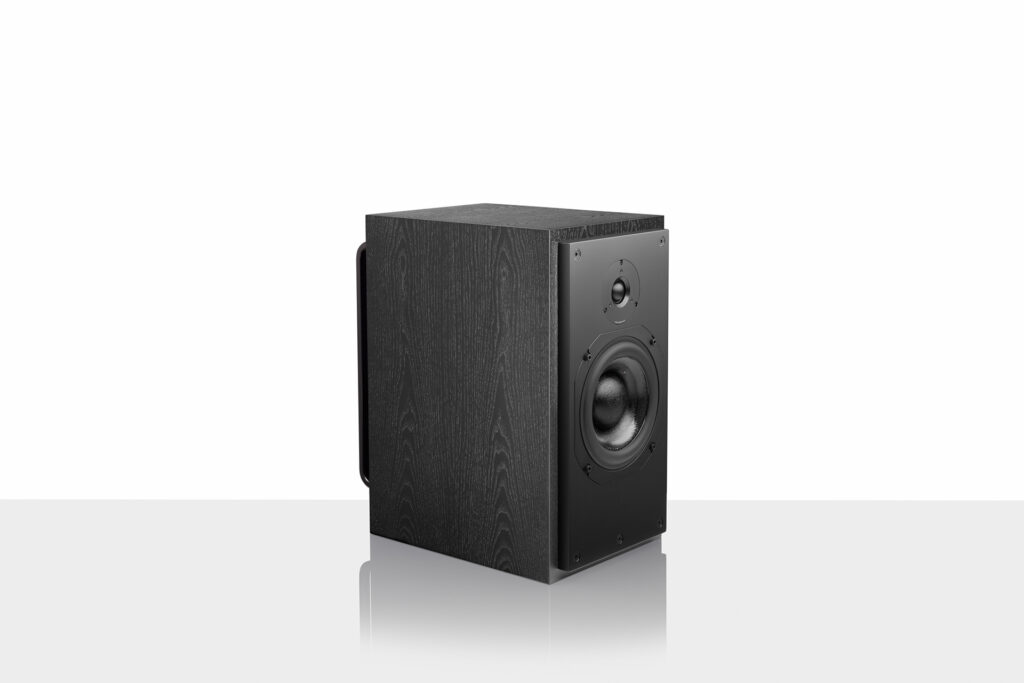
The ATC SCM20ASL is the smallest speaker in ATC’s active speaker lineup. It is not the smallest speaker they make; that would be one of the passive speakers from their Entry lineup. The ATC SCM20ASL speaker is a sealed, two-way monitor that brings much of ATC’s professional DNA into a form factor suitable for real living spaces. This is not a lifestyle speaker by any stretch, but it is also not an uncompromising studio box dropped unceremoniously into a domestic cabinet. This speaker can be had in either active or passive versions, in a stand-mounted configuration or mini-tower. A wide variety of finish options, including several veneers, are offered. In the stand-mounted active configuration I reviewed, the speaker retails for $10,999 per pair. I also briefly inserted an ATC subwoofer into the system: the SCS70, the professional version of the consumer C4 mk2 subwoofer.
What Makes the ATC SCM20ASL Loudspeakers Special?
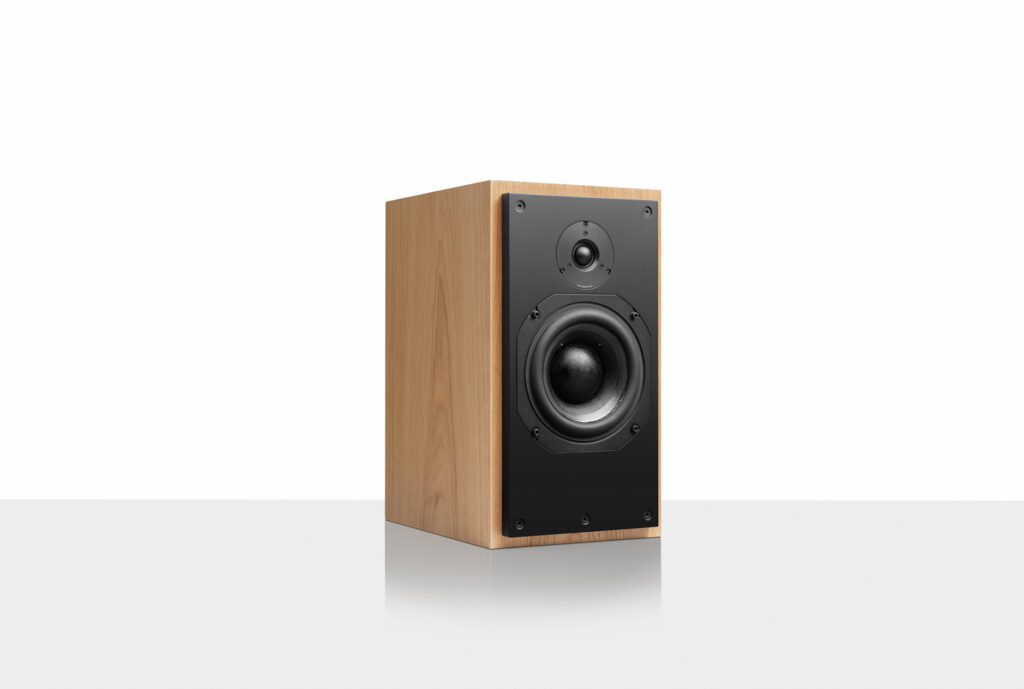
- At first glance, the ATC SCM20ASL looks deceptively simple. It is a two-way, stand-mounted loudspeaker, housed in an attractive but simple sealed enclosure, with no external DSP, no streaming capability, and no attempt to disguise its professional audio roots. The key difference, and the reason the SCM20ASL exists at all, is that it is a fully active design.
- Each speaker contains two dedicated Class-A/B amplifiers: 200 watts for the mid/bass driver and 50 watts for the tweeter. The crossover is implemented actively using a second-order Linkwitz-Riley topology, allowing ATC to control driver behavior far more precisely than would be possible with a passive network. This is not simply about efficiency or convenience; it is about reducing distortion, improving transient accuracy, and ensuring consistent performance, regardless of load.
- The mid/bass driver is ATC’s 150-millimeter Super Linear unit, a driver design that has become central to the company’s reputation. The Super Linear motor incorporates a shorting ring that significantly reduces odd-order harmonic distortion, particularly in the critical midrange. I remember seeing the ATC drivers sitting out at a show and noticing them as being quite heavy for their size and robust in construction. This is not an exotic or flashy driver, but it is one that has been refined over many years with a singular goal: accuracy under dynamic conditions.
- High frequencies are handled by ATC’s 25-millimeter soft-dome tweeter, a dual-suspension design that emphasizes controlled dispersion and low distortion rather than exaggerated extension. It is a tweeter that prioritizes integration and tonal consistency over sparkle, which is very much in keeping with ATC’s overall design philosophy.
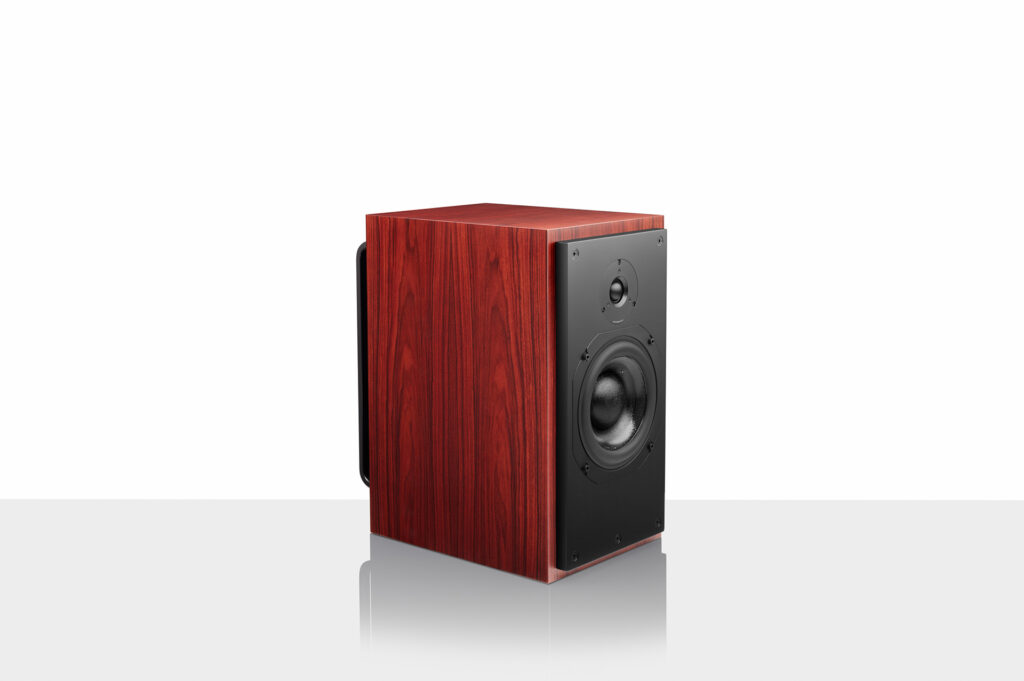
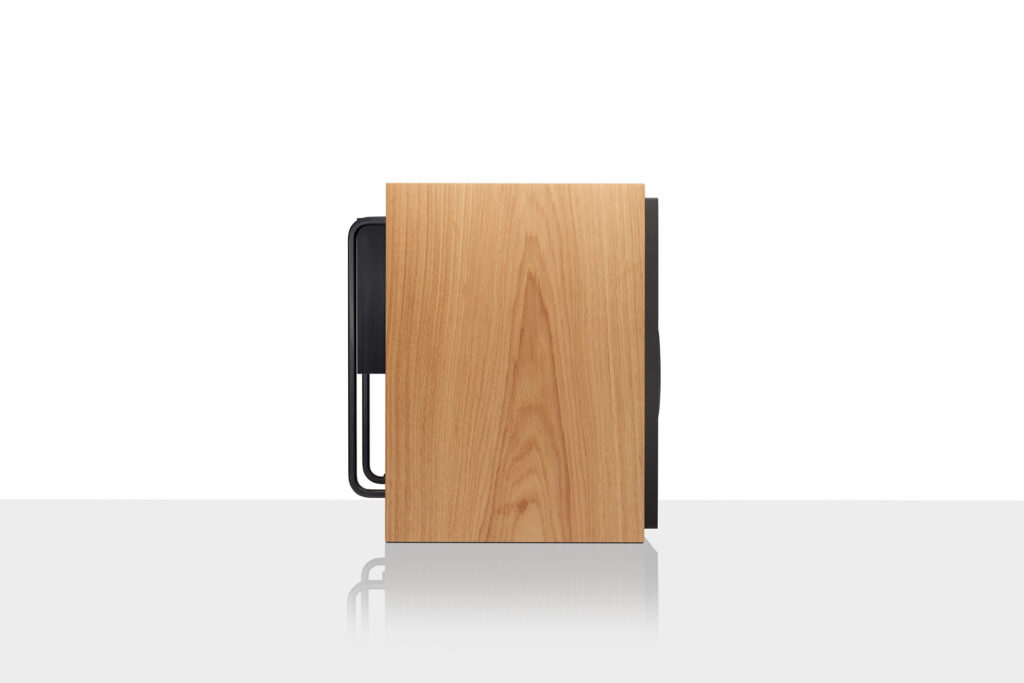
- The cabinet itself is a sealed, heavily braced enclosure, finished in either satin black or satin white as well as a variety of wood veneers. The cabinets were modestly sized at 17-and-11/16th inches high by nine-and13/16th inches wide and 16-and-3/16th inches deep, weighing in at a whopping 53.6 pounds apiece. I was very thankful for the built-in handles on the rear panel. My review samples were in an attractive, very nicely finished Burr Magnolia veneer. The sealed design is worth emphasizing. In an era when even small speakers rely heavily on ports or passive radiators to achieve low-frequency output, ATC remains committed to sealed loading for its time-domain benefits. Bass extension is more modest on paper, but control, speed, and integration with the midrange are exemplary.
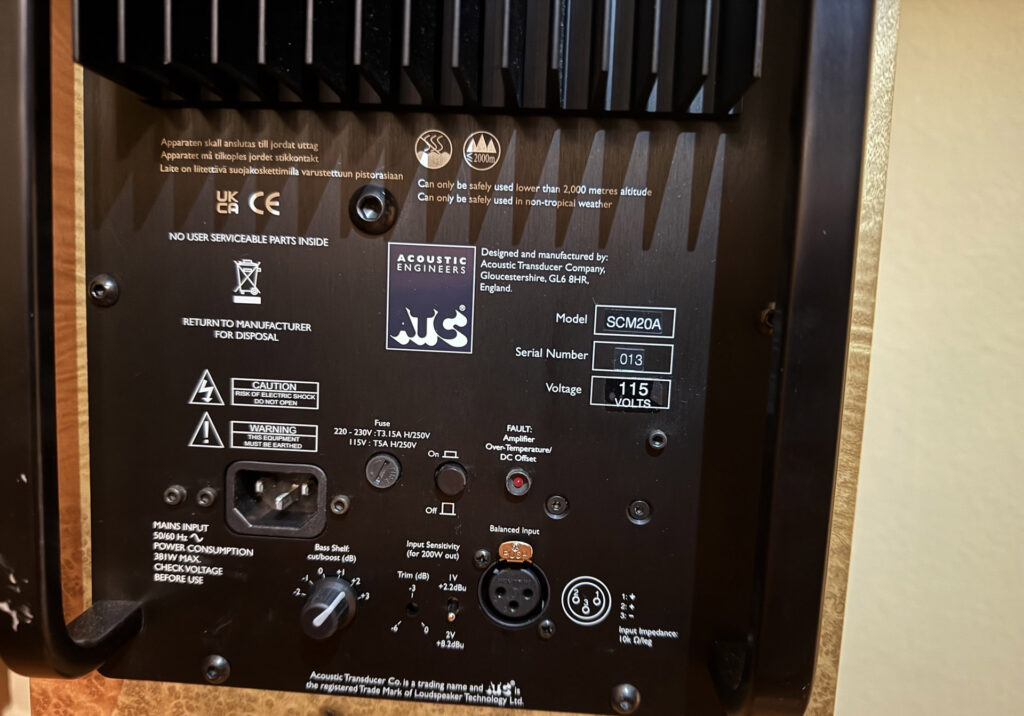
- On the rear panel, ATC provides balanced XLR inputs, along with sensitivity adjustment and a low-frequency shelf control. These are practical, professional features that acknowledge the realities of room acoustics and system matching without resorting to digital signal processing.
- There is an option in the ATC SCM20ASL available in a passive form, sans the four pack of amps. The passive version is the ATC SCM20PSL speakers $6,499 MSRP.
ATC SCM20ASL Active Loudspeakers Specifications
| Type | Two-way active stand-mount, sealed 20-liter cabinet |
| Drivers | 1-inch S-Spec soft dome tweeter; 6-inch Super Linear mid/bass with 3-inch voice coil |
| Amplification | Class AB MOSFET, 200 watts mid/bass and 50 watts tweeter per speaker |
| Crossover | Active analog, 2nd-order Linkwitz-Riley |
| Maximum SPL | 108 dB continuous, 114 dB peak (pair, one meter) |
| Input | Balanced XLR; sensitivity 1 to 4 volts RMS adjustable |
| Controls | Input sensitivity and bass shelf |
| Dimensions (H x W x D) | 17.7 x 9.8 x 16.2 inches |
| Weight | 53.6 pounds each |
| Warranty | Six years |
| Price | $10,999 at review |
Why Should You Care About the ATC SCM20ASL Active Speakers?
The ATC SCM20ASL will appeal to listeners who value consistency and truthfulness over spectacle. This is a speaker designed to tell you what is on the recording, not what the speaker thinks you would like to hear. That makes it an ideal candidate for a reference system – one where changes in upstream components, recordings, or room adjustments are immediately audible.
The active architecture also simplifies system building. With amplification and crossover design handled internally by ATC, the user is freed from the often-fraught process of amplifier matching. What remains critical, however, is the quality of the source and preamplification. The ATC SCM20ASL is not forgiving of poor upstream components, and that is precisely why it works so well as a reference tool.
In smaller-sized rooms, the ATC SCM20ASL can serve as a complete, almost full-range solution for listeners who value accuracy over sheer output. For larger rooms, or when low-end extension is desired, it integrates exceptionally well with a high-quality subwoofer, particularly one that shares its emphasis on speed and control.
Some Things You Might Not Like About the ATC SCM20ASL
- These speakers are also physically substantial. Each cabinet weighs close to 60 pounds, and proper stands are not optional. Placement and set-up matter, and the ATC SCM20ASL rewards careful positioning far more than casual installation.
- Bass extension, while clean and articulate, will not satisfy listeners who prioritize deep, room-filling low frequencies without LFE (subwoofer) assistance. This is a consequence of the sealed design and compact cabinet, not a flaw, but it is something to consider honestly.
- The ATC SCM20ASL is unapologetically sonically neutral. If you are looking for a speaker that adds warmth, bloom, or euphonic coloration, this is not that speaker.
Listening to the ATC SCM20ASL Loudspeakers
My primary listening was done using a Marantz SACD 30n (read my review) as a source feeding a Krell Phantom III analog preamplifier via single-ended connections. The Krell was connected to the ATC via balanced cables. The cables were all Wireworld Eclipse 8 Series cables. The SCM20ASLs were placed approximately seven feet apart and about two feet from the front wall, with minimal toe-in. Final placement was determined by imaging precision rather than bass reinforcement. I used the Bass Shelf cut/boost adjustment to boost the bass by two dB.
I began with familiar vocal recordings, starting with Shelby Lynne’s Just a Little Lovin’.Through the ATC SCM20ASL, Lynne’s voice was rendered with striking clarity and stability. There was no added warmth, but also no edge or sonic glare. Sibilant elements were present only where they existed on the recording, and the sense of scale was convincing, despite the speakers’ modest size. If you like the in-the-studio, immediate and accurate sound, you are going to love the ATC SCM20ASL speakers.
Moving to Joss Stone’s The Chokin’ Kind, the ATC SCM20ASL demonstrated its ability to maintain composure as arrangements became denser. The midrange remained intelligible, well-defined and uncompressed, with instruments occupying clearly defined spaces within the soundstage. The speakers did not exaggerate width or depth, but what they presented felt proportionally correct. Accurate is a term that comes to mind again here.
On acoustic material, such as Neil Young’s Live at Massey Hall, the ATC SCM20ASL excelled at conveying timing and micro dynamics. Guitar transients were fast and unblurred, and the decay of notes felt natural rather than truncated. The sealed enclosure’s contribution here was obvious: bass notes started and stopped with authority, without the slight overhang often associated with ported designs.
Electronic material provided a useful contrast. Billie Eilish’s Therefore I Am revealed the ATC SCM20ASL’s limitations in ultimate low-frequency output, but also its strengths in overall sonic control. The bass that was present was exceptionally clean and well-integrated, never masking midrange detail. Listeners accustomed to larger speakers may want more weight, but the quality of the bass on offer was undeniable.
ATC was kind enough to loan me their SCS70 Pro subwoofer, which is the commercial equivalent of their C4 Sub Mk2 but without the fancy veneer. It was impressive. The sub was positioned just inside and slightly back from the right channel speaker. I set the low pass to 80 Hz and adjusted the volume by ear and was able to get a smooth integration pretty fast. Listening to Eilish’s Therefore I Am with the subwoofer made a noticeable impact, pun intended. The bass notes hit hard and clean with palpable impact.
Listening to Marcin’s version of “Kashmir,” the subwoofer added weight to the lower notes and guitar slaps while remaining nimble enough not to block the texture of the guitar or reduce the sense of space. I also tried The Eagles’ “Hotel California” from the MTV Unplugged album and found the drum hits to be well-formed, with the appropriate weight, and the lower bass notes blending smoothly with the ATC SCM20ASLs.
Throughout my listening, what stood out most was the SCM20ASL’s consistency. Changes in recordings were immediately apparent, and upstream adjustments were clearly audible. This did not change at any listening volume. Micro-dynamics remained audible at low volumes, and I heard no loss of composure at higher than comfortable volumes. This is the hallmark of a true reference tool.
Learn how to position your audiophile speakers better with help from editor, Paul Wilson.
Will the ATC Speakers SCM20ASL Hold Their Value?
ATC products tend to hold their value well, particularly the active models. The company’s long history, in-house driver manufacturing, and conservative design approach contribute to long service life and continued relevance. While shipping costs for heavy speakers are always a consideration, the ATC SCM20ASL’s reputation among knowledgeable listeners should support strong resale value. The growing consumer appeal is nice, but the pro audio demand is what keeps the prices on used ATC speakers strong.
What Is the Competition for the ATC SCM20ASL?
At $10,999 per pair, the ATC SCM20ASL competes in a growing category of premium active loudspeakers aimed at serious listeners who want reference-level performance without the complexity of external amplification. Most of the competition in this price range falls into two camps: DSP-heavy active speakers designed to compensate for room acoustics, and traditional passive speakers paired with high-quality amplification. The ATC SCM20ASL charts a more analog-centric path between those two extremes.
Genelec 8341A “The Ones” – $7,400 per pair
The Genelec 8341A is one of the most obvious competitors for the SCM20ASL. It is a three-way active speaker, using Genelec’s coaxial “point source” design, with built-in Class-D amplification and extensive DSP. The 8341A offers room calibration via Genelec’s GLM software and claims a frequency response extending into the low 30 Hz range once room correction is applied.
In practice, the Genelecs offer exceptional imaging consistency and perform very well in less-than-ideal rooms. However, they rely heavily on digital signal processing to achieve their results. Listeners who prefer a simpler analog signal path and who value time-domain accuracy over room-corrected flatness may find the ATC’s approach more satisfying over the long term.
Dutch & Dutch 8c – $16,500 per pair
The Dutch & Dutch 8c (read Mike Prager’s Review) is another strong competitor in this price range. It is a DSP-controlled active speaker with multiple Class-D amplifiers and built-in room compensation filters. The Dutch & Dutch 8c offers deeper bass extension than the ATC, reaching into the low 30 Hz range, and is designed to work close to room boundaries. For listeners who want a full-range presentation without adding a subwoofer, and who are comfortable with software-based set-up, the 8c can be very appealing. Compared directly to the SCM20ASL, the Dutch & Dutch leans more heavily on digital correction, while the ATC emphasizes mechanical driver control and analog crossover design. Which approach is preferable will depend on system philosophy as much as on sound.
Kii THREE – $14,000 per pair
The Kii THREE sits at the upper end of this competitive set. It uses multiple drivers per cabinet, extensive DSP, and over 1,000 watts of Class-D amplification per speaker to deliver controlled dispersion and impressive low-frequency output from a compact enclosure. The Kii THREE can outperform the SCM20ASL in terms of bass extension and room adaptability, but it does so at a higher price and with greater system complexity. For listeners who want a “one-box” solution capable of filling larger rooms without a subwoofer, the Kii is compelling. For those who prefer a simpler, more traditional signal path and are comfortable integrating a subwoofer if needed, the ATC remains a strong alternative at a lower price point.
Final Thoughts on the ATC SCM20ASL Loudspeakers
The ATC SCM20ASL is not designed to impress on first listen with exaggerated bass or a romantic tonal balance. Instead, it earns its place through honesty, control, and repeatable performance. As a reference tool, it excels, providing a stable, trustworthy window into recordings and system changes. For listeners who value accuracy above all else, and who are willing to build a system around that priority, the ATC SCM20ASL is easy to recommend. It does not chase trends, and it does not apologize for its professional roots. It simply does its job, and does it extremely well.
In a hobby often driven by novelty and shiny new toys, the ATC SCM20ASL stands out by offering something far more enduring: a reliable point of musical reference. I thoroughly enjoyed listening to the SCM20ASL speakers and their well-made, classic yet attractive sealed cabinets should provide ample ability to fit in décor with more position flexibility than that of many other audiophile speakers.
Compare it with our reviews of the Dutch & Dutch 8c, Piega Ace 30 Wireless and Klipsch The Fives II. Comparing options? See the best audiophile bookshelf speakers we’ve reviewed from FutureAudiophile.com.



