
 By
By Things are a lot more complicated today than they were 30 years ago. In business, I could call a customer and, if they did not answer the phone at the time, they usually returned the call soon thereafter. Today, voicemail is seldom used, as many people of varying ages would prefer to text or email, versus interacting with their voice in real time. Back in the 1980s, there were more than the three television stations of my formative years, but probably not many more than about eight or so. We thought we were living in such modern and exciting times. As for our stereo systems, digital was burgeoning into a viable format – this despite the Compact Disc’s claim of “perfect sound forever.” Even with the promise of consumer-level digital audio playback via CDs, our audio systems were pretty simple, yet provided a lot of joy.
Technology has revolutionized our lives in so many ways in the modern world. I purchased my first computer around 1990, I believe. My first cell phone, hard-mounted, even bolted to the floor of the car, came in 1992. I was so proud and rode around in the car secure in my belief of how cool I was to even own a “car phone,” as we called them back then. And when the Internet came about, OH, wow, my world forever changed. I well remember the dial-up modems making all that buzzing, whirling sound as a connection to the world was attempted. When I clicked on a website, at a blistering 2,400 bps, no less (my current service is 1,000 Mbps, and I have 2,000 Mbps available if I want to upgrade) and, lo and behold, about 30 seconds later, it was right before my eyes on the screen! Monitors were these behemoth things that weighed so much, moving them was a very deliberate act. Not like today, when my 40-inch computer monitor mounts on a wall and is transportable under one arm. In those times past, we were no longer encumbered by the trappings of our limited exposure to the world. The Internet brought the world to our doorsteps – 30 seconds at a time. My, how times have changed.
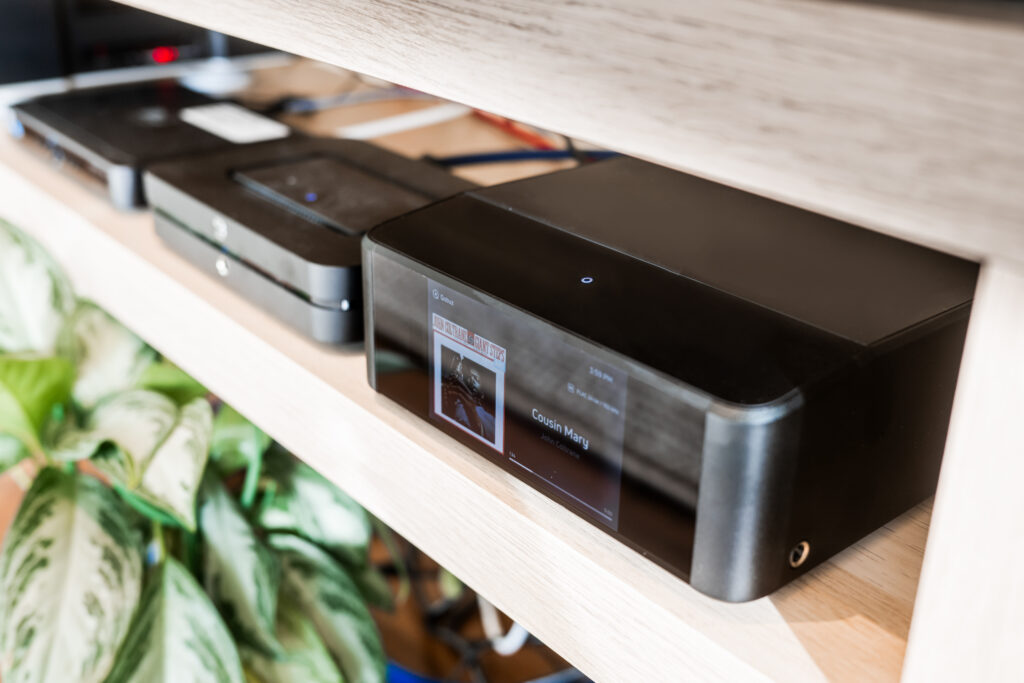
How Did Today’s Audiophile Systems Get So Complicated?
- My beloved first true audiophile system, purchased in 1973 after almost an entire year of yardwork, consisted of a Marantz 40-watts-per-channel integrated amplifier, a JVC turntable and a pair of Acoustic Research AR6 loudspeakers. My speaker cables were, predictably, lamp cord. My system proudly sat on heavy-walled boxes from the grocery store. I was so enamored by this system, I kept it even when it was no longer in use. In fact, I have been moving it around from house to house for 53 years. No matter how many systems I will ever own, this one was my first. Without question, it was a simple system which brought me unlimited joy.
- Before the 1970s had even ended, the cassette was widely popularized and offered something the music listening world very much wanted and appreciated – variety. One could play music on a turntable or a cassette deck. I had – in fact, still have – a JVC cassette deck I’ve been moving around since 1977. While maneuvers with pencils, Scotch tape and head-cleaning kits added some complexity, it hardly compares to trying to make a router connect to an audiophile streamer without a support call to India.
- Digital changed how music was enjoyed and continues to reinvent itself at an astonishingly rapid pace. The Compact Disc was introduced by friend-of-the-publication Marc Finer on October 1, 1982. From that moment on, I essentially stopped buying LPs. Pop a CD into the tray or, better still, load one into a six-CD cartridge (I had a friend who had a 50-CD rotating carousel), and I could play music without having to run to the turntable every 15 minutes. I could also, thankfully, skip any song I disliked without the careful touch needed on a turntable. I had literally hours of uninterrupted music at my disposal. I never had it so good, or so I thought at the time.
- Digital audio accomplished a pretty extraordinary feat; it almost ended the other competing analog formats. LPs, while never really going completely away, did become very hard to find. After 1982, I don’t think I purchased an LP for 20 years or more. While vinyl is back as a legacy format in which I am today heavily invested, just having an early Compact Disc player, or even a CD transport and DAC, was a simpler way to enjoy music. The cost of owning a large library of music was astronomical, but it was something everyone did. Today, young audiophiles don’t know a world without unlimited access to CD- (or often far higher) quality audio at a subscription price equivalent to the cost of one silver Compact Disc.
- When Apple was in development of the iPod, Steve Jobs never really was concerned about sound quality. His primary goal was quantity. The early goal of the iPod was 1,000 songs on a device small enough to fit in a shirt pocket. Today, our smartphone is basically a handheld computer capable of incredible photography, holding 100,000-plus songs, streaming videos/movies, being a calendar, an airplane boarding pass, a credit card, a boardgame and many other tasks too numerous to mention. None of us today can dream of living without a smartphone, but are we happier today with doom-scrolling versus $0.25-a-minute analog cellphone calls?
- Today’s streaming options are vastly superior to peer-to-peer download sites like Napster and LimeWire from the past. While there is an actual cost to streaming music, at least artists and labels get paid a little for your listening pleasure. There are many options to choose from in the streaming world today, be they from Apple, Amazon, Qobuz, Spotify, Tidal or others. For the cost of a single Compact Disc purchased back in the day at the local record and CD store, today we get unlimited access to pretty much all the music ever recorded in history. In terms of ease and access to music, things are certainly better today than in the past on the digital audio front.
- Today’s audiophile equipment is increasingly computer-like. Class-D power amps use semiconductors to make a tube-like, or Class A-like sound with no heat and little power consumption from a small package at a low price. That is a game-changer. Today’s electronics often come with room correction, which can be complicated, but provides potentially massive sonic benefits in the real world. Firmware and software updates provide performance, longevity and security, but add complexity, like so many other parts of our overly complicated world today.
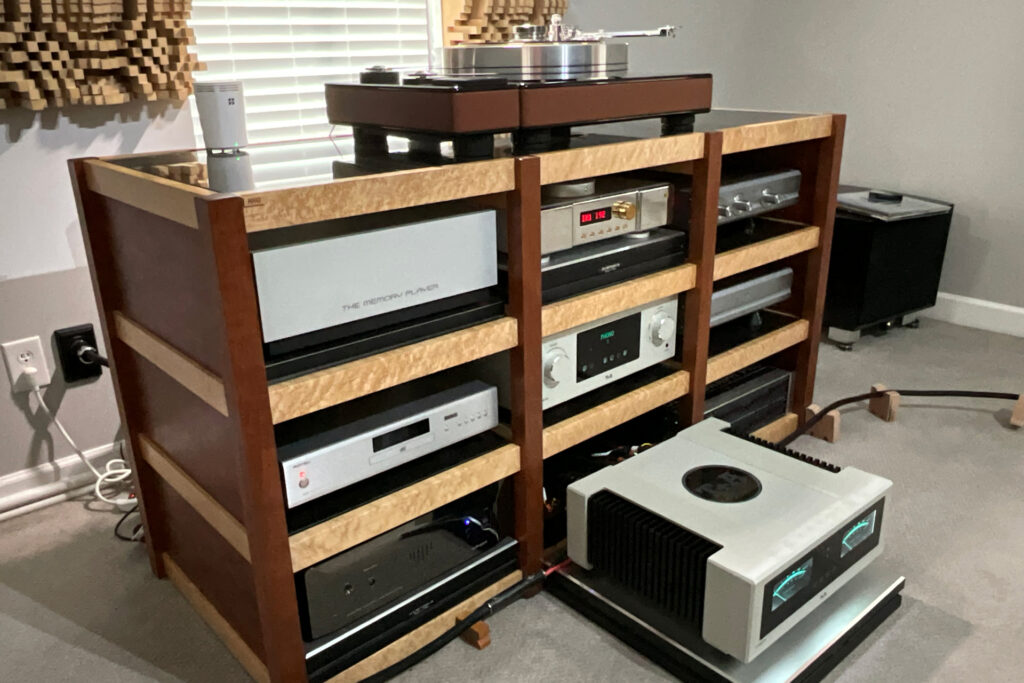
How Audiophile Systems Have Become More Technologically Advanced
- Systems of the 1950s were rather simple when you look back in audiophile history. Vacuum tube amplification, a turntable and speakers were the basic configuration of most consumer systems. The cable wars, as some enthusiasts call them, were decades in the future. Some systems had a dedicated stereo preamp, and there were the rare systems utilizing reel-to-reel. Things were simple then. Audio and audio technology have certainly changed in the modern world with significant benefits, as well as some notable drawbacks.
- Amplifiers are excellent case studies in how things have progressed in the modern audiophile world. Today, we still have single-ended triode amps (SET), pentode amps, solid state amps, Class-A, Class-AB and Class-D amps in the form of Gallium Nitride (GaN), Hypex, Pascal and Purifi. One may choose a stereo amplifier, monoblocks, integrated amplifiers, devices with huge amounts of power, SET tube amps with only a couple of watts of power, and the list goes on. A younger audiophile who embraces new technology might find themselves looking at getting most of the sound benefits of top-performing tubes or Class-D amps, but without the cost, size, heat or energy use from Class-A options. That’s a clear benefit to how things are today for audiophiles coming up in the hobby.
- How have things changed in the world of audiophile loudspeakers? HEIL, or “folded motion,” tweeters now bring an open, electrostatic sound that audiophiles of yesteryear loved, but from a much more modern form factor with speakers any audiophile can likely aspire to own. Today’s speakers don’t have tough-to-drive loads like Acoustat and THIEL speakers of the past. This means the need to have an exceedingly high-current amplifier is not as critical today. This is nothing but good news. Today, Chinese speaker factories make loudspeakers in significant volume that are so well-built it is hard to believe. Speakers come with sleeker footprints, better feet and hardware, as well as rainbow colors or luxurious finishes. Audiophile loudspeakers today, even today’s retro-looking options, are simply superior to what was available in the past.
- Turntables have also radically changed in the modern world. While the basic operation of a turntable remains the same, despite the unsolved problems caused by a tonearm tracking around a spinning disc, the ever-so-humble turntable has become technologically advanced. My European Audio Team (E.A.T. for short) Fortissimo with the F Note Tonearm (read review here) has lasers to check the VTA and azimuth. Linear tracking tonearms are available to replicate the movement of the cutting head used in the production of an LP. We have gimbaled and Unipivot tonearms. We have high-mass and low-mass designs. Has the cost changed? A $500 audiophile turntable today will typically perform quite well, while at the same time, there are some who spend $500,000 or more for a device to spin LPs.
- Perhaps no source has changed more so than digital. What began as a nice, simple Compact Disc player, if you call lasers reading pits on a molded plastic disc 44,100 times per second simple, has become streaming in modern times. I have Sirius XM in my car. Unless they have changed, it streams at 32 Mbps. Forget sonic quality via the satellite. Pandora and Spotify are trying, but still do not widely offer a quality level on par with a CD. Oddly enough, Apple and Amazon recognized the marketing potential of high-definition and offer streaming up to a quality level of 192/24. For audiophiles, most of us enjoy a minimum of CD quality, or a sample rate of 44.1 and a word length of 16. But wait … We also have high-definition all the way up to 192/24 resolutions, which are available on a few streaming services, such as Qobuz. And, of course, digital audio excellence does not stop at high-resolution streaming. While not brimming with available titles, even in the days when SACD was working to win over customers, DSD is perhaps the best-sounding digital format available to the average user today.
- Streaming and, for that matter, digital playback in general, is not without its own complications. I speak, of course, of jitter or timing errors in the digital signal controlled by a clock, and the increased distortion it causes. We have to clock the digital signal, which is highly complex. Clocking started out using the decay of the rubidium isotope, but some applications also use cesium. Other applications, some outside of music reproduction, use the vibratory motion of quartz crystal oscillators. Bottom line: if a digital signal is not precisely timed, jitter occurs, timing is disrupted, distortion increases and, in the audiophile world, music sounds worse. Jitter is so catastrophic to digital signals, it can even affect the geosynchronous orbit of satellites.
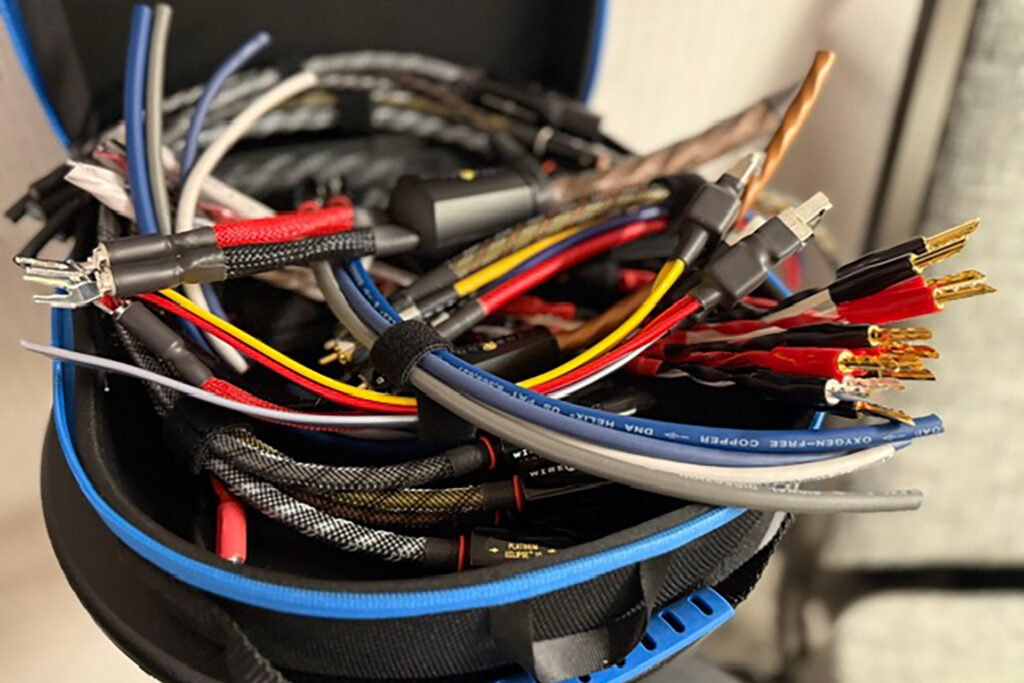
Final Thoughts on How Technology Is Making Our Audio Life More Difficult …
At Future Audiophile, our mission is to introduce the hobby to new audiophiles just getting started, as well as to give them something to which they can aspire. What a mission this has become. As we have learned over time, technology never sits still. Every facet of our life changes, purportedly for the better, as time goes on. What is new and improved today replaced the old and no longer interesting designs of yesterday.
We tell ourselves this new technology is a mandate, our lives somehow made worse without them. As it applies to audiophile music and systems, manufacturers realize this and work diligently in staying on the cutting edge of the new and improved. And why not? Personally, I look for technological advancements. I want my audio system to sound better as it grows. But there exists a fine line between an actual improvement and something George Jetson might be using. I’m looking for an actual technological advancement brought about by scientific research. I’m not interested in some sort of gimmick with claims of “quantum whatever” and space age materials too difficult to even pronounce. The humorous term “unobtanium” comes to mind. Voodoo science isn’t appealing to this audiophile.
I think we all are sometimes guilty of being swayed by the new shiny toy making claims which cannot be proven, and possessing technology that is not understood. So, for our readers who are new to the hobby, you have a good and not so good road ahead. We do live in a technological age. And these advancements have made our audio systems better-sounding and less expensive than perhaps ever before in the entire history of the audiophile hobby. But making the correct audiophile system decision has been undoubtedly complicated by the very technology our hobby relies upon for future improvements. Do your own research. Talk to other in-the-know audiophiles. Go to regional audiophile shows and see and learn what is available. Talk to dealers and use their expertise for your own purposes. Even use AI (artificial intelligence) – it has beyond tremendous potential on so many fronts. And when it is all said and done, after all the decisions have been made, sit back, push play, lower the tonearm on the LP and enjoy. At the end of the day, this is a hobby primarily concerned with one thing: having fun listening to music. When you do so, everything else just fades away and the complications somehow all resolve themselves …
What technology is most complicated to you? Which component category has changed the most in modern audiophile history? Post your comments below. We love to hear from you.
Resource: Learn how to get better support from your audiophile system here.




For older audiophiles, the technology issue is more about how to set everything up so it works…and then its about reliable connections and updates screwing things up…then, maybe things like jitter, etc. can be obsessed over.
There’s no debate here, even without having read the article yet. Digital’s early woes have been solved for years now, and streaming is pretty much there. I stream virtually everything these days, whether from Qobuz Direct or locally stored copies of my CDs, and I’m only left wanting in one regard: liner notes. Granted, that need skips over tiny CDs and harkens back to the LP days. Speaking of which, I’m still using and enjoying the Well Tempered table I bought around 1990. It does too many things well to ignore, and other than cartridge changes I haven’t had to touch anything. But the transformative technology for me is Lyngdorf’s RoomPerfect (I was happy to see FA’s review of their newest integrated amp recently). RP solves a great many room issues, both major and minor, with a minimum of fuss and — as long as you’re willing to devote an hour or so to re-running the setup a few times — no significant downside. I’m told that the origins of this technology were the reason Lyngdorf bought Snell before eventually producing Tact gear and ultimately Lyngdorf. I now understand why, and I applaud him for recognizing the potential.
I have mixed feelings on technology. I remember how satisfying it was when I got my first amp with a remote. On the other hand, I love a simple preamp with no micro processing, I dislike menus and set up.
Technology did end up making my audio experience so much better. As I grew older my eye sight was fading. Eventually I no longer could read album covers then recognize the pictures on the albums or CD’s. I want to be independent as it’s my hobby. There are work arounds like using apps on my phone but that takes a lot of time the app wasn’t always able to interpret what the phone was seeing. I now have a music transport. A streamer with built-in hard drive where I have ripped my entire CD collection. I use their app and can stream or play my CD’s from my fingertips using my iPad. The iPad reads what’s on the screen being touched by my finger. I did eventually sell my turntable after using one as far back as elementary school. With the convenience of the streaming I just didn’t use the turntable anymore as well as the burden of no vision.
I think it is human nature to resist change thankfully there are those out there willing to push the envelope and continue to experiment.
Fun article – thank you Paul – I believe we are about the same age and my audio story parallels yours. It is of course fun reflecting on our simple systems of the past, but would I go back? I have a nice Thorens turntable and Revox reel-to-reel that say no – not to mention the changes in amplification – cleaner, more believable, and if anyone doubts that technology improvements can result in serious sound improvement, pick up a pair of 70’s loudspeakers on eBay and compare them to what you have now. Like the computers we are using to have this discussion, audio tech is maddening when it fails us, but so very worth managing to achieve the things they bring to us, including excellent, enjoyable music.
Mark thanks for the kind words! I’m glad you enjoyed the article! I wish my 50+ year old AR6 speakers still worked but sadly, the paper cones deteriorated long ago. Enjoy the R2R! Now that is something I would like to have! Might have one day, just not today.
Happy Listening,
Paul
My opinion as an audiophile
An old audiophile opinion