
 By
By In my many years as an audiophile, there’s been a revolution in the audiophile world. Music lovers no longer need to rely on shelves of LPs, CDs, or tapes – we can access huge streaming libraries, and at a monthly price of about the cost of a silver disc or two. The idea of needing to march out to the record store to get that new album is a fading memory. Streaming is easier on the wallet and just easier in general. Because of it, the audiophile world is a better place.
On the equipment side, prices of remarkably good equipment have come down sharply, as companies like Schiit, JDS Labs, WiiM and Buckeye (just to name a few) sell audiophile components at notably low prices. It’s easier to get started, too, with a music lover’s first truly enjoyable two-channel system often being powered by a phone or tablet and a pair of earbuds. Of course, a music lover might move to a more complex system eventually (and we’ll be there to offer advice), but great sound with simpler and less expensive equipment is a new paradigm, one that relies heavily on digital audio from start to finish. That’s not to say that there isn’t a place for vinyl in the modern audiophile world, but when it comes to cost, ease of access, and depth of repertoire – digital is where it’s at today.
Firmware and Apps in the Modern Audiophile World
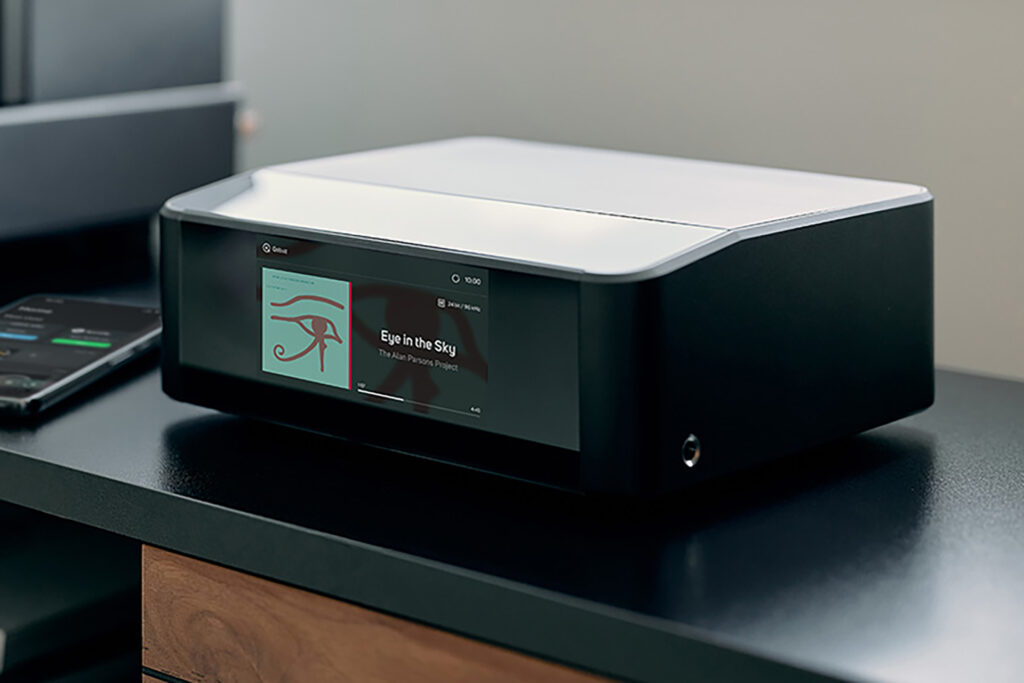
Today’s digital audio gear is far more computer-intensive than yesterday’s amps and CD players. Our streaming devices are basically small computers, many based on commercial modules, such as the Raspberry Pi. Modern music streamers and preamps may include subwoofer management, equalization, and room correction, all done in the digital domain. Even volume control is often accomplished digitally, using features of the DAC chip. A flush of convenient features, which may include renamable inputs, adjustable displays, and individual gain settings for each input, have made information-dense display screens the default for user interaction. All this requires software to manage, conceptually found in two main layers.
The first layer is firmware, embedded into the device’s hardware to control configuration and actions. Firmware can require updating from time to time – especially in more complex components – to fix bugs or incorporate feature changes. In yesterday’s components, updates were installed by manufacturers or dealers, but now they usually are installable by the user, increasingly through a component’s own Internet connection. Some components even update themselves periodically – a mixed bag, as updates sometimes introduce their own bugs.
At a higher level than firmware, and usually designed for more extensive user interaction, are applications (apps) running on a tablet, smartphone, or personal computer. (Current usage has “apps” running on phones and tablets and “applications” on larger devices but, here, we consider the terms basically interchangeable.) Apps typically enable a user to configure components, browse and manage music libraries and playlists, and control playback in various ways.
App development and maintenance are complicated by the need to support at least Android and iOS, for an app running on small devices. or Windows, macOS, and possibly Linux for an app on larger devices. Users may need capability on both classes of hardware. A thorny task is keeping software functional, as operating systems evolve in the years after the component’s sale, when it no longer generates income for the maker.
Some manufacturers attempt to simplify things by supplying interfaces that run in a web browser. Though web apps can be easier to develop, they may not be as responsive or fully-featured as free-standing software.
Nothing Can Go Wrong, Can It?
Given the importance of software in modern audio, and the tendency of all software to contain bugs, it’s hardly surprising that software issues have become headaches for audiophiles and manufacturers. It’s painfully clear that many traditional audio manufacturers are not yet well-equipped to develop and maintain software. Some firms may be too small to have dedicated software talent. Some seem to underestimate the resources it takes to keep software running well for the lifespan of a component.
Some audiophile companies, having contracted out software development, become unwilling or unable to devote resources to refinements, or even to fix bugs. Manufacturers and audiophiles have found out the hard way that designing and supporting components driven by software is radically more difficult than an old-school amp (or preamp, or pair of audiophile speakers), which has a determined form and function. The former must work in a near-infinity of system and network configurations and may need periodic revision to keep up with tablet, smartphone, or computer developments, as well as to fix bugs not detected in development. Its software also may need revision to accommodate changing market imperatives, such as the move towards stream players (“endpoints”) that are Roon Ready.
What Type of Problems Might a Future Audiophile Might Experience in the Modern AV World?
For the audiophile, software problems can range from nagging annoyances to truly fatal flaws. As examples, I’ll describe a few issues I’ve encountered. I’m sure that many readers have had similar experiences.
In one case, I bought a DAC with a built-in streaming module advertised as state-of-the-art. It didn’t take long to discover that the manufacturer’s software was fatally crash-prone and, if the streamer was used with other software, it was incapable of gapless playback. (As Wikipedia puts it: “The absence of gapless playback is a source of annoyance to listeners of music where tracks are meant to segue into each other, such as some classical music [opera in particular], progressive rock, concept albums, electronic music, and live recordings with audience noise between tracks.”) After listening to Bach’s “Goldberg Variations” (32 short movements played continuously) with 31 unwanted two-second silences added by this “state-of-the-art” device, I snapped. The manufacturer’s fix arrived years later and with a price tag, but I’d long since moved on, after selling the DAC at a loss.
Later, I owned a streaming DAC/preamp made by a highly respected brand. This also lacked gapless playback but, before a product engineer admitted to me the issue was real, I exchanged dozens of emails with tech support, who tried to convince me that I had somehow screwed up. I hadn’t. What really irked me was that in numerous positive reviews, only one reviewer noticed the flaw. (Hats off to Kalman Rubinson.) The manufacturer never fixed this, but I negotiated a hefty discount after detecting the issue during a home trial.
These and other issues with gapless playback suggest that too many manufacturers and reviewers listen only to single tracks and only to demonstrate gear, in line with Alan Parsons’ quip about audiophiles. In truth, it is easy to find music in most genres that needs gapless playback.
More examples, more briefly: A device in for trial claimed compatibility with widely-used standards, but in reality worked only with the manufacturer’s quite limited software. A second device leveraged free software to add important functions. This great idea, unfortunately, was not 100 percent reliable and, because the issue involved three parties – two audio firms, as well as Microsoft – it proved impossible to track down and fix. In a third component, small but irritating bugs – in volume control, remote operation, auto shutoff, and display behavior – gradually eroded the pleasure of use, despite the component’s excellent sound. Another component had a product-configuration app that appeared to run fine on my five-year-old tablet, but wouldn’t restore settings properly (a key function). To fix that one required buying a new iPad.
What is the Upside of Software and Firmware Issues for the Modern Audiophile?
Software, in various forms, make many of our listening experiences possible. Without software, we wouldn’t have CDs, SACDs, streaming services, playlists, or even DACs. Studios could not make or edit digital recordings. Nor would we have digital room correction software (like Dirac Live, Audyssey, and Anthem Room Correction) to reduce problems with room acoustics and ease subwoofer integration. It’s in part because software is asked to do more varied and complex tasks that it can harbor hidden defects. Those hidden flaws, when they become apparent, interrupt our musical flow and transform a time of relaxation into one of frustration.
Although software can burn us, it does so while enabling a whole new world of audio – a world I, for one, would not be without. Yes, some audiophiles prefer analog, which is arguably simpler (but have you ever struggled with vertical tracking angle on a turntable, or hum, sensitivity to vibration?), and I respect that. On the other hand, as a person with wide musical tastes, intolerance of off-center or warped LPs, and having a room with bass problems, I welcome what digital audio has brought us. The question in my mind is: how do we get that with fewest headaches?
Tips for Audiophiles Trying to Navigate the World of Modern Electronics
It’s time to elevate software quality and support in your critiques of potential purchases, as there is simply no way that these key factors won’t influence your user experience.
- Any audiophile can research online a manufacturer’s track record of software support.User forums, while sometimes skewed towards problems, can give insight into how quickly issues are addressed and how well products are maintained. If there is a lot of chatter on software and firmware matters, you are smart to take note.
- When you budget an audiophile component purchase, consider the expected longevity of a device. It’s not just that digital circuitry changes more frequently, but also that software-based devices may become less functional after software updates cease. Though a well-built power amplifier can last for decades, a streamer probably won’t be with you quite that long.
- An audiophile component that sounds great but is frustrating to use will continue to irritate over time. Don’t forget to give apps and interfaces a thorough workout before a purchase, be it at a retail location or during an in-home trial. And with streaming products, you may not be limited to the manufacturer’s software: Roon (learn all about Roon from Brian Kahn) and generic DLNA players can control many functions of some equipment.
- I try to avoid absolutes, but still, never buy audiophile gear because of features promised for future releases. Though a manufacturer’s intentions may be good, promised features often are delayed, altered, or abandoned. For your own peace of mind, count on only what works now.
An Audiophile Writer’s Wishes for Manufacturers
From this writer/consumer’s perspective, manufacturers could improve the current situation in several ways:
- Since software development and maintenance are key to performance, software needs sufficient resources allocated over a product’s lifetime, including updates and other support. Ideally, even the user whose product is old will receive support of some kind (even if simply a trade-in value).
- Establish a means (maybe a forum on the manufacturer’s site) by which customers can submit and track bug reports. I’ve seen the appreciation users have when forums include a manufacturer’s rep to help. Another great feature is a tracking system for known defects. Respect customers enough to respond to their requests, and don’t bury problems – fix them!
- Bring back the suggestion box. While most suggestions will not be winners, who knows the product better than the experienced customer, who may have used not just your products, but also your competitors’ products? Customers might see areas for improvement that elude even your own designers.
- Every artist is a thief, they say … Well, not really, but if you are designing a product that solves a common problem, examine your competitors’ solutions before starting from scratch. To this industry watcher, Apple and Samsung appear to do this constantly, and their respective smartphones get better and better because of it. Yet in audio, my experience suggests that many interface designers never have used a competing product.
- Before releasing a complex product, do usability testing with both novice and experienced users. The former can tell you what should be simpler; the latter, what should be better.
- For extra credit, make contingency plans for long-term support. Plans might include releasing source code if a company leaves the market, so software support can be continued by others.
Final Thoughts on the Impact of Firmware and Software in the Modern Audiophile World …
Understandably, our audio world has become more and more reliant on firmware and software. Not every manufacturer can meet the challenge of this paradigm shift, but the survivors (at least in digital audio) will be those who do. Already, I see potential buyers very concerned (as they should be) with the quality of software components.
I live in hope that artificial intelligence (AI) will offer real improvement to the current state of lagging bug fixes and glacial release of promised features. The skill of AI at writing, testing, and revising software is improving by leaps and bounds. This may reduce the personnel load on audio firms enough to make a real difference – if firms grasp the new opportunity.
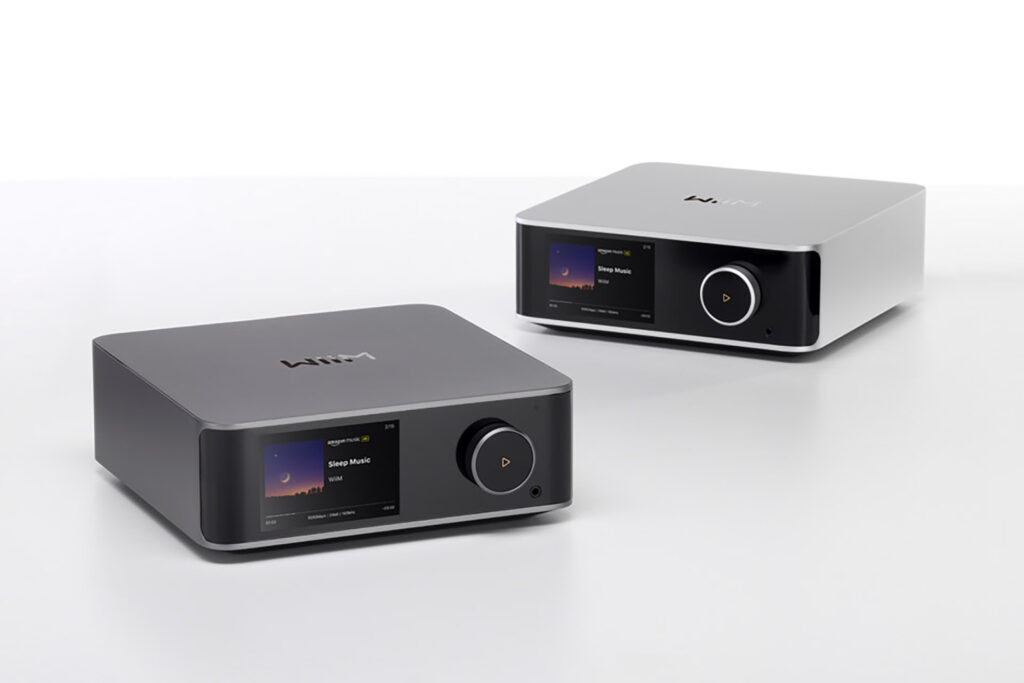
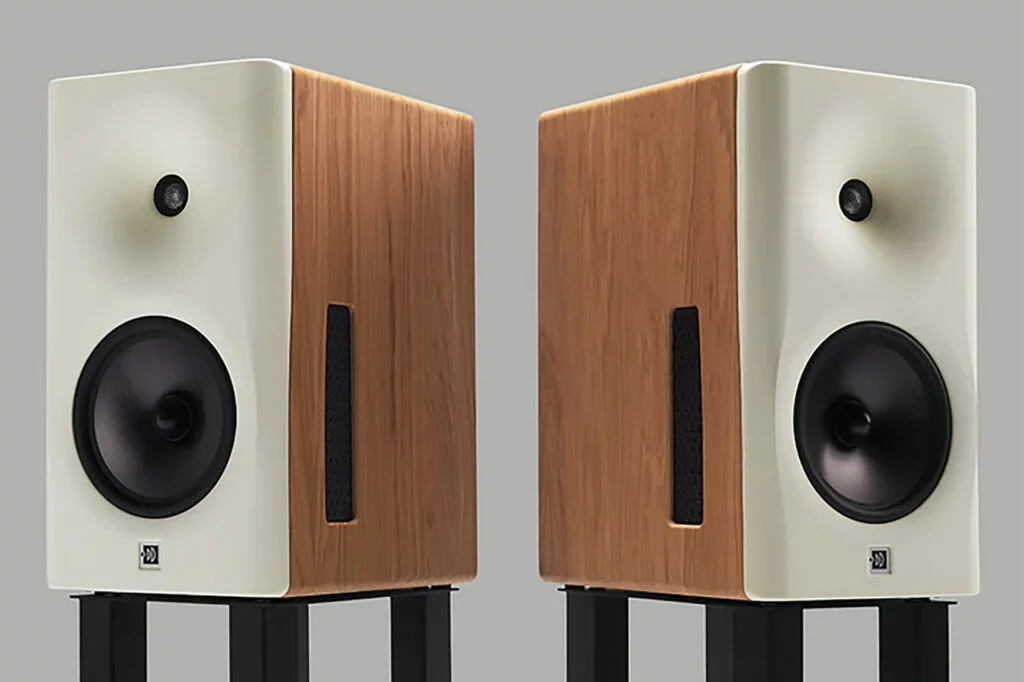
It’s great to see some manufacturers leverage firmware updates to add new features to customers’ products. Auralic, while it was in business, regularly improved functionality of its streamers, adding parametric equalization and the ability to cache digital audio from CDs. WiiM has added EQ and room correction to its inexpensive devices; it updates firmware frequently. Dutch & Dutch (read my review of their 8c speakers here) added Roon Ready functionality and room correction to its powered speakers. None of that cost users anything extra. Let’s hope this trend continues long into the future.
In the meantime, I wish for you to enjoy the new world of software-based audio as much as I do. I appreciate my system’s many digital functions that, through software, make music listening more involving and enjoyable. There are complications, without question, but in the end they are well worth the trouble for the performance, sonic and user interface benefits.
If you have had positive or negative software-related audio experiences, feel free to describe them in the comments section we will approve comments ASAP.
Resource: Learn how to get better support from your audiophile system here.




You’ve said many things that needed to be said, and hopefully heard by manufacturers! The “gapless playback” issue is one that needs much more attention from equipment manufacturers and retailers. About a year ago, I bought a new SACD drive that was touted as having gapless SACD playback….but it took me only a few minutes to conclude that it did not have this capability. After dozens of emails to the manufacturer, they finally “fessed up”….claiming that the 1/2 second of silence inserted between tracks was “usually not noticeable”. I disagreed and returned the unit to the dealer who promptly issued a refund. The manufacturer then updated their marketing and advertising to eliminate any reference to gapless playback.
Hank – Thanks for the comment. It is inexcusable that a playback device being sold today inserts extra silences — gapless playback has been a solved problem for a long time now. Glad to hear you got a refund!
Everything you have noted is important for both users and manufacturers to understand.
As for suggestions: I would advise every first timer…buy products from companies that either have a lot of online support videos…either their own or from users…without these, you are likely to get frustrated…and for example, just look at all the videos related to Lyngdorf streaming.
My own story……I own a Lyngdorf TDAI 1120…it was my first venture into streaming a year ago….It’s a fantastic sounding device, even when played in neutral with no correction of any type applied.
Out of the box it was glitchy, often be hard to get connected and then it would often drop the connection (using Tidal)(also using Iphone). I hung in there with it because of the sound and all of the capability.
Now, a year later, Lyngdorf has updated their software as has Tidal…and I have now discovered the magic of Google Play as a way to create a Tidal streaming link with even more reliability. It now works beautifully.
Ron, Thanks for the comment. When I reviewed the Lyngdorf TDAI-2210, I was impressed by the quality of the software and firmware. Peter Lyngdorf ‘s companies have been doing software-based audio for a long time, and it shows.
this whole article exemplifies the trend of enshittification of everything in the modern world. Gone are the days when a manufacturer builds prototypes and tests and gets it right (or damn close) before it’s locked down and released to the wild. Nowadays it’s completely acceptable to release half-baked crap and use your customers as beta testers who will find all your errors for you.
My profession is pro A/V and this has been the downward slope of the industry for the 30 years I’ve been in it. What began a with the live broadcast “this can’t fail, ever” mindset has devolved to “just get it good enough and we’ll blast out a firmware update every month until its replacement is introduced at next year’s Infocom”.
My brand new “smart” dishwasher has needed two repairs in less than a year. The new microwave, 3. The smart ovens have had 4 firmware updates since I’ve owned them… It’s completely ridiculous.
Personally, I am more than happy with my amp/preamp from the late 80’s and my CD rig from the mid 90’s. The last thing I want is to need my phone to run my system. Future Audiophile, for me, is vintage, when the stuff was built to last.
Respectfully… I hate the song “Glory Days” or “Summer of 69”
I prefer “The Best is yet to come”
The gear that we have today is superior to that of the past (sorry Steve Guttenburg and clickbait stuff written for old folks). AND it is less expensive in many cases. Compare my $2,600 SPL pro audio stereo preamp with a $10,000 preamp of $20,000 years ago. It is an easy decision which is best – regardless of price.
I would challenge you as my new audiophile friend to get out of the cliches and look to the cutting edge. The value. The new thoughts.
These are good times to be an audiophile and they are only getting better.
Jeff….I hear you and agree. I am in the professional broadcast equipment business. “Broadcast quality” has always meant “100% functionality and reliability, no defects, no excuses, 20+ year product life with support”. Any suppliers who’s products didn’t meet these requirements was quickly out of business.
But in today’s software-driven world, it’s nearly impossible to deliver such products. It’s because those products are dependent upon a 3rd party operating system (Windows, Mac O/S, Linux, etc) and that’s a constantly moving target. A product might work fine during development, get built and shipped, but then the O/S changes (like a Windows update) and the product now fails. It’s the world we live in.
This is not an excuse for a product being shipped before it’s been fully tested, and yes….customers are now often used as (unwary) beta-testers. This is inexcusable. I will usually give a manufacturer one chance to fix glitches and defects. After that….I deem the product as defective and back it goes. If other users do the same, refusing to accept defective or ‘glitchy’ products….manufacturers (and their dealers) will get the message: No defects, no excuses.
Do you think that part of the problem is that audio people aren’t software developers? Really credible audio manufacturers have fallen prey to poorly designed software.
The convenience of streaming and its incredible breadth and selection are too often countered by glitzy software and awful, unintuitive mobile apps. Ask anyone who bought an ARCAM streamer who woke up one day to find the proprietary mobile app was no longer being supported, rendering their streamer a brick unless it had their service’s app built in. Not every service was available- mine wasn’t.