
 By
By In the modern world in which we live, things move really fast. Artificial Intelligence (AI) is all the rage and, while we love the potential technological advancements, we remain mindful of the potential pitfalls. The business world moves at a speed and with cutthroat ethics, which makes the idea of a gold watch as a retirement present after 25 years of service seem simply laughable. The world of audio moves fast as well. Semiconductors now make $2,000 amps sound like much more expensive Class-A monoblocks. Sub-$1,000 DACs will often outperform decade-old designs costing 10 times as much. Digital Room Correction has made substantial advancements, and the stunningly positive changes it may provide are now found on much more affordable gear than in the past. Powered speakers are gaining increased acceptance in the audiophile world. Traditional speakers play louder, better and more resolutely – often for less money than in the past.
Without question, the audiophile world is changing for its next generation of buyers at a speed commensurate with the ultra-connected, often overly digital world, where many live their everyday lives. Here is a look at where we came from, and some projections as to where we are going in 2026 and beyond, from someone who has seen a few of these changes over the decades.
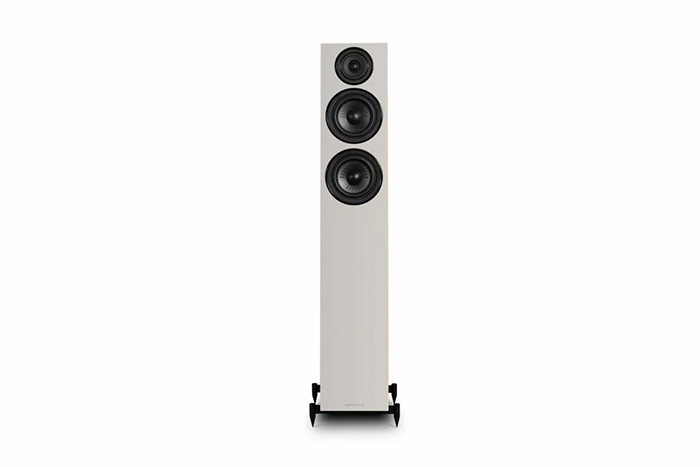
The Past and Present of Audiophile Loudspeakers
The concept of a dynamic speaker dates back to 1877, when Ernst Werner Siemens was awarded a patent for the moving coil speaker. While the capability to reproduce sound has obviously progressed – no one will argue that today’s speaker systems don’t sound better than those made in the late 1800s – the operating principles essentially have not. We’ve obviously improved manufacturing methods and materials, but the dynamic speaker’s hows and whys remain essentially the same. The laws of physics are equally constant for audio as for aircraft.
- While dynamic speakers remain the most popular by far, other designs, such as planar, electrostatic, horn and hybrid versions using multiple technologies, are also widely available. These hybrid designs include a variety of offerings, such as a dynamic speaker with an electrostatic-type tweeter design, or a planar speaker augmented with a subwoofer for improved low bass.
- Today, there are any number of different designs used for the drivers in modern dynamic speakers. Neodymium magnets (learn more here), used in the motor assembly of a speaker, come first to mind. Materials for the dome range from soft, including silk and other fabrics, to hard metal made from materials such as aluminum, beryllium and titanium. We have the Heil Air Motion Transfer tweeters. And in a really 23rd-century approach, there was once a very innovative tweeter that utilized plasma, the fourth state of matter, ionizing the air to create a design with no moving mass and extremely fast response times. All these cutting-edge technologies, and the new designs to follow, will serve to amaze most modern-day audiophiles regardless of how they may feel today.
- Speaker enclosures also have a wide variety of designs with one unified goal: creating a rigid, inert cabinet in the modern audiophile world. We have moved far beyond the basic wooden cabinets used by Edgar Villchur when he built his landmark sealed-air design, the Acoustic Research AR3 (learn more here) loudspeaker. Today, we have molded cabinets mounted to an aluminum frame. We have open baffle designs, which aim to actually eliminate as much of the cabinet as possible. We even have cabinets made from granite. And of course, we still have the ever-popular MDF wooden cabinets. Some of these finely adorned cabinets are as much works of art as they are a means to house an acoustic driver. And the technology on the inside of the cabinet has been vastly improved. Planar and electrostatic speakers essentially do not have a cabinet, per se. Instead, they use a metal frame with a grid on both sides, made necessary because both designs radiate from the front and the back. And yet, even given all these design advancements and achievements, speakers continue to operate under the same basic technology as they did as many as 100 years ago. This is not to say there are not major modifications and improvements. Consider the internal aluminum framework of a Magico speaker, for instance. It is an artistic as well as a scientific statement of what can be done to make one of the world’s most inert audiophile speaker cabinets. Stenheim uses machined aluminum panels on the outside (versus internal bracing) to accomplish the same effect. Wilson Audio uses advanced polymers for their speaker cabinet materials. Valero Acora (speaker impresario and the new owner of Audio Research) makes his speakers in Canada from the finest and most exotic examples of granite and stone. Even modern-day, low-cost speakers made in Chinese factories use multi-axis CNC machines to cut MDF into folded boxes, which are then glued together to become insanely good audiophile cabinets in mere minutes. Painting speakers is like taking your Testarossa to Earl Scheib, as you can generally paint them any color of the rainbow or any PPG paint color found on the most luxurious of cars. Sonic, as well as visual, advancements have come a long way in the last decade.
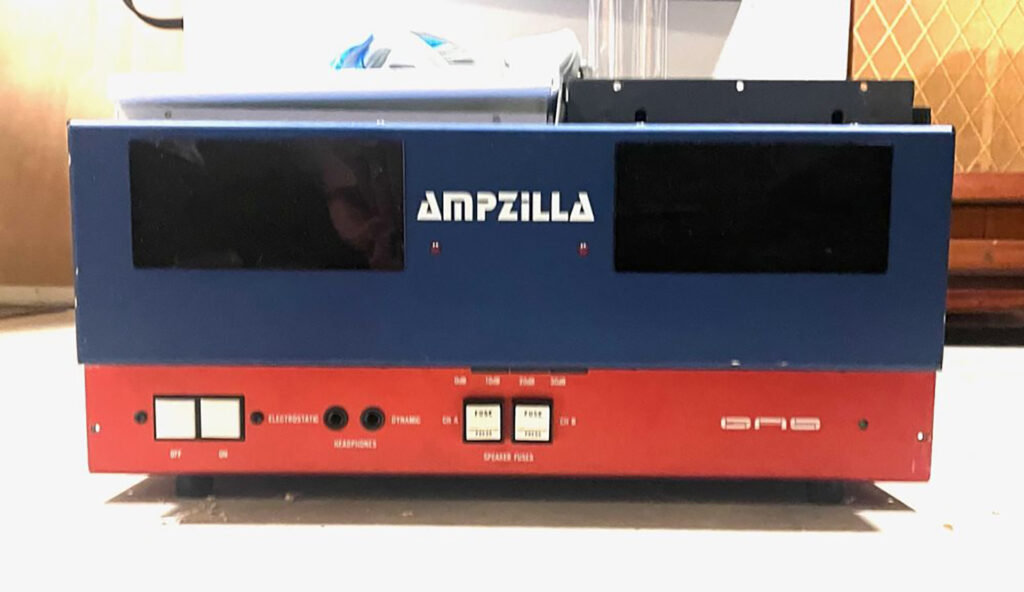
How Much Have Audiophile Amplifiers Changes in Over 100 Years?
- Tube amplifiers are more than a century old, and the basic tube design has changed little since its 1904 patent – each tube still uses an anode, cathode and filament. While these are labor-intensive, heat-generating and low-output, many audiophiles love the rich, warm (mildly distorted) sound of a tube amp. The glow of rare Russian tubes is calming and peaceful. The practice of “tube rolling” allows audiophile enthusiasts, and system tweakers, to fine-tune their systems by experimenting with rare and exotic vacuum tubes from around the world.
- Solid state amplifiers are unquestionably more popular than tubes. They exist in forms such as Class A, which is probably the best-sounding but least efficient, Class-AB, the workhorse of solid state amp design, Class-D and the surprisingly listenable sound of the Class-D hybrid, Gallium Nitride (GaN). Whereas tube and solid state amplification once had a very wide sonic gulf between them, in modern times, the gap has closed to a surprising degree. Many audiophiles would in fact claim solid state sounds every bit as good as a tube amp. I have heard how a pair of $2,500, GaN monoblock amplifiers can easily perform surprisingly well when compared to an amplifier which costs 10 times as much. This unquestionably points to a bright future for the audiophile hobby.
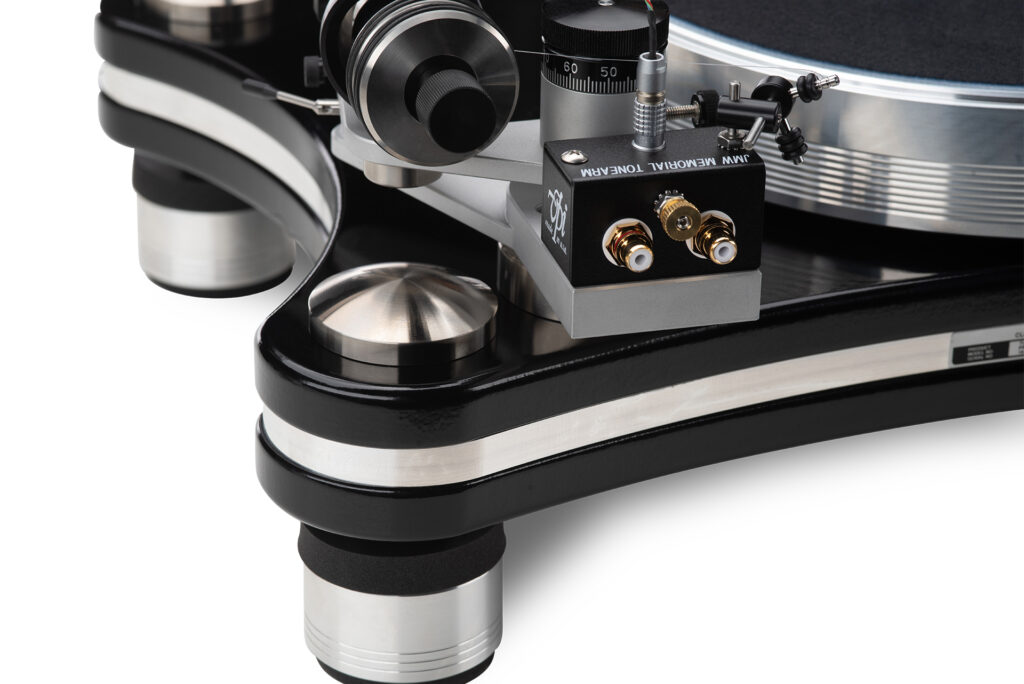
How Have Audiophile Turntables Changed in the Last 100-Plus Years?
Who could forget the contributions of Thomas Edison and his 1877 introduction of a device to play a round wax cylinder? Not really a modern turntable, rather an excellent starting point. In 1888, Emile Berliner introduced a machine to play a flat disc, the forerunner of a modern LP. Generally speaking, credit for the modern LP is given to Columbia Records, which in 1948 introduced the 12-inch, 33.3 RPM vinyl record. In 1949, the 45 RPM single was introduced and became very popular. Artists like Frankie Avalon and Elvis Presley ruled the airwaves in those days. By the mid 1950s, LPs had basically become the de facto standard in music reproduction and remained so until the October 1, 1982 release of the Compact Disc, with its “Perfect Sound Forever.”
So, what of the audiophile turntable itself? It barely changed at all. Okay, we have been the fortunate recipient of technological advancements. Design improvements in the platter, plinth, tonearm, cartridges, motor designs, and other performance enhancements have made modern turntables stunning marvels of musical reproduction, specifically through technological refinement. However, today’s audiophile turntables are still plagued by the same basic problems that they have always endured. Design inefficiencies, such as the issue of the tonearm tracking across the LP, overhang, improper azimuth, tracking force, vertical tracking and anti-skating – all of these have been exhaustively researched but still none of the associated problems are eliminated. Yet how many audiophiles absolutely love the sound of an analog LP, and have made investments at all levels in having and playing a turntable? Me, for one. New advancements like laser-aligned cartridges, highly efficient and accurate motors, and incredibly stable chassis all point towards performance benefits for audiophiles of the future – AKA: our aspirational audience.
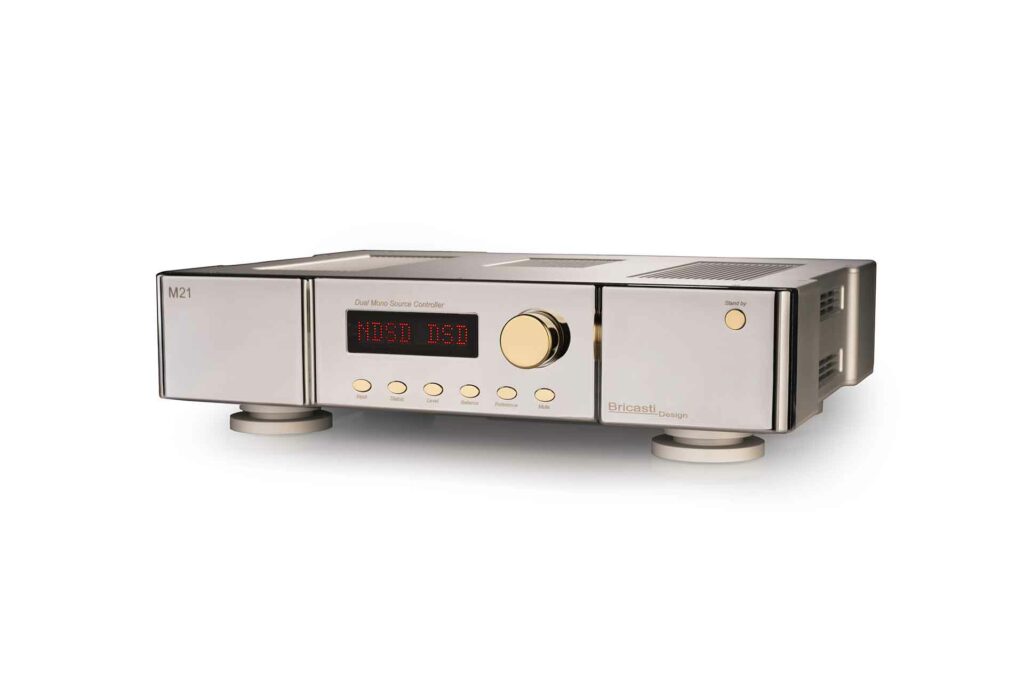
How Has Audiophile Digital Changed and Where is it Heading?
When the Compact Disc was first introduced, most listeners appreciated the convenience and durability as much as anything. Whereas an LP required many steps and careful attention, it was only necessary to load the silver CD and press play once the drawer closed. Where the early problems occurred was how the music sounded. Most audiophiles would agree that the sonics of early 1980s-era CDs were pretty dismal. We endured the loudness wars and a host of recording techniques, which were mostly failures if your goal was to get closer to the sound found on the master recording. That was then. This is now.
Audiophile digital playback has, not surprisingly, continued to evolve in 2026, with possibly more room to improve than any other category. Nothing has been more transformational to recorded music than modern streaming. From a cost and availability standpoint, modern music streaming usually offers a remarkable level of sonic quality at a beyond-affordable price. To say virtually every recording on Earth is available is not a wide-ranging exaggeration. I cannot think of another musical format that has changed more, and continues to change, as we sit on the sidelines and press play.
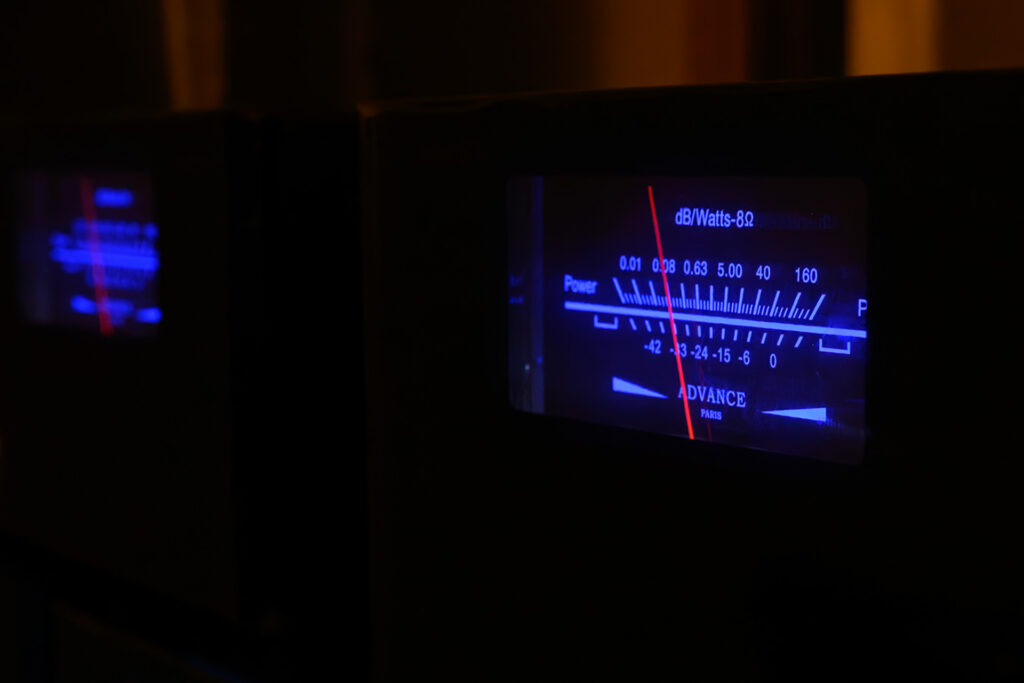
We touched on the importance of semiconductors when talking about amplification, but digital playback in the audiophile world is quite evolved in the modern era. How evolved, you ask? An iPhone’s internal DAC can reproduce a nearly perfect sine wave in ways that expensive digital to analog converters of the past could have only dreamed about. Will semiconductors get better over the years? Absolutely they will, and the audiophile world will benefit. Clocking improvements, better digital power supplies and other factors will help make digital audio more like the master tape, and for less and less money as time goes by. This is certainly something to be excited about for all generations of audiophiles, both now and in the future.
What Does the Future of the Audiophile Hobby Look Like?
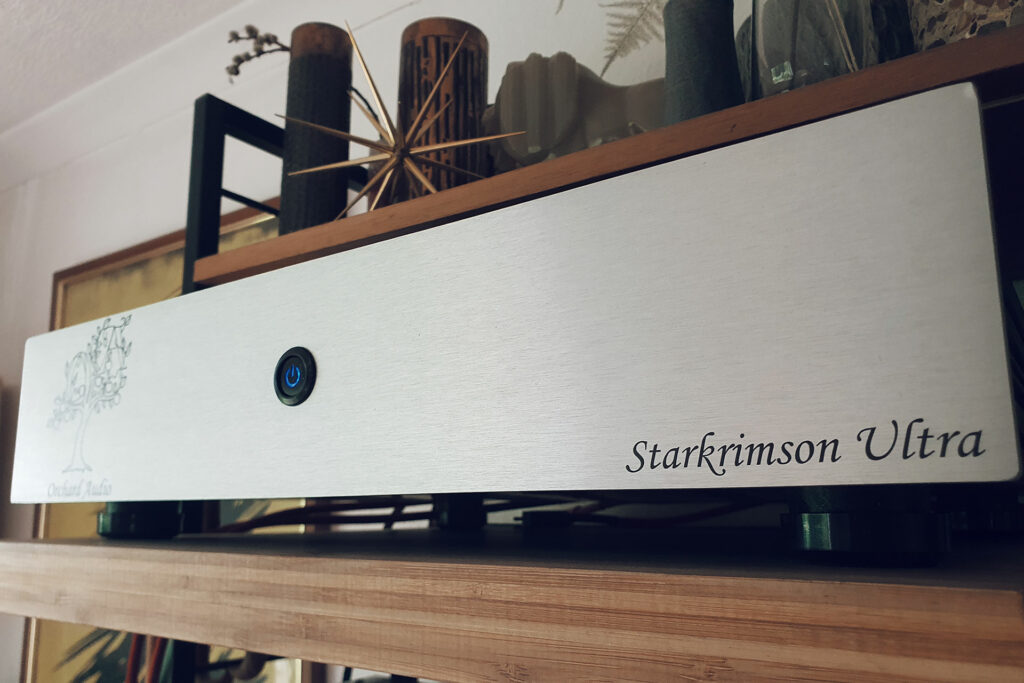
There was a time when high-performance audio was very expensive, with few, if any, less expensive alternative options. There was just no getting around this fact. Today and, I am confident, in the future, manufacturers have begun and will continue to introduce equipment with amazing sonics that are not five-figures-and-up expensive. Gallium Nitride amps come to mind. Compared to most amps, especially Class-A and Class-AB solid state, GaN is a standout bargain (as are the other new Class-D options). When you plug one of these new-school amps in and listen, you can’t help but hear how amazing this technology has become in the modern era. Are there amps and designs with better sonics than today’s Class-D options? Of course there are. However, for systems which do not include $10,000-and-up components at every possible location, Class-D amps are certainly game-changers.
Existing Audiophile Technologies Will Continue to Improve
Audiophile engineers and designers will find new and innovative ways to get more out of less, and to make audiophile components sound better without a huge increase in price as the hobby grows.
Speaker designers will continue working on wireless connections with world-class sonics, because young and older music lovers welcome the day when their components will have very few wires. There are any number of manufacturers with wireless speakers, and not just bookshelf speakers, either. There are audiophile companies working on larger-format floorstanding speakers that rival the best traditional speakers but, respectfully, we aren’t there yet. However, we can see the future.
Digital audio is changing faster than most audiophiles even recognize. Take USB connections, for instance. USB was never designed to move audiophile-level signals. It was primarily designed for connecting a computer to something – most commonly a printer or scanner. It is also used for gaming devices, cameras, and a host of powered applications. Music was never an initial intended use. Yet here we are. USB is very widely used when connecting a DAC and a music server. What started as USB-A is now connected by USB-C. Is a USB-D on the horizon? I can’t say, but don’t bet against it. Digital audio is changing so quickly at all levels, it is more difficult to find an area where digital is standing still rather than moving forward. We are now seeing components with I2S connections, and components with multiple digital operations in one enclosure. Digital is by no means sitting still. In fact, it is advisable to consider any digital component that is five years old at a minimum as a potential candidate for replacement.
All our other audiophile components will continue to improve as well. And, in what is probably the most appreciated facet of future design, it seems likely that sonic quality will continue to improve while keeping pricing very affordable. A nice listenable system today may be purchased for about $1,500. Spend $5,000 and the sonic reward is even greater. When you sum things up, the future of the audiophile hobby looks bright. There will always be half-million-or-more-dollar systems, and people who can afford them. But for the younger audiophile, someone who has, for instance, just finished their education, has a job and disposable income, high-performance audio is more obtainable today than it ever has been.
Final Thoughts on the Changes in Audiophile Equipment
Our hobby is one with a rich scientific heritage of innovation. Technology has changed for the better, but with decades-old designs. But is this an unusual condition? Today’s cars far exceed the Model T in every design parameter. Still, today’s cars are a combustion engine (or an EV design) on a frame with a body on top. Basically, this is the same design philosophy as a Model T. Yet to the average consumer, a Model T and modern automobiles could hardly be more different.
As audiophiles, we look forward to the next big thing, like the next amp with a radically different design. Or perhaps a completely different type of speaker. For now, those designs remain unrealized. Who knows, maybe someone in a garage somewhere is perfecting the next great audiophile invention?
Until as-yet-unknown sonic advancements are realized, we will have to console ourselves with the knowledge that what we have today is a remarkable progression from the past. At the same time, the fundamental methodology in how our audio systems function has, in many cases, changed very little. Fortunately, we have at our current disposal the pinnacle of current-day audio achievement. Whatever our sonic goals, and no matter the budget, something may be found to realistically meet virtually all criteria.
We can thank people like Ernst Siemens, or any of the other notable designers of our past who have laid so solid a foundation for the audiophile hobby. We can also thank the engineers working today to enrich our passion for recorded musical excellence. While there are many debates, like cost, for instance, and of course cables, it can hardly be argued how our current designs, both budget-oriented and world-class, best of the best, are collectively sonic marvels worthy of the high-performance audio label. In fact, as it applies to budget gear, today’s equipment, it may be legitimately argued, is the best-sounding equipment for the lowest cost at any time in the history of high-performance audio.
Modern technology based on turn-of-the-century designs has evolved in a predictable progression. In fact, it is pretty remarkable. If you don’t agree, look at audio’s history, then give your system a serious listen. You’ll see.




I would argue that for the audiophile, the only changes have been: streaming, Class-D & DSP. For the designer the use of modeling (mechanical, electrical & acoustic), materials (neodynium, beryllium, carbon, diamond & woven synthetic fabrics) & improvement in measurements (Klippel scanner & online objective reviews) have benefitted both expensive & inexpensive components. The sheer volume of new components arriving each year is mind boggling. There has never been a better time to enter the hobby, if only the word could get out to casual music lovers, they don’t realize what the’re missing out on!
Maybe add CD to the list of changes? A very significant format shift that may have been (at least temporarily) counter-productive.
Looking back is a great way of seeing the road travelled. For me this hobby/passion is as much about the journey than the destination.
My old equipment brings with it the times and excitement I had when first bought, which is why I love it all so much. Different sounds bring different memories.
My latest purchase is a new Linn Sondek LP12 Seleckt so read into that what you will!
Thank you Paul – excellent article. It’s been fun “living” over 5 decades of this evolution, having received my Dad’s Vietnam-era hi-fi set-up when I was 14 and being hooked ever since. And the never-ending quest for better sound never ends – now if that pursuit can just keep up with inevitable hearing loss (maybe the subject for a future article?) Another topic of interest might be double-blind DAC comparisons. I for one am in the “yes I can tell camp”, but it would be interesting to benchmark where we are today in the 10x improvement zone you referenced.
Mark, thank you for the compliment, I’m glad you enjoyed the piece. I’m at just over five decades myself… and counting! As for the inevitable hearing loss, keep a lookout for articles on that very subject from our resident expert on the subject, Eric Forst. He has already published several articles on hearing in the audiophile landscape. Thanks for being a patron of Future Audiophile!
Paul