
 By
By While the use of subwoofers can be a polarizing topic for some audiophiles, it is hard to deny that the need for them exists, as very few speakers can get the bass and ultra-low frequencies that a subwoofer can reach, let alone being able to hit those notes with precision. Paradigm has been making subwoofers since the mid-1990s, when they released their first powered subwoofer, the PS-1000, and haven’t stopped since. Their range today consists of the high-end Paradigm XR series (the 13-inch model is $6,000) and goes all the way down to the value-oriented Essentials series (the 10-inch model is $550).
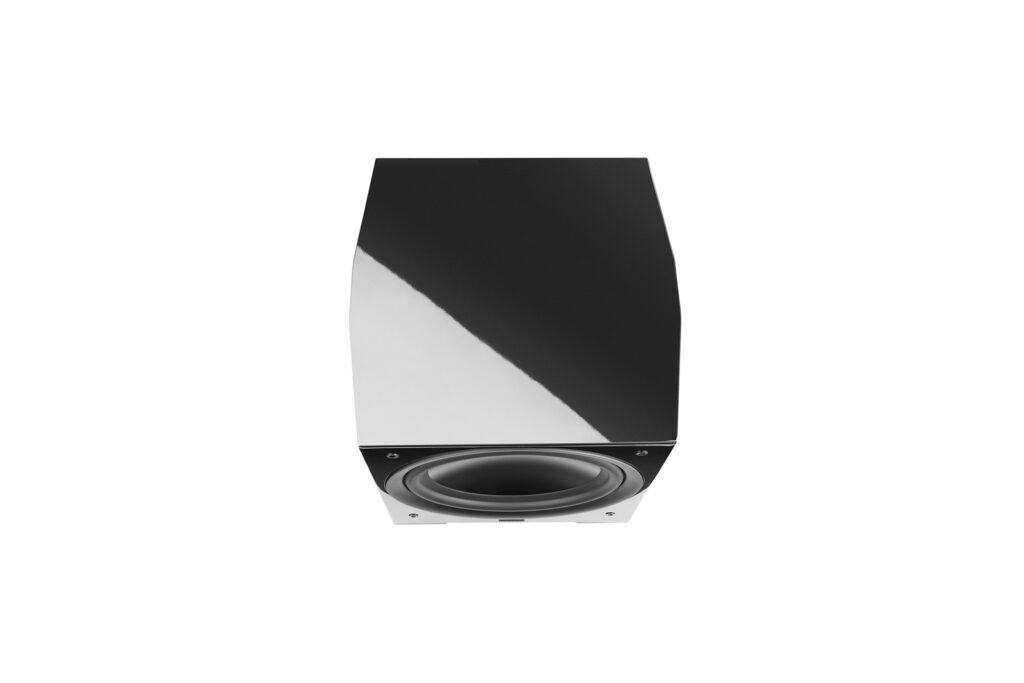
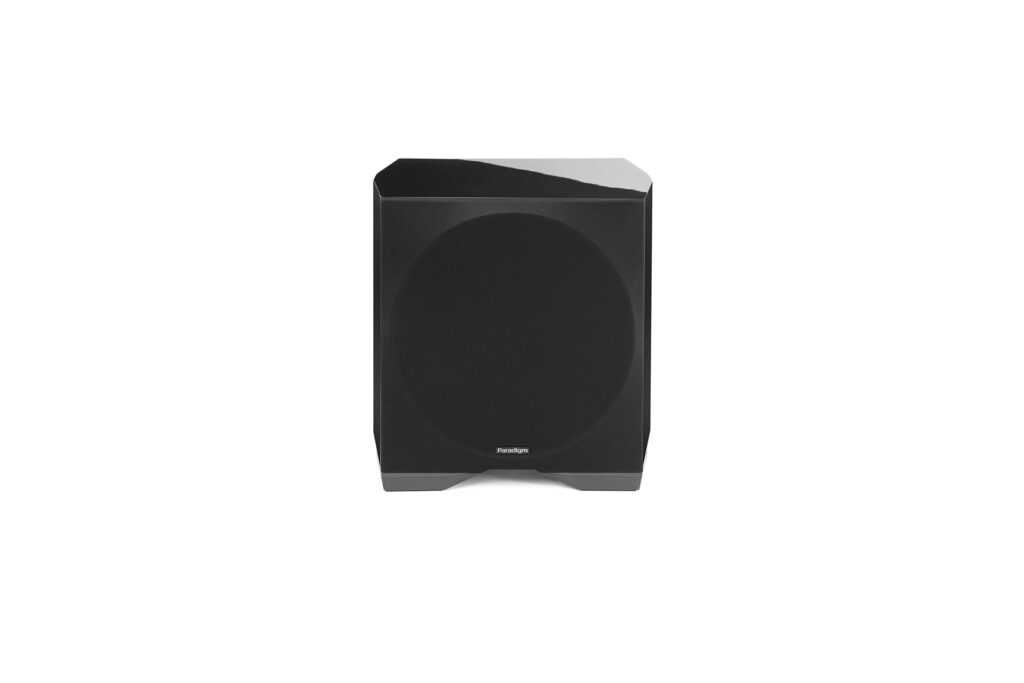
Paradigm recently released their Defiance S series of subwoofers with a 12-inch model, and a 10-inch model that falls below their top-of-the-line XR series. The Paradigm Defiance S10 (buy at Crutchfield) is the 10-inch subwoofer, which is priced at $1,199. It features a 500-watt Class-D RMS amplifier and a high-excursion S-PAL driver. This sealed subwoofer is capable of going all the way down to 18 Hertz, which is below sub-bass and into the infrasonic region. From an input perspective, the Defiance S10 is very well-equipped with XLR input and line input, as well as LFE (fancy term for subwoofer) and speaker level inputs. If that isn’t enough, Paradigm also adds the wireless unit (free of charge) if you don’t want to attach any wires at all, other than of course the power cable.
What Makes the Paradigm Defiance S10 Subwoofer So Special?
- Having Room Correction built in is major plus for most audiophiles at this level in the hobby. I can’t imagine too many audiophiles reading this who haven’t heard an adage about how important it is to treat your listening room (read publisher Jerry Del Colliano’s rant here). However, this isn’t always possible for everyone who is using these products in the real world, which means you should use the next best thing: room correction software. I have personally been using Anthem’s ARC software for about five years now, and it is so easy. Trust me, once you have access to it, you won’t go back. You can also adjust the room correction over time if you want to tinker with it to ensure you’re getting the sound you seek.
- The Paradigm Subwoofer app is simple to use. Using Paradigm’s SubControl app, I was able to set up the Paradigm Defiance S10 subwoofer in less than 15 minutes. While I don’t always love using apps when I am listening to music, it is hard to deny how easy this made configuring the subwoofer for my room.
- Having a line-level input is a fantastic feature. As a person who uses an analog preamplifier, having a subwoofer that has speaker level inputs is a game-changer. It ensures the handoff between the speaker and the subwoofer is seamless, and you don’t need to worry about getting double bass because your crossover isn’t set quite right.
- The grille is secured on the subwoofer. There might be a day where I don’t love this, but the person I am today always has the grilles attached to my speakers and subwoofers. Having the grille attached means that when people pass by the Paradigm Defiance S10 subwoofer, they don’t accidently knocking the grille off, and you also ensure the woofer isn’t taking any unnecessary damage.
- The Paradigm Defiance S10 subwoofer is relatively light. Subwoofers often have the reputation of being dense, heavy objects and, after you have moved around one that exceeds 100 pounds, you understand that is for good reason. However, the engineers at Paradigm were able to keep the Defiance S10 to just 35 pounds, which means you can move it around your room as needed without too much trouble.
- The Paradigm Defiance S10 subwoofer comes with spikes to use with carpet. Having reviewed many subwoofers recently, this feature is rarer than you might expect, but Paradigm made sure to include carpet spikes with this subwoofer.
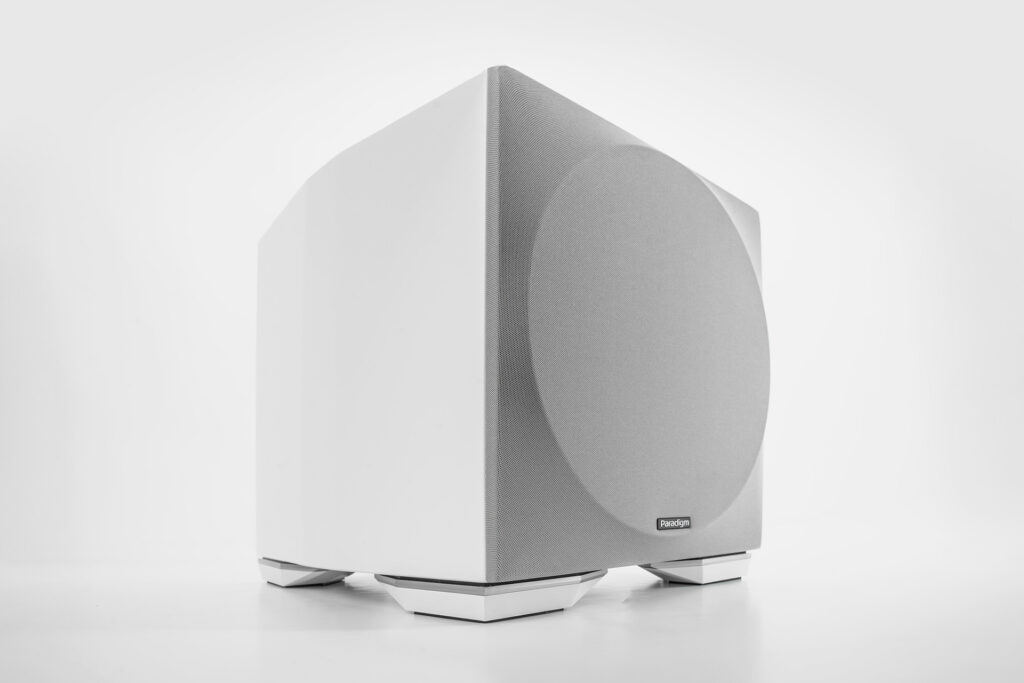
Paradigm Defiance S10 Subwoofer Specifications
| Driver | 10-inch satin-anodized aluminum cone |
| Amplifier | Class D, 500 watts continuous (1,000 watts peak) |
| Low-Frequency Extension | 18 Hz (DIN) |
| Enclosure | Sealed, 1-inch MDF with bracing |
| Inputs | LFE (RCA and XLR), stereo RCA, speaker level; built-in wireless receiver with transmitter included |
| Room Correction | Anthem ARC Genesis compatible (mic sold separately) |
| Control | Paradigm app (iOS and Android) |
| Dimensions (H x W x D) | 13.8 x 13.5 x 14.9 inches |
| Weight | 34.7 pounds |
| Price | $1,199 at review |
Why Should You Care About the Paradigm Defiance S10 Subwoofer?
I talked in the opening paragraph about why there is a need for subwoofers in the first place. But why this subwoofer in particular? Paradigm has created a subwoofer in the Defiance S10 that hits what I think of as a sweet spot. This sub’s ability to go deep enough to appeal of audio and home theater enthusiasts alike, and with the wide array of input options, it should work for every audiophile, even ones like me who use analog preamps and lack the subwoofer control options that many modern preamps have.
Some Things You Might Not Like About the Paradigm Defiance S10 Subwoofer
• If you unplug the Paradigm Defiance S10 subwoofer, you will need to reset the app. I had this issue when I reviewed the Defiance S10’s larger sibling, the S12, and the same issue exists here as well. It isn’t the end of the world, as resetting the app is easy enough, but it is an annoyance.
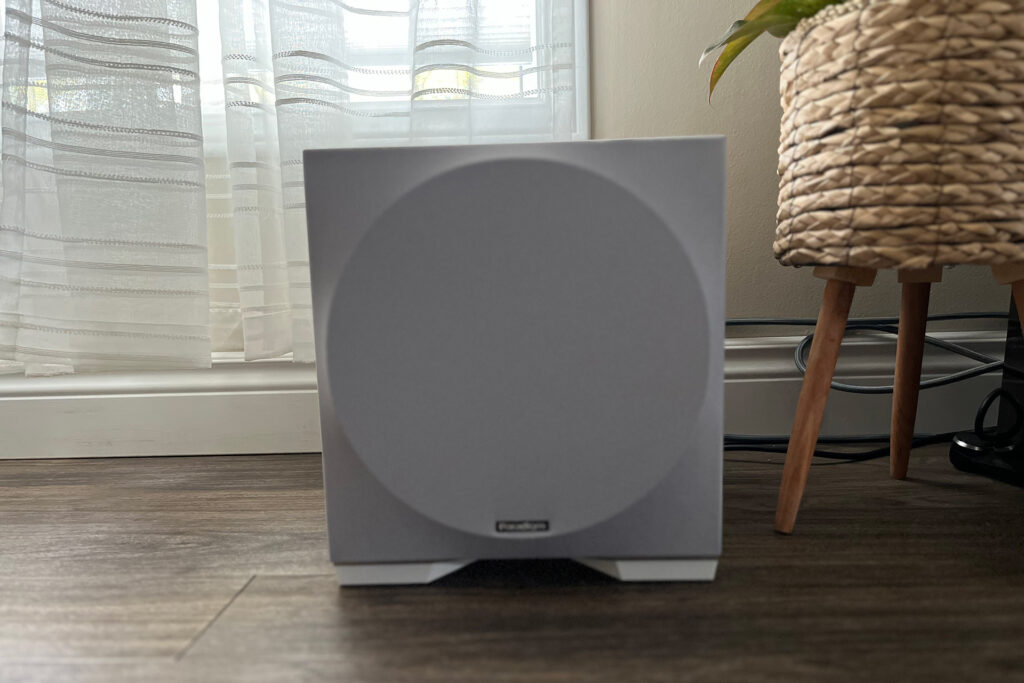
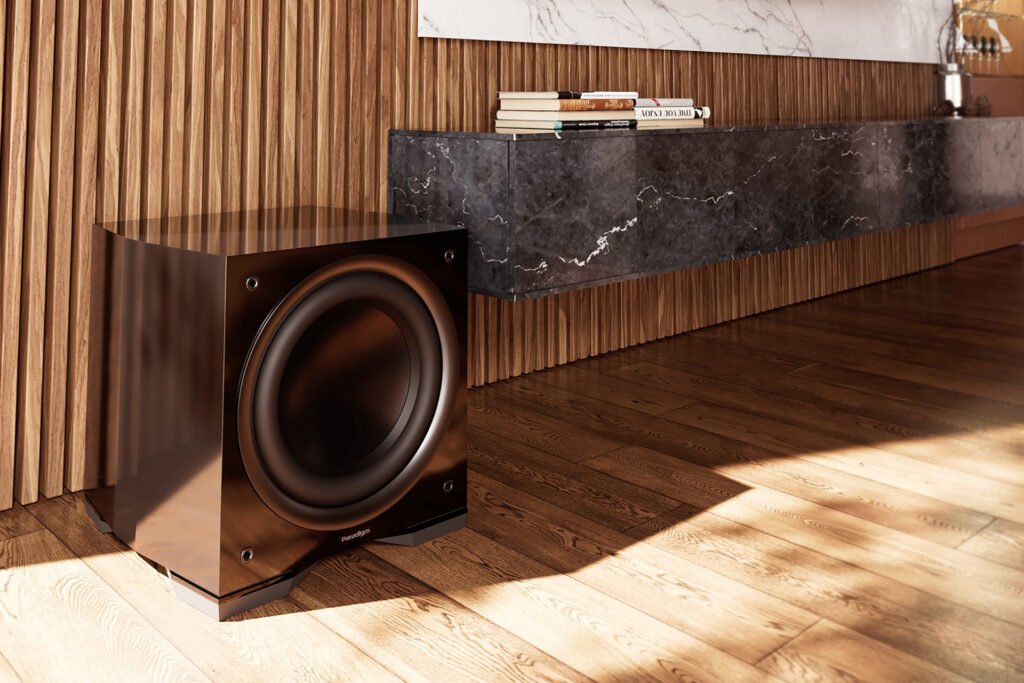
• The color/finish options for the subwoofer are limited. I would have loved to have seen a wood grain option, but the Defiance S10 only comes in black or white finishes. For example, REL comes in colors.
Listening to the Paradigm Defiance S10 Subwoofer
I tested the Paradigm Defiance S10 subwoofer with my SPL Elector preamplifier, the Anthem MCA 225 Gen 2 amplifier, and a Bluesound Node (2024) streamer as a source, paired with Paradigm Founder 80F speakers. With the SPL Elector being an analog preamplifier, I used the speaker line-in from the Paradigm Founder 80F speakers directly into the subwoofer, and then did some small configuration tweaks with the Paradigm SubControl app on my iPhone.
The first track I used to test the Paradigm Defiance S10 subwoofer was the Alexisonfire track titled “This Could be Anywhere in the World” (Qobuz 44.1 kHz) from their 2006 album titled Crisis. I love testing subwoofers with this track because of the bass sweep that comes through many times and can hit you by surprise. The Defiance S10 was able to keep it under control. You could hear it, but one thing that stood out to me was that you didn’t necessarily feel it the way that I noticed with the Defiance S12. Otherwise, the Defiance S10 proved itself more than capable of handling this type of track.
The next track that I used to test the Defiance S10 Subwoofer is “NUEVAYoL” by Bad Bunny (Qobuz 44.1 kHz) from his 2025 reggaeton album DeBÍ TiBAR MáS FOToS. Bad Bunny has been among the biggest names in music over the last few years, as reflected in his Super Bowl performance this past February. You can now find him in anything from Adam Sandler movies to Adidas ads, as he is now firmly among the biggest stars in the world. This track mixes reggaeton and Puerto Rican salsa, so it likely won’t be for everyone but, when you are testing out a subwoofer, this is a track that will definitely put it through the paces. The Paradigm Defiance S10 was able to maintain the tight bass that this track demands with a lot of quick punchy bass. Even with so much sub-bass, I didn’t detect any added chuffing sounds from the subwoofer, either.
The last track I used to test was “bad guy” (Qobuz 44.1 kHz) from Billie Eilish. This track comes from her 2019 album WHEN WE ALL FALL ASLEEP, WHERE DO WE GO? This track is also a workout for your subwoofer. The sub-bass in this track is heard frequently throughout the entire track. The Paradigm Defiance S10 was able to recover through the constant sub-bass sounds. The only thing I detected with this track was that the feet didn’t quite absorb all of the bass, particularly with the constant bass sweep, that starts around the two-minute-and-40-second mark of the track, I could hear the vibration come through a tower fan that was about six inches beside the fan. The good news is that, if you notice this as well, Paradigm did attach the feet in a way that will allow you to replace them with an aftermarket solution.
Will the Paradigm Defiance S10 Subwoofer Hold Its Value?
The Defiance S10 subwoofer from Paradigm checks all the boxes that should help it maintain its value long-term. One of the biggest things that will influence its resale value is its weight. Because it is light, it can be shipped, which opens more of a market than just the one where people can pick it up from your house. The other things that are going to help it retain retail value are the input options and, of course, its ability to go below the sub-bass range, which will also increase its appeal.
What is the Competition for Paradigm Defiance S10 Subwoofer?
When I think about comparable subwoofers, one that comes to mind is the REL T/7x (read our review) ($1,299 buy at Crutchfield). This subwoofer is very different in design from the Paradigm Defiance S10. The T/7x uses an eight-inch active woofer and a 10-inch passive radiator. REL also uses Class-AB to power their subwoofers instead of Class-D, so it only has 200 watts of power instead of the 500 watts that the Defiance S10 has. REL looks at subs more in terms of traditional setup and likes the sound better without digital room correction. They will help you set their subs up without DRC over the phone or however you like. They are very hands-on, which is great.
Another competitor to the Paradigm subwoofer is the SVS SB-3000 R/Evolution ($1,399 buy at Crutchfield). SVS is well known for their subwoofers, and this new offering from SVS is unlikely to change that, as they have essentially taken the original SB-3000 subwoofer and added even more technology to it with a parametric EQ built-in room correction, and it now has an incredible 1,200 watts of power. I expect if you can get hold of one, it would be worth comparing in a side-by-side test.
Another direct competitor to the Paradigm Defiance S10 subwoofer is the PSB SubSeries BP7 subwoofer (buy at Amazon). It retails at $1,249 and uses two 6.5-inch woofers and 350 watts of Class-D power (learn more here). However, it lacks the plethora of inputs that the Defiance S10 has, with only a LFE/RCA input. One thing that is nice is that it is about 10 pounds lighter, at just 26 pounds, and there is certainly an audience that prefers to have two smaller woofers instead of one larger woofer.
Final Thoughts on the Paradigm Defiance S10 Subwoofer
If you are someone who is looking for a subwoofer in the $1,200 price range, you owe it to yourself to check out the Paradigm Defiance S10 (buy at Crutchfield) subwoofer. The folks at Paradigm pulled out all the stops, and while the word “value” often comes to mind, I think this is a subwoofer that most people could keep in their system for the long haul, as it truly has everything that you should be looking for in a subwoofer (input options, room correction, and covering the sub-bass spectrum). For me, this subwoofer is one that I want to hold on to, as it is the best fit that I have found for my system, and I expect that many others will find the Paradigm Defiance S10 fits in just as well for them.
“If you are someone who is looking for a subwoofer in the $1,200 price range, you owe it to yourself to check out the Paradigm Defiance S10 subwoofer.”




First thing I’d do if buying this SW is to chuck the spikes (especially if used on a wooden floor!), and swap in the $50 SVS footers. They’ll keep the subs from exciting wood floors, windows, etc. Because getting even bass response is to tricky in a 2 ch system with one SW, it’s usually a better idea to stagger TWO sw, despite the work, to get even in-room response. Where it can make sense to spend more on subs isn’t just for tight clean FR, but also to dial in great phase response, which is critical to matching with main speakers upper bass/low mids. Enjoy the music! ernieM
I’m a big believer in using subwoofers for music listening. Most domestic rooms have the biggest problems in the bass as that’s where the room takes over. Placement of mains for best soundstage and imaging is often very different than the best place for smooth bass response so, without subs you’re compromising the sound you get from your mains.
Acoustic treatments that are truly effective from 20Hz-100Hz aren’t realistic for living/family rooms in houses so if you, like most of us, don’t have a purpose-built room for music multi-sub + digital room correction is THE way to go. The idea is that you place your mains where they’ll do everything but the bass their best, place the subs where they’ll excite the room modes the most (the most bass output) and then smooth the bass to your liking with room correction.
Paradigm/Anthem’s ARC room correction is one of the easiest to use and I find it to be very effective at dialing in a satisfying curve. It leads to much better results than the old snd simple standard volume/crossover/phase adjustments that were pretty much all we had outside of an AVR 10 years ago. Good room correction software adjusts all of those things much better along with timing to ensure seamless integration with your mains.
Glad to see you enjoyed this subwoofer, Paradigm’s always made high-value products at many price points!