
 By
By If you follow subwoofer coverage and reviews on FutureAudiophile.com with any regularity, the name SVS should need very little introduction. Ohio-based SVS has quietly become one of the most trusted and widely recommended subwoofer brands in the audiophile hobby, thanks to a consistent formula of high-performance engineering, competitive pricing, best-in-class DSP control, and customer service that has put most of the industry on notice. I have spent considerable time with SVS products over the past several years, most recently reviewing the Ultra Evolution Bookshelf speakers and their smaller counterpart, the Ultra Evolution Nano Bookshelf speakers, both of which left strong impressions and had me excited to see what was in store for the brand’s upcoming subwoofer product catalog.
Enter the 3000 Micro R|Evolution, a subwoofer that SVS debuted at AXPONA 2026 and one that I had been anticipating since the company teased it at CES earlier this year, alongside the larger SB-3000 R|Evolution and PB-3000 R|Evolution models (buy at Crutchfield). The original SVS 3000 Micro subwoofer, which featured dual eight-inch drivers, was already one of the most highly recommended compact subwoofers on the market at its $899 price point, having earned a devoted following among Future Audiophile staff and audio enthusiasts at large for packing genuinely deep, controlled bass into an 11-inch square cabinet and seemingly defying the laws of physics. The SVS 3000 Micro R|Evolution promises a complete reimagining of that formula, with larger nine-inch drivers, substantially more amplification, and a more advanced DSP platform, trickled down from SVS’ flagship models in a similarly-sized package. At $999, the price increase is modest. The performance claims, however, are anything but. Does the SVS 3000 Micro R|Evolution live up to the considerable hype? Let’s delve deeper in the review ahead and find out.
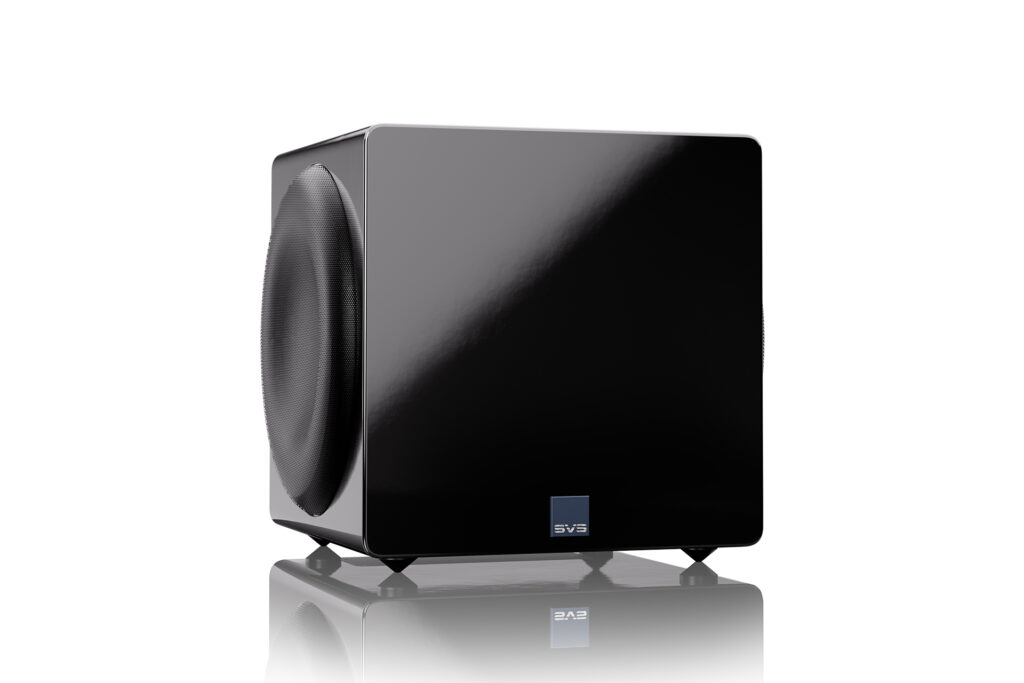
What Makes the 3000 Micro R|Evolution Subwoofer So Special?
· The SVS 3000 Micro R|Evolution features dual force-balanced opposing active nine-inch drivers housed in a compact 11-inch square sealed enclosure. The driver configuration is the key to making this cabinet work: by mounting two drivers facing opposite directions and firing simultaneously, SVS cancels out the mechanical vibration that would otherwise cause cabinet resonance in a box this small. The result is a subwoofer that can move a serious amount of air without the enclosure buzzing, rattling, or coloring the sound. SVS has also opted for a sealed enclosure over a passive-radiator design, which the company argues produces tighter, more accurate bass reproduction and a more overall musical experience. Having lived with both designs over the years, I am inclined to agree, particularly for music-focused listening. That said, don’t let the compact form factor fool you. This thing is an absolute beast, and would perform equally well in a mixed music and home theater setup.
- The R|Evolution amplifier platform delivers 1,200 watts continuous and over 4,000 watts peak output via a Class-D amplifier with a discrete MOSFET output stage. To put that in context, the original 3000 Micro managed 800 watts continuous and 2,500 watts peak. That is a 50 percent increase in continuous power in the same footprint, which is a genuinely impressive engineering achievement. The discrete MOSFET output stage is worth noting specifically, as it provides the kind of current delivery and signal integrity that is typically associated with much more expensive amplifier designs.
- A 295 MHz Analog Devices DSP chip monitors and controls power delivery, thermal management, and driver excursion in real time. This is the same class of DSP sophistication found in SVS’s flagship subwoofer lines, and it does more than protect the drivers from damage. By continuously monitoring excursion limits and adjusting output accordingly, the DSP allows the 3000 Micro R|Evolution to play louder and deeper with less audible compression than simpler designs that rely on passive protection. The practical result is a subwoofer that maintains its composure at high output levels far better than its cabinet size might suggest.
- The SVS Subwoofer Control app provides comprehensive real-time DSP control from your listening position, and it is genuinely one of the best subwoofer apps in the business. SVS has long been praised for the quality and usability of its app ecosystem, and the R|Evolution builds on that reputation with a full parametric EQ suite featuring six adjustable bands, along with volume, low-pass filter, phase, polarity, and room gain compensation controls, plus three onboard memory presets for switching quickly between different system configurations. Auto Room EQ, which applies precision EQ filters tailored to the listener’s specific room environment, is expected to arrive via firmware update in Q2 2026.
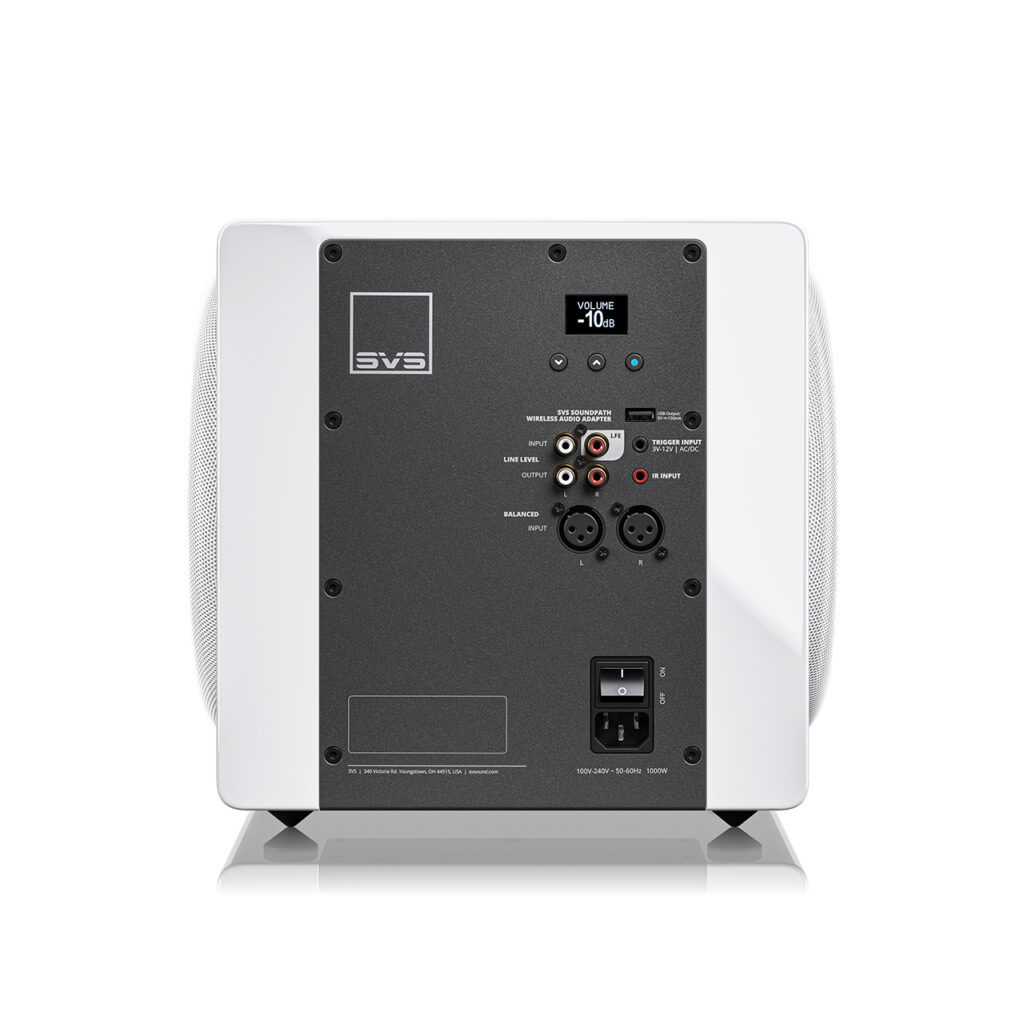
- Connectivity includes both balanced XLR and unbalanced RCA inputs, which is a meaningful inclusion at this price point. The XLR option is particularly welcome for listeners running longer cable runs or using preamps and processors with balanced outputs, where the noise rejection benefits of a balanced connection can make an audible difference.
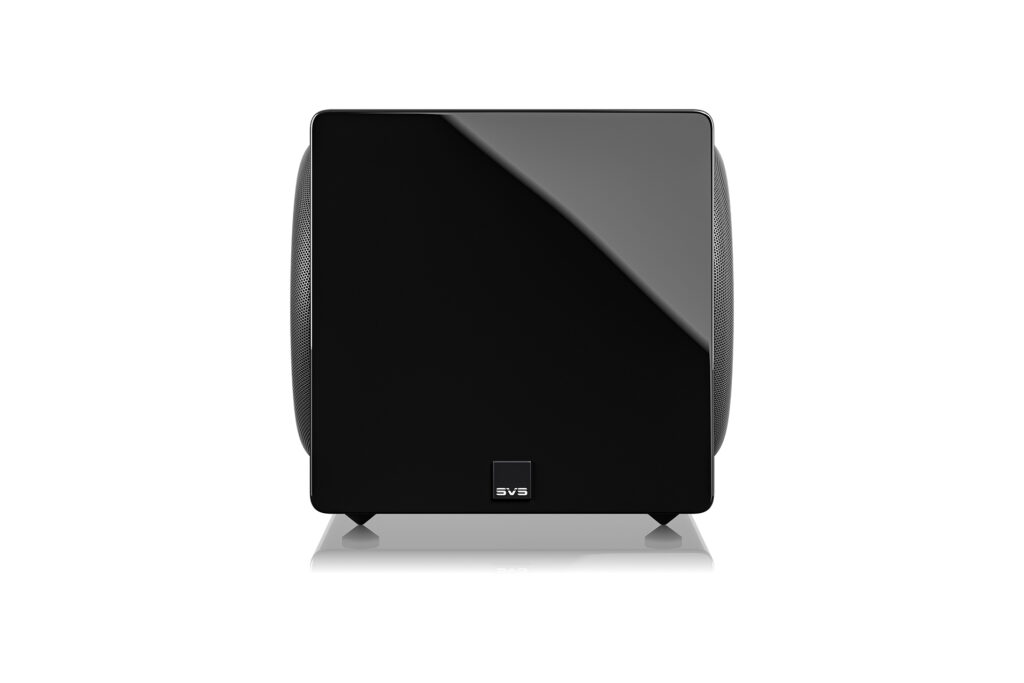
- The SVS 3000 Micro R|Evolution is available in piano gloss black or piano gloss white and measures just 10.9 inches tall by 11.8 inches wide by 10.8 inches deep. For a subwoofer capable of extension down to 20 Hz, that footprint is remarkable, making placement in a real-world living room not just possible but genuinely unobtrusive.
- SVS backs the 3000 Micro R|Evolution with a best-in-the-business five-year warranty and their industry-leading 45-day risk-free in-home trial, which allows buyers to evaluate the subwoofer in their own room and return it for a full refund if it does not perform to expectations. In a product category where room acoustics play such a significant role in the final result, that return window is not just a marketing gimmick. It’s a testament to SVS’ belief in its own products and respect for its customers.
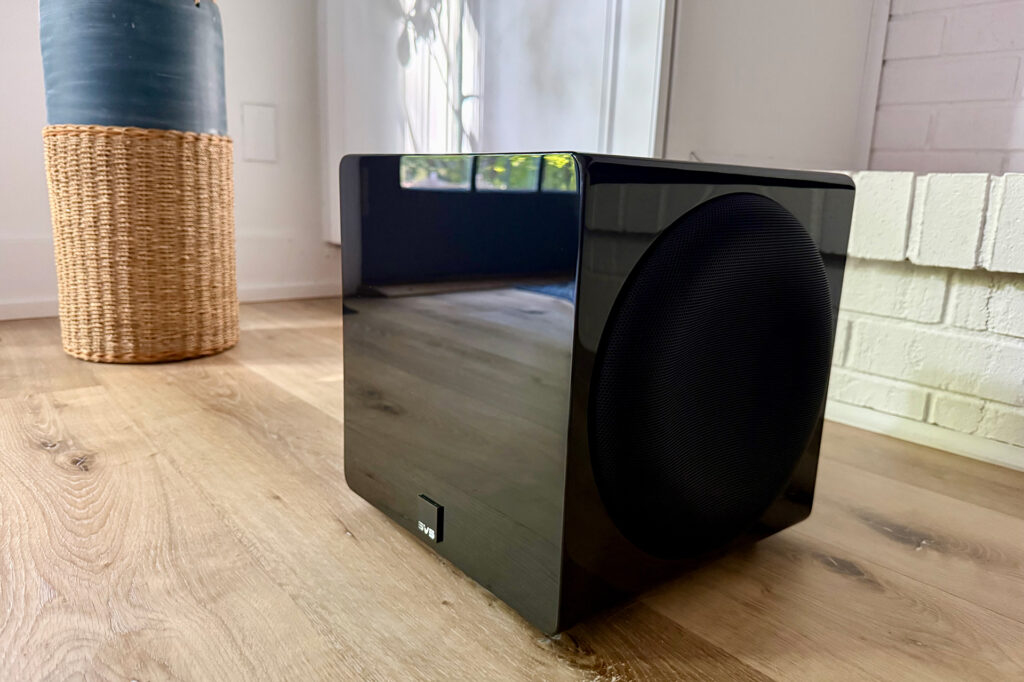
SVS 3000 Micro R|Evolution Subwoofer Specifications
| Design | Sealed, dual opposing side-firing drivers |
| Drivers | Two 9-inch high-excursion |
| Amplifier | 1,200 watts RMS, 4,000+ watts peak, Class D |
| Frequency response | 20–230 Hz, ±3 dB |
| Inputs | RCA, XLR, 3.5 mm trigger and IR |
| Control | App with six-band parametric EQ and auto room EQ |
| Dimensions (H x W x D) | 10.9 x 11.8 x 10.8 inches |
| Weight | 22.5 pounds |
| Price | $999 at review |
Why Should You Care About the SVS 3000 Micro R|Evolution Subwoofer?
There is a persistent myth in audiophile circles that a subwoofer is only for home theater enthusiasts. The prevailing thought is that serious two-channel music listeners have no use for a dedicated low-frequency driver, and that adding one only muddies the purity of the stereo image. I have never subscribed to that view, and the more time I spend with well-engineered subwoofers like the SVS 3000 Micro R|Evolution, the less credible that argument becomes.
The reality is that even the very best audiophile bookshelf speakers typically roll off somewhere between 40 and 60 Hz, leaving an entire octave or more of sonic information either missing or severely diminished. Upright bass, kick drum, pipe organ, electronic bass lines, and the room-pressurizing low-end information embedded in well-produced recordings simply do not exist in a system without a capable subwoofer. The SVS 3000 Micro R|Evolution, with its rated extension down to 20 Hz, fills that gap completely, and does so from a cabinet that is easily tucked away in a corner or next to a couch. For music listeners who have resisted adding a subwoofer due to space constraints or aesthetic concerns, this is the product that should remove those excuses entirely.
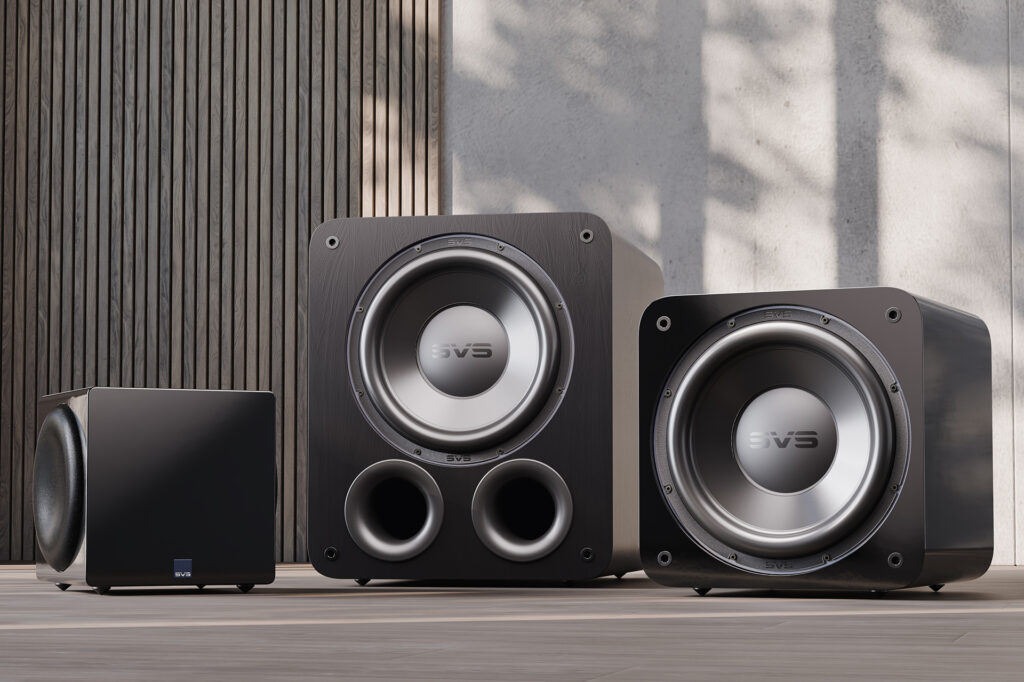
Some Things You Might Not Like About the SVS 3000 Micro R|Evolution Subwoofer
· There are no speaker-level inputs. Listeners running integrated amplifiers or receivers without dedicated subwoofer outputs will need to either use the high-level inputs via a workaround or invest in an inline adapter. This is a relatively common limitation in the subwoofer category, but worth flagging for buyers coming from a more traditional two-channel setup. SVS sells a speaker level to line level RCA adapter that will allow connection if the amp does not have line level outputs:
· The black piano gloss finish, while beautiful, is a fingerprint and dust magnet. Any owner of a piano gloss audio component will know this already, but it bears mentioning for buyers who prefer a low-maintenance finish, and SVS has done away with their black oak/faux wood offering. A microfiber cloth will easily become a permanent fixture in the listening room, especially for those audiophiles who are eccentric about their components’ appearance (like me).
Listening to the SVS 3000 Micro R|Evolution Subwoofer
For my listening sessions with the SVS 3000 Micro R|Evolution, I leaned heavily on material that I knew would put both its musicality and dynamic capabilities to the test in equal measure. First up was “Decks Dark” from Radiohead’s A Moon Shaped Pool, which is celebrating its tenth anniversary this year. It remains one of the most underrated and most beautifully recorded albums in the band’s catalog, in my humble opinion. The SVS 3000 Micro R|Evolution handled the track’s sustained, hypnotic bassline with an impressive smoothness that never once felt forced or exaggerated. Kick drums landed with genuine punch and presence, and the lower bass information in the mix was reproduced with a naturalness and musicality that reminded me why a well-implemented sealed subwoofer design is so difficult to beat for serious two-channel listening. There was absolutely no resonance, rattling, or bloat to speak of, even at high volumes, which in a cabinet this small is no small achievement.
From there I moved on to Daniel Pemberton’s riveting Project Hail Mary official soundtrack, specifically “Grace Go Home.” This cathartic track features a slow, reflective introduction, followed by a building percussion line that crescendos around the 3:40 mark in a genuine swell of emotion. Worth noting is that Pemberton constructed the score almost entirely from organic and unusual sound sources, including body percussion created by recording the clapping and stomping of 16 people simulated into complex drum machine patterns, along with woodblocks, a cristal baschet, and even a leaky tap recorded on an iPhone. There is not a conventional drum kit anywhere in sight, which makes the SVS 3000 Micro R|Evolution’s handling of those textures all the more impressive. The SVS captured the weight and emotional gravity of that climactic moment with a composure and authority that frankly caught me off-guard, given its dimensions. It had me asking a question I did not expect to be asking during a subwoofer review: can a subwoofer capture emotion? Based on what I heard, the answer is yes.
I also spent time with “Time Go Fishing” from the same soundtrack, which presented a different challenge in the form of lively percussive instrumentation at varied tempos. The SVS kept pace without ever sounding strained or congested, tracking the dynamic shifts in the track with the kind of speed and control that sealed designs are specifically engineered to deliver.
Finally, I cued up “Oblivion” by Grimes, a deceptively simple track built around a deep, relentlessly thumping synth bass percussion line. The droning, repetitive bassline is exactly the kind of material that exposes a lesser subwoofer’s weaknesses; on less competent models, it can come off as muddy and messy. The SVS 3000 Micro R|Evolution handled it with confidence, tracking the electronic bassline cleanly and allowing the low-end mix to recede naturally into the background when the music called for it, then reassert itself with authority when needed. It is a quality that is harder to achieve than raw output numbers suggest, and it speaks to the sophistication of SVS’ driver design and DSP platform working together as designed.
Will the 3000 Micro R|Evolution Subwoofer Hold Its Value?
SVS subwoofers have a strong track record on the used market, and the 3000 Micro R|Evolution should be no exception. The SVS brand carries significant recognition among audiophiles and home theater enthusiasts alike, and the original SVS 3000 Micro consistently fetches healthy resale prices on Facebook Marketplace and other resale outlets years after its introduction. The SVS 3000 Micro R|Evolution’s updated drivers, amplification, and DSP platform give it a longer runway before obsolescence than a typical electronics-driven product, and the compact, non-threatening form factor means it appeals to a wide range of buyers on the secondary market.
That said, subwoofers can be tricky to resell due to their weight and the challenges of evaluating bass performance outside of a buyer’s own room. SVS’ 45-day return policy on new units also means that cost-conscious buyers may simply purchase new with the option to return, which can soften demand for used units at aggressive prices. Overall, I would expect a gently-used SVS 3000 Micro R|Evolution to hold respectable long-term value, particularly as it is the newest and most capable compact subwoofer in its class, featuring plenty of futureproof bells and whistles.
What is the Competition for the SVS 3000 Micro R|Evolution Subwoofer?
The REL T/5x (buy at Crutchfield) is a $799 eight-inch compact subwoofer that I reviewed and subsequently purchased for my own reference system, which should tell you most of what you need to know about my opinion of it. The T/5x uses a single long-throw eight-inch FibreAlloy driver and a 125-watt Class-A/B amplifier in a beautifully finished sealed cabinet measuring just 8.5 inches wide by 9.5 inches tall. Its Neutrik Speakon high-level input is one of the most genuinely useful features in the subwoofer category, allowing the T/5x to draw its signal directly from the speaker terminals of an amplifier for a more seamless, natural integration with the main speakers – something that made a big difference for me after my in-home calibration by REL’s Jerrad Perkins. What it does not offer is an app, parametric EQ, or any form of room correction. REL’s philosophy has always been that superior engineering and careful placement eliminate the need for digital correction, and in practice that approach works remarkably well. The T/5x rolls off at 32 Hz, which means the SVS 3000 Micro R|Evolution reaches deeper. For a buyer focused primarily on musical integration in a smaller room, the T/5x remains one of the finest subwoofers at its price. For a buyer who wants genuine infrasonic extension and app-based DSP control, the SVS might be a better choice, but both are impressive in their own rights.
The Sonus faber Gravis I ($1,100 buy at Crutchfield) is a compact sealed subwoofer, featuring a down-firing eight-inch ultra-long-throw treated paper cone driver and a 150-watt high-current Class-A/B amplifier. Available in four finishes with a soft leather top embossed with the Sonus faber logo, the Gravis I is one of the most visually distinctive subwoofers in its class. Its connectivity is thorough, featuring both high-level and low-level inputs with separate volume controls for each, making it equally comfortable in a two-channel music system or a multi-channel home theater setup. Rated down to 30 Hz, it gives up some extension to the SVS, and its 150-watt amplifier cannot match the 3000 Micro R|Evolution’s output capability. At $100 more than the SVS, the Gravis I is asking you to pay a premium for brand heritage, craftsmanship, and aesthetics, rather than raw performance. For the right buyer in the right room, that is a perfectly legitimate trade-off. For the buyer who wants maximum bass performance per dollar in a compact footprint, the SVS is probably the better choice of the two.
Next on my list is the slightly more affordable $799 GoldenEar ForceField 30 (buy at Crutchfield), a compact eight-inch subwoofer that features a front-firing woofer, a 500-watt RMS digital amplifier, DSP, and a bass reflex/passive radiator design. The sleek black cabinet with its perforated metal grille looks like something out of a higher-end product catalog. At its current price point, it’s a strong performer worthy of a spot on any audiophile’s listening room floor, though color options are limited and the design leans minimalist rather than luxurious.
Finally, the KEF KC62 ($1,699, buy at Crutchfield) is a unique subwoofer worth mentioning due to its use of KEF’s proprietary Uni-Core force-cancelling dual six-inch driver technology, a 1,000-watt amplifier, and the company’s iBX bass extension processing to achieve extension down to 11 Hz from a cabinet measuring just under 10 inches on each side. It is the most analytically precise and spatially resolved compact subwoofer I am aware of at this price, and the gap between it and everything else with a similar footprint is real. At $700 more than the SVS, however, it demands some serious justification, and the futuristic and unconventional design might not be for everyone. For most rooms, most music, and the majority of listeners, the 3000 Micro R|Evolution delivers an impressive percentage of the KC62’s performance at a considerably lower cost of entry, and that, frankly, is the story of the SVS brand in a nutshell.
NEWS: learn about SVS’ new 5000 Series audiophile subwoofers here.
Final Thoughts on the 3000 Micro R|Evolution Subwoofer
There is a certain kind of audio product that does exactly what it promises on the box, and then quietly does a little more. The SVS 3000 Micro R|Evolution is that product. On paper, the specifications are impressive enough: dual nine-inch force-balanced drivers, 1,200 watts of continuous amplification, extension into the low 20 Hz range, and a DSP platform borrowed from SVS’ flagship lineup, all packaged into an 11-inch square cabinet that could pass for a decorative accent piece. In practice, those numbers translate into bass performance that is not just technically capable, but genuinely musical, meaning it is able to hammer through the most dynamically demanding material one moment and disappear seamlessly into a delicate film score the next.
What I did not fully anticipate was the emotional dimension. A subwoofer review is not typically where you expect to confront questions about whether low-frequency reproduction can move you, but the SVS 3000 Micro R|Evolution put that on the table and answered it convincingly for me. The combination of speed, control, and depth that SVS has engineered into this cabinet does something that goes beyond filling in the bottom octave of your speakers: it completes the picture in a way that makes music feel more present, more alive, and occasionally more affecting than you had any right to expect from a box this small. At $999, the SVS 3000 Micro R|Evolution represents exactly the kind of audio product that keeps SVS at the top of so many recommended lists, and it is easy to see why.
“There is a certain kind of audio product that does exactly what it promises on the box, and then quietly does a little more.”



