
 By
By If our readers ever wonder if we love them, this article shows them just how much. Our ad money, aka: how we make our living around here, comes from ads promoting buying more audiophile equipment. The hobby is about buying more and more equipment over time, on a journey to get from some starting point to where we have achieved a level of enlightenment from our system that makes us truly musically happy. Do we ever get to that final place? That is debatable, and I would argue even irrelevant, as the journey is the beautiful part. The buzz that comes from finding a new component, a new tweak, a new something that gives us a little bit more of “the feels” is why many of us are so into our audio hobby.
Where outsiders get confused or disillusioned with audiophilia is when the hobby goes off the rails like a crazy train. $35,000 speaker cables. Mpingo discs. Green paint for the edges of your Compact Discs (I totally did that in high school when I couldn’t afford a better tweak). People think, and who could blame them, that we are batshit crazy. Of course, we are a little bit cuckoo (for Cocoa Puffs), but we’ve got music in our lives, and that is a pretty big upside. Audiophiles live with melody and rhythm and harmony in our daily lives, which makes up for some level of crazy. With that said, here at FutureAudiophile.com we stay away from the anti-science. We stay away from the anti-facts. We stick with the numbers and the physics and the science – and that has served us well for a very long time.
Room Acoustics Make More of a Difference in the Sound of Your Room Than Most Component Upgrades
There, I said it (and it needed to be said). Your listening room is the most important factor in your audiophile system. Period. End stop. The acoustics of your listening room are more sonically impactful than an upgrade to, say, your turntable. More than a new streamer/DAC. More than a sexy new preamp, power amp, cables, subwoofers, or even your favorite floorstanding loudspeakers. Sadly, this is not advice that you will hear at a lot of audiophile salons, Best Buy, Magnolia, or any number of highly respected audiophile online retailers. They are in the business of selling you more gear, and we get it. We love gear here at FutureAudiophile.com. We publish 102 reviews per year, which is more than any of the establishment publications, and we are very proud of that. We also don’t charge for our reviews (paywall model) and we never plan to do so. At the same time, we will never blow sunshine up your ass, either. We let you know how important room treatments are in your audiophile listening room.
The Idea That Your Audiophile Room Needs to be PERFECT is a Total Fallacy
Since the Palisades Fire on January 7, 2025, my life has been turned upside-down. House badly damaged (but one in 10 that didn’t burn down). Family unit crushingly destroyed. Autistic wife cracked and demanded a divorce when she refused to even consider going home to Los Angeles. Dealing with contractors, the evil that is State Farm (replace them if you have the chance – please, friends as they are evil and do not pay like a respectable insurance company) and more is nothing compared to the agony of moving six times in 15 months. I am two weeks into my latest condo here in Marina Del Rey, California. I love the building that I live in and I loved the 17th-floor, 2,500-square-foot unit that was living in, but I was lucky to procure said space for six months, considering how the destruction of 90272 created so much demand for alternate places to live. My building is great, as it has many of the amenities of a Four Seasons hotel, with the soul of a full-service Park Avenue co-op. The staff here at home valet-park my EV. They deliver my Amazon and audiophile gear right to my front door. Like a Vegas hotel, you can only get to certain floors of my building with a FOB that I attach to my keychain. The pool cabanas are free (take that, trendy hotels). The views are to die for. It is nice here, but it is not a house. More accurately, it is not MY HOUSE that I am being forced to sell, and that makes for an imperfect audiophile listening room situation. I needed a real-world solution on a real-world budget for my next 12 months, while matters hopefully resolve themselves.
Fret not, as an imperfect room is reality for so many of us and is by no means the end of the world. This is a modern building made of steel and cement, which means sound doesn’t travel, so I can rock out without getting calls from the front desk. The windows have views of 3,000 boats, Catalina Island, and the ocean, but they also block out heat and sound, which is good. These are the positive factors.
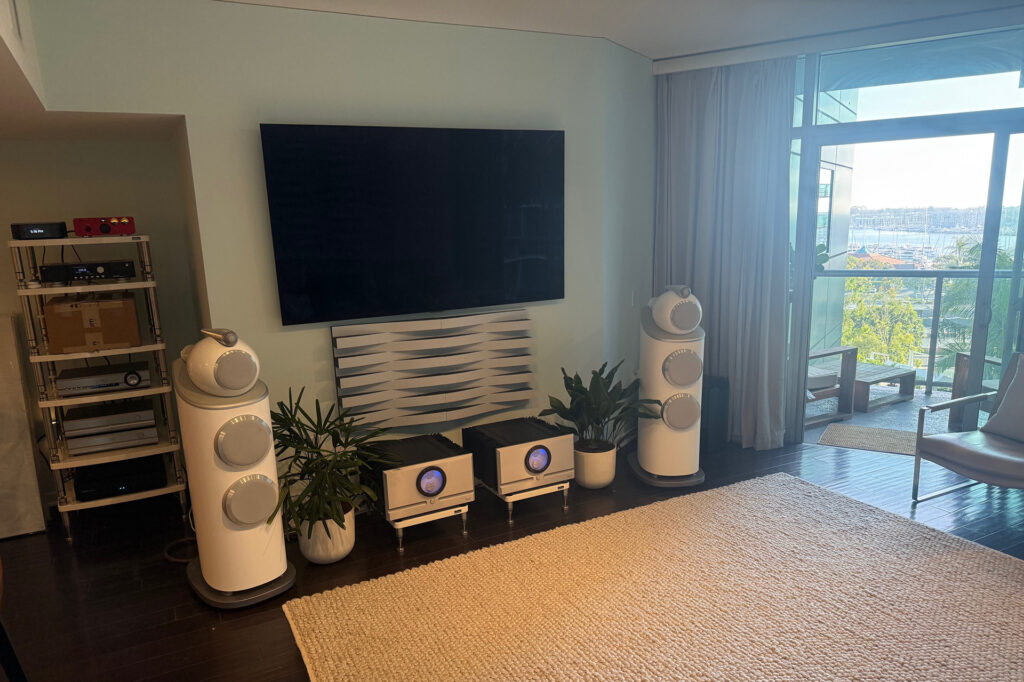
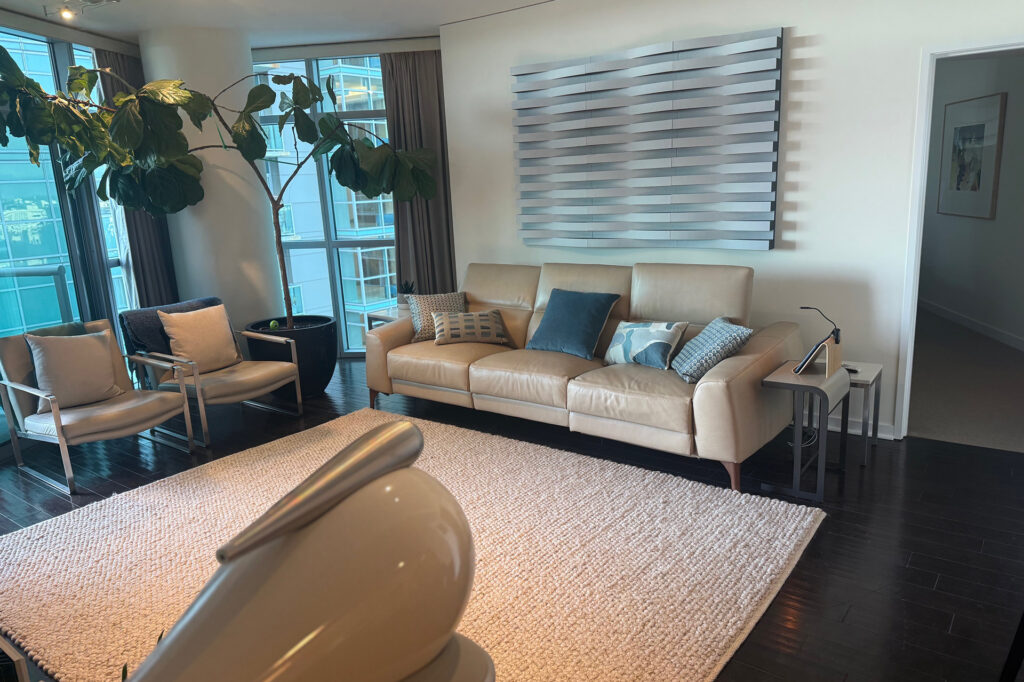
My new dwelling is $5,500 a month less money per month (welcome to the post-fire Los Angeles that is low on inventory but flush with people spending insurance money) than my old one, with 750 fewer square feet and an oddly-shaped room. I have acoustical challenges, but they are by no means insurmountable. And don’t take that diagnosis from me – that comes from global experts like Anthony Grimani, who helped me (and he can help you, too) with my acoustics in my newly-minted bachelor pad. I’ve got no space (the wall is right there behind my head) behind my seating position. I’ve then got an angular and glass right wall. On top of that, I’ve got no left wall. But I’ve got really good sound, thanks to about $1,500 worth of room treatments and a little bit of sage advice. Grimani’s solution for me was to use a somewhat dual-purpose absorption/diffusion foam treatment behind my seating position that looks pretty cool and works even better. We used two more panels above my mono amps and below my 77-inch LG OLED monitor in the front. On the ceiling, we used ultra-sticky tape to adhere two two-foot by four-foot white absorbative panels, and we were off to the races. Would a $379 GIK Turbo Trap Pro bass trap help (read my review)? Perhaps, as it did in my house before the fires, but I am pretty damn happy with what I am hearing with these simple steps. Friends, room acoustics don’t have to be complicated or expensive.
Digital Room Correction is Better After You Install Physical Treatments
While my first big-boy turntable is coming from VPI (and spaceship-like Avenger), arriving Monday, I am very much of a streaming guy for my all-day, at-work listening. Those tunes come from a BlueSound Node ICON (read the review), which also can be used as a source for DIRAC room correction if you buck up for the mic, cable and subscription. I am personally a big fan of DRC (digital room correction), as are many on staff here at FutureAudiophile.com – specifically Mike Prager. The issues that we can measure and deal with are meaningful. The cost to resolve them is low and the results can be huge, but this is its own unique topic.
Regarding room correction (DRC), it is always better to treat your room in the physical domain first. The less your processor needs to do, the more organic (better) things will sound. Some audiophiles might not be able to deal with any physical treatments. I bought a $1,200 rug from Restoration Hardware (I wrote a whole article about it) that sheds like a Golden Retriever but works great for absorption on my hardwood floors. That was a very good upgrade for real-world acoustics. Then again, the DRC in my SVS SB-4000 subwoofer (read my review) helps get me that deep foundation of sound in my room to sound low, tight and solid in ways that my even a reference-level speaker like the Bowers & Wilkins 802 D4 speakers (read my review) can’t quite do.
There is a place for both low-cost, easy-to-implement treatments in both the digital and analog domains.
How Do You Get Started with Audiophile Room Treatments?
There are more resources out there for room acoustics than you might believe. The folks at GIK Acoustics give FREE acoustic design advice and sell their treatments for a very, very fair price. This is almost too good to be true. Anthony Grimani can be had as a world-class acoustician for under $1,000, I am told, for basic set-ups. You will need to measure your room (easy with a tape measure or a phone) and to take a few photos – and then you are off to the races.
There are all sorts of online resources, but I worry about the cesspool that is, say, R/Audiophile on Reddit with people who act like they are experts but are just Internet trolls, who at 62 still live in their mother’s basement and spent six hours a day playing first-person shooter games, seven days a week. I’d rather have an actual expert dial me in for good advice.
Anthony Grimani, Bob Hodas and guys like Keith Yates are topnotch and, considering what they can do for you in terms of overall performance, are game-changing. They are worth the cost of a modest audiophile component when you consider the paramount importance of room acoustics in even a small audiophile room. By no means do you need such high-level expert help, but it certainly isn’t a waste of money.
Do I Have to Spend a Fortune on Audiophile Room Treatments?
Absolutely no – you do not need to spend a fortune on room treatments! By all means, you can get spendy if you want and, with more money, you should expect to get far more luxurious materials and perhaps even better performance/technology, but don’t think that you need to spend a fortune to get a big performance benefit from adding some room treatments.
The first step that I recommend is to treat your first-order reflections. Your first-order reflections are created in front of your speakers at about two to three feet on the ceiling, side walls and floor. Simple and low-cost panels get the job done here nicely. Legendary recording studio tuner Bob Hodas talks about moving anything physical and large that might mess with your audio, such as a coffee table. Removing items costs nothing and can make a big difference. I added that Restoration Hardware rug and that helped more than I expected, too. These are easy fixes. Another tip is to get very strong double-sided tape at Home Depot or Amazon, as the weak-sauce shit only wastes your time, as I learned.
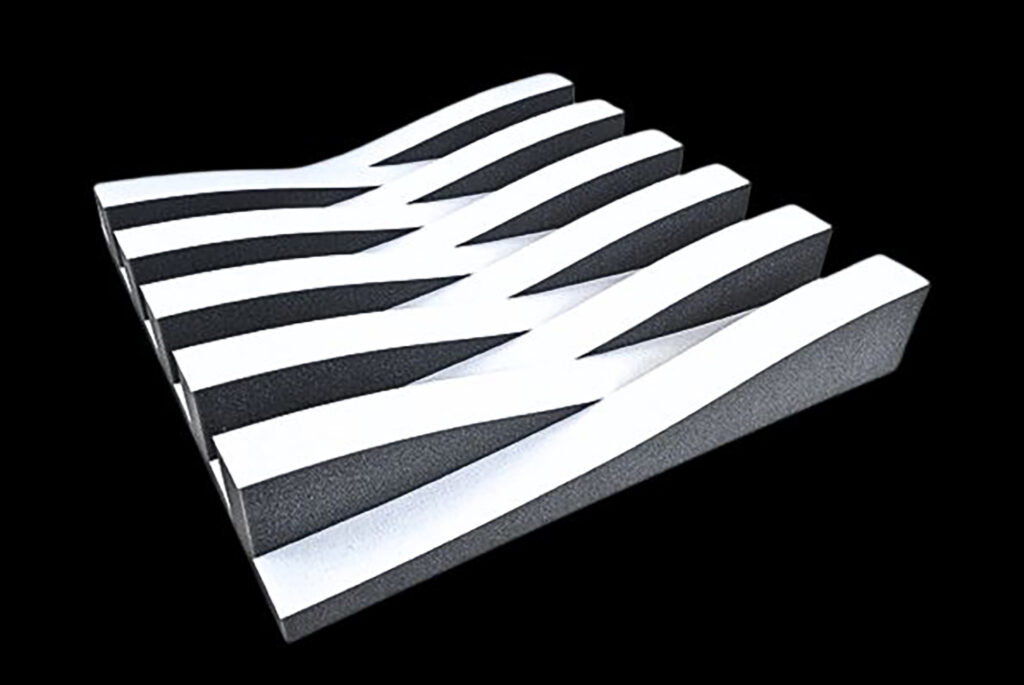
Diffusion is often a good acoustic category to look at next. You’ve seen those “cityscape”-looking treatments, right? They can look pretty cool and they send sound going to, say, your back wall and diffuses it, so that you don’t have competing sound waves with your direct sound. A bookcase filled with books, Compact Discs or LPs can work well here as a dual-purpose threat and is another low-cost but highly effective solution.
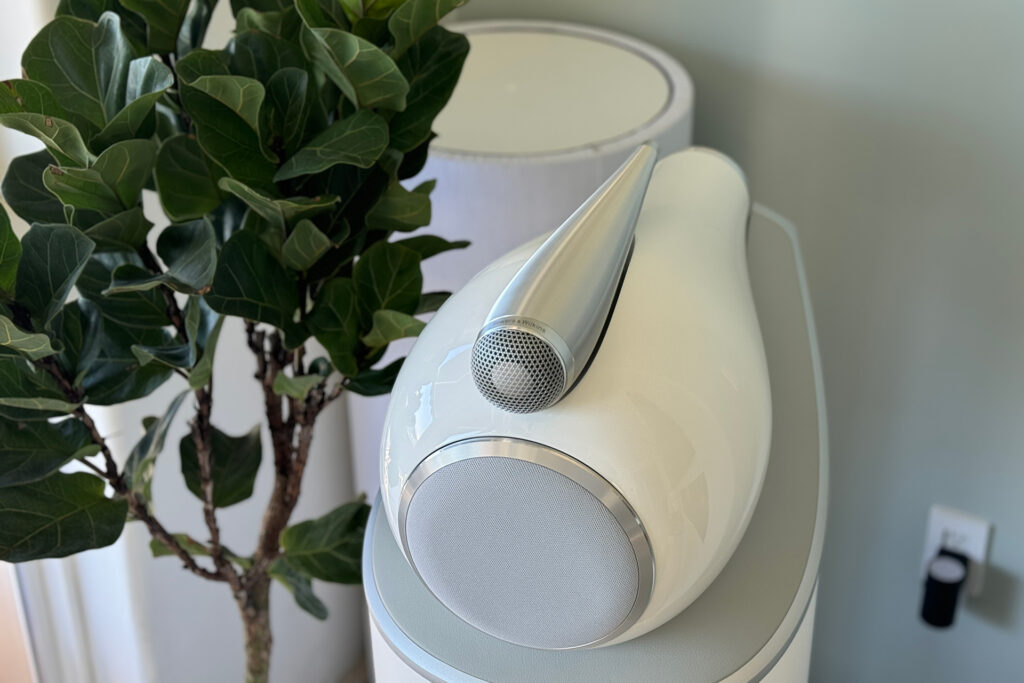
Bass traps effectively solve big low-frequency sonic issues. Priced at around $400 (and up), these often cylindrical tall tubes eat up the long sonic waves created by bass. That bloated, muddy low-frequency sound tightens right up for a more taut, visceral feel. There are non-round options. There are fancy fabric-finished ones, too. They work. They are cheap. If you can live with them in your room (hide behind a plant or something), you are in for a massive sonic upgrade that can easily be had in the gear upgrade value proposition.
Note: these are the basics of audiophile room treatments and I am no PhD. There are those who can design you a much more tuned-in plan, but this is a really strong place to start for an overall plan.
Do Your Room Treatments Have to Look Like You Live in a Recording Studio?
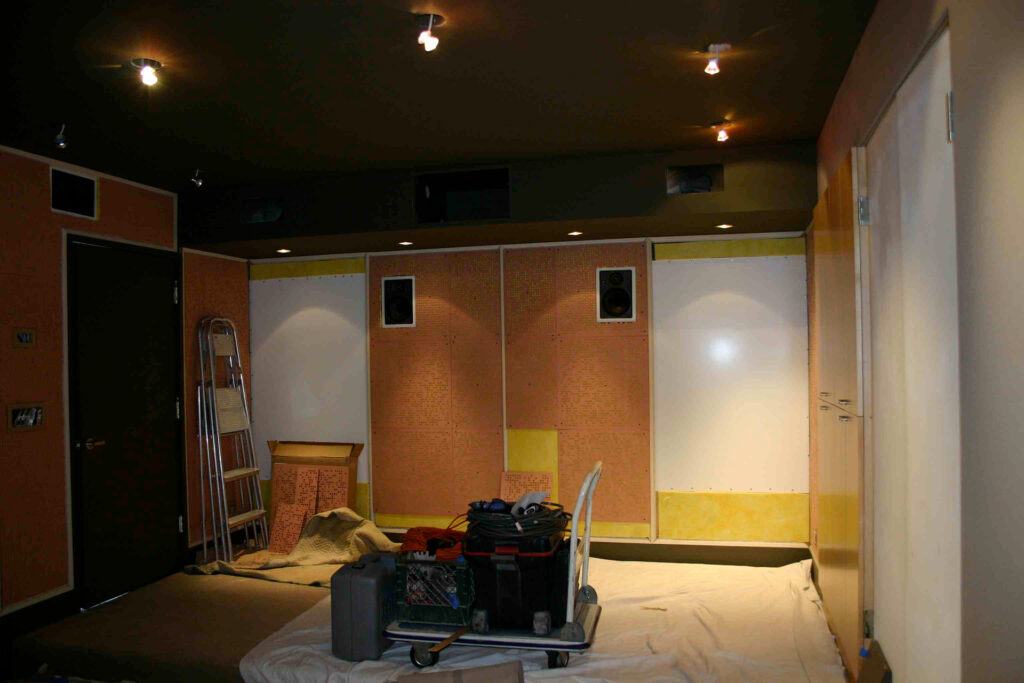
For years, I put my room treatments behind simple fabric wall frames and you couldn’t see them. I used RPG products (very good) and hid the bass traps in the corners of the room behind neatly-installed fabric walls. This is more expensive, but nothing crazy, when you consider the cost of today’s “component of the month” component costs.
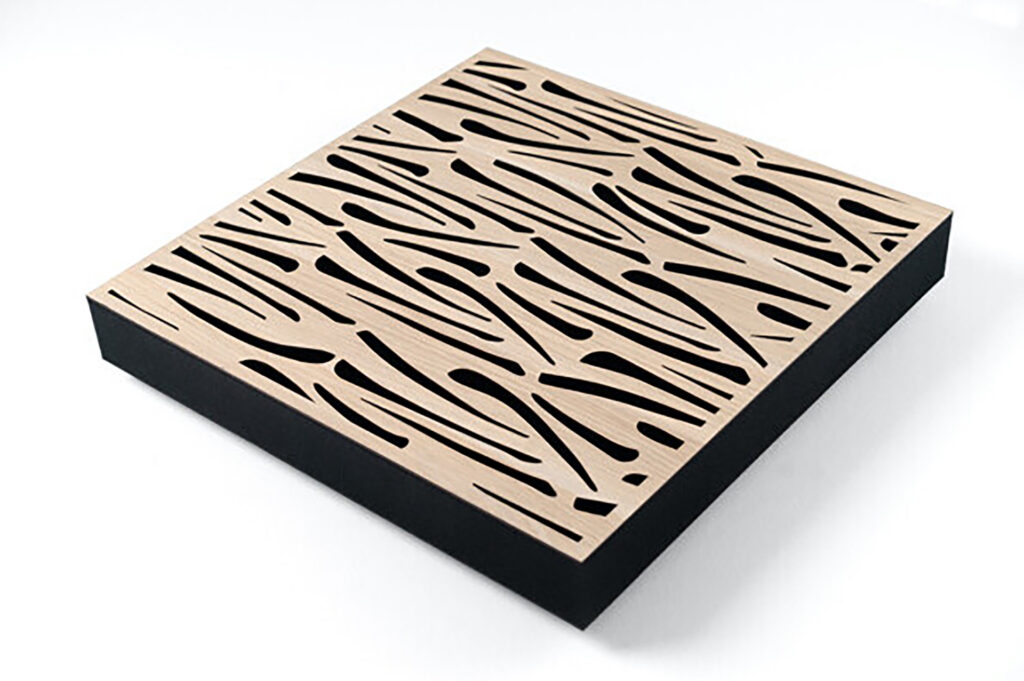
Some more expensive treatments look really fantastic. For example, wooden panels for diffusion can really look both modern and elegant. Other treatments can be hidden in your room by lush plants or other interior design elements.
By no means, should your listening room look like a recording studio, unless that is the design goal that you are going for.
Why a $1,500 Room Treatment System is Better Than a $15,000 Audiophile Component
The simple fact is that it is easier for a retailer to sell you a new DAC or preamp than it is to talk to you about the physics of your room. The sad part is that the physics of your room is where the biggest and least expensive sonic improvements are waiting for you. Room treatments are also relatively low retail profit margin products, so a dealer might rather make more profit dollars from your audiophile spend, and that means pointing you away from doing what will make your system sound the best, the fastest and for the least amount of money. That’s fine for them, as we are not going to give up such a big sonic improvement that easily.
Should you ignore upgrading your gear? Absolutely not. New, badass gear is the lifeblood of this hobby, and a lot of the fun of being an audiophile. There’s nothing like bringing home a cool new component and getting that rush from the sonic improvement that you hear. That is the high that we chase as audiophiles, but before we can get to that level of enlightenment, let’s get the foundational physics in order. That goes for digital room correction, too. We love DRC, but get your actual physical room all taken care of as a first matter of business, and you are going to be well on your way to more and more great sound without the wasted money, time and frustration that comes as you get deeper into your audiophile journey.
How have you treated your room so far? Share with us your story. Is your dealer good at acoustic design? Tell us about your room acoustic story and we will post your comments ASAP below to share with everyone here. We LOVE to hear from you!




I’ve said, and written many times:
“Play the system, hear the room!”
Room treatments are very often the final piece of the puzzle and should not be overlooked.
I could argue – room treatments would be the first part of my system structure but few of us get that memo SO EARLY in the journey. That’s 100% OK – it just helps us to get to that next level of performance without spending a fortune and lots of frustration.
j
This is one of your best articles. You both cut through the voodoo and include a real-life example that’s representative of most people, who have to mix music and the real world. Nice job!