
 By Frank Picarello
 Marten is a Swedish high-end loudspeaker manufacturer, founded in 1998 by Leif Mårten Olofsson. To this day, it’s still run as a family business in Gothenburg, Sweden. It began with a deep personal obsession: why don’t speakers sound like real instruments in a real room? Marten speakers range in price from approximately $11,000 per pair for entry-level bookshelf models to over $760,000 per pair for their flagship floorstanding loudspeaker system.
The Marten Parker Series sits one rung up from the entry-level of their lineup and is priced at $33,000 per pair. In the Parker Series, there are three models: The stand-mount Marten Duo at $19,000 a pair, the floorstanding Marten Trio reviewed here, and Quintet. Each speaker has the option of an upgraded diamond tweeter. More on that later. I have had the opportunity to listen to Marten Speakers at audio shows for several years now. I was always impressed, finding the speakers to be natural-sounding and musical, with a wide, tall, and deep soundstage, and solid bass. Even their bookshelf models do bass exceptionally well.
The world of very high-end loudspeakers is a crazy one and things can get expensive fast. $33,000 is a lot of money for loudspeakers, unless you read (and believe) some of the Oligarch Audio-supporting print magazines. In the real world, if you are to spend at this level – how does an exotic, uber-high-performance, European speaker perform? Learning that is our task in this review.
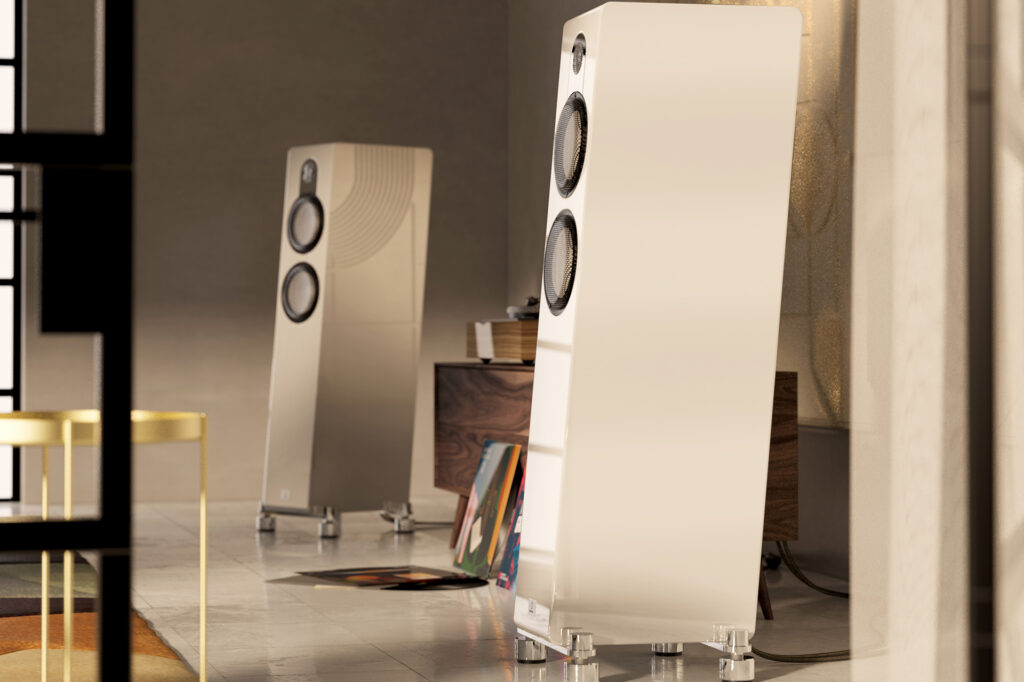
What Makes the Marten Parker Trio Speaker Special?
- The Marten Parker Trio speakers are extremely musical, with a difficult-to-engineer balance of transparency, linearity, and body. They simply play music honestly and with emotion. What I like about the Parker family in the Marten line is that the differences between models is tied more to how they best work in different room sizes, not a compromise in sound quality. Having listened to both the smaller Maerten Parker Duo and the larger Marten Parker Quintet, I can attest to hearing the family sonic resemblance across all speakers in the Marten Parker offerings.
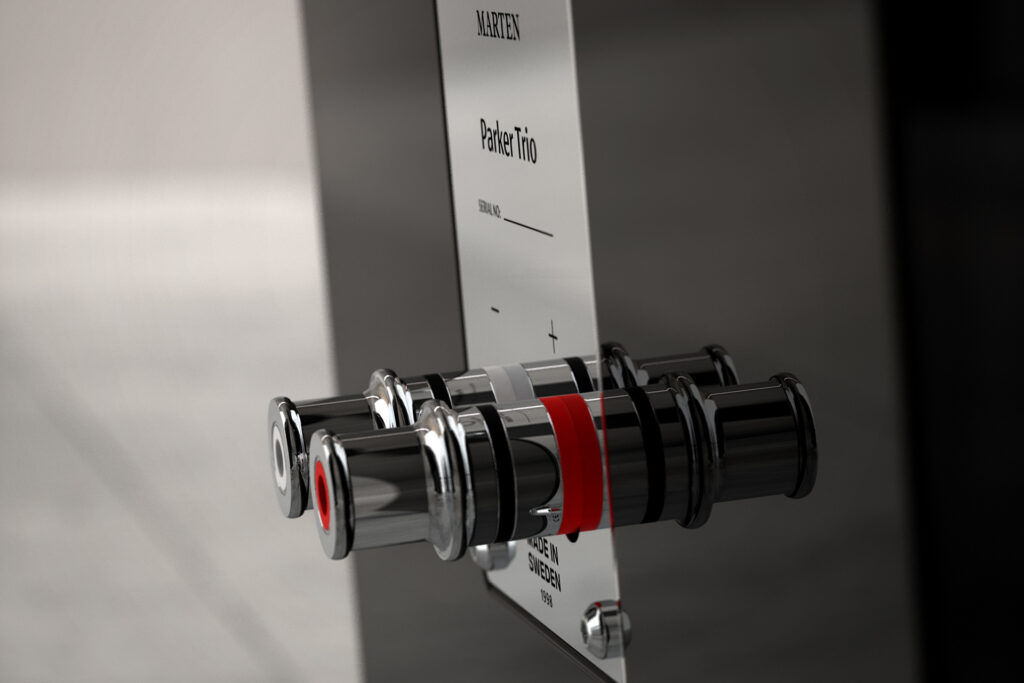
- The drivers are all Accuton-sourced but designed specifically to Marten’s specs. The tweeter is a one-inch ceramic dome. The two bass/midrange ceramic drivers use Neodymium magnets to maintain control and minimize distortion. There are also two nine-inch aluminum passive radiators in the rear of the speaker. The crossover is special in its use of 2.5-way multi-diverse configuration, polypropylene capacitors, and copper foil inductors. The Martens use Jorma Design internal wiring and WBT speaker terminals.
- Marten has paid special attention to minimizing resonances in the use of 35mm M-board, their own proprietary multi-layered fiberboard designed to eliminate internal resonance.The result is a knuckle-tapping-dull sound, resulting in close to zero image smearing. At the base, Marten uses mirror-polished stainless-steel outriggers and Marten spec IsoAcoustics feet. The result is a very stable platform with excellent floor/speaker isolation and a relatively easy to reposition speaker for setup and fine-tuning.
- When set up even remotely well, these Marten speakers sonically disappear. I have owned many really great audiophile speakers over the years, and the Marten Parker Trios produce the best soundstage that I’ve ever heard, with wide and deep rock-solid, appropriately-sized instruments I’ve had in my listening rooms. Imaging is pinpoint, with a soundstage that goes outside the speaker’s edges. The image focus is stable and sized perfectly.
- The passive radiator bass design is really well-thought-out. While there are several approaches to bass configuration, the passive radiator design uses a non-powered woofer (two rear-mounted in the case of the Parker Trio) that increases the effective woofer area enhancing deeper bass output. As the volume of the cabinet remains constant, due to the passive radiators moving in the opposite direction of the driven woofers, the cabinet characteristics required to produce appropriate bass remain constant. The devil is in the details regarding deployment, and Marten has pulled this off exceptionally well. The speakers produce powerful bass that is deep and tight, yet quite musical.
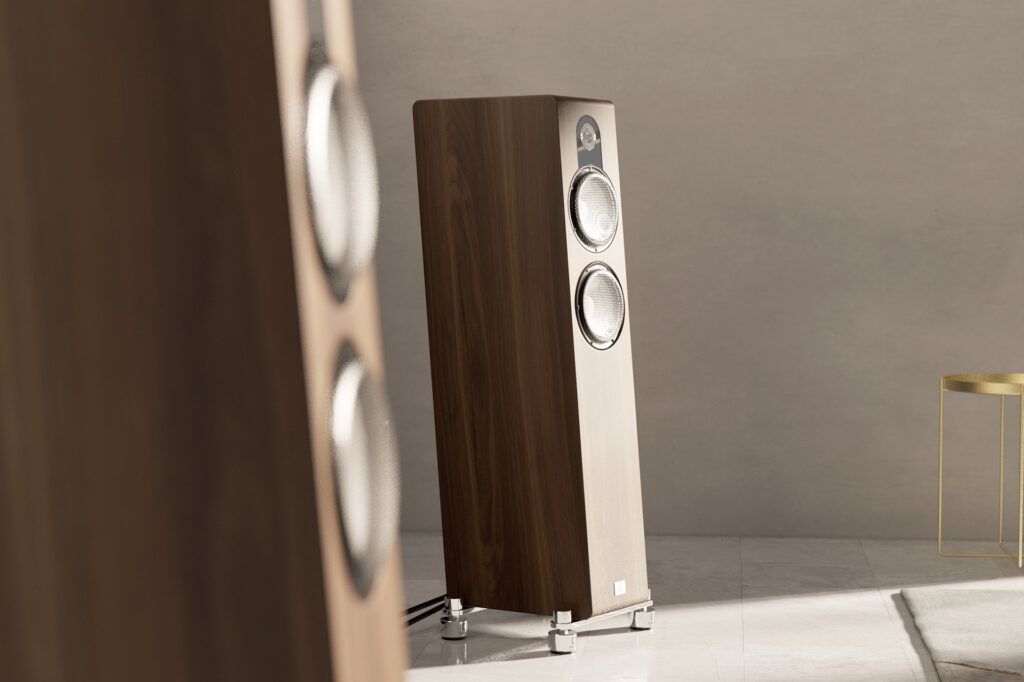
- The Marten Parker Trios don’t take up a lot of floor space and are not overly heavy at 89 pounds. They seem lighter than they are, as they are easy to maneuver and get into place with wide and flat feet on outriggers to add confidence when sliding them around. While I know beauty is in the eye of the beholder, I find the Martin Parker Trio speakers good-looking with a nice blend of modern and classic styles and a dose of Scandinavian simplicity.
- The Marten Parker Trio is an efficient speaker at 91 dB with an easy six-ohm nominal impedance. This opens things up for lower-powered amplifiers. In my case, the Martens are easily powered by my Pass Labs XA30.8’s 30 watts (read our review).
Marten Parker Trio Floorstanding Loudspeakers Specifications
| Design | 2.5-way floorstander |
| Drivers | 1-inch ceramic tweeter, two 7.5-inch ceramic woofers, two 9-inch passive radiators |
| Frequency range | 26 Hz–40 kHz, ±2 dB |
| Sensitivity | 91 dB (2.83V) |
| Impedance | 6 ohms (3.1 ohms minimum) |
| Crossover | 2,200 Hz |
| Dimensions (W x H x D) | 8.7–11 x 46 x 14.2 inches |
| Weight | 89 pounds each |
| Price | $33,000 a pair at review |
Why Should You Care About the Marten Parker Trio Speaker?
The Marten Parker Trio works well and can be set up easily in many different rooms. They also have their big brother’s genes. Trickle-down engineering is alive and well at Marten. Having heard and drooled over their larger and more expensive models, the Marten sound and primary attributes are evident in the Parker Trio. Leading-edge attack, solid and articulate bass, seamless integration of drivers, tremendous soundstage, and high efficiency make the Marten Parker Trio a solid investment for the advanced audiophile, as these will never be any enthusiast’s first speakers, but it could be the last for many.
For the audiophile who is looking for a more musical, detailed but not overly analytical speaker, Marten is a good place to explore. The fit, finish, and quality of the drivers and cabinet are in line with the more expensive models and a level above many speakers in this price range. You are getting a very high-end luxury audio product at a price that, when compared to others in this rarified space, is actually a little bit of a bargain.
Some Things You Might Not Like About the Marten Parker Trio Loudspeakers
- While the ceramic tweeter in the Marten Parker trio is extremely well-executed and integrated, with fast transient response and extended frequency range, listeners who are accustomed to softer-sounding dome tweeters or ribbons, might find the Martens to have a less warm sound. Prior to the Martens, I had two speakers with AMT tweeters and a third with Raal ribbons. The difference is noticeable, yet I find the Marten ceramic tweeter more accurate, sometimes in a brutally truthful way. Having an amp like the Pass Labs XA30.8 and an Allnic L-7000 preamp helps, as both form an exceptionally smooth foundation for the Parker Trio. The Parker Trio speakers benefit from good electronics.
- The Marten Parker Trios are not super-easy to set up, although I got magic going in my room with patience, measurements, and experimentation. What’s interesting is that, while they took longer and require micro-adjustments in placement for them to create magic, once they clicked, they indeed worked exceptionally well. My square room, which is typically an enemy of speakers, accepts the Martens on their terms.
- The Marten Parker Trios benefit vastly from high-quality electronics. Any speaker at this price and performance level relies on and reflects the rest of the system, yet having tried different digital front ends, mono single-ended tube amps, and an all-tube preamp, the differences in other components and even cables (yes, cables) matters. Finicky? No, yet as good stereos are systems, using the Marten Parker Trios require careful system component selection. Get it right and the results are magical.
Listening to the Marten Parker Trio Speakers
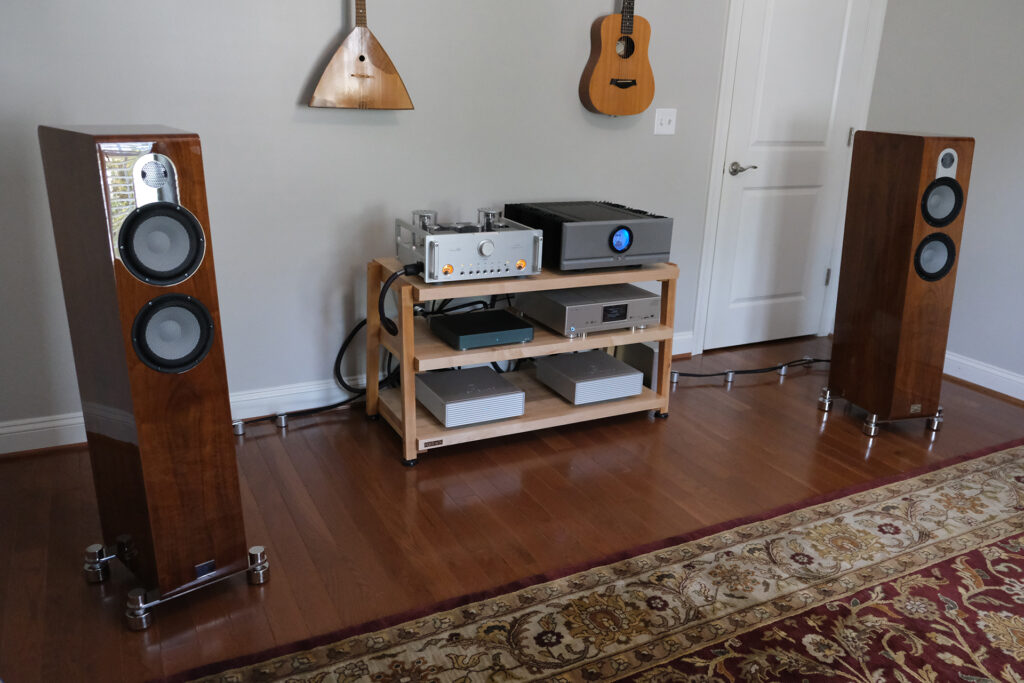
My 14-by-15-foot listening room is dedicated mostly to my audio endeavors so, outside of the system, two chairs and an electric piano/keyboard, it’s all stereo all the time. The rest of my reference system consists of a Pass Labs XA30.8 power amplifier, an Allnic L-7000 preamp, a Cary Audio DMS-800PV Streamer/DAC, two Tai Hung power conditioners – one for the amp and the other for everything else – and an LHY-10PRO switch for the direct ethernet feed. I use Qobuz for streaming and have over five TB of local USB-attached hi-def DSD and PCM recordings. This includes my CD collection and countless DXD and DSD 128/256/512 music. I use Copper Colour Alpha speaker and interconnect cables, and a variety of different power cables.
I know many audiophiles use Steely Dan’s Aja as a benchmark and I understand why yet, for me, the album prior to Aja, The Royal Scam, is a favorite of mine. It’s not as polished, yet has a greater variety of energy. I streamed the HD version from Qobuz. On the track “Kid Charlemagne,” Donald Fagen’s voice is full, round and perfectly positioned in the soundstage. The energy of the song is front and center. Larry Carlton’s guitar solo is energetic and crystal clear. Placement of the instruments is really good, and the front to back layering feels appropriate. The pace of the song after the opening can be felt and it’s all a very enjoyable listening experience.
On Cat Stevens’ Tea for the Tillerman, HDTracks downloaded 192 kHz PCM version, the song “Father and Son” is a personal favorite. The opening guitar is full-bodied, far to the right in the soundstage, and a believable size in terms of imaging as it can, on other very respectable systems, sound a bit larger than life. Stevens’ voice retains the edge and emotion that makes this a wonderful song. This is an older recording, yet the Martens get the most out of it. The bottom end is tight and warm enough to be a solid foundation for the rest of the instruments.
Musically, I just love the progressive rock iconic band Yes, even though most of their original recordings sound thin and a bit bright to me. Great for the car, yet their recordings can be tough to listen to on higher-end home systems. In listening to the Steven Wilson remix of Close to the Edge deluxe reissue, the song “And You and I” streamed through Qobuz, all of that is better managed. The song sounds much better than the initial release, and the Martens got the balance of detail, warmth, and dynamics right. There is part of this song where there is a lot going on, and the Martens kept things separated and in order.
I have been a Damien Rice fan for years and, as a result, followed Lisa Hannigan as she went on her own. She has an amazing voice and connects to the music as well as anyone. On her album At Swim, the song “Prayer for the Dying” shows up on Martens exceptionally well. There is good layering of the soundstage and Hannigan’s voice remained rock-solid in the soundstage, crystal clear, and had the right balance of clarity and smoothness. The Martens got the speaker-to-speaker balance right and seamless.
Will the Marten Parker Trio Speakers Hold Their Value?
Rest assured, Marten speakers will hold their value well. Marten does not make radical changes to their speakers, but rather evolve and refine them. This should help the Marten Parker Trio speakers remain saleable. I do not see many Marten speakers for sale on the used market, keeping the brand’s positioning and rarity alive.
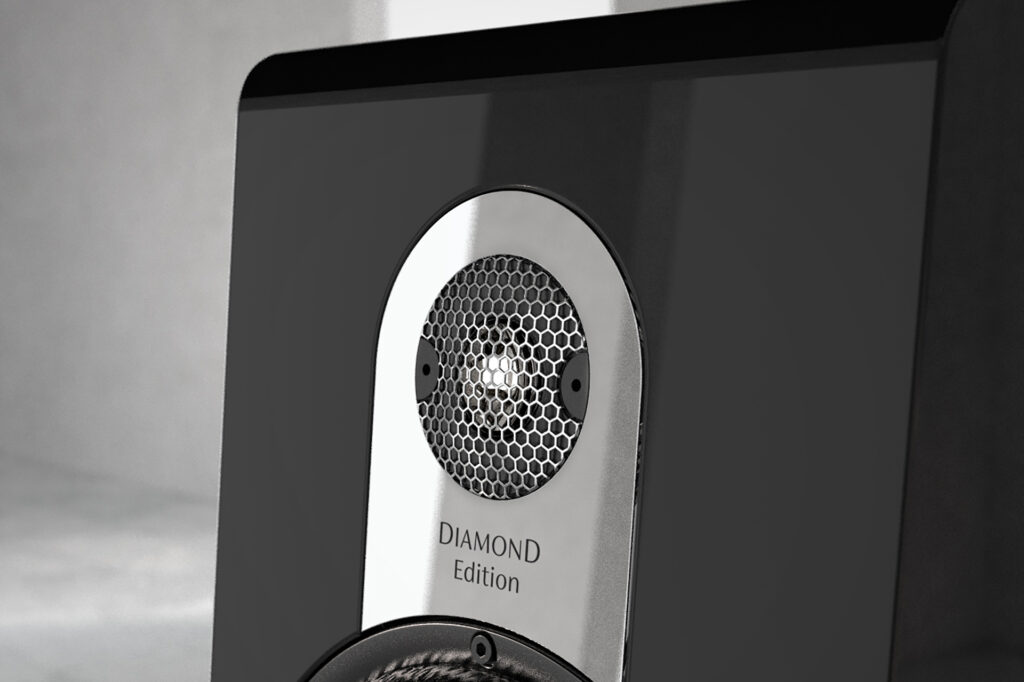
As the base model, Marten speakers are upgradable to the Diamond version. This modularity can make the base model more attractive to secondhand buyers, keeping resale prices higher. Add to this the robust build quality, use of custom-designed ceramic drivers and Marten’s own 35mm M-board cabinets, these elements should ensure the longevity of the product and a higher resale value.

What is the Competition for the Marten Parker Trio Speakers?
I’ve spent almost a year seriously listening to several top competitors. This was done in people’s homes, at shows, and at audiophile salons. Here is the list of competitors I investigated and my notes:
The PS Audio FR30, at $34,999 per pair, is a good comparable, based on their size/footprint, price and the fact that I found them easy to drive and work well in smaller and larger rooms. The PS Audios were very dynamic in the midrange, yet not as efficient as the Martens. The treble initially seemed better yet, after repeated listening, I found it to be a little soft and maybe a tad too polite. The Martens had more bite, and I found they imaged as well and had a stronger bottom end. I also felt the Martens’ look would remain relevant longer and not tire of easily.
At just shy of $31,000 per pair, the Magico A5s matched the brute force of the Martens’ bass and, in some regards, outclassed them in the lower registers. That’s no small feat. I found the continuity of the Martens’ midrange and treble better, being more seamless and natural. I had expected the treble of the Magico A5s to be better than the Parker Trios’, yet it wasn’t. Both speakers presented a large soundstage, yet the Parker Trios seemed to layer in more depth in my listening. The physical weight of Magicos is a real chore and, while I appreciate their aluminum frame, I couldn’t hear where that created an advantage in any lack of resonance, compared to the Martens. The Magicos are more power-hungry and would need a larger amp than my Pass Labs XA-30.8s.
Rockport Atria IIs at $27,500 per pair were the most serious comparison in my listening. The Rockports throw a wide and deep soundstage, have excellent musical bass and a holographic soundstage. The price is a little higher, yet in the ballpark. The Atria II loudspeakers are big and heavy yet, as it appears, their weight creates a very inert cabinet.
The YG Carmel speakers at $29,800 per pair created an interesting audiophile speaker comparison. The YGs had amazing integration of midrange and treble, and this was a very strong suit for them. The high frequencies sounded very detailed. Where the YGs came up short was in the low to upper bass. While all the music was there, it felt forced and not as effortless as with the Marten Parker Trio speakers. The YGs threw a very wide and tall soundstage that belied their size. The Carmel 3s were a bit power-hungry.
The last speakers on my shortlist was the Dali Epikore 7s at $26,000 per pair. What I liked about the Dali Epikore speakers was the fit and finish and simplicity in look that will stand the test of time. The midrange was amazing-sounding and the soundstage was wide and deep. The bass sounded tight and articulate. I felt the Dali Epikore 7s’ treble was just a tad polite, yet I could live with these speakers. I could be very happy with these Dalis or nearly any other of these other world-class speakers.
Another compelling comparable is the MC Audiotech TL-12 loudspeakers (read the review) here.
Final Thoughts on the Marten Parker Trio Speakers …
Marten has done an exceptional job with the Parker Trio speakers, considering their current position in the audiophile market. Most speakers in the price range of the Martens will have compromises. I find the Marten Parker Trio compromises to be in areas that are less impactful on musicality, presence, and dynamics. In the Parker Trio, Marten has created a speaker that is very musical, linear, and integrated, providing a layered tall and wide soundstage that will make you smile. With the ability to upgrade to the Diamond Version if you are inclined to, this can be an endgame speaker, providing a path for improvement while delivering many years of musical bliss.
The Marten Parker Trio speakers are well-engineered and do not dominate the room. They are elegant and understated, yet never have you questioning whether they look old or too modern. The cabinet is extremely inert, delivering a very controlled musical experience. Factor in the high efficiency and easy amplifier load, and the need for a powerful and possibly more expensive amplifier does not exist.
As a company, Marten has a clear strategy tied to model families, sub-models and, for the non-Diamond versions, a path for future upgrading. The Marten “house sound” is front and center, and it is indeed a good one.
Speakers at this price point better be good, retain their value, and stand the test of time. This is an investment-level purchase. The Marten Parker Trios fit that bill. In the price range they compete in, they carry the flag very, very well.




Enjoyed the review Frank. Very well done!
Excellent review. I appreciate the comparison with similar speakers. Don’t see that very often. Well written and apt. Looking forward to more reviews from Frank!
Cheers
Glad you liked the review.
Thank you for your kind words on our format. We like to offer comps in the space so that people know how to value a product that we are reviewing.
🙂
Thanks Joe. Appreciate the feedback. More reviews coming…
LOTS MORE…
As the guy who pays for (and edits) the reviews – we are proud to publish more content than any other professional audiophile publication while never charging a penny to read our reviews 🙂
Frank, a most excellent speaker review. I thought the review was very informative, balanced and thorough. I thought the selection of reference listening material was appropriate given the high performance nature of these speakers. Pristine audio recordings are the best materials to use when evaluating ultra high end speakers. Keep up the great work. i look forward to your future audio gear reviews.
Wes,
Glad you liked Frank’s voice and review!!! More coming from him….
Jerry
That was an excellent review by Frank Picarello. It was interesting, informative and entertaining. I liked how Frank used other speakers to draw a comparison with. The music mentioned was also great. I am a huge fan of Yes, and I don’t see them referenced in audio reviews much. Good Job! I look forward to more reviews from Frank, who is an excellent writer and a bona fide audiophile!
thanks for the kind words on our new team member.
I have to comment on this review, because this is how these should be made. Comparing to competition gives reference for the observations. It also doesn’t hurt that I bought the Marten Parker Trios two years ago after extensive comparisons and coming to the same conclusions as you did.
Nice addition to the system man. These are some serious speakers!