
 By
By Audio-Technica was founded in 1962 by Hideo Matsushita in Tokyo, Japan. Matsushita created his first products (the AT-1 and AT-3, which were moving magnet cartridges) in his apartment, while working a full-time job as an art curator at the Bridgestone Museum. He was inspired by how much people loved the Hi-Fi sound, but he was frustrated by how expensive it was to get it. Today, Audio-Technica offers a wide range of products, but it is best known for its audiophile turntables, cartridges, and headphones that range from the very affordable to the midrange price point.
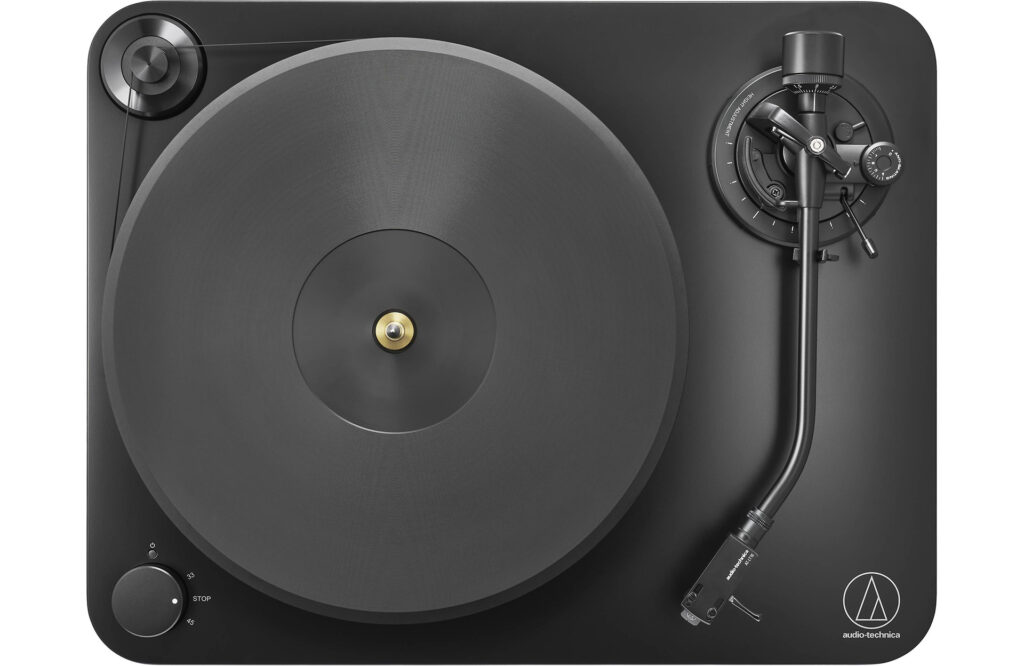
The Audio-Technica AT-LP7X (buy at Crutchfield) is the latest iteration of their LP series. It is a fully-manual, belt-driven turntable that is capable of playing both 33 RPM and 45 RPM vinyl records. It comes equipped with the AT-VM95E BK moving magnet cartridge and features a J-shaped tonearm. In addition, the Audio-Technica AT-LP7X comes equipped with both a moving magnet and a moving magnet phono stage built in. With this turntable priced at $999, let’s take a closer look to see if it stands out in a highly contested segment of the turntable market.
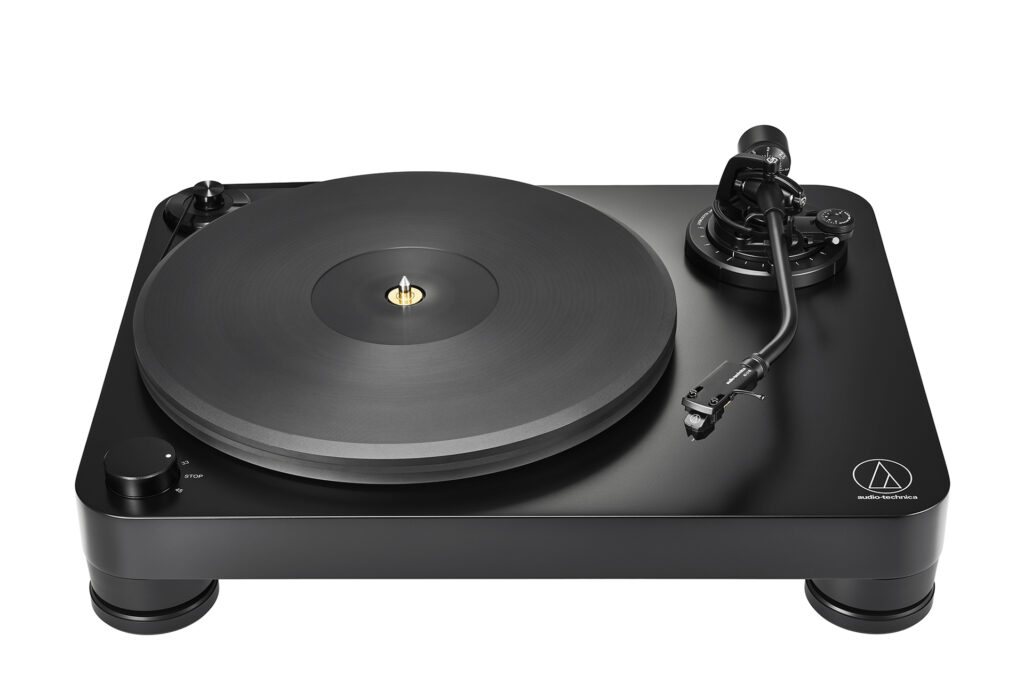
What Makes the Audio-Technica LP7X Turntable So Special?
- Setting up the Audio-Technica LP7X turntable was easy. Having set up many turntables recently, the Audio-Technica LP7X was straightforward, and the directions provided were easy to follow.
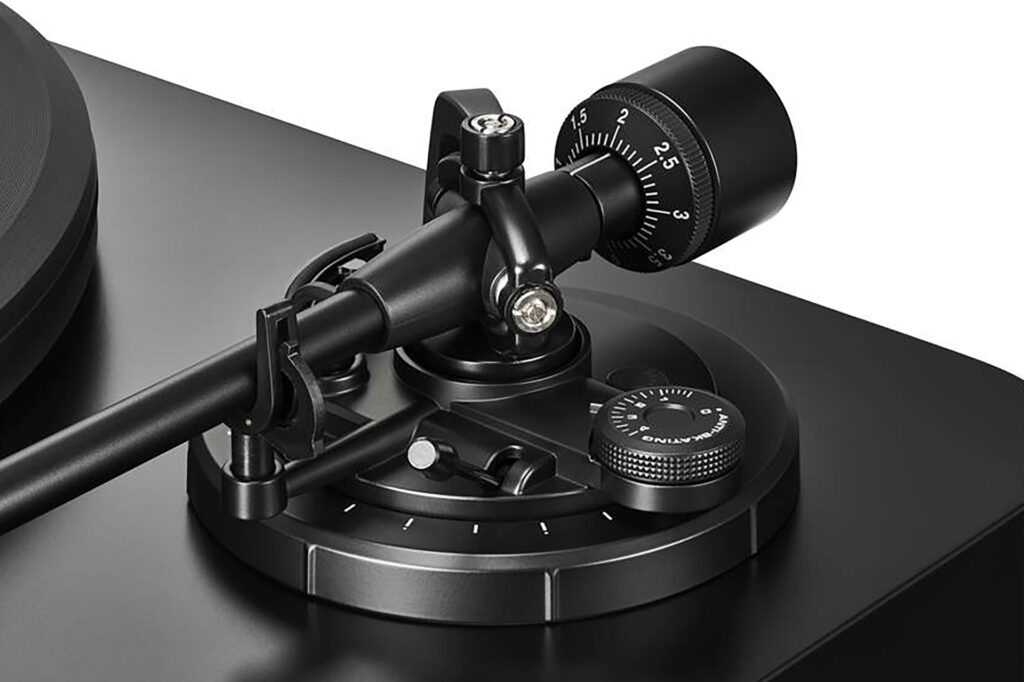
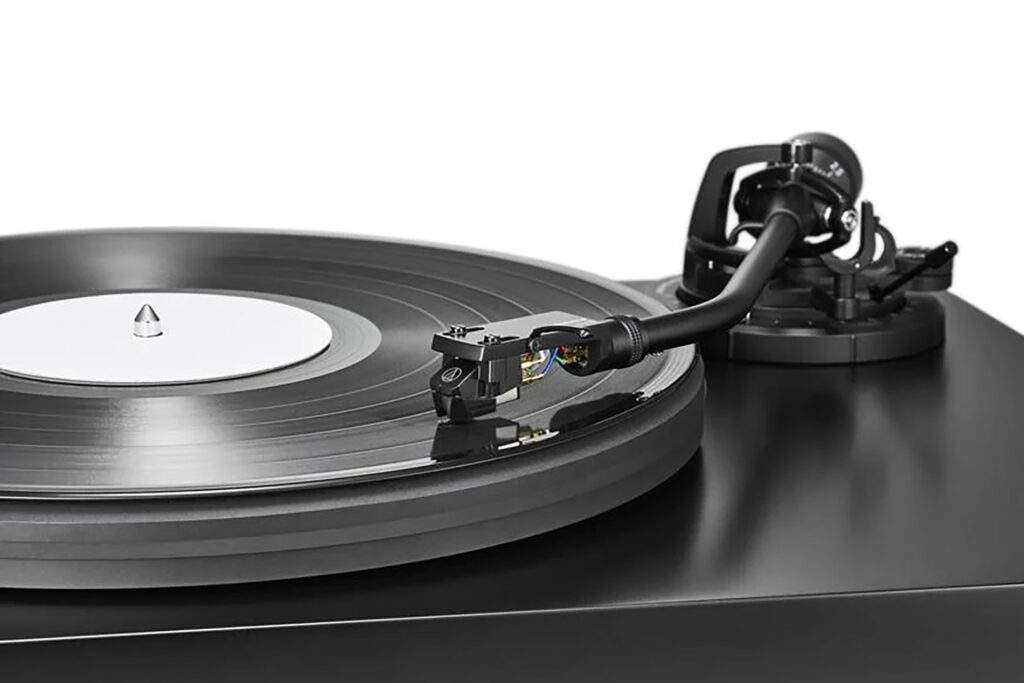
- Audio-Technica built this turntable to be used with multiple cartridges. It would seem that everything about this turntable was built for you to be able to change the cartridge. You can adjust just about everything having to do with the tonearm with ease, so when you’re ready to upgrade to a different cartridge, you can.
- The dust cover on the Audio-Technica LP7X is completely removable. The dust cover seems like an odd thing to comment about, but once you have had your hands on a bunch of different ones, you start to appreciate them. The dust cover for the Audio-Technica LP7X turntable is the first one I have had where the cover acts more like a lid. It isn’t attached to the turntable; you simply pick it up, take it off and put it back on when you’re done.
- The Audio-Technica LP7X has both a moving magnet and a moving coil phono stage built in. It is pretty common to find moving magnet phono stages built into turntables, but this is the first one that I have seen that had a moving coil phono stage built in. That is a boon for anyone who might be looking to upgrade their cartridge without having to go out into the market to get an external phono stage or phono preamplifier.
- The Audio-Technica AT-VM95E cartridge allows for the stylus to be swapped out for easy upgrades. I love this feature for audiophiles. It is such a smart idea to be able to upgrade or replace the existing stylus without having to replace the entire cartridge. This allows you to complete the task in minutes and, if you’re looking to upgrade, you can go to the top end of the AT-VM95 series for just $200.
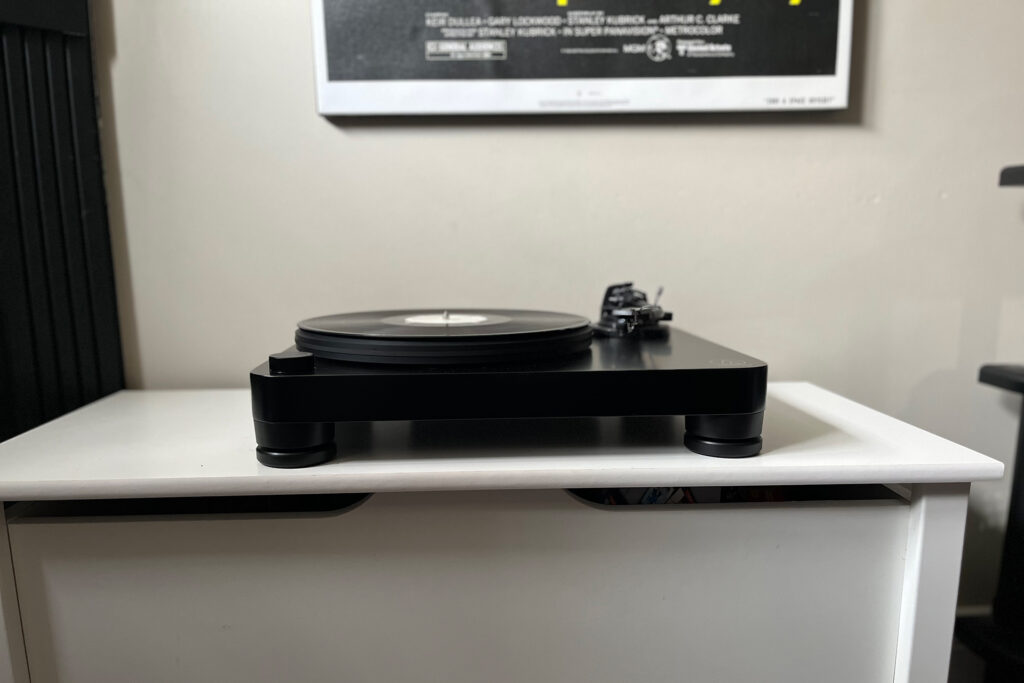
- You can level the feet on the turntable on the Audio-Technica LP7X, which is a really smart feature at this price point. While we would all love to believe that our floors, and therefore all of our gear, is perfectly level, the reality is that is often isn’t so easy to be able to adjust the turntable. The ability to to make it level is a wonderful feature, and one I am very happy to see on a turntable in the price range.
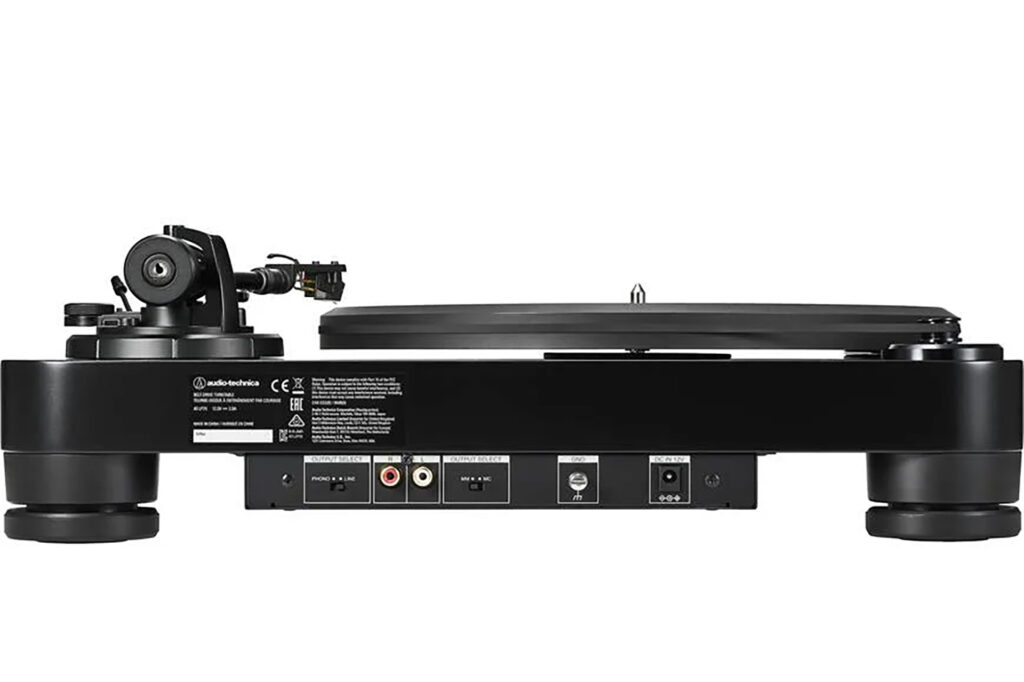
Audio-Technica AT-LP7X Turntable Specifications
| Drive | Belt drive, DC servo motor with speed sensor |
| Speeds | 33 1/3 and 45 rpm |
| Wow and flutter | Under 0.1 percent (WTD at 3 kHz) |
| Tonearm | Static-balanced J-shaped; 247 mm effective length |
| Cartridge | AT-VM95E moving magnet (bonded elliptical stylus), installed |
| Built-in phono stage | MM (36 dB) and MC (56 dB), switchable |
| Platter | 20 mm acrylic |
| Dimensions (W x D x H) | 18 x 14 x 6.2 inches |
| Weight | 17 pounds |
| Price | $999 at review |
Why Should You Care About the Audio-Technica LP7X Turntable?
When you are shopping in the $1,000 range for a turntable, you have a lot of very good options. What allows the Audio-Technica LP7X to be unique is how easy it is to customize the tonearm to prepare for your next upgrade. I would go as far as to say that the engineers who designed this unit understood that audiophiles are often looking for ways to upgrade their sound, so they made it easy. The enthusiast audiophile will like being able to go from one starting point to a more advanced level without going into bankruptcy protection to get there. The fun of the hobby is an audiophile’s journey and the Audio-Technica LP7X makes it easy to be technologically upwardly mobile.
Some Things You Might Not Like About the Audio-Technica LP7X Turntable
• The Audio-Technica LP7X turntable isn’t as powerful as other turntables at this price point. While the motor in the turntable had no problems spinning the vinyl, it did struggle when I tried to apply a brush to the vinyl to get dust off it before I put the needle down. This is something you can adjust to, but use the brush without the vinyl spinning.
• The Audio-Technica LP7X turntable only comes in black. With many brands choosing to provide the consumer a plethora of color options, Audio-Technica chose to only release the LP7X in one. There will certainly be some who will avoid this turntable because of the lack of color options.
Listening to the Audio-Technica LP7X Turntable
I tested the Audio-Technica LP7X turntable with the Schiit Skoll F phono stage (read the review), the SPL Elektor preamplifier, and the Anthem MCA 225 Gen 2 amplifier. The Audio-Technica LP7X turntable was connected to the Skoll using Wireworld Oasis 10 interconnect cable, and Wireworld Oasis 10 balanced XLR cables to connect the phono stage to the preamp and the preamplifier to the amplifier.
All of the tracks were heard with side-by-side comparisons to the Pro-Ject X1 B I use as a reference. These two turntables compare fairly well, with the only real difference being that they use different cartridges (Sumiko Rainier vs the Audio-Technica AT-VM95E BK) and the Pro-Ject has a balanced output option, but for the sake of the review, the balanced option wasn’t used. Note: I am comparing these two turntables as they would be presented to the consumer out of the box, which includes the cartridge that comes with each turntable.
When testing turntables, one of the tracks I enjoy playing is “Roundabout” from Yes’ legendary progressive rock album Fragile from 1971. This is a fantastic track that has truly stood the test of time. There is so much detail in this eight-and-a-half-minute track, and the Audio-Technica did a fine job of picking up all of it. The presentation of the track was more detailed than that of my reference Pro-Ject X1 B, while maintaining the groove that makes this track so special. The only thing that I felt like the Audio-Technica didn’t handle as well was the acoustic guitar, which didn’t sound as thick as it did with the Pro-Ject.
Another track that is great for testing out turntables is John Coltrane’s “Love Supreme, Pt. 1: Acknowledgement” from his 1965 album Love Supreme. This is one of Coltrane’s best-known tracks. There are a lot of high-frequency sounds in this track between Coltrane’s saxophone and the piano track played by McCoy Tyner. I didn’t notice any harshness from the instruments, and the bass and drums were noticeable in the mix and didn’t sound muddy as I have heard on other tables in this class. The double bass of Jimmy Garrison also sounded thick yet tight. Any music enthusiast would love this sound, regardless (but especially because) of price.
Finally, the last track I used was “ATWA” by System of a Down’s 2001 album Toxicity. I know that many audiophiles will skip past this early 2000s alt-metal track, but it does a fantastic job of showing off dynamics. The pace of the track bounces from slow to fast, and loud to soft. The Audio-Technica LP7X had no problems keeping up with that, and the dynamics were clear and present. One thing that I did notice in comparison between the Pro-Ject and the Audio-Technica was that, when listening through the Audio-Technica, the acoustic guitar did sound a little bit thin, but at the same time, the bass sounded fuller.
Will the Audio-Technica LP7X Turntable Hold Its Value?
As far as turntables go, I expect the LP7X to hold its value. Audio-Technica is a very well-known brand that is widely distributed. With the ability to easily swap out the cartridges, and with how easy Audio-Technica has made it to change the stylus on the AT-VM series of cartridges, I expect people will seek this turntable out in the resale market. Simply put, there will always be somebody who will need a turntable with this performance and flexibility in the years to come. This is a safe audiophile investment in my eyes.
What is the Competition for the Audio-Technica LP7X Turntable?
The Technics SL-50C ($899 buy at Crutchfield) has many of the same qualities as the Audio-Technica LP7X, with both turntables using a J-shaped tonearm. Both are belt-driven, and they both have phono stages built in. Where the Technics differs is that it can handle 78 RPM records (a rarity even with vinyl’s return to prominence), and it comes in a few different colors. It also doesn’t seem to have the same features that make changing the cartridge as simple as the Audio-Technica does.
You can also consider the NAD C588 ($999 buy at Crutchfield). I reviewed the less upgraded version of this turntable (the NAD C558) a few years back and I was impressed with its build quality, as well as the overall quality of the sound. The C588 has upgrades to the tonearm, cartridge, speed control and feet, which leads me to believe that it should be a very solid competitor to the Audio-Technica.
If you’re looking for another alternative, the Pro-Ject Debut Pro B ($1,099 buy at Crutchfield) is worth your consideration. Pro-Ject has extended its balanced turntable output to the Debut Pro B, as well as its balanced cartridge. If you have a balanced phono stage or preamp, then you might want to check this offering out from Pro-Ject, as it is priced similarly to the Audio-Technica. I would just be aware that, if you want to upgrade the cartridge later, Pro-Ject will make that task much more difficult than Audio-Technica has.
Final Thoughts on the Audio-Technica LP7X Turntable
No matter how you want to look at it, the Audio-Technica LP7X (buy at Crutchfield) is a fine audiophile turntable, and certainly one that anyone who is shopping in the $1,000 range should consider. It does everything you would expect of a top-performing component in its price range. The sound is accurate, it’s easy to use and, maybe most importantly, it allows you to customize the cartridge, which should ensure that you continue to get value from this turntable for many years to come. The only thing that I really find myself wishing that was different about this turntable are the color options, but I am not sure it would keep me ultimately from being willing to purchase the LP7X, as the rest of the package is so compelling.
“No matter how you want to look at it, the Audio-Technica LP7X is a fine audiophile turntable, and certainly one that anyone who is shopping in the $1,000 range should consider.”



