
 By
By U-Turn Audio began humbly in 2012 via a Kickstarter campaign aimed at producing stylish, affordable analog turntables. After a successful crowd-funded launch, the Massachusetts-based brand has since grown into an industry favorite nearly a decade-and-a-half later, building a reputation for unpretentious, affordable, well-engineered gear that consistently punches above its weight class.
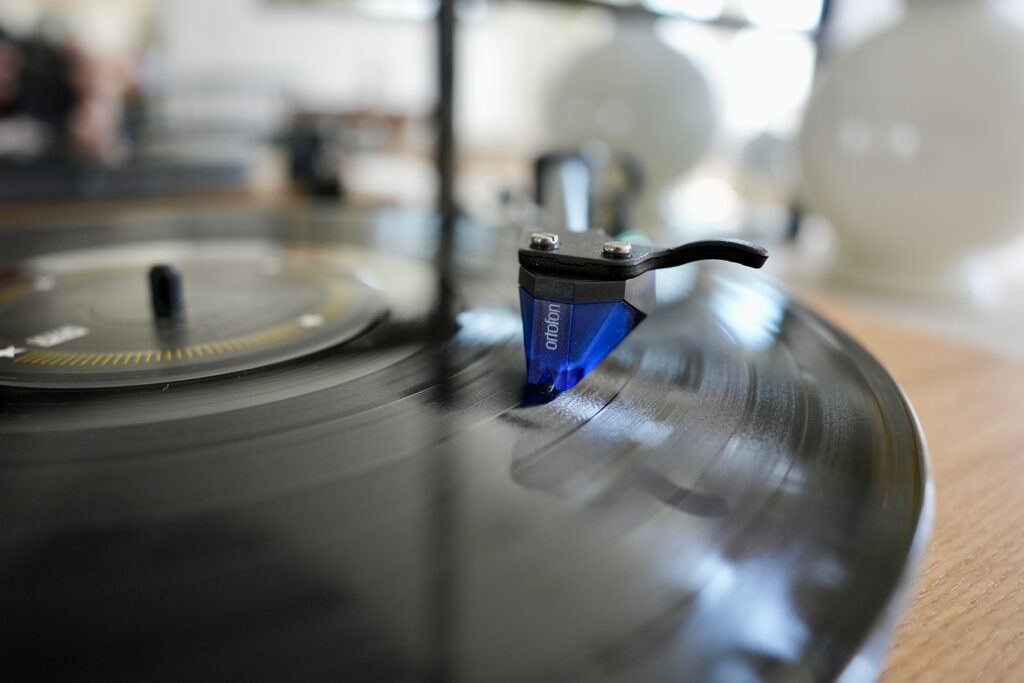
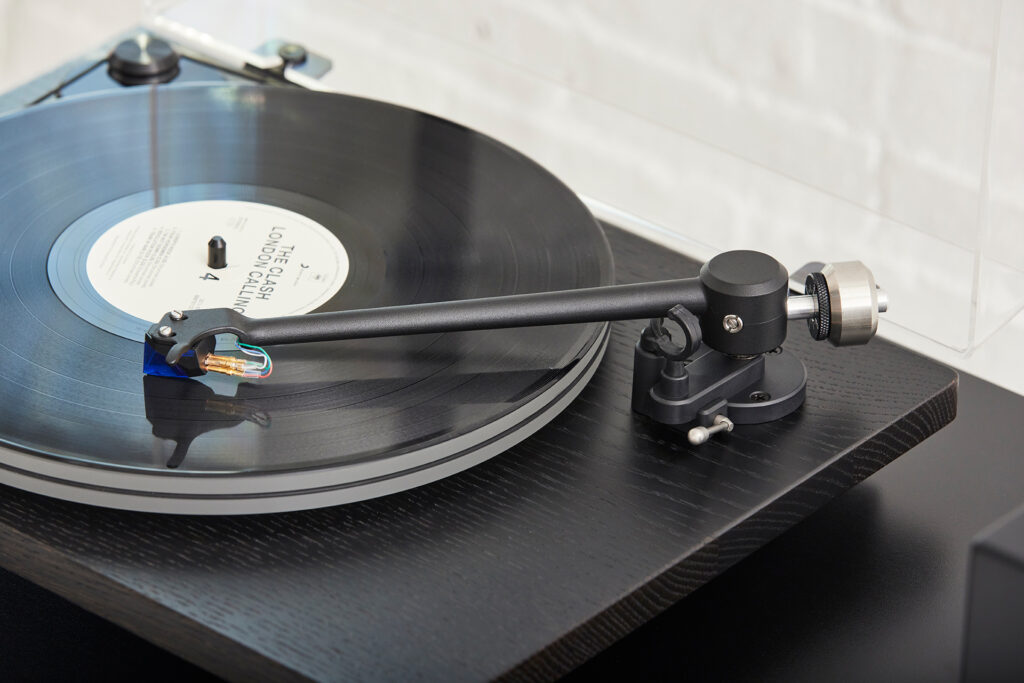
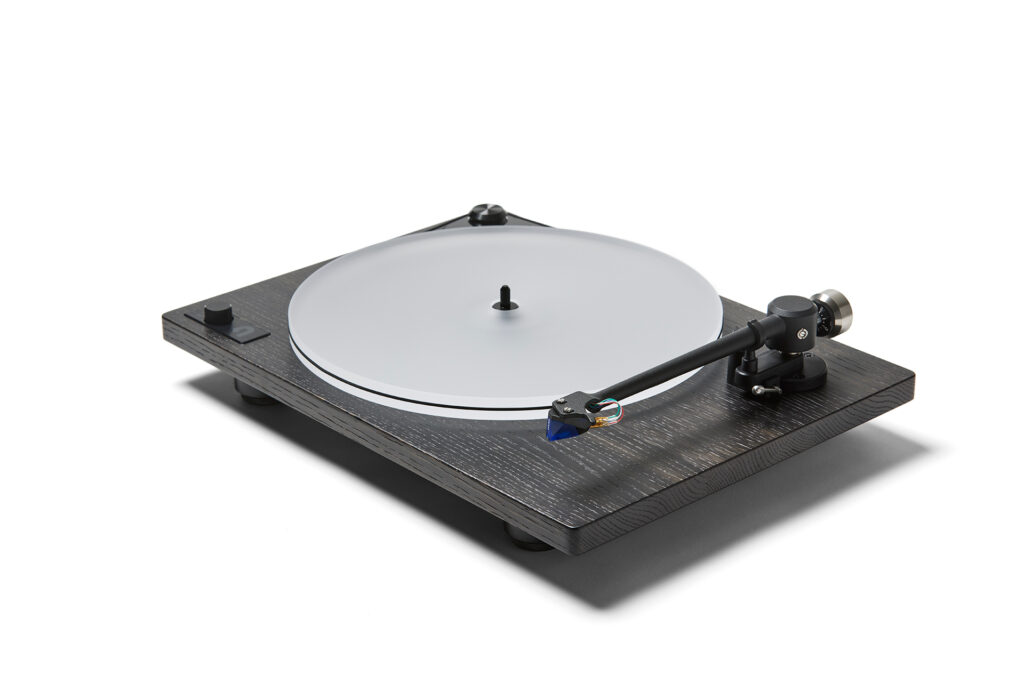
The U-Turn Audio Orbit Theory turntable sits at the very top of the company’s growing lineup and, at $999, it is also the brand’s most ambitious offering to date. That price tag puts it a full $450 above the excellent U-Turn Orbit Special (read Andrew Dewhirst’s review), which is well-reviewed and popular among budget audiophile circles. With the belt-drive Orbit Theory turntable, U-Turn is clearly aiming higher, approaching premium territory. The feature list and quality of design materials reflect that ambition, including an OA3 Pro tonearm with magnesium arm tube, a factory-installed Ortofon 2M cartridge, and an impressively quiet motor with electronic speed control for both 33 and 45 RPM playback, to name a few.
Of course, $999 is a lot of money for a turntable for most people, especially in a market where good-looking, high-performing, entry- and mid-level options can be had for less. But vinyl lovers also know that the turntable itself is the foundation of the entire analog listening chain. If the table isn’t up to a listener’s standards, nothing downstream can fix it. So, the obvious question becomes: does the U-Turn Audio Orbit Theory deliver the kind of performance that justifies its near four-figure asking price? And, perhaps more importantly, does it bring enough to the table (pun intended) to stand out in an increasingly crowded field of high-performing turntables in the near-$1,000 price bracket? Let’s find out in the review ahead.
What Makes the U-Turn Audio Orbit Theory Turntable So Special?
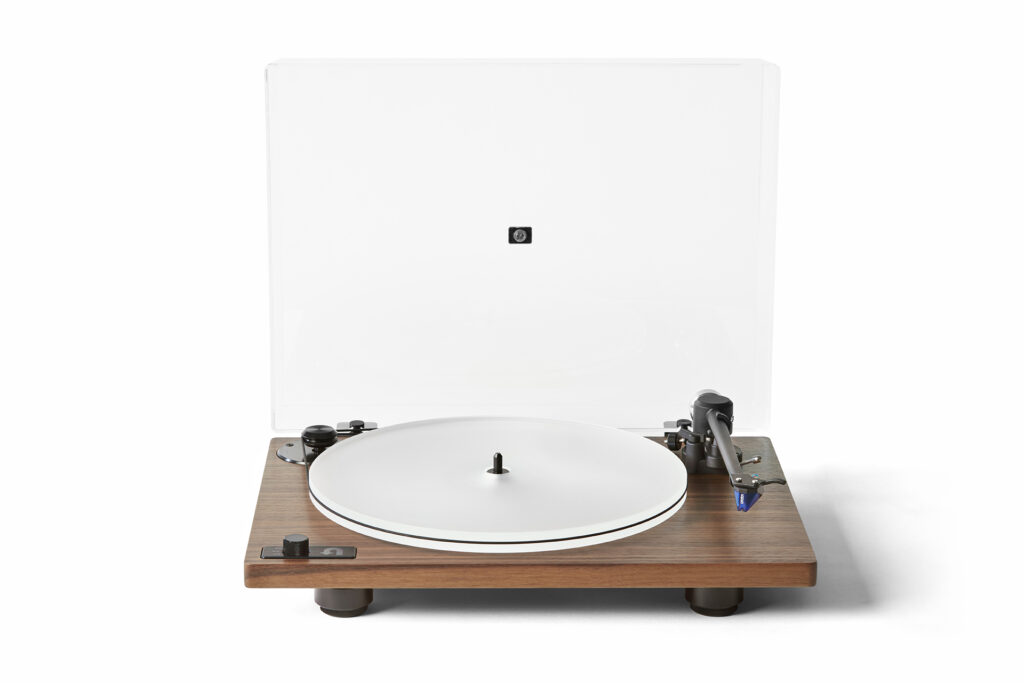
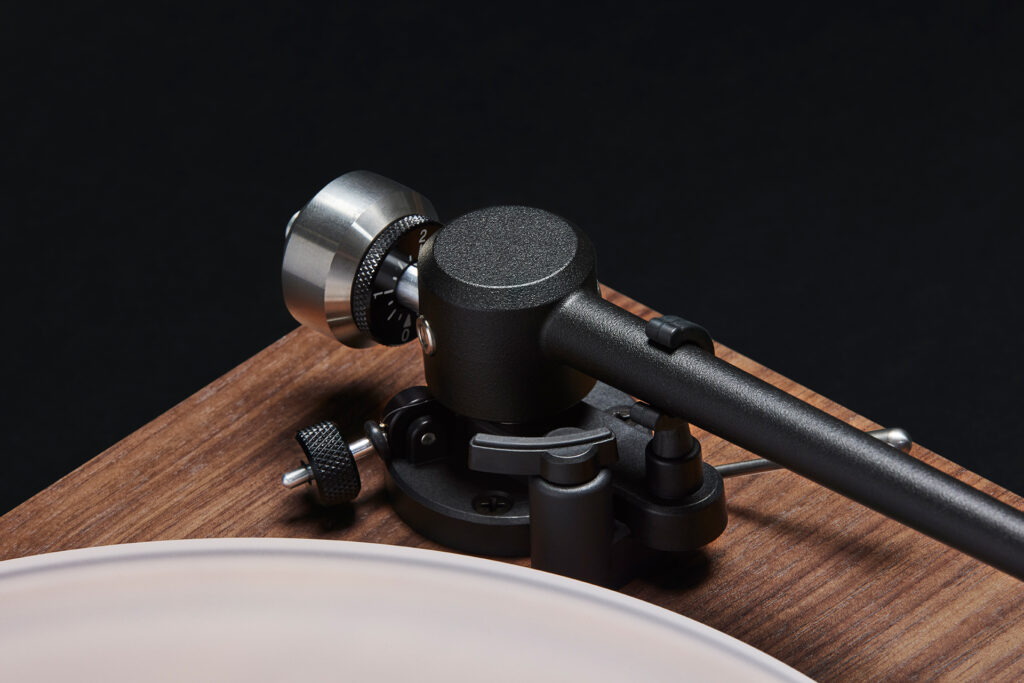
- The U-Turn Audio Orbit Theory turntable features an OA3 Pro Tonearm with a one-piece molded magnesium arm tube, dial counterweight, and adjustable anti-skate. It not only looks high end, but its lightweight yet incredibly strong construction allows for serious sound dampening and resonance mitigation. U-Turn claims the OA3 Pro Tonearm is 33 percent lighter, with 10 times more damping capacity, compared to aluminum. It also incorporates a high-precision bearing assembly constructed entirely from stainless steel components.
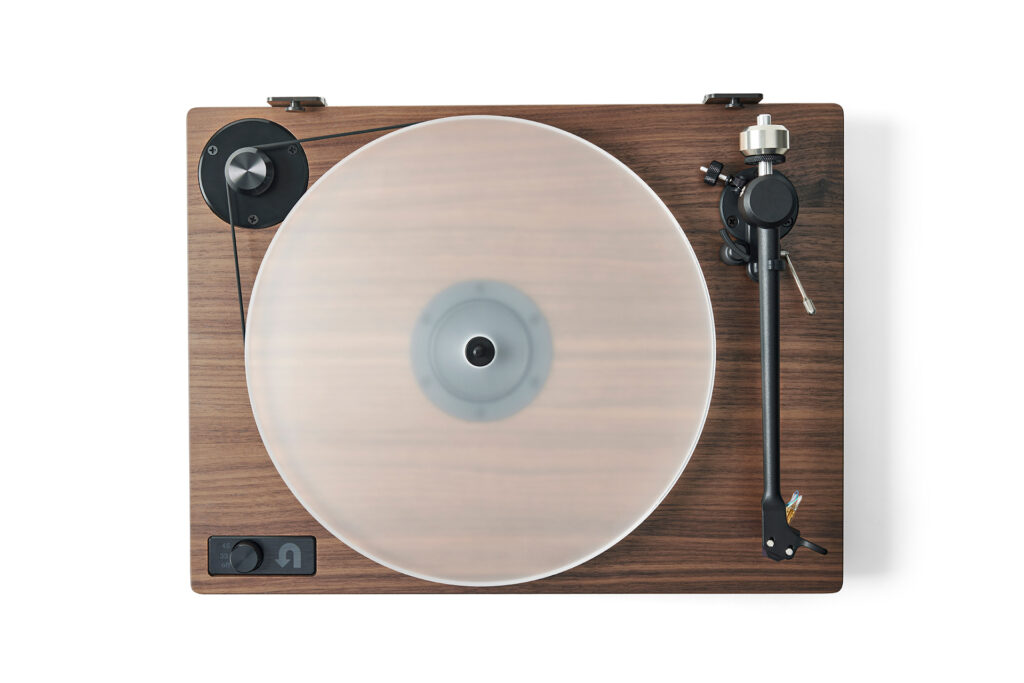
- Powering the Orbit Theory is a redesigned motor with a larger rotor and optimized coils intended to keep things running smoothly and quietly. An advanced motor controller keeps speed locked in with impressive accuracy, while a convenient knurled metal knob allows quick switching between 33 and 45 RPM.
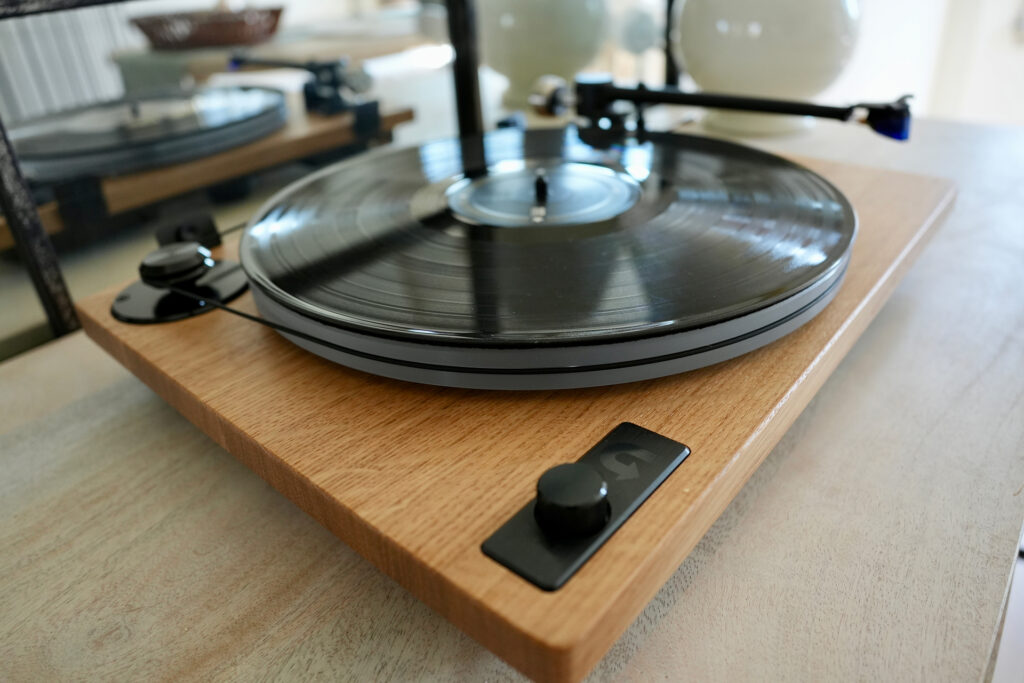
- The Orbit Theory turntable features natural, sustainably-sourced American hardwood plinths in rift-cut walnut, ebonized oak (exclusive to the Theory), and white oak finishes. Handmade construction and craftsmanship are on full display here. I received a U-Turn Audio Orbit Theory Turntable in walnut and, as someone who enjoys woodworking as a hobby, I can honestly say that no corners were cut in its construction, and it looks absolutely stunning.
- For $80 more, the Orbit Theory can be equipped with a built-in phono preamp based on U-Turn’s Pluto 2 design, featuring low-noise circuitry and quality components, such as WIMA film capacitors and resistors. For audiophiles seeking convenience and a more plug-and-play experience, this is a great option.
- There are three MM (moving magnet) Ortofon cartridge options: 2M Blue (standard), 2M Bronze (add $240), and 2M Black (add $530). I love that U-Turn gives the consumer so many ways to customize their table to their exact specifications and needs.
- The Orbit Theory is assembled in the United States. It is backed by a three-year warranty and a 30-day return policy. Pair that with U-Turn’s well-earned reputation for excellent customer service, and potential buyers should feel pretty comfortable taking the plunge on the Orbit Theory turntable.
U-Turn Audio Orbit Theory Turntable Specifications
| Drive | Belt drive, AC synchronous motor with electronic speed control |
| Speeds | 33 1/3 and 45 rpm |
| Wow and flutter | Under 0.1 percent |
| Platter | Grooved, frosted acrylic |
| Tonearm | OA3 Pro, one-piece magnesium armtube; 220 mm effective length, 8 g effective mass |
| Cartridge options | Ortofon 2M Blue, 2M Bronze or 2M Black |
| Phono preamp | Optional built-in Pluto 2 |
| Plinth | Solid hardwood (walnut, ebonized oak or white oak) |
| Dimensions (W x D x H) | 16.75 x 12.5 x 4.25 inches |
| Price | $999 at review |
Why Should You Care About the U-Turn Audio Orbit Theory Turntable?
The U-Turn Audio Orbit Theory represents the brand’s most serious push to date into the higher end of the turntable market. U-Turn built its reputation by delivering simple, well-built turntables that sounded better than their modest price tags would suggest. With the Orbit Theory turntable, U-Turn takes that same philosophy and applies it to a more ambitious and upscale design, incorporating upgraded materials, a more advanced tonearm typically found in much pricier turntables, and tighter motor control. For vinyl enthusiasts looking for a thoughtfully-engineered, American-made turntable that keeps things simple while still chasing real performance gains, the U-Turn Audio Orbit Theory is clearly aiming to compete with some very capable turntables around the $1,000 mark.
Some Things You Might Not Like About the U-Turn Audio Orbit Theory Turntable
- The vertical tracking angle (arm height) of the tonearm is not adjustable. This can make fine-tuning a little more difficult, though it was not necessary or an issue for me.
- The included felt platter mat felt a little flimsy. Considering I was able to find a quality platter mat on Amazon for under $40, U-Turn might consider upgrading the mat to match the quality of the turntable and the rest of the included accessories.
Listening to the U-Turn Audio Orbit Theory Turntable
I chose Fleet Foxes’ “Tiger Mountain Peasant Song” from their self-titled 2008 debut as my first track. It’s a stripped-down yet richly layered acoustic guitar-driven piece with excellent stereo imaging and strong, center-focused midrange vocals, exactly the kind of song I envision when I think of vinyl listening.
From the jump, the U-Turn Audio Orbit Theory turntable did not disappoint. In the opening moments, where dual, intricately picked acoustic guitars intertwine before giving way to Robin Pecknold’s lead vocals, there was an immediate sense of warmth and richness. As the track built toward its more dynamic chorus, the Orbit Theory maintained its composure, capturing both subtle textures and more intense passages with control and precision. The stereo image remained wide, stable, and distortion-free, and the motor was never audibly detectable at any point. A great first impression, and one that had me genuinely looking forward to the next few hours of listening.
We decided to continue our trip down indie memory lane and fired up Vampire Weekend’s 2013 album, Modern Vampires of the City. This critically acclaimed album features so many memorable tracks with some truly wonderful audiological moments, it was hard to settle on a specific track for critical review, but “Step” stood out to me for a few reasons. On the surface, it’s a relatively straightforward, experimental pop-leaning song, but beneath its simplicity lies a layered arrangement with subtle dynamic shifts, textured instrumentation, and Ezra Koenig’s distinct reverbed vocals sitting right at the center.
The Orbit Theory handled this track with impressive finesse. The opening piano loop truly popped, while the layered background elements, such as strings, vocal harmonies, and light percussion, were presented with a solid sense of separation. Koenig’s vocals were clean and well-defined, never getting muddied or lost in the mix, even as the arrangement became denser. What stood out most was the U-Turn Orbit Theory turntable’s ability to preserve the track’s dynamic contrast. Quiet moments felt intimate and controlled, while the more energetic, borderline cacophonous elements throughout the song (and the album at large) opened up without sounding strained or blurry. Bass performance was strong and hefty, and the overall experience of listening to this track was balanced and enjoyable from start to finish.
Wanting to push things a bit further, I reached for something with more low-end presence and rhythmic drive: Daft Punk’s Random Access Memories. Dropping the needle on “Giorgio by Moroder” felt like an appropriate stress test. This track builds from a spoken-word intro into a sprawling, dynamic composition with deep bass, crisp percussion, and wide-ranging instrumentation.
Here, the U-Turn Orbit Theory turntable continued to impress. The spoken intro was presented with excellent clarity, placing Moroder’s voice firmly out front with a textured, lifelike tone. As the track evolved and the rhythm section kicked in, the Orbit Theory turntable delivered a satisfying sense of punch and control in the low end. Bass was full but never bloated, and the transient attack of drums and percussion remained tight and articulate. Even as the track became more complex, the Orbit Theory turntable kept everything organized, maintaining a coherent and engaging presentation without smearing or mushing things together.
After several hours of listening across a variety of genres, a consistent theme emerged for me. The U-Turn Audio Orbit Theory turntable strikes a compelling balance between the warmth and musicality people love about vinyl and a level of control and accuracy that keeps it from sounding overly colored or soft. It doesn’t try too hard; it just presents music in a way that feels natural, engaging, and easy to listen to for extended sessions.
Perhaps most importantly, it made me want to keep spinning records. And for someone who typically defaults to digital, that might be the highest compliment I can give.
Will the U-Turn Audio Orbit Theory Turntable Hold Its Value?
Vinyl continues to surge in popularity, as evidenced by a recent Forbes report stating that record sales topped one billion dollars in 2025. This equates to a very healthy resale market for well-made turntables. Considering the Theory’s solid construction, premium materials, and clean industrial design, I doubt a gently-used unit would sit unsold for very long.
That said, turntables are not the easiest components to move around. They can be tricky and expensive to pack and ship properly, and their delicate parts make them more vulnerable to damage during transport or even everyday handling. For that reason, resale tends to favor local buyers who can pick the table up in person. Assuming it’s been well cared for, however, the U-Turn Theory should have little trouble holding respectable value on the secondhand/used market.
What is the Competition for the U-Turn Audio Orbit Theory Turntable?
The NAD C 588 (buy at Crutchfield) is a $999 manual belt-drive turntable that features a 10-mm glass platter, a nine-inch carbon-fiber tonearm, and comes pre-mounted with an Ortofon 2M Red moving-magnet cartridge. Andrew Dewhirst called the NAD C 588 “flawless” (check out his review) and praised it for its high-quality build and finish. Like the U-Turn Theory, it’s designed for listeners who prefer a straightforward, audiophile-focused turntable without extra features, such as Bluetooth or USB outputs. It looks solid and well-built but is a little more modern-looking than the U-Turn Audio Orbit Theory, and it only comes in black, which may be a dealbreaker for some.
For $100 more, the Pro-Ject Debut PRO B (buy at Crutchfield) features an 8.6-inch carbon-aluminum hybrid tonearm, a heavy die-cast aluminum platter with TPE damping, and Pro-Ject’s Pick it PRO Balanced moving-magnet cartridge. It also offers electronic speed control at 33 and 45 RPM (with optional 78 RPM support) and includes balanced output via a mini-XLR connection for users running compatible phono stages. The Debut PRO B is also fully adjustable, allowing for azimuth and VTA adjustments to dial in cartridge performance and minimize unwanted distortion. Like the NAD C 588, it is only offered in an attractive black chassis, so those seeking a variety of finishes will have to look elsewhere.
Another interesting option for a couple of hundred dollars less at $799 is the Pro-Ject Debut EVO 2, which features a built-in switchable phono preamp. The EVO 2 (buy at Crutchfield) is available in eight gorgeous finishes, including satin walnut, high-gloss or satin black and white, and even red, green, yellow, and blue. It features a carbon fiber tonearm and a pre-mounted Pick It MM EVO moving magnet cartridge, and is well-constructed with a die-cast aluminum platter with resonance-damping internal TPE (thermoplastic elastomer) ring. Brian Kahn loved the $599 Carbon EVO (read the review), making the EVO 2 a solid choice for anyone looking to save a little money while also dipping their toes into the higher-end turntable category.
Final Thoughts on the U-Turn Audio Orbit Theory Turntable …
The U-Turn Audio Orbit Theory turntable does so many things well that it almost feels a bit underpriced at $999. Its beautiful, solid-wood plinth, advanced magnesium tonearm, and ultra-quiet motor all come together to create a turntable that is as pleasing to look at as it is to hear. U-Turn has clearly put a lot of love into the design here, focusing on meaningful upgrades from their budget and mid-tier options that improve performance, while remaining in a relatively accessible price bracket.
I would have no problem recommending the Orbit Theory to anyone looking to step up from an entry-level turntable. It also makes a strong case for newcomers to vinyl who want something simple, stylish, and well-built right out of the box. In a crowded field of turntables around the $1,000 mark, the Orbit Theory manages to stand out by delivering thoughtful design, solid engineering, and excellent sound without unnecessary frills.




Great to see a small Massachusetts company getting good reviews. The Original U-Turn was around $200. If you’re on a tight budget it would be instructive to compare the Original & Theory (with identical cartridges) to identify differences, if any?