
 By
By There has been a popular saying bouncing around the automotive industry for years, especially among those who like high horsepower gasoline engines – “There’s no replacement for displacement.” Essentially, this means the more horsepower, and equally important, the more torque your car has, the greater amount of power is available to be transferred from the tires to the road. In the audiophile world, power is a somewhat more difficult subject to quantify. Because, in truth, correct amplifier power is variable and is best determined by a host of other factors.
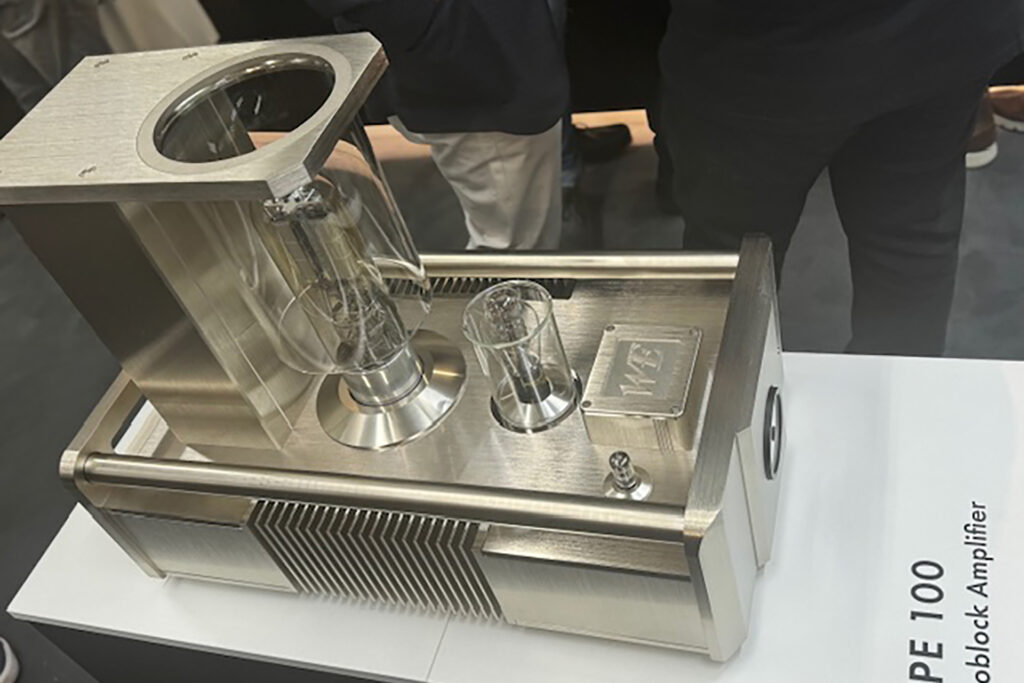
Wattage is Identified Numerically and by the Term “RMS”
Even if not specifically listed, amplifier wattage is identified by the term RMS, or “root mean square.” So, a 100-watt amp is technically identified as 100 watts per channel (WPC) RMS. While the mathematical foundation of RMS power is perhaps going a little too deep, this power determinant is most easily defined as the amount of continuous available power an amplifier is capable of delivering. When considering an amplifier, is having a lot of power the best route, or are there mitigating conditions?
How Some Different Amplifier Types Diverge from One Another
- Single-End Triode (SET) analog, tube-type amps are typically lower-powered and very often will have high distortion ratings. An SET amplifier with three watts RMS power rating and 12 percent distortion is not uncommon. And, guess what, I have heard a three-watt SET amp with high distortion values, paired with a set of highly efficient speakers, play so loudly and cleanly that the sonic presentation was truly magnificent-sounding. Don’t be fooled into thinking amplifier/speaker combinations such as these are not worth further scrutiny. They’ve been around for about 75 years or more, with good reason.
- Class-A amplification, often considered to deliver the best sonics of any amplifier type, is also the most wildly inefficient. Class-A amps are basically running at full speed, all of the time. The entire waveform of the output stages is always fully powered. They never turn off, even when no music is playing. While this does produce a very linear and wonderful-sounding musical presentation, it is also stunningly inefficient. Class-A amps produce significant amounts of heat, and in fact they lose much of their efficiency to heat. They will also consume substantially more electricity than other amplifier types, such as Class-D. They are typically quite heavy and come in larger-than-average-sized enclosures. So why does anyone use Class-A amps? Because they absolutely sound very, very good. Sonics matter.
- Class-AB is the workhorse amp technology of the audiophile industry. Generally speaking, Class-AB amplifiers, typically solid state, operate for the first few watts in Class-A for finesse, and then switch to Class-B for the weight and bulk of the music. They are surprisingly efficient and, while they do get slightly warm, their heat output is typically quite low. An appropriate question is, how often does a Class-AB amp switch over to Class-B? Answer? It depends. Different manufacturers bias this crossover point differently. My T+A A3000HV amplifier (read review here) is rated at 500 WPC, RMS, with an intermittent rating of 700 WPC at four ohms, and operates in Class-A for about the first 40 watts. According to the power meter, it seldom goes above 30 watts, so how often am I switching over to Class-B to have 80 dB in the room? Hard to say, but probably not very often – maybe for a quick transient because the musical passage demands increased power. When considering a Class-AB solid state amplifier, it is advised to find out the crossover point prior to making a purchase. It might not matter at all, other than knowing the value, but it will usually be a nice fact to know.
- Class-D, while once widely ridiculed for poor sonics, has vastly improved over the years. Class-D is a digital switching amp that continuously, and extremely quickly, switches the signal on and off. This produces a significant amount of available wattage with almost no heat, in a typically much smaller and lighter enclosure and, best of all, normally at a more affordable price. They also usually consume very little electricity, so they are very affordable to power and use. Hybrid Class-D amps, such as Gallium Nitride (GaN), with their high efficiency, more than adequate available power, and pleasing sonics, are a popular choice for new audiophiles just starting out in the hobby.
Why Pairing the Right Amplifier with Your Speakers is So Important
I’ve written about this topic before, but speaker impedance is one of those must-pay-attention-to ratings of a speaker. Amplifiers are normally rated at eight ohms and four ohms, and how much power an amplifier delivers is very important. For every three additional decibels of sound your speakers produce, the amplifier wattage must double. If it takes five watts to produce 60 dB, then 10 watts will be necessary for 63 dB, 20 watts will be required for 66 dB, and so on. This is one of the main differences between high-performance audio and those 700-watt, seven-channel, middle-fidelity (Mid-Fi) receivers at Best Buy. Generally speaking, amplifiers double their power output as impedance is halved. So, a 200 watt at eight ohms amplifier will theoretically have 400 watts at four ohms. When considering an amplifier or a set of speakers, or both, be sure the output of the amplifier is well suited to the impedance of the speakers.
How Much Amplifier Power is Really Needed?
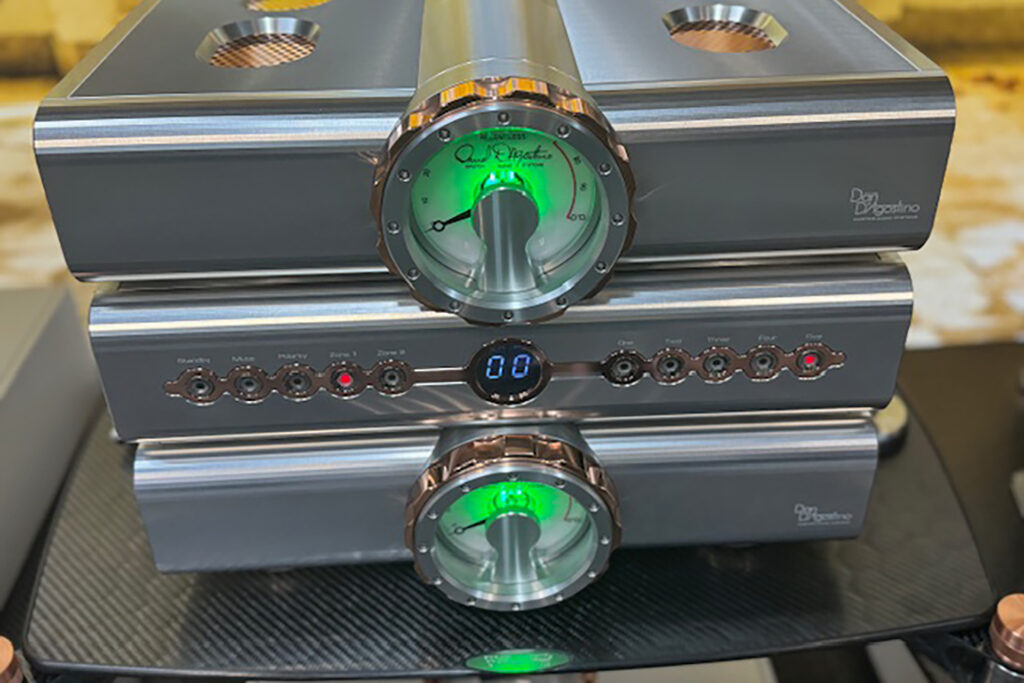
Ah, now we get to the real question … And the answer is more complex than one might realize. Amplifiers are normally determined by the type – tube or solid state, amplifier classification – Class-A, Class-AB or Class-D, and the available rated power, RMS, based on a four- or eight-ohm load. If, for instance, your speakers operate at four ohms, and are 95 dB efficient, a Class-AB solid state amplifier rated at 400 watts RMS at four ohms will really make the speakers come to life. In fact, a 200 WPC amplifier will generally do the same. A 30-watt RMS, Class-AB amp will probably struggle and may even have surprisingly poor sonics. On the other hand, a tube-type amplifier with much lower output power will usually work well with an efficient pair of speakers. And then there is Class-D. Generally speaking, Class-D amps are easily capable of a high enough wattage output to be able to power almost any speaker.
Another important factor is headroom. In any recording, there will be musical passages that need more power to be faithfully recreated. Think about a soft flute passage in a symphony giving way to a 50-piece orchestra. The requirement of the system to accurately recreate such a passage means far more power is needed. And, because the wattage of the amp needs to double every time the decibel output increases by three dB, it is pretty simple to see how more power matters.
Another factor in the power requirement decision is having too little wattage output. The perfect amplifier will have a nice waveform. A 400-watt RMS amp should not significantly deviate from a sine wave when viewed on an oscilloscope. When a low-powered amplifier struggles to drive a low-efficiency speaker at very high volume, it is possible to send the amp into an overload situation called clipping. Rather than the nice, smooth, rolling sine wave, an amplifier that is clipping will produce a squared-off sine wave. Trying to play rock and roll at 105 dB with a 30-watt amplifier through four ohm speakers rated at 80 dB efficiency is a recipe for a potentially blown speaker, damaged amplifier, or both. Be sure you have sufficient power and efficient speakers for however you plan to play music.
Audiophiles, not surprisingly, have available a wide variety of amplifier types and power ratings. Finding an amplifier to play nicely with a set of speakers is not terribly difficult. There is, however, another determining factor in choosing components – pleasing sonics. Let’s face it, we all have a certain sound we enjoy above all others. Maybe one person enjoys a more aggressive type of sound. Maybe someone else prefers a much warmer, more relaxed sound. Sonics are not based on wattage alone. A tube amp with 200 WPC may sound different from a solid state, 200 WPC Class-AB amp. And a Class-D 200 WPC amp may sound different still. So how do you decide which amplifier type is best for you and delivers the sound you find most enjoyable? Simple. You listen. Demo equipment and, when you find the sound you like best, the decision on how to proceed is usually made.
While it would be really easy to just buy the highest-wattage amplifier available, doing so may also be unnecessary. Understanding the speakers, their impedance and efficiency ratings and then match the amplifier to those values is normally a very wise path to follow. Also realize that different amplifier types will not necessarily sound the same. Finding the amp/speaker combination the listener finds most pleasing is always the best path.
What About the Room? Does It Matter?
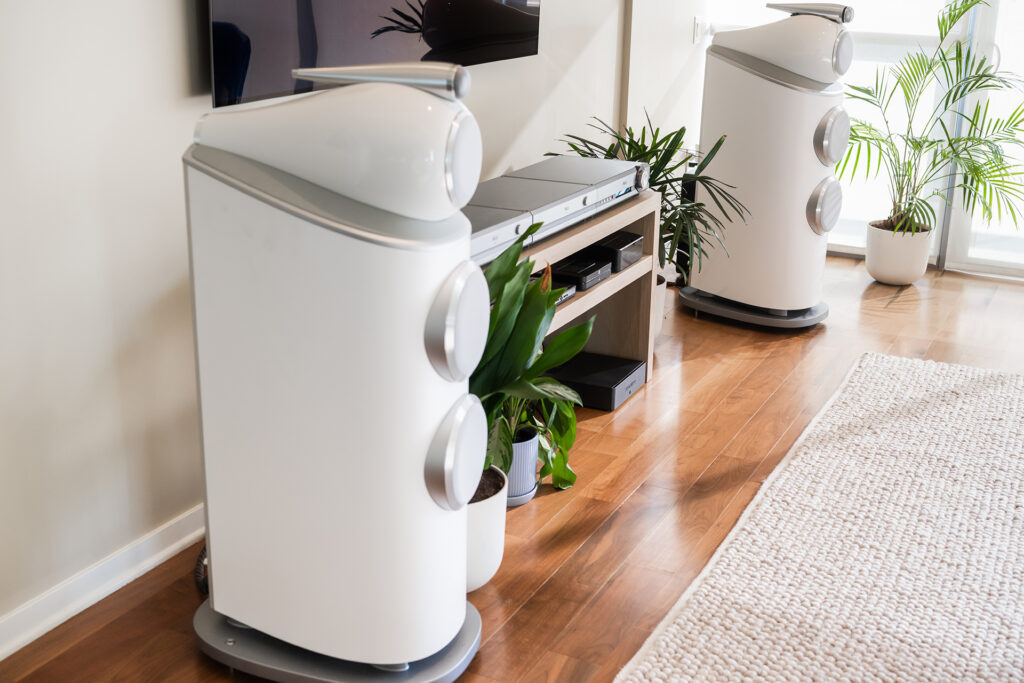
Room size and what is going on in the room are always important factors when determining how a high-performance audio system is set up. Room ratios are the normal starting point. A very popular ratio is Height: Width: Length. Numerically, a generally agreed ratio is 1: 1.6: 2.33, or, for example, 10 feet high: 16 feet wide: 23.3 feet long. This gives the normally considered ideal proportions for effective management of the three basic frequency bands – bass, midrange, and treble. My room, for instance, is slightly askew from these values, as it is nine feet high: 15 feet wide: 32 feet long. However, I have two dormers, one on each side wall, which extend the width to 22 feet wide. Sound obviously fills these spaces, so they must be considered as well. If the room is very large, it can more easily handle larger speakers and more powerful amplification. Smaller rooms may only need bookshelf speakers and an average-powered amplifier.
Another determining sonic factor is room treatment. Absorption panels, diffusion panels, and bass traps, used in the proper combination, will almost always improve the music in the room. For those who believe in digital processing, or DSP, the benefits of room treatments cannot be provided by DSP. In this case, it will be necessary to hang an acoustical panel on the wall, or mounted on the ceiling, or both. There are companies that will make recommendations of how many, and what combinations of room treatments are used. Normally, this design assistance is provided at no cost, as long as an order is placed.
What if the room, unlike mine, is not a dedicated audio room? What happens if the audio system is in the family room and is used for movies and television as well as music? This is a setup many audiophiles must face, along with the very real probability of other household members who don’t care about sonics and are singularly interested in room aesthetics. Again, this is a real-world situation. Unfortunately, in these instances, sonics normally don’t win out. And this in no universe means music and movies cannot both be enjoyed. Gathering the family for a movie is every bit as enjoyable as a listening session with a two-channel audio system. Bottom line, there is not really one universal answer to the room matters question. Like so much in high-performance audio, it is variable.
Final Thoughts On Determining How Much Power is Needed
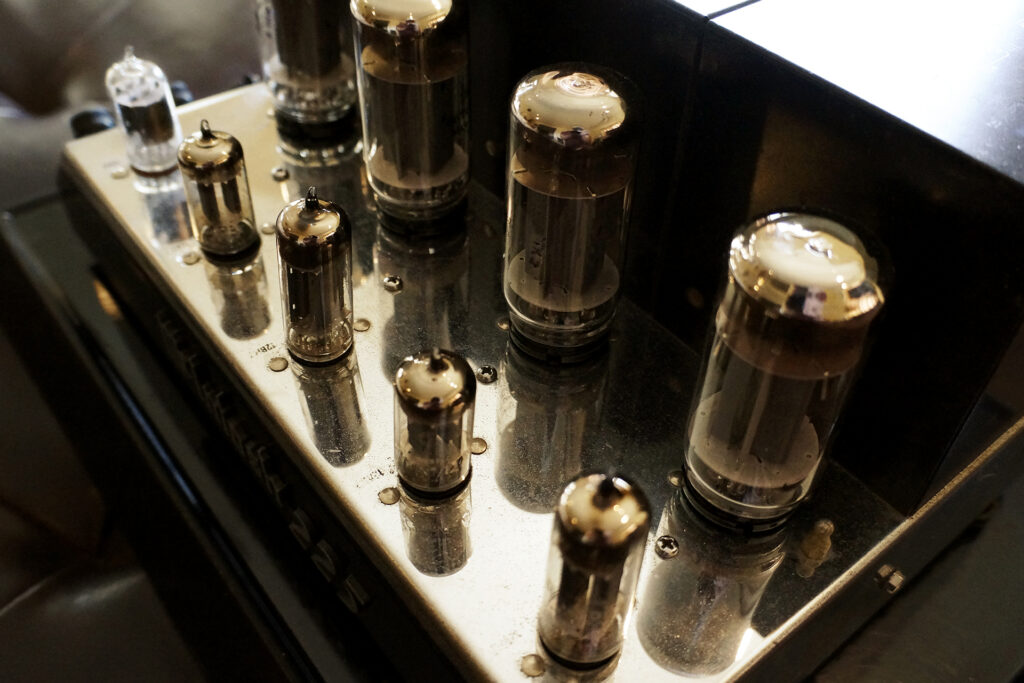
Having a wide variety of available system choices, in my opinion, makes the hobby more fun. How interesting would it be if every audio system sounded the same? Not very, I’m sure. In each high-performance audio system configuration, which components are used are the choice of the listener. However, those choices are best made based on comprehensive fundamentals. Knowing and understanding the basics of how best to assemble an audio system is paramount to enjoying the music the system will ultimately play. While it would be simple to just advise the use of the highest-powered amp available, it is almost certainly not the best path to follow.
In modern times, we have speakers with very agreeable ratings in terms of both impedance and efficiency. Unlike several past brands that operated, for instance, at two ohms and were almost impossible to drive, today’s speaker designs are far more user-friendly, and there are also powered speaker options. Personally, I am not a big fan of powered speakers but, I must say, I have heard several powered speakers sound absolutely magnificent. So, in the end, it is a user decision.
Bottom line, knowledge is very important. Know and understand the very real relationship of the amplifier to the speaker. Read and understand how different combinations of amps and speakers will produce different sonic presentations. Demo the various types of each to determine how they are different and which is the most appealing. If the goal is many hours of listening in total enjoyment, then making the correct choices is absolutely necessary. We all want to enjoy the music we love most. And having an audiophile system capable of providing a pleasing sound is the ultimate goal. How any one of us gets there may be based on different combinations of equipment. In the end, however, how we get there is important, but not nearly as important as doing so.
What type of amp and speakers do you use? Tell us about your process in selecting an amp. Do you own your dream amp, or is there an upgrade in your future? Let us know in the comments below and we will approve them ASAP.
Read more about distortion and how it affects an audiophile system from FutureAudiophile.com editor, Paul Wilson




With multiple stereos across the house from Bryston and Focal to the porch set- they’re all good and the porch set is remarkably satisfying.
The porch set is a used 1978 ish Sony V2 type A I think, plus a used Bose 201 mk V speaker pair stood upright! (Better by far!), and a $7 Bluetooth receiving my phone. This has the most satisfying casual listening I’ve ever owned for only $177. Crisp. Clear and brings in Radio Paradise flawlessly while I sip my coffee and love the clarity of this near perfect matched-by-chance system.
This is interesting, my next up grade is a Michi 3 series 2 amp. This I’m considering!!
Currently I have a Older Rotel amp rated at at 100wt and Focal tower speakers rated at 125 wt.
You can probably tell I’m not an audiophile person!
I don’t know much about amps or this side of music, but do love great sound, In sayin this I place a great deal of trust in favorite music shop “True Tone Elec”.
Question- is this the right path?
You are doing great my man.
Michi is SOLID GEAR and a fantastic value. Like a really good Acura or Lexus. The best a very good company can do. Can you spend more? Yes, you can but how much more gets you how much? That is the audiophile conundrum.
Zellaton emotion evo what’s amp compliment
I have had now 9+ years Ayre ax-7e with B&W 805D3. I only need about half a watt per channel which is 85 dB. More is too loud. My ears are in great shape at 63 audiologist who pulls out my wax says I can hear 14kHz
A very good layman’s explanation of the different style of amplifiers on the market. As an old Boomer, I’m a tube man. And a strong believer that if the 1st Watt isn’t good, having 500 Watts doesn’t matter.
I use a McIntosh MC225 (built in 1963 and still going strong on the original McIntosh branded output tubes) with its glorious 25 WPC, a Reisong A10 with 12 WPC, and a Dennis Had Inspire 45 with just under 2 WPC. The Had amp makes my Klipsch Forte II’s and KG4’s get as loud and crystal clear as I want with those measly 2 WPC.
It is a joy to introduce young audiophiles to the world of tube amps. There’s just something mesmerizing about that orange glow.
That MC225 is just a lovely sounding vintage amplifier. I love mine!
Paul, what a wonderful and insightful article. I have a relatively low powered amp – Pass Labs XA30.8 that I swear has double the published power. Funny how those things work!
that is SUCH A GOOD AMP.
Double the published power? Chalk it up to the way Nelson designs amps! Over the top!
Thanks for the kind words, Frank.
P
My Pass Labs XA 160.8s are bat-shit insane good.
Not the power (they have so much more than I would ever need to drive Bowers & Wilkins 802 D4s) but the control. The headroom. That is what you pay for.
I’m very lucky as a music lover and audiophile. Not long ago I finished a dedicated music room and moved in my end-game speakers — Klipsch Heritage Jubilees.
The very high efficiency of the Jubilees along with their high power handling (up to 100 wpc HF horns/300 wpc LF horns) gives me a lot of flexibility in amplifier selection. And while I’ve had some very expensive amplifiers in the past the Klipsch play really well with more modestly priced tube gear.
I’m currently powering the HF sections with a Japanese Sunvalley SV-S1645D tube amplifier, which uses a pair of 45 tubes for a whopping 1.5 wpc. And I have a restored McIntosh MC225, an Ele-kit TU-8900 300B/2A3 amp, and a 25 wpc Sunvalley SV-128II that I can swap in if I desire a change in sound profile.
LF horns are more than adequately powered by a pair of Ralph Karsten’s Class D monos at 100 wpc.
It’s nice to have choices without breaking the bank and I’m a big believer that this is, or should be, My-Fi and not someone else’s idea of Hi-Fi. I have a lot of fun with this system and I really, really enjoy the hours spent spinning vinyl, CDs or streaming my favorite music.
Hegel 590 powering Bryston Middle T speakers. I see no need to upgrade in the foreseeable future.
also using Hegel Viking CD player and Hegel Raven DAC. I have one JL D110 subwoofer, thinking of adding another one.
Average Audiophile? What an oxymoron! I once had a high school English teacher tell the class, “if someone calls you average, you should be insulted.” That being said, in my opinion, if one is an Audiophile, it would suggest one listens to music with intent way beyond the average.
Also given the above, I guess I should say my system puts out a tremendous 12 watts into 90db standmounts. Just sayin…😏
Roger A. Miller, Asheville, North Carolina
We put the “moron” in audiophile oxymoron.
🙂
I enjoyed the article. I’m from the school you can’t have too much power 🙂 I drive JBL 4367 with a Mark Levinson 534. Although the speakers are 94dB they do enjoy power with good current. An example of not all higher efficient speakers are good match with low watt tube amps.
Headroom counts. I NEVER use the power that I have directly but having the reserve allows for so much control.