
 By
By To say audiophiles are quirky and highly opinionated would be to understate the many crazy characters that make up our hobby. These historically Baby Boomer men have their views on the way audio should be and what makes up “real high-end.” Sometimes they are absolutely right and well-founded with their audiophile opinions. Other times, they are nuttier than a Chinese chicken salad. To know an audiophile is to love one, but putting up with their views is part of the appeal. With that said, the times, they are a changin’, and one of those changes is with powered loudspeakers.
Let’s be clear … traditional audiophiles have hated powered speakers for as long as the hobby has been around. That isn’t the case in pro audio. That isn’t the case with mainstream consumers who might enjoy sound from, say, a portable JBL speaker or a Sonos device rocking out some tunes in the kitchen or garage. Lifestyle products like B&O or Meridian have been powered for years, but they’ve never had one lick of audiophile approval. Audiophiles simply have hated powered speakers, no matter what they sounded like. Finally, that is changing.
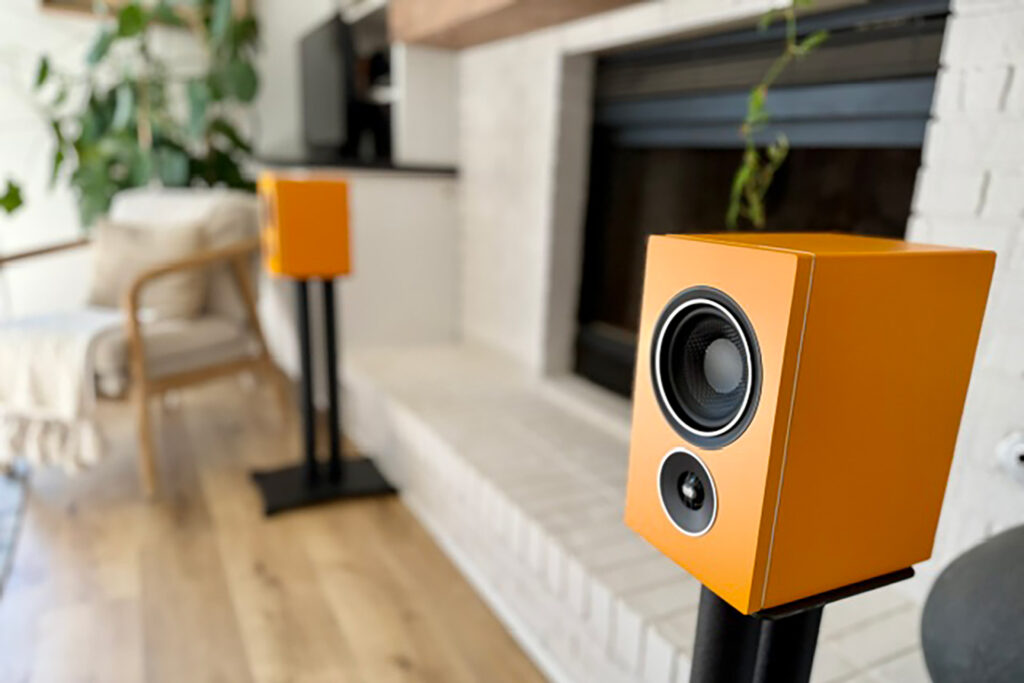
Studio Tuner Bob Hodas Once Played Powered Speakers to the Seattle Audiophile Society
Bob Hodas is the studio tuner to the stars. What that means is that he periodically travels from Northern California to other locations, ranging from Los Angeles to New York to Tokyo to London and beyond, to make sure the world’s finest working recording studios and mastering labs are tuned and performing their best. Studio, unlike audiophile systems, are dynamic, living, breathing entities that get tweaked and bumped and messed with as a normal course of doing business. Hodas not only designs the acoustics of the studio, but also tunes and re-tunes them. For decades, Hodas designed my audiophile system’s acoustics with fantastic results, in spaces ranging from my 800-square-foot West Hollywood rock and roll condo (Jimi Hendrix, Axl Rose, Lenny Kravitz and Billy Idol all lived above Spago and Tower Records on the Sunset Strip, with crooner Neil Sedaka living next to me – I terrorized him with my Wilson-Krell-ARC audiophile system for years) to my audiophile screening room and beyond.
Long ago, Hodas introduced me to a pro audio loudspeaker company called Meyer Sound. They are the only horn speakers that sonically appeal to me, which often gets me into trouble with audiophile horn speaker companies. I am sorry, but I just don’t vibe in the “honky” (cup your hands on your mouth) sound of even the most well-regarded audiophile horn speakers, and I don’t care about how exotic the single-ended tube amps are that are powering them. Meyer Sound speakers, specifically these $40,000 (or more) ugly-ass X-10 speakers are the big exception for me. And guess what? They are powered! They play so loudly that you can’t compare them with other audiophile speakers as much as to a Gulfstream G-600 taking off. Literally. They will play at 130 dB and not suck. They don’t compress. They just rock at arguably dangerous levels of output. For studio or big theatrical applications, Meyer Sound speakers are a great fit as a crossover from the world of sound reinforcement.
So, Hodas took a pair of these goofy, bulky and now-discontinued Meyer Sound X-10 speakers (read my review from the long ago) up to Seattle to present them to the Pacific Northwest Audiophile Society. These audiophiles are smart, experienced and tech-savvy, but don’t all have that much exposure to very high-end pro audio gear like Meyer Sound. To add to the experience, Hodas has relationships with top mastering engineers, so he has partial, one-off recordings (or other rare versions) recordings that are basically from master tapes. Good stuff, too – No Doubt, U2. Platinum-selling real music – not audiophile pablum crap that just sounds good. Hodas plays music that connects on all fronts, as we all should aspire to do with our audiophile systems.
So, Hodas segued into his demonstration and the attendees were just blown away. Simply put, audiophile speakers can’t compete with the resolved output of a speaker like the powered Meyers X-10. When the music stopped, their first comments were effusive. Drool was pooling on the floor. The first person who stood up to comment said something to the effect of “Bob, this is the best-sounding system that I’ve ever heard! How do I change the amps?”
This disconnected comment sums up where traditional audiophiles just never understood audiophile speakers. The best sound that they’ve ever heard was somehow in need of a tweak, because somehow they knew how to pair an amp better than the engineers at Meyer Sound? Their consumer interconnects are better than hardwired connections? Because somehow their hand-curated power amps were better than the ones that the engineers matched to the exact drivers and crossovers of their loudspeaker designs? When is the best not good enough? With traditional audiophiles, this is an actual, real-world struggle, but thankfully that is starting to change.
Upgrade-itus Limits Dealer Support for Powered Audiophile Speakers
Audiophile dealers and consumers alike tend to dislike powered speakers for a number of reasons. but the number one reason is that they are not easily modified. As the member of the Pacific Northwest Audiophile Society stated, “How do you change the amp” sums up the issue. You simply don’t change the amp. That’s the point of a powered loudspeaker. You don’t have other products to upgrade, either. You don’t use up as much physical space. You often don’t use as much electricity. There are a lot of advantages to powered speakers, even with some obvious downsides.
The value issue is a big one for more advanced audiophiles. Powered speakers take a lot of the upgrade-itus out of the hobby and that is a big part of the fun for so many of us. For example: if you bought a pair of Meridian DSP-8000 powered, DSP speakers – you are bought into the Meridian platform. If you wanted to use a dCS DAC or some Dan D’Agostino power amps – you are out of luck. For many audiophiles that is a non-starter, and that is absolutely understandable.
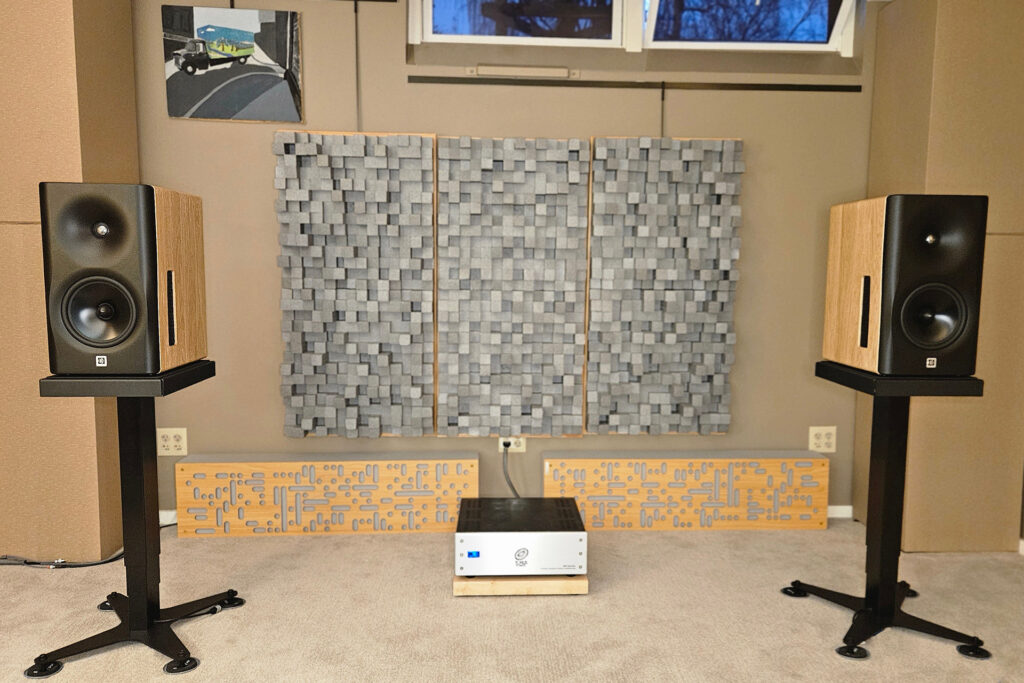
The Allure of Wireless Connections
Every audiophile knows that a physically wired connection is better than a wireless one.Sonically and logistically, a wired connection is a simply superior way to connect an audiophile component. At the same time, every audiophile connects so many of his or her devices wirelessly, with wireless speakers being the most likely category to make it into our stereo system and beyond our mainstream devices. A Sonos-type speaker brings music to places in ways that are low-cost, portable, easy to use and fun, but that is a pretty mainstream consumer electronics component. A PSB Alpha iQ-type (read the review) smart/powered speaker brings Bluesound streaming (read a review of the Icon streamer) and Paul Barton legacy speaker design with the ease of plugging one speaker into an outlet to the table. Music streamers connect wirelessly but don’t always thrive, as I learned when I added a wired Ethernet connection to my main audiophile rig with very positive results. Increasing numbers of audiophile components use Internet connections to update firmware and software. There is no fighting wireless connections, so let’s look at how to best balance the use of wireless versus wired connections to meet our unique needs.
The next generation of audiophile demands ease of use, and wireless is a big part of said ease of use. This is just how the world works and, while imperfect, the convenience is something that more traditional audiophiles will have to work to understand.
Hybrid Power Speakers Offers a Reasonable Audiophile Compromise
When legendary audiophile loudspeaker impresario Sandy Gross “left” Polk Audio, he made tectonic waves with his next venture, Definitive Technology, in the early 1990s. I sold Def Tech then as a teenager on the Main Line of Philadelphia, and the tall, black speakers were a perfect form factor to match a term that our younger readers may never have heard: “big-screen TVs.” These giant, non-HD televisions were huge and had very little light output but, powered by a VHS or Laserdisc player,made for the core of a mainstream home theater at the time. Other than matching these silly-looking (by today’s standards) television sets, Sandy’s Definitive Technology speakers did something else unique. They had subwoofers built into the sides of them, which allowed for subwoofer-like bass without having a big, black rectangular subwoofer in the room. They were profitable, as well as brilliantly in tune with the needs of the customers of the era. They also foreshadowed the changes that we are seeing today, with hybrid integration of subwoofers with tall floorstanding audiophile speakers.
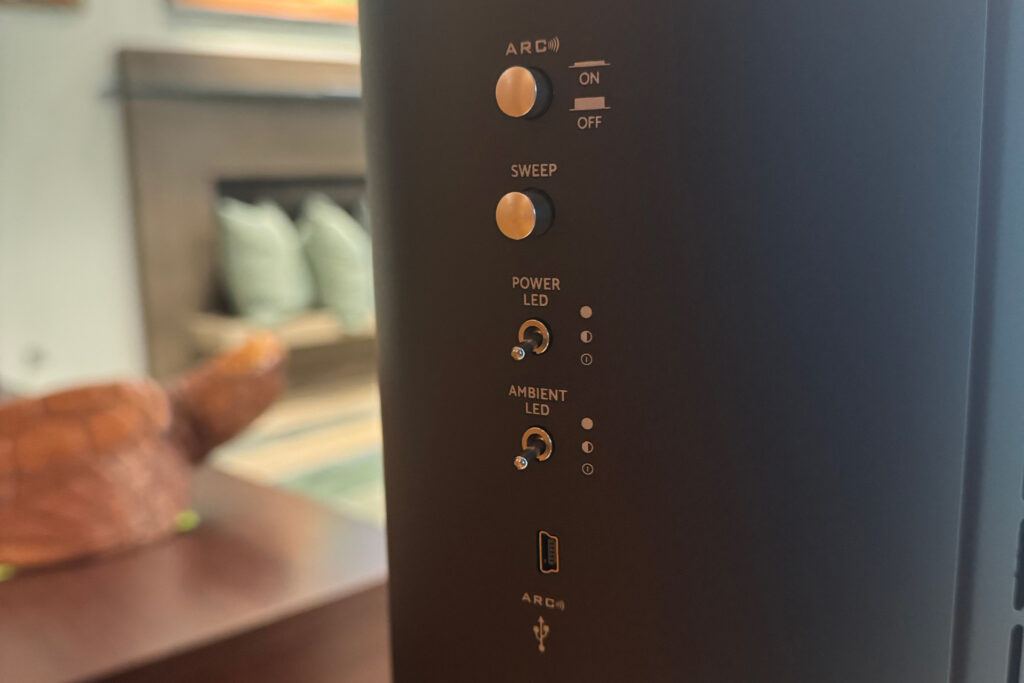
MartinLogan’s ESL speakers (read a review here) are another example of hybrid powered speakers that set the stage for modern audiophiles. The then-Kansas-based audiophile speaker company stopped making all-electrostatic transducers like the game-changing curved and impossible-to-power (and set up) CLS speakers and focused on more hybrid deigns. By hybrid, this means that the bass driver has its own power (and perhaps even digital room correction) built in, meaning that audiophiles needed to power just the more easy-to-drive electrostatic driver with their own amps. Audiophiles still had freedom to pick their electronics but were not burdened to power full-size, odd-impedance large electrostatic speakers which, back in the day (anybody remember Acoustat?), were very challenging physics projects – more than a stereo system.
In a more modern form factor, products like Paradigm’s Persona speakers (read a review of the Persona 9H here) represent the same kind of forward-looking audiophile options but with the hard parts already handled for you. Digital room correction is offered. Bass drivers are internally powered, yet you can select the most sweet-sounding (and low-powered) exotic audiophile amplifier to power your highs and mids. This type of thoughtful design meets the physical needs of speakers, while allowing hobbyists (and dealers) to keep upgrade options open. Everybody seems happy.
How Audiophiles Are Embracing Powered Speakers Today
We review 102 audiophile components a year here at FutureAudiophile.com. That’s two a week and, while that is likely more than any of the establishment audiophile magazines (or many of the other top online competitors), it is amazing how fast you we fill up the roster for the year, so balancing out all the key categories is more and more challenging.
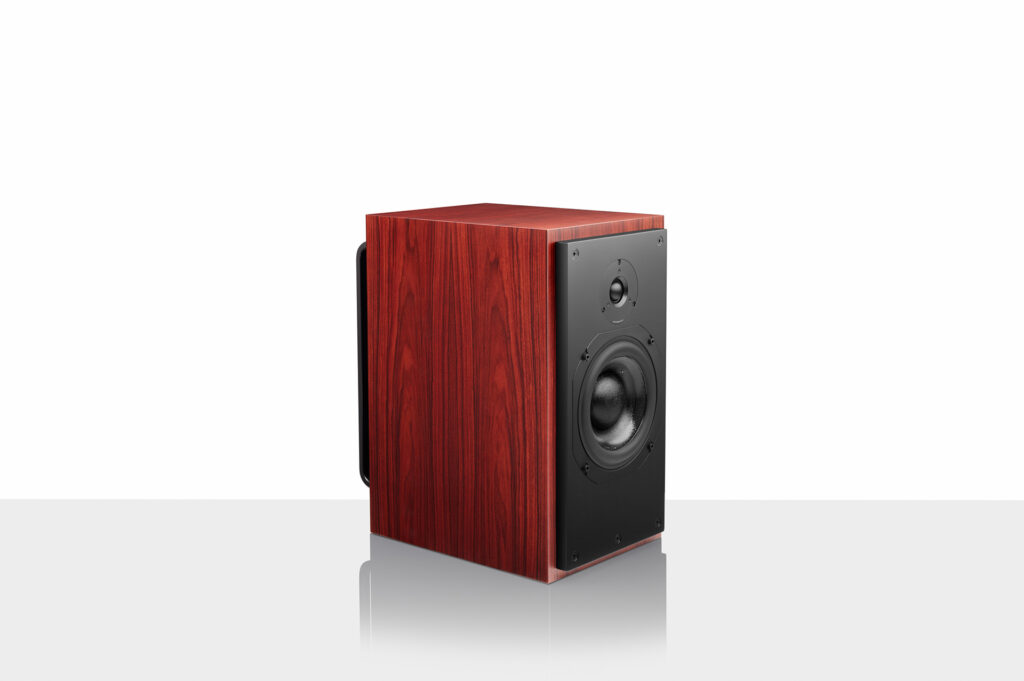
One category that is getting harder and harder to ignore is powered speakers. A few weeks ago, I visited Rotterdam in The Netherlands to see Dutch & Dutch speakers. They are making expensive bookshelf speakers that are powered and packed with advanced room correction. A friend of mine has already bought a pair of their $16,500 Dutch & Dutch 8c speakers (read the review). Reviewers like Eric Forst have been focusing more and more on more affordable powered speakers that represent a totally sensible path for young audiophiles to get started in the hobby. Brian Kahn just took a look at some totally badass powered studio monitors from ATC that also cross over really well to the audiophile world.
Powered speaker are getting more and more attention from us, mainly because they are more and more relevant to the way that we bring music into our lives today. It isn’t too dissimilar to the outlook that Sandy Gross took when he launched Definitive Audio 35 years ago, and the relevant strategy still makes lots of sense.

Final Thoughts on Powered Audiophile Speakers …
There are simply too many pointless clichés and audiophile rules in our hobby. The point is to bring music into our lives (and the lives of younger and more diverse demographics, as we state in the FutureAudiophile.com Mission Statement) in ways that make sense. Owning a stereo system should be a way to live more in tune with your art. It is a way to lower your stress and anxiety in a world where these issues have never been more relevant – especially to younger women and men.
Powered speakers, in their varied form factors and configurations, represent a reasonable (but far from perfect) vehicle to accomplish our audiophile goals. There are ways to build real-world, big-dollar audiophile systems around powered or hybrid powered speakers, while there are countless ways to bring today’s wireless powered speakers into our lives to deliver better and better sound in alternate spaces like bedrooms, offices, basements, garages and beyond.
Long live the powered speaker in all of its varied configurations. We set out to dispel some of the lamest audiophile clichés when we launched in 2022. Consider the one that said powered speakers suck to be dead.
How do you use powered speakers in your audiophile life? Would you buy (or suggest) a pair of audiophile speakers to a young music lover? How does the hybrid audiophile speaker appeal to you? Does adding digital room correction help woo you?
We always love to hear your comments and will post them ASAP. We hope to hear from you!




I have KEF LS60 wireless speakers and would never go back.
Those are good ones.