
 By
By It seems like such an obvious statement. One with little ambiguity or question. Yet the manner in which most people, audiophiles and non-audiophiles alike, actually listen to music is remarkably varied. Not surprisingly, the non-audiophile world may easily think those of us who practice the art of audiophilia as certifiably nuts. We go through all these, what, gyrations, just to listen to a song? Why? Who cares? It’s just a song, right? Um, no. Not really …
For those of us who do care how our music sounds, we embrace the difference between our hobby and the rest of the music listening world. And if we truly are nuts, then we happily support the derisive label, and actually wear it proudly. We know the joys an audiophile sound system can render. For those uninformed listeners who are not in the know, we welcome inclusion into the hobby. We will even help make the hobby easier to understand and enjoyable. Because listening is one spoke, one leg on the stool, so to speak, we thought it might be fun to take a brief look at the art of listening to an audiophile music system. However, this is a complex topic worthy of further scrutiny.

Critical Listening – What All Audiophiles Must Do on Occasion
- Critical listening is the laborious task all audiophiles must face at some point in their journey through the hobby. Primarily, critical listening is a method of defining what we like and enjoy, and what we find unsettling and incorrect. We do this in order to make corrections so that the sonics may be improved.
- Critical listening makes it therefore necessary to evaluate the five basic characteristics of reproduced sound – clarity, accuracy, dynamics, soundstage and imaging. Quite obviously, we want all five to excel and deliver the finest sonic picture possible. When everything is right, we are drawn to the music and can readily develop an emotional connection to the musical presentation.
- We evaluate the bass response to be sure it is well-defined and portrays a sufficient level of dynamics to suit our tastes. Some are looking for chest-pounding lows, others are more interested in a presentation on par with something they might hear in a live setting. Ultimately, we all want a realistic yet pleasing bass presentation.
- We want the midrange to be open-sounding but unincumbered by the low frequencies.There are a host of instruments, and most male and even some female vocals, which live in the middle frequencies. How well the midrange sounds determines our music texture and body.
- We want a cymbal crash to actually have an attack and decay. And we are looking for instruments and vocals in the upper registers to be delivered with precision and a certain level of ferocity. How much power and authority these should have are the listener’s preference. For instance, when I hear a very high note on an alto saxophone, I want it to have a razor-sharp edge, no fuzziness, no smear, no congestion. I want it so precise it would cut my finger if touched.
- We want the music to convey a message. We want to experience some measure of emotional connection. Our magnificent systems are designed to and capable of delivering amazing sonics. It is incumbent upon each of us to unlock the door to an enriched musical experience.
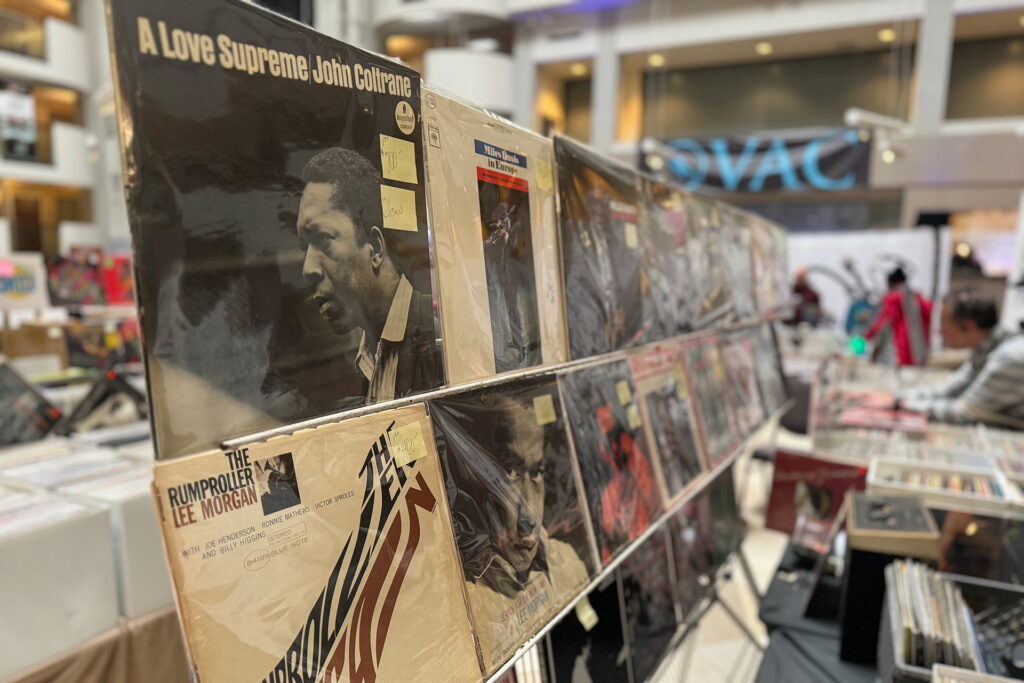
Listening for Pleasure – the Other Side of Listening
- For reasons that escape me, over about the last year, on occasion I will go into my audio room early in the morning, often before 6:00 AM (yeah, I know, I’m crazy), and set Roon to pick music at random. I will listen at a very low level – about 50 dB of amplitude, or sometimes less, in an almost darkened room, close my eyes, lean back in the recliner, and just let music play. Sometimes I even fall asleep. I’m not concerned in the least about my typical sonic checklist. I’m not asking myself why something sounds a certain way. Dynamics? Who cares? I am not employing any of the processes I use when doing a review or evaluating equipment. This is the cherry popsicle part of the hobby – something done for simple pleasure and satisfaction.
- Other times, I go into my audio room and select one of the playlists I have compiled, press play, crank it up, and tap my toes. Sometimes (perish the thought), I sing along to a favorite track, while listening at my preferred listening level, about 80 dB. And if by chance, Earth, Wind and Fire or any of several other favorite groups plays, maybe I sneak the volume up to about 90 dB. Yeah … And sing along.
- Listening for pleasure also exists when I have guests over and we make our way to the audio room to play a few songs. I usually have prepared a playlist of a few tracks to get things started. Almost inevitably, my guests will have requests of their own – and it is Qobuz to the rescue. I will answer any question someone may ask. Usually, however, everyone just enjoys a song they like.

What Are Some Cues an Audiophile Should Be Mindful of When Listening?
Being a proficient listener is not an inherent trait, it is a learned skill. Most often, developing listening skills takes place over time. Each of us has different musical aspects and preferences. What follows below are a list of listening cues normally practiced by audiophiles. These are only generalities, however, and may not apply to all systems. That said, this list is a pretty good place to start.
- Is the music presented in front or behind the speakers? It is generally considered correct if the image presentation occurs behind the speakers. In front means the possibility of a phase imbalance or compromised room acoustics. However, there are also those who like their music in front of the speakers. As is so typical in our hobby, personal preferences will almost always differ.
- Can you hear all the instruments at the same time and are they in separate and distinctly identifiable locations?
- Is there space around each instrument, almost as if they exist in only one area? And is this space totally lacking any accompanying background sounds? Audiophiles call this absence of extemporaneous sound a black background.
- Does the low bass sound congested, almost as if there is a fuzzy texture to the sonic presentation? If so, it is likely distortion. Can the individual notes on a bass guitar be identified, and is the bass guitar separate and apart from the drums? Does the entire bass presentation overwhelm the midrange and obscure the highs? Overwhelming bass is an unwanted characteristic.
- When a track begins with a bass guitar line, and the rest of the music joins in, does the bass guitar fade or does it maintain a consistent amplitude?
- Can you tell the difference between an electric and an acoustic guitar? In either case, is the guitar in tune?
- Is the cymbal or hi-hat obscured, or are they prominently heard and identified? Does a hard cymbal strike seem to explode, or does it come off as more of a whimper?
- If the lead singer increases the amplitude or frequency of a song in mid-breath, does the singer’s voice get louder and/or change pitch while the rest of the band remains constant?
- Can you identify a soundstage? For instance, on a live recording, is there an obvious difference between a two-man jazz combo in a small nightclub, as opposed to a symphony orchestra in a performing arts center, as opposed to a rock and roll band in a 25,000-seat open-air coliseum? Does the recording render a sense of scale? Obviously, the recording matters when trying to visualize a soundstage.
- Do the instruments sound as if they are in different locations, both side to side and front to back, on a soundstage? This is called imaging.
- Are there backup singers, and are they in a separate location from the lead singer? Does it sound as if the backup singers are positioned towards the rear of the soundstage?
- Can you discern what audiophiles call PRaT – Pace, Rhythm and Timing? Does the music seem to speed up and slow down, or does it remain constant?
- Does the sonic presentation start and stop with great speed and precision? Put differently, is the system fast?
- Do you want to keep listening and fight turning the system off, or do you want to leave after only a few minutes of listening?
- Does it sound as if the music is being performed for you live, right in front of your eyes, or does it sound like just another recording?
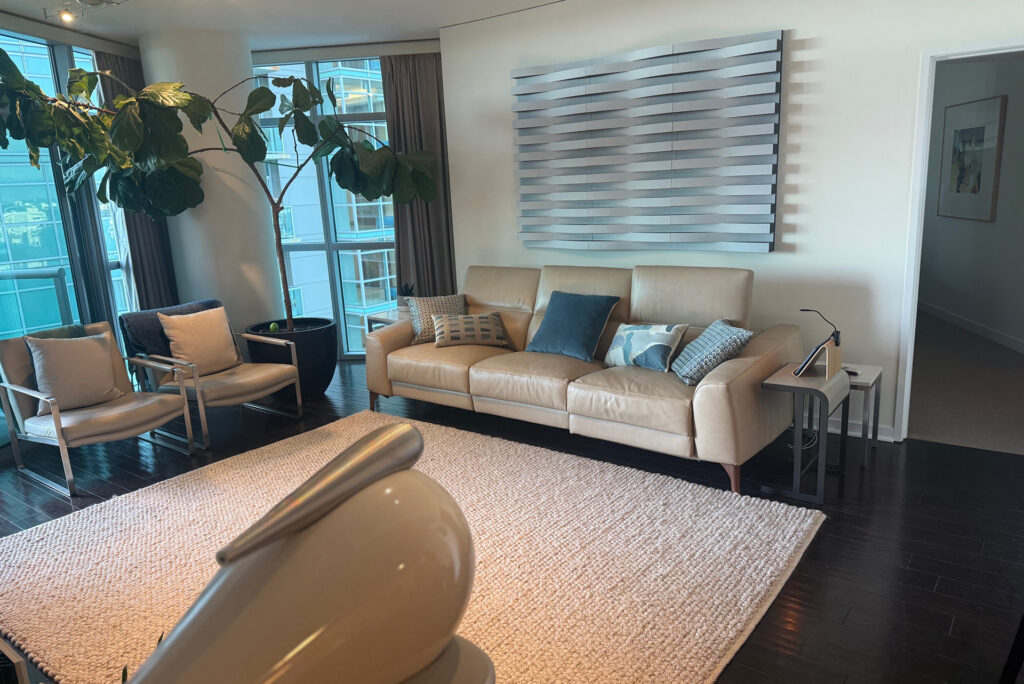
How Does the Room Influence What We Hear?
- There is an obvious sonic difference between an entry-level, budget-priced piece of audiophile equipment and its world-class, best of the best, cost-no-object counterpart. As much as components will influence sonics, the room will almost always be an equal influence.
- It is generally considered better to place an audiophile system in a rectangular room rather than a square room. Rectangular rooms are generally for two-channel audio and square rooms are generally for home theater.
- It is always advised to place the speakers on the short wall and not the long wall. Short-wall placement allows the sound waves to flow down the longest part of the room. This is especially useful with low-frequency sounds, which have longer wavelengths than midrange or high-frequency sounds. It also helps to mitigate standing waves. It is generally advised to place the speakers well into the room. Doing so helps manage reflections and offers the possibility for an improved image presentation.
- Every surface in the room is a reflection point. All four walls, the ceiling and the floor will create reflections. The same may be said for furniture, so keeping it at a minimum is preferred. The goal is to manage the reflected sound. Carpeted floors are preferable over hard floors, like tile or hardwood. Wall and ceiling-mounted acoustical panels are recommended – even if your system employs DSP. It is also advised to cover windows with blinds or curtains and avoid glass as much as possible. This includes coffee tables, especially glass-topped coffee tables. And, while controversial, avoid hanging a large TV on the wall directly above the system itself. Large televisions have a significant amount of glass. However, many audiophiles very much enjoy watching a sporting event with the TV volume turned down while listening to music.
- There is a vast amount of technical data on the Internet about room configuration. Artificial Intelligence may also be very helpful. Room configuration is a topic unto itself and is best for the listener to do their own research or to seek assistance from a professional acoustician.
Does the Time of Day When We Listen Matter?
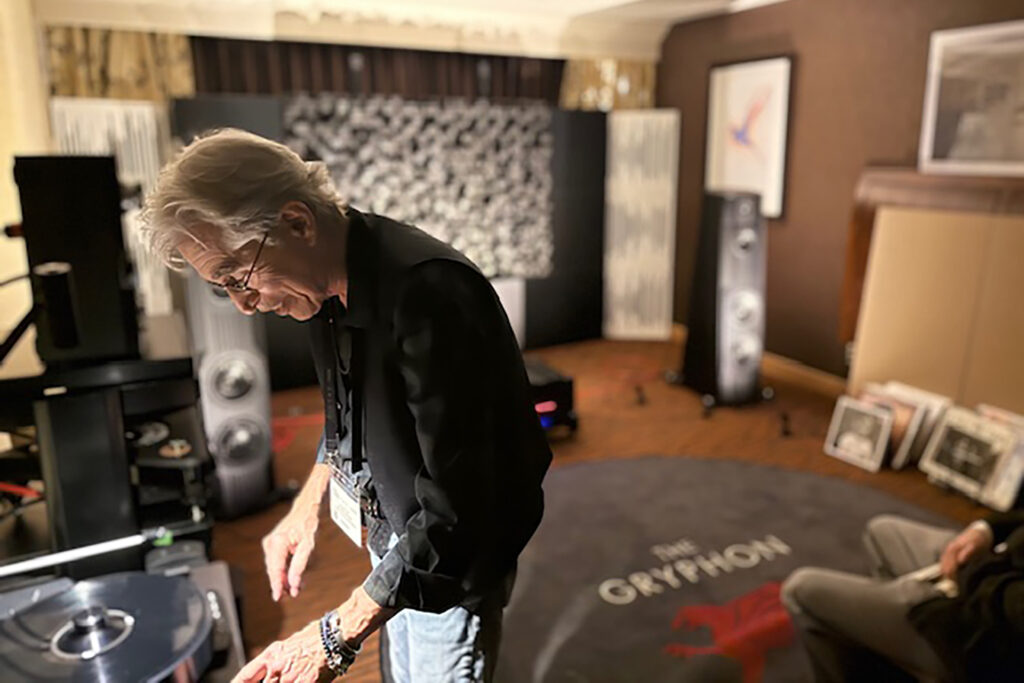
There are rampant and highly divisive opinions on this controversial subject. Many audiophiles love to listen at various times of the day and have their own reasons for doing so. For my own purposes, I like to listen to music in the early morning and the middle of the afternoon. Occasionally, I may wander up to the audio room in the early evening. Scientific research has looked into this phenomenon and has postulated five distinct different times of day for listening to music.
- Morning at about 6:00 AM. The listener’s overall level of energy is higher, and they will be more attuned to the loudness and overall quality of the presentation.
- Afternoon at 12:00 PM or after. There will be an increased perception of the strength of the beat of the music.
- Evening at about 6:00 PM. The perception of the beat strength is even more heightened, and the danceability factor and musical excitement becomes more prevalent.
- Night at roughly 10:00 PM to 11:00 PM. Lowest time of the day for loudness awareness and responsiveness to beat, tempo and danceability. It is typical for slower, softer music to be played during the night.
- Late night at about 3:00 AM to 4:00 AM. It is during the late-night phase when the awareness of beat and tempo starts to see increased levels. Late night is beginning to merge with morning, when our awareness is typically at its best during the day.
It should be noted that these conditions are generalities at best, and may not represent an individual’s listening preferences, habits or results.
Read more about distortion and how it affects an audiophile system from FutureAudiophile.com editor, Paul Wilson
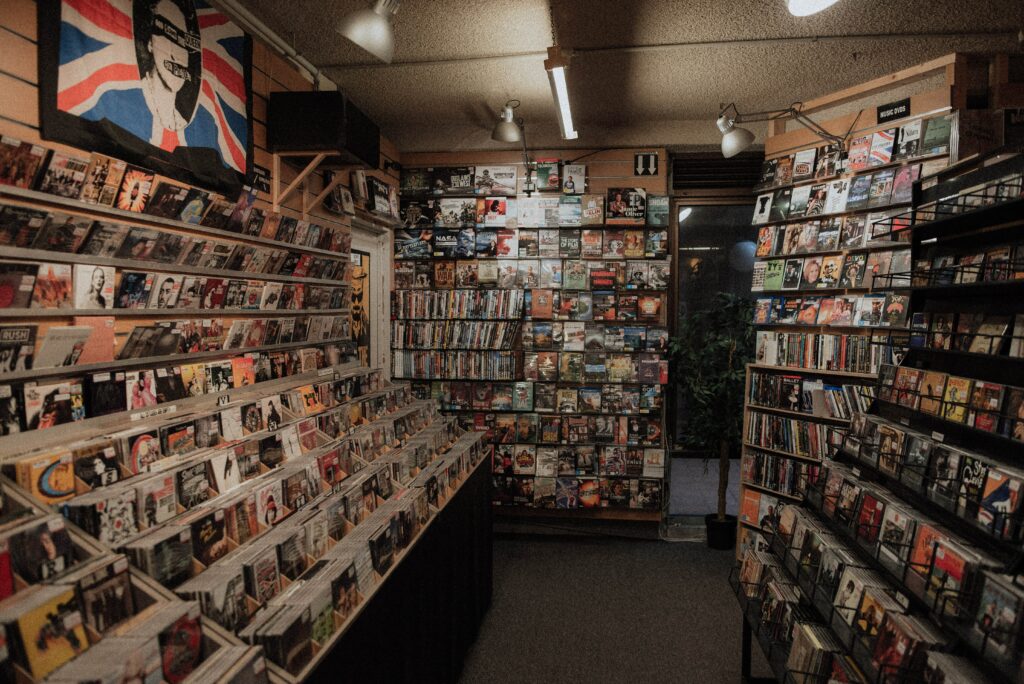
Do You Listen to Whole Albums or Individual Tracks?
When I first became interested in the audiophile hobby, the only realistic source was an LP. So, listening to one whole side of an album, then the second side, was normal practice. And why not? Jumping up and down and running back and forth to the turntable is, for some, too much work – both then and now. I see this as one reason for the immense popularity of digital. Whereas I once listened to an entire album, my preference today is to let Roon search my entire music library on my music server and pick tracks at random. If I am not particularly enthused by any one track, I can very simply and easily push the next button, and a new song will begin. Best of all, I can do so from the listening chair, and I don’t need to run across the room and fiddle with a cue lever and tonearm. Analog LPs, I should also note, are very popular amongst audiophiles and the efforts associated with a turntable are completely acceptable.
Do You Have a List of Favorite Tracks You Use to Evaluate Your System’s Sonics?
If you do not, you should have such a list. I have five songs, each of which has different qualities that help me affirm my system’s overall sonics. I will always use them at some point when doing an equipment review. For instance, if I am concerned about image correctness, I will play “I Cry Everyday” by Shelby Lynne from the Suit Yourself album. I know this track inside out and, if any placement of an instrument or vocals is not exactly where it should be, I will recognize it immediately. Every so often, I get the immutable feeling the lateral side-to-side imaging of a particular track is not completely correct. When this happens, I play my Lynne song and, if it sounds like it should, I know the questionable track is simply recorded in a particular manner and it is not my system. I have other tracks for various sonic signatures. It is recommended that each listener develop a list of tracks to help identify any potential issues with their system.
How Many Playlists Do You Have?
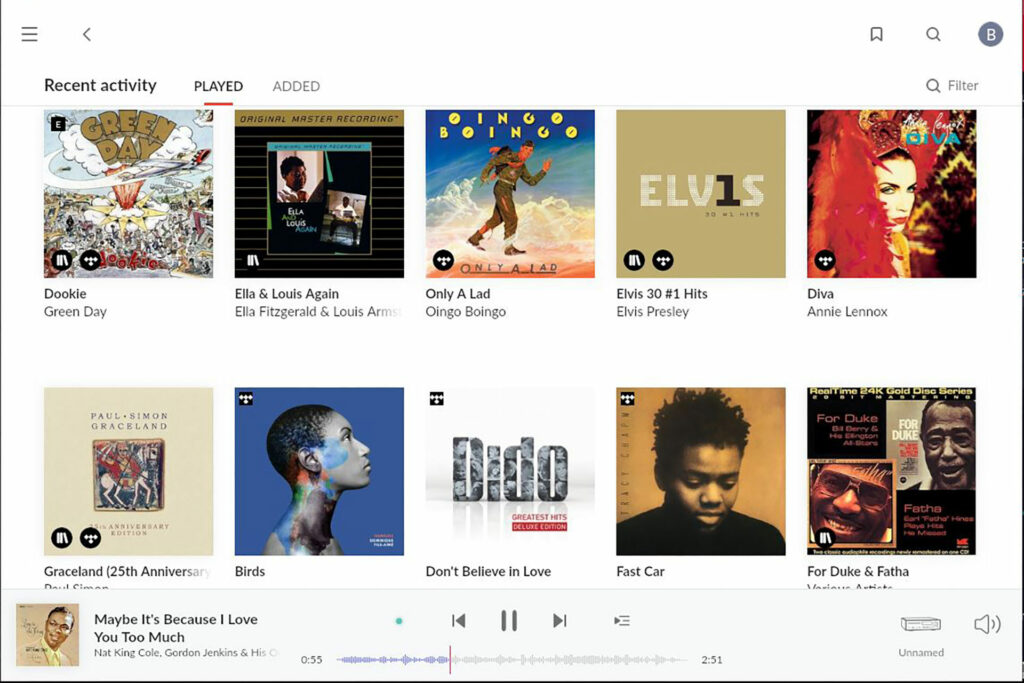
My main playlist is one I call my five-star list. Basically, this is a list of about 200 songs and counting, each of which has some sort of meaning to me. Typically, a five-star song moves me in some manner, and this in itself qualifies it for inclusion on the list. Basically, I have playlists for any number of evaluations. I have playlists dedicated to incredible bass lines. I have one with songs portraying impactful dynamics. I have one highlighting tracks with remarkable imaging. And I will also create a single-purpose playlist, such as when friends come over and a trip to the audio room will be included in the evening’s festivities. Any audiophile who listens to digital music can very easily create a playlist for their own unique purposes.
Final Thoughts on How We Listen to an Audiophile Sound System …
As audiophiles, we have two main interests which represent the hobby. One is the equipment itself. The second is music and the art of listening. And make no mistake, listening to music on an audiophile-level system is a learned experience. It takes time and concentration to become a better listener. Here again, books are written on this subject. The fact remains, however, the equipment and the music are in a symbiotic relationship. One cannot exist without the other.
Oddly enough, how we listen to our systems is a very personal thing. Some audiophiles will swear their systems sound better at a certain time of day. They wait until their preferred hour, maybe in the early evening, for instance, because they firmly believe the system sounds better at that time. Realistically, the veracity of this belief may or may not be true, but in reality, it doesn’t matter at all. Not in the least. We listen to music on these remarkable systems because we enjoy doing so. The hows and whys certainly matter but, in the end, one factor rises above all the rest – how much enjoyment we ultimately derive from our audiophile systems. When we are the fortunate recipients of an enjoyable listening experience, nothing else really seems to matter.
Resource: Here are some tips on how to troubleshoot highly complicated audiophile systems from FutureAudiophile editor, Paul Wilson.
Tell us how you listen. What are your quirks. When are the best times to listen? What is your process? We will post your comments ASAP.




How do you listen to music?
I have been involved in music my entire life and an audio enthusiast since I was 12, when I first noticed the sonic differences in AM car radios. Growing up in the 1970s, I always bought full albums rather than singles. In high school, I ran a mobile DJ business for dances and weddings, copying singles to reel-to-reel tapes. During engineering school in the early 1980s, I worked as a radio announcer, acquiring a large album collection and industry contacts who still send me music today. Back then, I had the classic pre-CD setup with a turntable, preamp, amp, DBX III, Nakamichi RX-505 cassette deck, EQ, ZeroStat, and Discwasher.
Later, I transitioned to a CD player, amp, preamp, and speakers, downsizing the equipment footprint as my family grew—an all-too-familiar audiophile story.
Over the last year, I completely overhauled my system and room treatment. My room is now balanced and calibrated, allowing me to simply sit down and enjoy the sound. It has taken me 51 years to get “hear.”
Now that my setup is optimized, I have been listening to various playlists and trying to identify the producer or engineer by the mix. My Maggie 2.7i speakers showcase the soundstage exceptionally well. My current goal is to focus entirely on the music and the musicians, particularly catching up on 1990s and 2000s tracks I missed while working long hours.
I use ROON and have close to 4,000 artists and 15,000 albums. I do not use streaming services; all of my music is digital. I also display many valuable albums from my radio days in my room.
When I want to listen to music, I close the door, sit in my HumanTouch PerfectChair, and simply let the music present itself. When I want to evaluate my equipment, I play a familiar song to listen for sound placement and quality. They are two entirely different listening experiences.