
 By
By One of the prevailing thoughts that has come to me in 2025 is, how can I upgrade my audiophile gear and setup with components that are still being made in the United States? This is the tariffed world we live in; however, it shouldn’t stop us from dreaming about or seeking our meaningful upgrades or updates to our gear should we so desire, without having to pay an additional 10 percent or more due to tariffs. Most of the turntables I have reviewed in the past have come from Europe, so I was excited to get the VPI Cliffwood in for review, as it is designed and made by VPI in their New Jersey facilities.
The Cliffwood is VPI’s entry-level model, but entry-level here is really just the introduction to their designs, as the $1,499 price tag shows, but this isn’t to say that it doesn’t come with value. It features a nine-inch gimbal tonearm, and VPI’s one custom cartridge, the Shirley, that they have made in conjunction with Audio Technica. The turntable is rectangular (19 inches long by 14 inches wide by six inches tall) and weighs 17.6 pounds. Let’s take a closer look at the Cliffwood and see if it is a worthy rival to some of its European counterparts.
What Makes the VPI Cliffwood Turntable So Special?
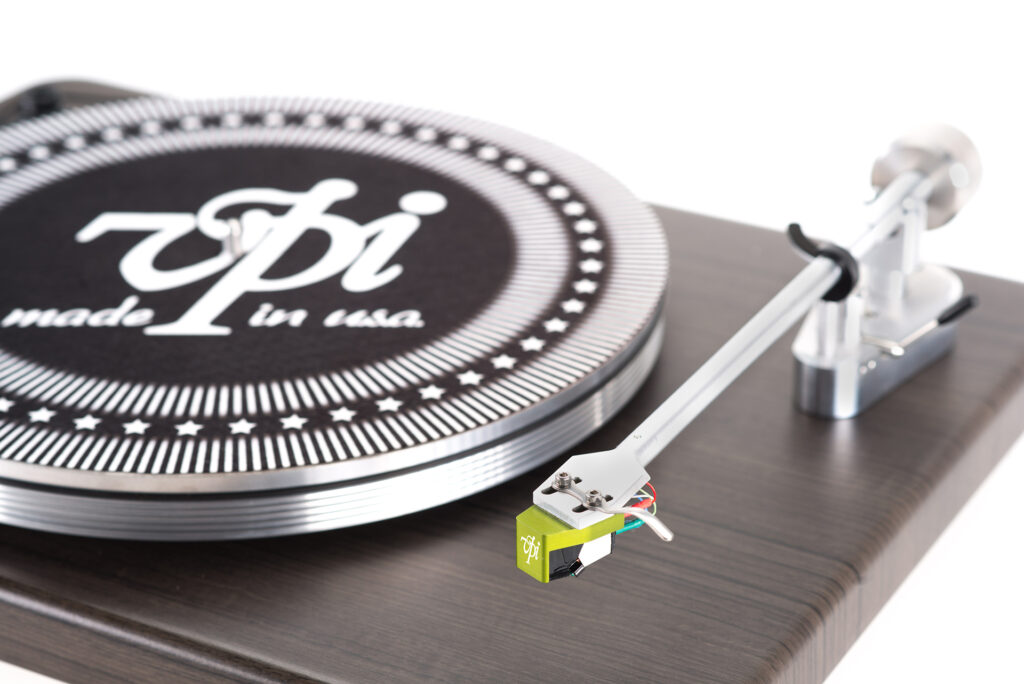
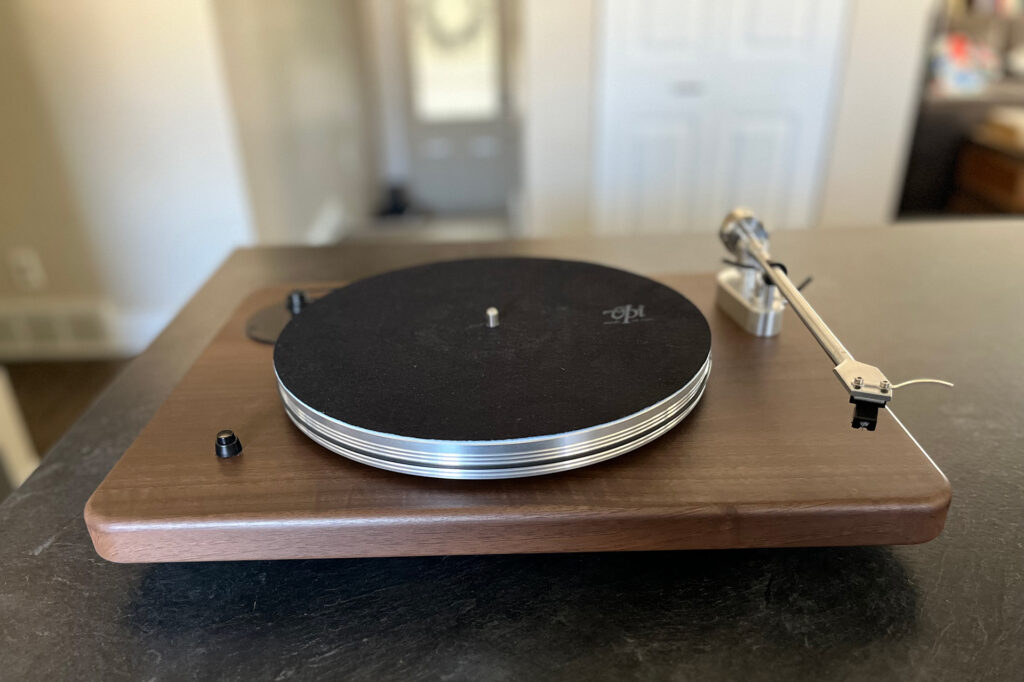
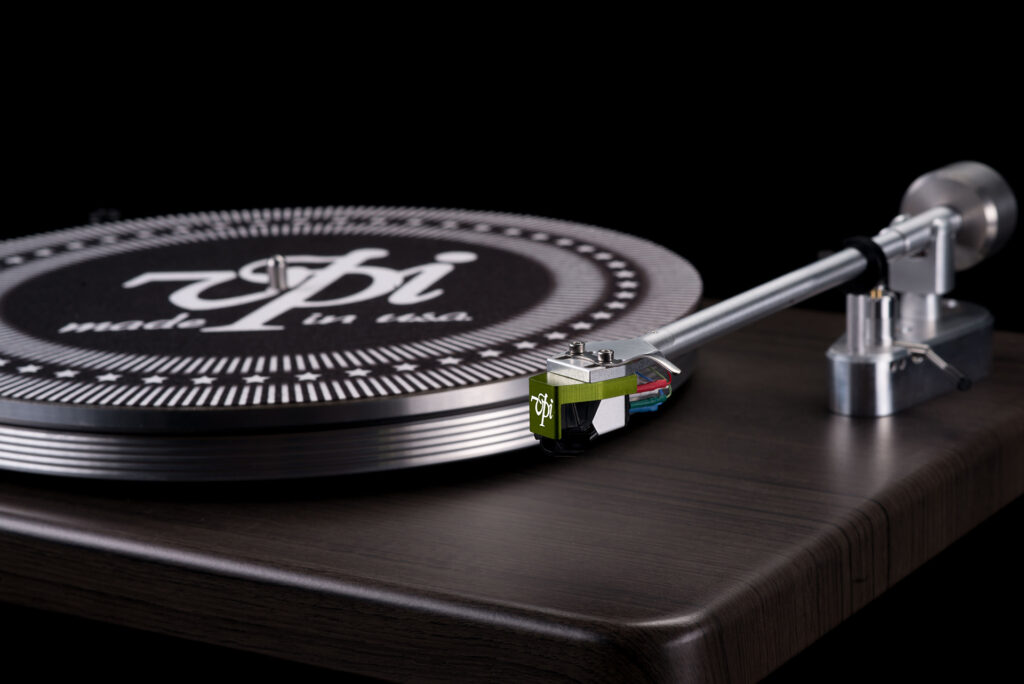
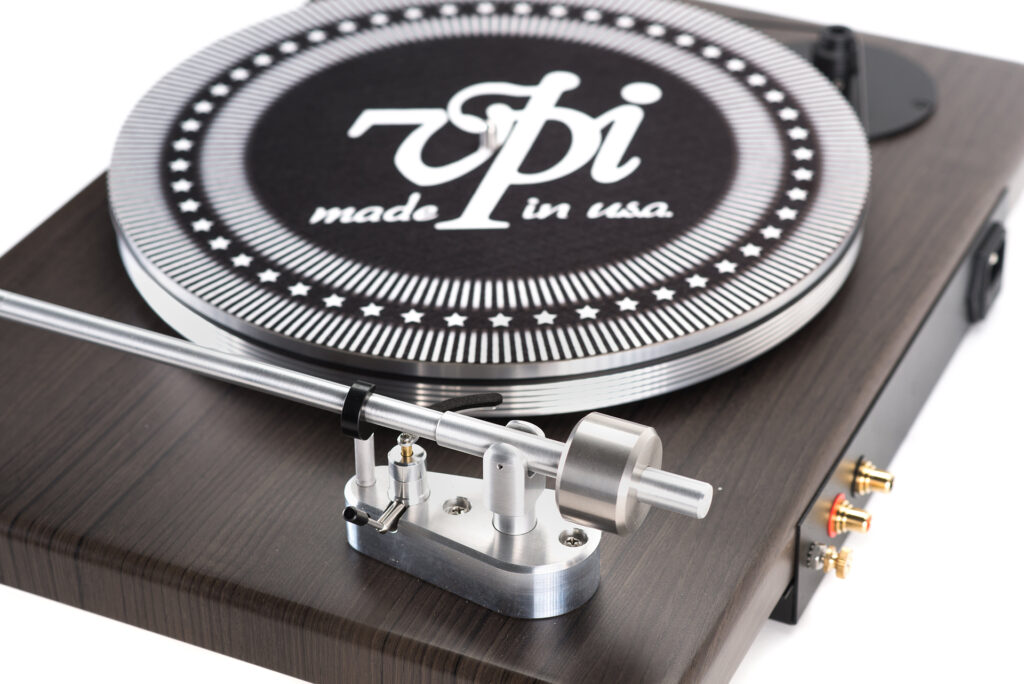
- The styling of the Cliffwood really stands out. My first impression, once I had the VPI Cliffwood put together and hooked up, was just how good it looked. The vinyl-wrapped MDF chassis looks and even feels like real wood, instead of the wood veneer that we typically see on turntables.
- VPI gets the finer points of a turntable right. One of the things I loved about using this turntable is that it just has an easy-to-use feel. When you turn it on, it is just a simple button that is on the top of the table. There isn’t a switch hidden under the chassis. When you put the needle down, the drop is minimal, instead of what can be close to an inch with other turntables at this price point.
- The VPI Cliffwood was super easy to set up. One of the things I find with setting up turntables is that sometimes they have many small pieces to set up and move around. Admittedly. this can create some anxiety about the possibility of missing something when you’re putting it together. The Cliffwood was very different in that way. I think I had it set up in less than five steps, and I didn’t have any concerns that I had lost a part or that I might have done something wrong.
- There was no audible sound when the turntable was on. It isn’t uncommon for there to be some mechanical noise when a turntable is running, but I wasn’t able to hear any sound from the Cliffwood while it was running from the motor or the table turning.
- VPI uses a standard power cord for the Cliffwood. To some, this might seem like an odd item to call out, but the use of a standard power cable allows you to upgrade the power cord if you wish. The other turntables I have had all had a non-standard power cord, which wouldn’t allow you that option, at least not easily.
Why Should You Care About the VPI Cliffwood Turntable?
The VPI Cliffwood will be a solid fit for an audiophile who is looking to upgrade from an entry-level turntable to something that not just has a better sound, but also has more style. While the price of this turntable is probably three times greater than what many entry-level turntables sell for, this is an item that is likely to stay in your setup for much longer, with its solid build that should last many years, and the upgrade paths that will allow you to make more incremental updates without having to go searching for a whole new component.
Some Things You Might Not Like About the VPI Cliffwood Turntable
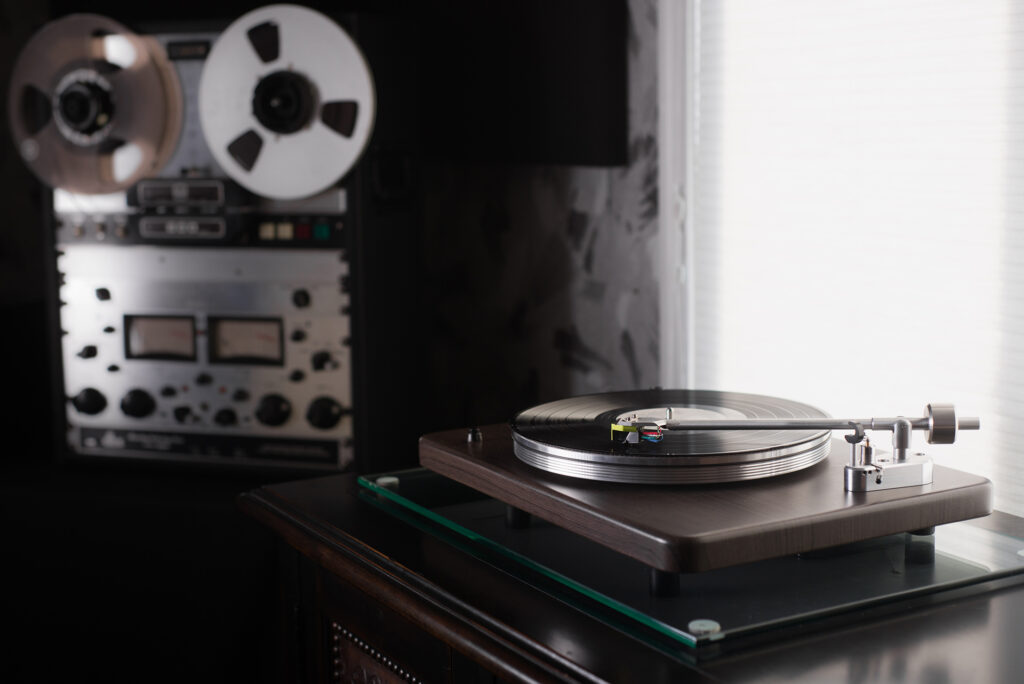
• A dust cover isn’t included. For some people, this will be a real concern. You are allowing all the natural dust that exists in your house to fall onto the platter, which is often felt, and that dust is getting applied to your vinyl. I regularly clean my vinyl, so this wasn’t a big issue for me, I found that I liked the visual difference, and I didn’t miss having to move the dust cover around when I was changing the side of the record or putting the record on/taking it off.
• To go from 45 RPM to 33 RPM, you need to adjust the band. I expect for most people this won’t be much of an issue, but if you have 45 RPM vinyl, you will find yourself having to move the rubber band up and down the pulley to change speeds.
Listening to the VPI Cliffwood Turntable Amplifier …
I tested the VPI Cliffwood turntable with the Schiit Skoll F phonostage, the SPL Elektor preamplifier, and the Anthem MCA 225 Gen 2 amplifier. The Cliffwood was connected to the Skoll using Wireworld Oasis 10 interconnect cable, Wireworld Oasis 10 balanced XLR cables to connect the phonostage to the preamp, and the preamplifier to the amplifier. All of the tracks were done with side-by-side comparisons to the Pro-Ject X1 B I used as a reference.
When testing headphone amplifiers, one of the tracks I enjoy playing is “Roundabout” from Yes’ album Fragile. If you’re not familiar with this track, in my opinion, it represents legendary bassist Chris Squire at his best. The bassline on this track is quite catchy and shows off his immense skill. When listening to this track with the Cliffwood in the signal chain, the track felt very laid back in comparison to my reference Pro-Ject turntable. I found the Cliffwood to have slightly more detail throughout this epic, eight-and-a-half-minute track. It was overall enjoyable and there was a definite difference in sound between the two turntables and their cartridges.
Another track that is great for testing out turntables is John Coltrane’s “Love Supreme, Pt. 1: Acknowledgement” from his 1965 album Love Supreme. This record represents Coltrane’s more spiritual side. On this seven-and-a-half-minute track, you get a little bit of everything from Coltrane and his backing band. When it was played on the VPI Cliffwood, I was able to easily pick out all the details from McCoy Tyner’s piano and Jimmy Garrison’s bass, not to mention that the power of Coltrane’s saxophone was ever-present throughout the track. However, again, it was a little more laid-back then it was when with the Pro-Ject turntable.
The last track I used was “ATWA” by System of a Down’s 2001 album Toxicity. This track reminds me just how different the music scene was in 2001. Toxicity launched at number one on the charts, which is something that is very difficult to imagine nearly 25 years later. If you’re not familiar with this record, it is thought of as a hard rock/heavy metal album, but it is full of dynamics and that makes a track like “ATWA” ideal for test purposes. The VPI Cliffwood didn’t disappoint. The track opens with Serj Tankian’s vocals over the guitar, with the harmonies of Daron Malakian. Each time you hit the chorus, the track goes from slow and simple to fast and heavy. The Cliffwood was able to move with this and the dynamics of the track came through wonderfully.
Will the VPI Cliffwood Turntable Hold Its Value?
It doesn’t look like there have been a lot of VPI Cliffwoods sold on the used market yet, which is a good sign. The ones I have seen are going for more than 50 percent of retail price, without including the cartridge. So, I would say yes, it is likely to hold its value for as long as the playing of vinyl records remains in vogue. This is a well-built turntable, and with its minimal setup, it should be an item that you can ship without having to worry too much about damage.
What is the Competition for VPI Cliffwood Turntable?
The Technics SL-1500C ($1,599) is a reasonable contender if you’re looking for a turntable with more features. The Sl-1500C comes equipped with an Ortofon 2M red cartridge and is a semi-automated turntable. “Semi-automated” in this context means that, at the end of the side, the tonearm will take itself off the record. This turntable also features an onboard phono-preamp, but I cannot imagine that many people who are shopping in this price range are using onboard phono preamplifiers.
You can also consider the Pro-Ject XA B ($1,649), another turntable that is well worth your consideration. It features the Pick it PRO balanced MM cartridge, and is designed to be balanced. I had reviewed this turntable earlier in the year and really enjoyed it, not just for its sound, but also for its clear acrylic look. It is more expensive, and larger in size, but it is certainly something I would recommend that you compare with the Cliffwood.
If you’re looking for an North American alternative, the MoFi Ultradeck ($1,650) is worth checking out. The price points can be variable with the Ultradeck, as you can purchase it with either no cartridge, or one of three other cartridge options that MoFi offers. My esteemed colleague Paul Wilson reviewed this turntable last year, and praised its dynamics and presentation.
Final Thoughts on the VPI Cliffwood Turntable …
The VPI Cliffwood was a delight to have in my home while I had it. I enjoyed not just the sound it helped reproduce, but also the visual aesthetic that it provided for my music room. I believe that this turntable is an ideal stepping-stone for folks who are able to shop in the $1,500 price range. Alone, it has a great sound, but the fact that it also allows its owners upgrade paths through things like the power cable, instead of only more standard items like the cartridge, is ideal and really adds to the immense value that this turntable brings to the market. The only thing I have left to do is decide if I am willing to send it back or not.




That yellow/green cartridge looks nothing like the current Shirley on VPI’s website. Is it a prototype? It looks like a Grado Green with an improved top drilled for mounting screws. It should be better than the current Shirley.
Hi Mark. I am not certain which cartridge VPI is using in that photo. The unit that was shipped to me, and this Cliffwood was reviewed with, was the Shirley.