
 By
By It was some time ago that I was able to demonstrate that it is entirely possible to capture the essence of loving music through a $500 audiophile system (read the article). The “TL;DR” of this article is simple: Synergy and careful selection of high-value components can go a very long way toward achieving your audio goals on a strict budget. Has there been further progress in the entry-level audiophile arena in the past couple of years? Fosi Audio seems to think so, and they are tossing their hat in the ring with the ZA3 amplifier.
As with many other entry-level audio pieces, there is a hardline pitch from Fosi as to why this $149 power amplifier is the next must-have piece and, despite its gorgeous looks, which are typically found adorning gear that costs 100 times the ZA3’s price tag (with optional 48-volt power supply), it is still an entry-level amplifier. Fosi has made some serious inroads toward building their strong reputation in the affordable audiophile world, so I think it is time we find out whether the Fosi Audio ZA3 is all show and no go, or both all show and all go.
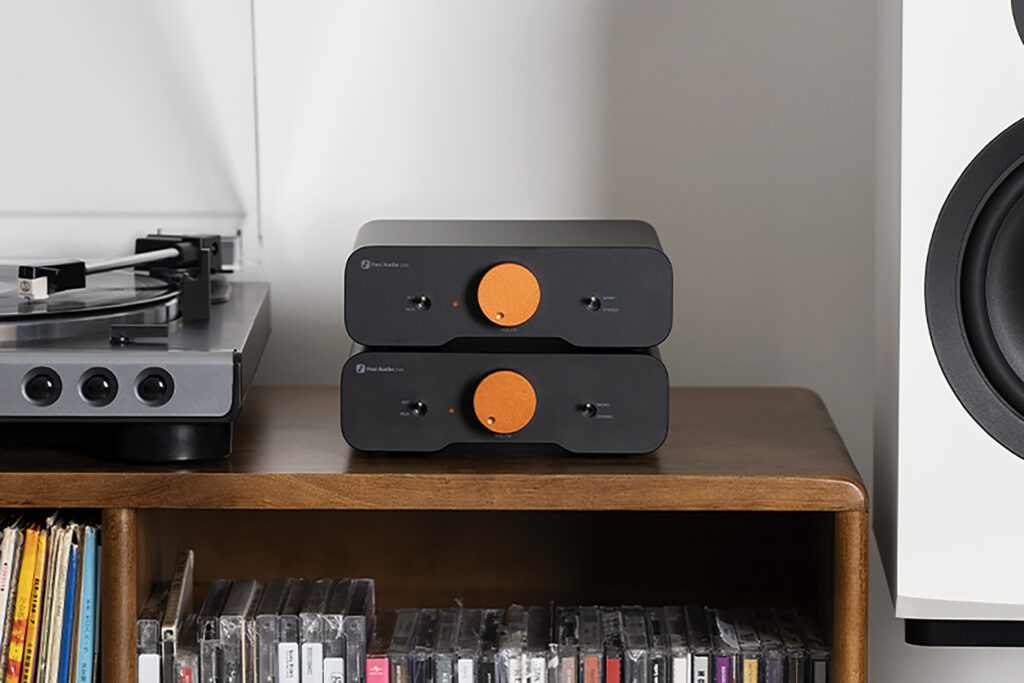
What Makes the ZA3 Power Amplifier So Special?
- The Fosi ZA3 packs some serious, high-quality technical execution. There are manufacturers of electronic components that have earned a reputation as the best. The ZA3 is built with these components, which offer tighter tolerances, lower noise, more improved reliability, and more quality sonic performance than most in their entry level category. Components for the ZA3 are sourced worldwide from proven performers, such as Wema, Sumida, ELNA, NCC, and Texas Instruments. These names may not mean much to someone just embarking on their music-loving journey, but they are akin to saying that Porsche, Ferrari, Lamborghini, and McLaren have teamed up to make high-performance components for Kia’s next entry-level car. Many times, these branded components are only saved for oligarch audio pieces or audio jewelry, and I have a suspicion the performance of these components is going to be super-relevant when we get to listening.
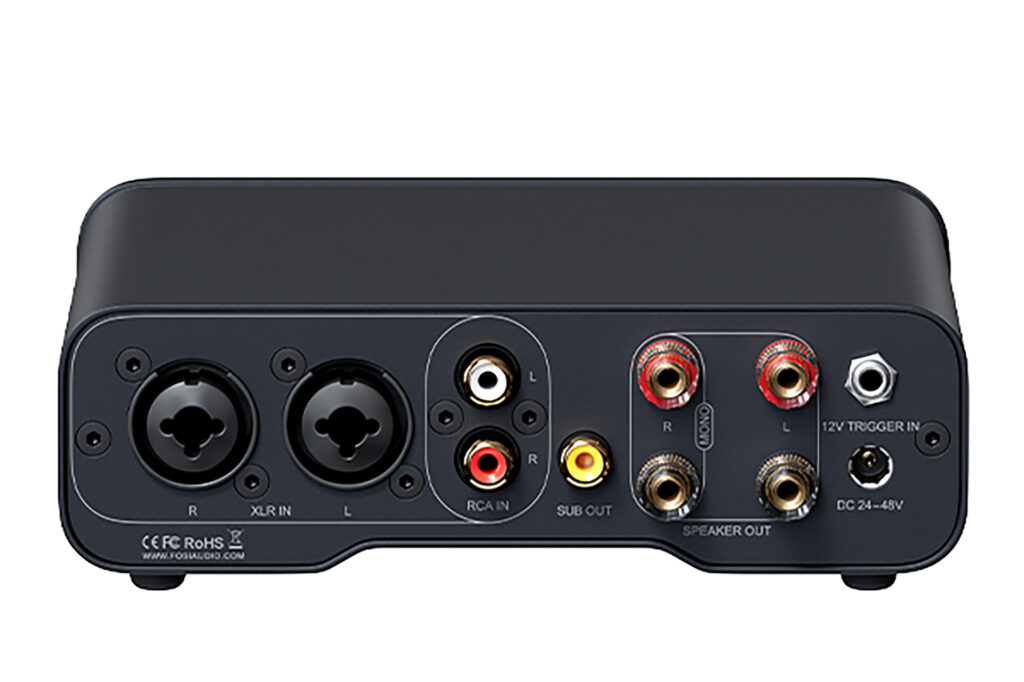
- The Fosi ZA3 is a balanced amplifier. Balanced amplifiers amplify both the positive and negative aspects of the sound waves separately. Doing so allows a balanced amplifier to take advantage of the extremely low noise born from the age-old technology called Common Mode Rejection. My $30,000 (at discount) Bricasti Design M30 amplifiers (read the review) utilize this same build topography. Balanced technology is more expensive, requiring more components, since there are two signal paths per audio channel instead of one. This means that, in order to reap the full benefits of the ZA3, the balanced XLR connections are the way to go.
- The Fosi Audio ZA3 features a logarithmic potentiometer. Potentiometer, sheesh, what a fancy name for the “volume control.” However, the logarithmic part is interesting and utilized in much more expensive dedicated preamplifiers, such as the Parasound Halo P6 preamplifier (read the review) I had the pleasure of hearing. The logarithmic potentiometer allows for finer adjustment of the volume through the most sensitive ranges of listening to finetune the ZA3 to listening-level perfection.
- The op amps in the ZA3 are swappable. Op amps are the frontline workhorses of solid-state electronics, even though transistors get all the glory. Geeky tweakers sometimes like to change out op amps for different brands that have subtle but noticeable effects on the overall sound. Swapping op amps is a level of tuning that resembles tube rolling in vacuum tube amplifiers. While op amp swaps can take serious surgery in most amplifiers, Fosi encourages the behavior, and has made it simple in the ZA3 to customize the sound exactly as you wish. Fosi has made it possible to swap op amps in the XLR, RCA, and subwoofer circuits. For those of you who are tweak-curious, the Fosi ZA3 operates under 50 volts, which means OSHA considers playing with its electrical innards a safe bet.
- The Fosi Audio ZA3 has a dedicated subwoofer out, a very nice-to-have feature that budget audio companies often leave out.
- The Fosi Audio ZA3 can be used in both mono and stereo modes. I like this feature in budget audiophile gear. Simply put: You can start your budget-friendly audiophile journey for $149 and, for an additional $149, add another ZA3, which means you are now rocking dual mono amplifiers. Dual mono amplifiers mean double the power and open new worlds of listening possibilities with improved power capability for larger loudspeakers.
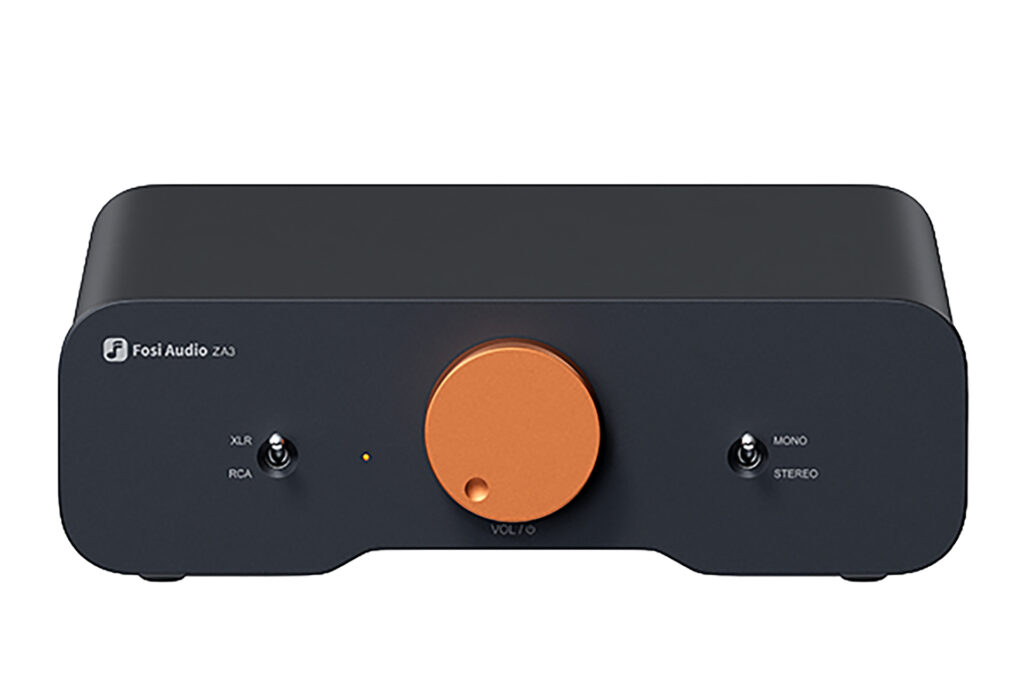
- The Fosi ZA3 is a compact but handsome power amp. The Fosi ZA3’s compact size, which is not much larger than your favorite sandwich, is at home in both a dedicate audiophile system and on a desktop. Even cooler is that the ZA3’s functional aluminum chassis adds a rich feel while keeping heat away from its interior components.
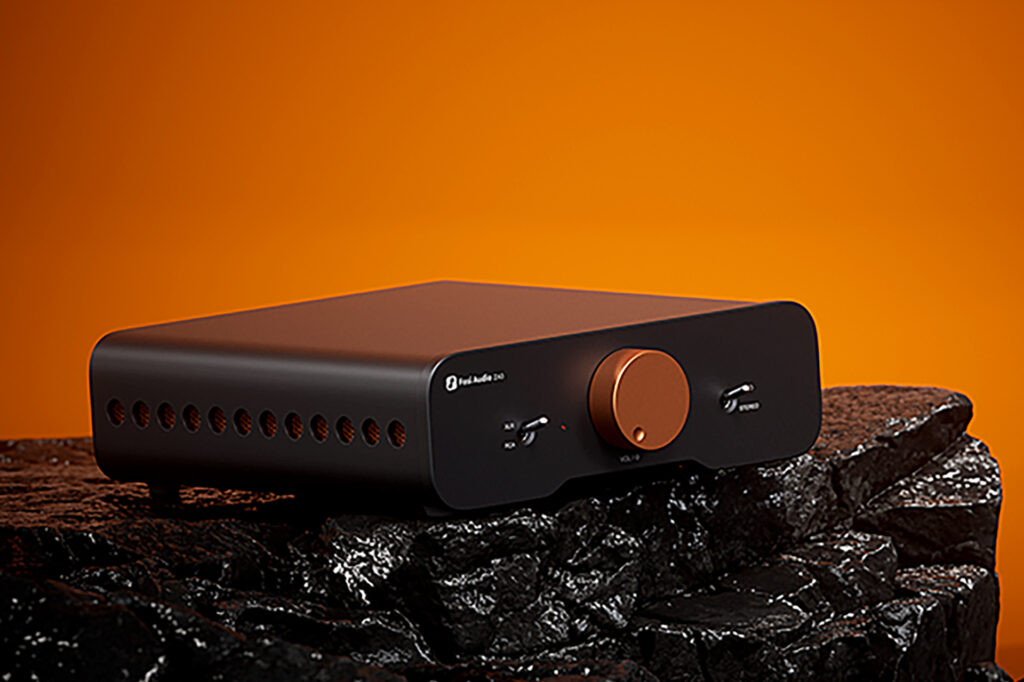
Why Should You Care About the Fosi Audio ZA3 Amplifier?
There are plenty of metaphorical fish in the sea when it comes to entry-level audiophile amplifiers. Fosi understands that, in these competitive waters, not moving means certain death. In this spirit, the ZA3 is an evolution of Fosi’s renowned V3 amplifier. Although the Fosi ZA3 is not simply a mundane next-gen improvement over the V3 – it is, rather, an evolution of the V3, skillfully curated from the feedback received from customers of how the V3’s next of kin should perform. For budget components, where it counts which corners are cut, Fosi has not cut anywhere the audio signal is concerned, which makes the Fosi ZA3 a very high-fidelity amplifier. Year over year, many audiophiles talk about simplicity as one of the kingpins (along with synergy and room) of great sound. The ZA3 has taken this to heart by focusing on performance over features. Fosi backs the ZA3 with a two-year warranty and the company is known for great customer service, which is seriously lacking in much of the fodder sold through Amazon or third-party distributors. What is left when one zooms out to the big picture of owning a Fosi Audio ZA3 is the saying, “right where right counts.”
Some Things You Might Not Like About the Fosi Audio ZA3 Amplifier
- The published power ratings on the Fosi Audio ZA3 are all over the place. It is not entirely Fosi’s fault that the ZA3 is rated anywhere from 300 watts by two channels maximum power, to 155 watts by two channels at four ohms, to 180 watts by two channels at 4 ohms – all on the same product page. There are no real standards for amplifier output and not all watts are created equally. What seems to be consistent is that these ratings are all at one-kilohertz 10-percent total harmonic distortion (THD). This nugget of data means the rated power does not cover the ZA3’s full working audible frequency range, and 10-percent THD is a very high distortion rating, which only happens when amplifiers are severely overdriven.
A keen eye can peer through the veil and see the other published specifications, such as a very good 106 dB signal to noise ratio and 0.006 percent nominal THD, mean more than the inconsistent ratings around power. For $149, the ZA3 comes with a 48-volt, five-amp power supply, and some math that the late George Simon Ohm figured out centuries ago tells me the maximum power the Fosi Audio ZA3 will see (assuming no losses) will be 240 watts. For good measure, let us knock that down by 20 percent for losses, normal electrical consumption, heat, etc. This leaves us with about 90 watts per channel of honest to goodness power that can make it to one’s loudspeakers. To my ears, this calculation seems about right, as I found the ZA3 to sonically perform like a very high-quality 75-to-80-watt amplifier.
- The pint-sized binding posts on the Fosi Audio ZA3 are a giant-sized pain. I highly recommend using banana plugs for your loudspeaker cables when connecting them to the ZA3. There is not much room for spades or bare wire.
- There is no remote control for the Fosi Audio ZA3. No remote is not much of an issue on a desktop. When used in a listening space, it can be a bit of a pain to constantly get up and down, adjusting to each audio engineer’s opinion of what gain versus dynamic range a music recording should have. A remote is not the worst thing to leave out to keep the Fosi ZA3 high-performance and affordable, but it is annoying nonetheless.
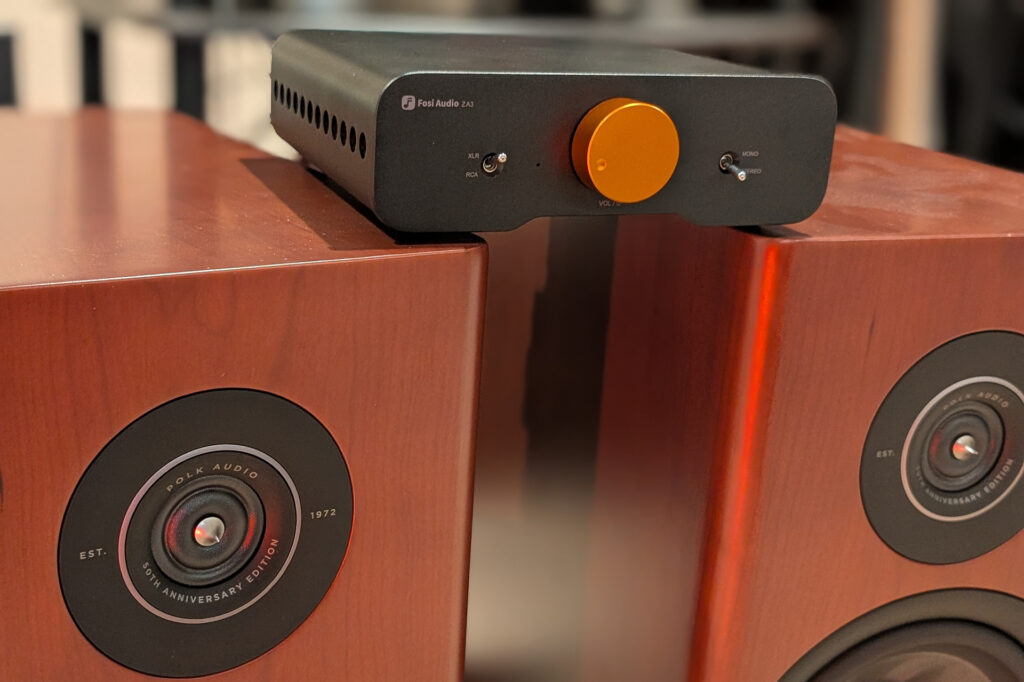
Listening to the Fosi Audio ZA3…
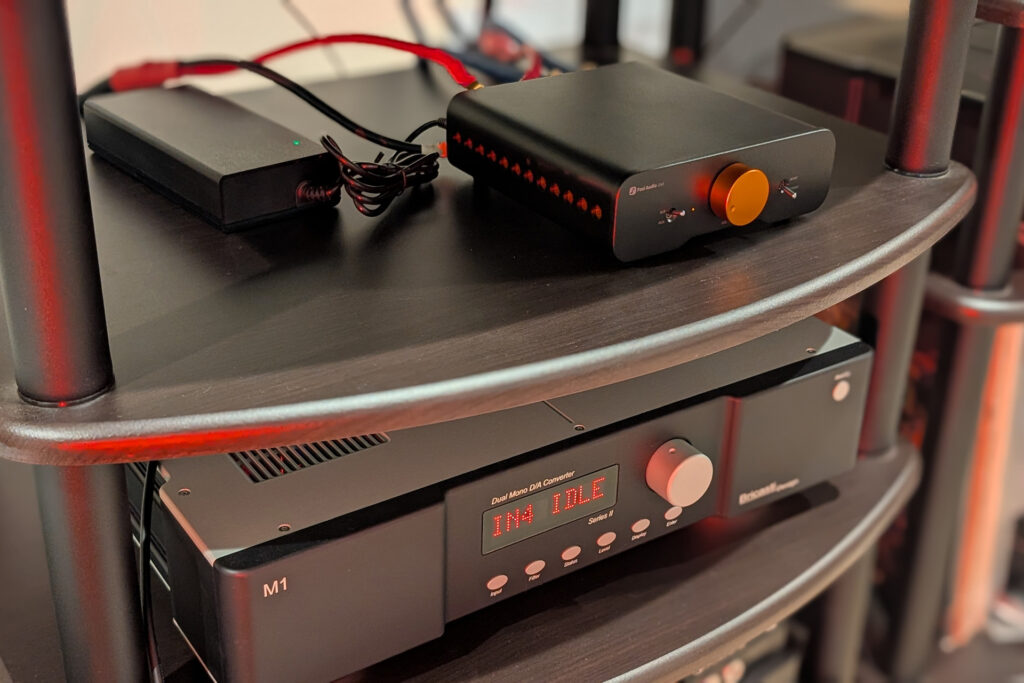
For listening evaluations, I primarily use my Polk Audio Reserve 200 Anniversary Edition loudspeakers (read my review). In order to change as few variables as possible, I used my Bricasti Design M1S2 DAC (read the review) running Qobuz as my primary source. A smattering of other components was used, but the focus and the overall picture of the musical discussion reflect the consistencies found in the ZA3’s performance.
Staring small, a recent musical favorite my daughter introduced me to is a singer/songwriter by the name of Noah Kahan. The track “Growing Sideways” off the album Stick Season is a melancholy but meaningful track that features Kahan’s tenor-esque vocals over well-recorded guitar and ambient background vocal effects. The Fosi Audio ZA3’s background is jet black (low noise), allowing a lot more music to come forward than one would expect for $149. Though a very quiet background combined with a highly focused soundstage is a hallmark of balanced amplifiers. Kahan’s voice was rich in texture and full of body. The guitar had good body, detail, harmonic balance, and each note had a distinct attack to it that again made me forget the Fosi ZA3 is only $149. The background vocals and ambience were gigantic and wall-to-wall in the soundstage, which is not something I often hear in any budget audio amplifier. I could already hear that the ZA3 had the stuff of a true high-fidelity piece, since its ability to translate the meaning behind the music was clearly apparent. I needed something a little more complex to ensure this integrity was going to be consistent.
I enjoy having a diverse group of friends. Musically speaking, there is a constant flow of different genres that I get to experience from either cultural diversity or raw personality. Heading into the mountains of New Hampshire, tent camping, and hauling every bit of dangerous gear one can imagine in preparation to help clear a spot for a cabin on a 15-acre mountainside, I came across Pagan RIP’s track “You Don’t See the War.” Adorned with heavy guitars, drums, piano, and other instruments found in a dirty Southern country song, “You Don’t See the War” is a complex tune that is recorded surprisingly well. It’s a crank-up piece that hits hard. The ZA3 kept the high-fidelity signatures found in “Growing Sideways,” but added deep, well-controlled bass while maintaining a silky timbre. I did notice, however, a lack of outright dynamic capability in the ZA3. This did not sound flat; it just did not sound north of 150 watts per channel with plenty in reserve. The more I desired to crank up this powerful country piece, the more apparent the dynamics were lagging. Even with the push in volume, ZA3 did not distort, become glaring to my ears, or change its timbre integrity. Pretty impressive for $149.
Guess we can close the listing of the ZA3 with an overly audiophile female jazz vocal track. Why? It’s cool, and I think paired with quality monitors on a desktop or in a small room, the ZA 3 would just sound fantastic with acoustic instruments and highly trained vocals. “This Town” off Patricia Barber’s album Clique can get your head bobbing with its laid-back but fast-paced beat, established by the upright bass and drums. Barber’s voice is always haunting and dynamic, with piano that easily matches her energy. As I suspected, the ZA3 sorted out all the harmonic richness of this song, while keeping a fantastic soundstage and integrity to the individual instruments. I also enjoyed that the cymbals were well-resolved and lacked the normal sizzle I find in most budget amplifiers. Again, I found myself wanting more in the dynamics department. Compared to much more expensive amplifiers, the piano attack was not as sharp as I am used to. I will stop picking nits, though. At the end of the day, the complete musical picture of the Fosi Audio ZA3 is higher-fidelity than its price lets on, and that is what I call value.
Will the Fosi Audio ZA3 Amplifier Hold Its Value?
The ZA3 is $149 in its most expensive form as reviewed. There is just not a large used market/deprecation worry since, at these budget levels, they are practically consumable with no used market. At $149, one can recycle the amp or give it away when done.
What is the Competition for the Fosi Audio ZA3?
In the world of budget audio, Topping is another name often mentioned. The Topping PA3s (buy at Amazon) is a pound-for-pound contender for the ZA3 – right down to its $149 price tag. The PA3s rated power is a significant 65 watts per channel at four ohms, with one percent distortion. This is a more realistic power rating than that of the Fosi ZA3, though Topping uses quarter-inch jacks for the balanced inputs instead of the standard XLR inputs the Fosi has.
For $14 less than the Fosi ZA3, the $135 Dayton Audio DTA-100ST (buy at Amazon) provides a modest 55 watts per channel into four ohms. Dayton’s small amplifiers are known to be the lower end of entry-level, but Dayton always seems to pack interesting features into them that builds a strong value proposition. The DTA-100ST includes Bluetooth connectivity, a variable high-pass filter for tuning in monitors with subwoofers, and a built-in power supply, so there is no need to find a place to hide another box with a cord on it. In my experience with some of the entry-level Dayton offerings, I do not think it will carry the fidelity the Fosi ZA3 has but, in some instances, the sacrifice may be worth it for some to get the additional functionality.
Up the food chain a bit lies an offering from another company known for affordable compact audio. The Audioengine N22 (Gen 2) (buy at Crutchfield) will supply a low-distortion 50 watts per channel, has Bluetooth connectivity, a built-in DAC via a USB-C connection, and provides a quality headphone amplifier section for when you cannot have your music rocking. The Audioengine N22 comes in at $229, but is once again an option if more flexible features are desired. I am unsure, again, that the N22 will have the overall fidelity of the ZA3.
Final Thoughts on the Fosi Audio ZA3 Amplifier …
The $149 Fosi Audio ZA3 amplifier finds its niche as a budget piece that offers some serious high-fidelity sonic quality. Of course, being a budget piece means decisions must be made as to where to leave the ZA3 to prioritize high internal quality components and a gorgeous aesthetic first. For the cut of my jib, the softer dynamic capability and somewhat polite audible demeanor of the ZA3 is okay, because I value the ability of a component to translate the meaning behind the music above all. Pairing the ZA3 with capable loudspeakers and quality source in a desktop system or a small room will yield a tremendous level of musical enjoyment for its meager price. I started this evaluation wondering if there have been advancements over the past couple of years in terms of quality in budget audio equipment, and the Fosi Audio ZA3 is a hard yes that advances the boundaries of what is capable for less than a month’s worth of automobile fuel. Stay home, grab a ZA3, and enjoy.




I wonder if the reason for the limited dynamics at higher levels may be the current limited switching power supplies?
Could be… It’s not always easy at at these budget price points to have it all. The weight of the bass and full lower midrange were nice to help it sound a lot more spendy though.
The ZA3 measures well. The lack of dynamics may be down to the speakers. A comparison of: dual mono vs stereo, alternate speakers & alternate amplifier may have given a fuller picture of the capabilities of the ZA3.