
 By
By I’ve been an audiophile since the mid-1980s. Since that time, I’ve owned more loudspeakers than I can remember, and I’ve listened to several hundred beyond those that I ultimately purchased. I have owned countless passive speakers and a few powered ones. Dome tweeters, Horn tweeters, AMT tweeters, ribbon tweeters, titanium tweeters, soft-dome tweeters, Beryllium tweeters, aluminum tweeters, diamond coated tweeters, and probably something that was touted as Unobtanium tweeters – I’ve owned them or heard them.
With all that said, I haven’t owned and I don’t recall demoing a design that uses two tweeters. In all my years, I’ve never had the chance to hear a Dali loudspeaker. It just so happens that the Dali Opticon 8 Mk II uses a unique design with a hybrid module that incorporates two tweeters. I was really looking forward to reviewing these speakers, and my anticipation was well-rewarded.
What Makes the Dali Opticon 8 MkII So Special?
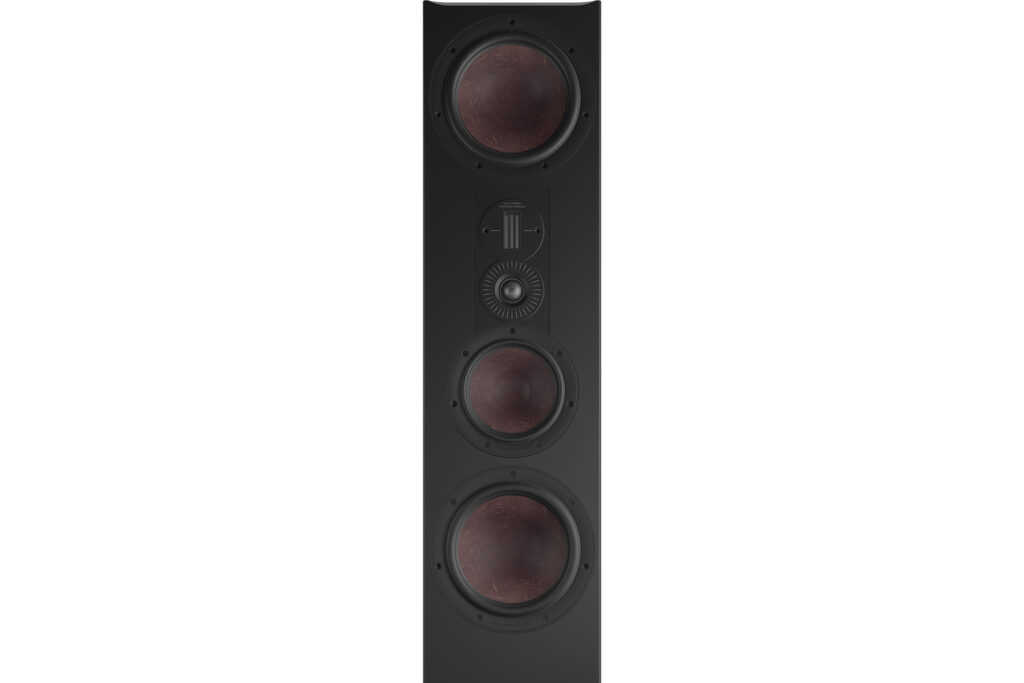
- The Dali Opticon 8 MkII uses a unique two-tweeter hybrid design. I have never owned nor had the chance to review a speaker that incorporated two tweeters in the past. The Dali hybrid tweeter module marries a 29-millimeter soft dome tweeter with a custom 17-by-45-millimeter planar element. The goal is to offer a speaker with wide dispersion. This ultimately should allow for easier placement and a large soundstage.
- The Dali Opticon 8 MkII is proudly built in Denmark. Denmark is widely known for having a long history of building high-quality cabinetry and furniture. The Dali Opticon 8 MkII uses a 25-millimeter-thick front baffle and extra internal bracing to ensure minimal panel resonance. While the Dali Opticon 8 MkII does not share the fancy curved cabinets and high-gloss finishes offered in the speakers further up the Dali product lineup, they clearly are built very solidly, cleanly, and with a quality control that was evident from the minute I unpacked them.
Why Should You Care About the Dali Opticon 8 MkII Loudspeaker?
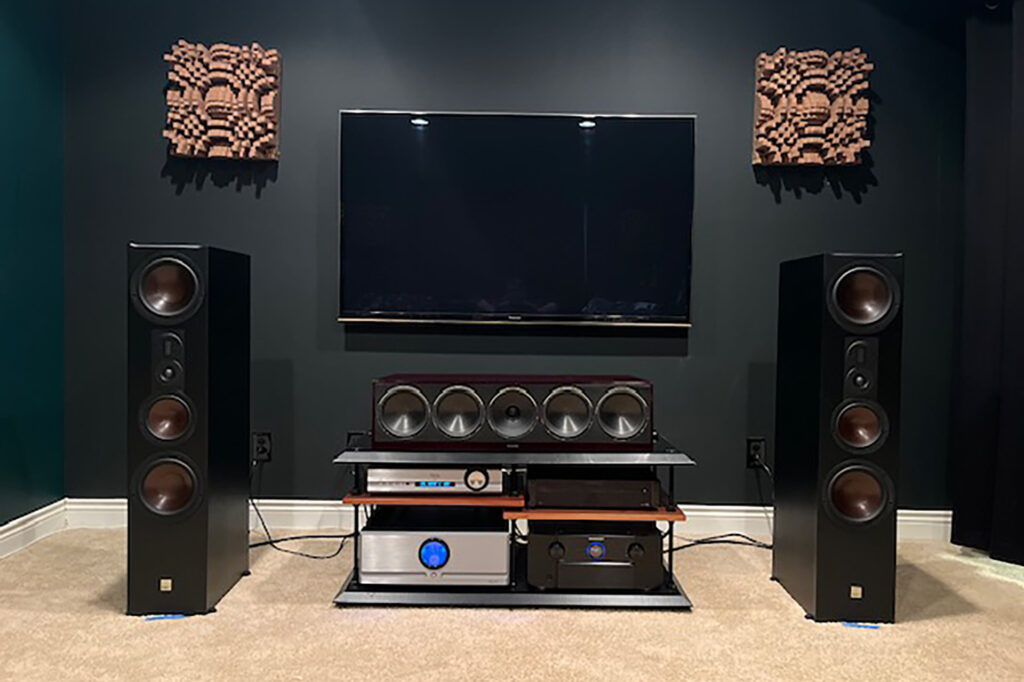
The Dali Opticon 8 MkII is a larger-format loudspeaker that also performs as such. It is an almost 80-pound loudspeaker that stands nearly four feet tall. I’ve heard many loudspeakers of similar size that do not sound big, or at least as big as I would expect. The Dali Opticon 8 MkII uses a heavily-braced cabinet that houses two eight-inch woofers, a six-and-a-half-inch midrange, and their unique hybrid dual tweeter design that promises wide dispersion. They do not disappoint. This speaker is big, sounds big, performs big, and provides a fun listening experience for what I consider to be a very reasonable price.
Some Things You Might Not Like About the Dali Opticon 8 MkII Loudspeaker
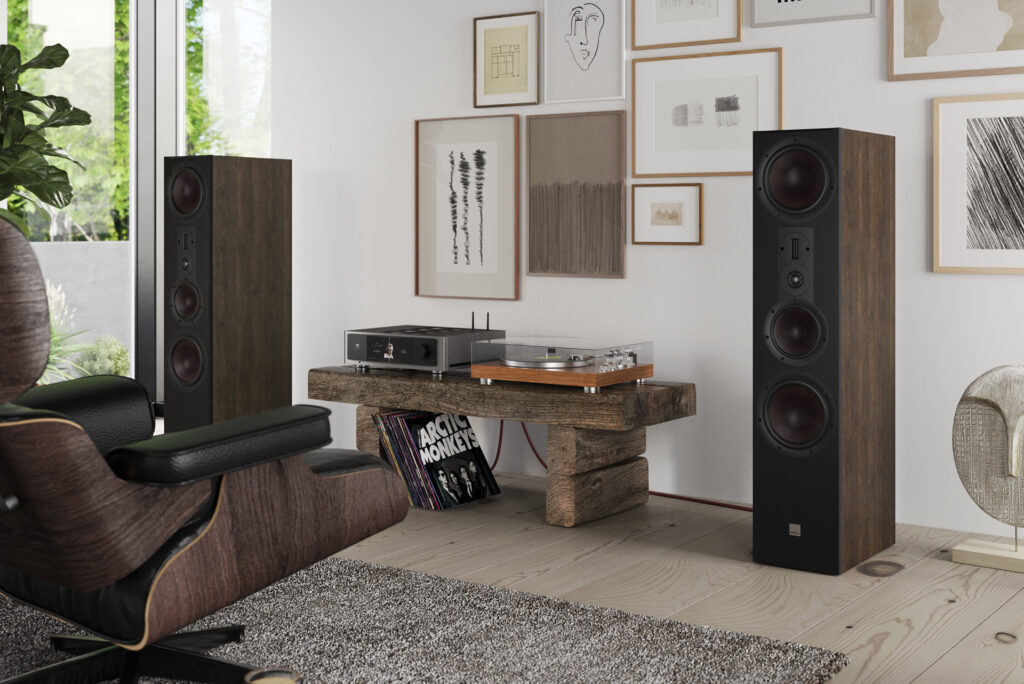
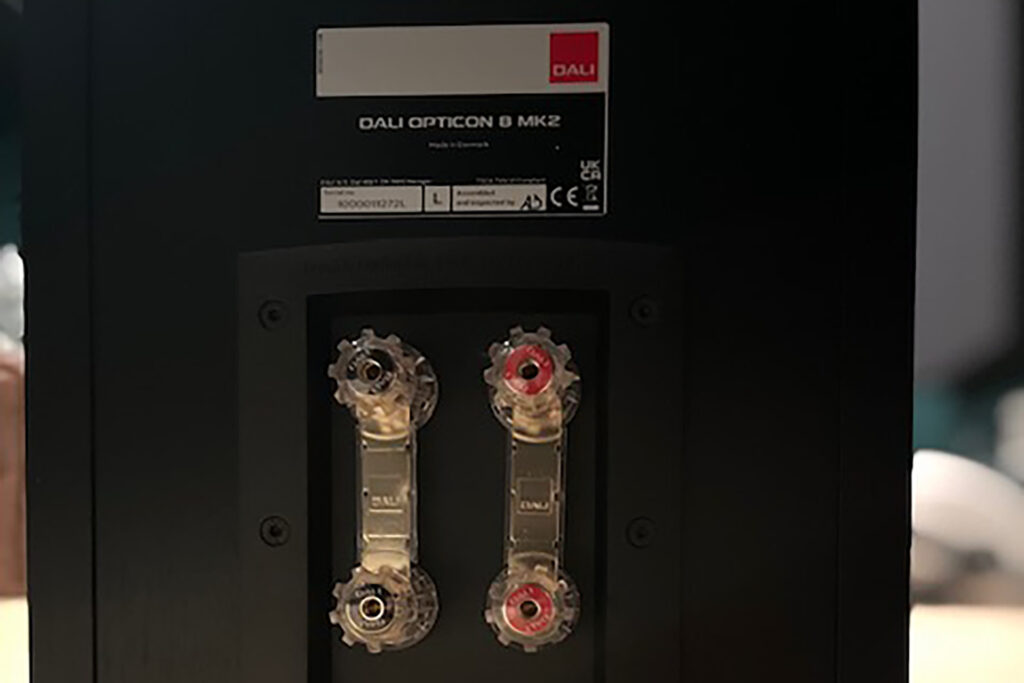
- The Dali Opticon 8 MkII cabinet is built very well. However, it is basic, with limited finish options. Dali offers the Opticon 8 MkII in two finishes: Black Ash, which looks exactly how it sounds – flat black with just a bit of grain – or Tobacco Oak, a darker brown with more of a satin finish. Both finishes are perfectly fine. They won’t offend, but they certainly don’t scream “look at me.” The cabinet is simply a well-executed box and the grille attaches via rubber grommets. You might view them as boring, or as Scandinavian simplicity at its best.
- The Dali Opticon 8 MkII is designed to face be set up “straight ahead,” not toed in. While I do not consider this to be a big deal, some may after toeing in their speakers for years to achieve the optimal listening position. They do exhibit a much different listening experience if you choose to toe them in versus simply facing straight ahead. While I absolutely believe in adjusting your speaker and room set-up to achieve optimal listening, I’ve not experienced a speaker that, in my view, changed its character this much toed in versus being set up straight ahead.
- The Dali Opticon 8 MkII uses a wood fiber woofer. That in itself may not bother you. However, as a result, each and every woofer has its own unique look. Similar to a snowflake, each driver looks different. If you set up and listen with the grilles off, at first glance, your drivers may appear to be scratched. I had more than one person ask me if the woofers were scratched or damaged in transit while these were in my home.
Listening to the Dali Opticon 8 MkII Speakers …
I unpacked the Dali Opticon 8 MkIIs, connected them to my Pass Labs XA 30.8 amplifier (read the review), and set them up exactly in the same position as my reference Paradigm Founder 120H loudspeakers (read the review). One note: before writing this review, I took time to listen to the speakers toed-in with the tweeters set up to cross right behind my ears and straight ahead. When I set them up so the drivers would cross just slightly behind my ears, the treble dominated, even while these speakers can put out prodigious bass. I didn’t find it to be bright, rather there was just a lot of it and they didn’t image the way I had hoped. Placed straight ahead, they were awesome. Instruments imaged spectacularly, spaciously, and filled the room. I moved around a bit between seats, and the sweet spot was a bit larger than usual. The listening impressions below were with the speakers set up straight ahead.
I started my listening with “Thorn in My Pride” from The Southern Harmony and Musical Companion, by The Black Crowes. I found it to be really well-produced with tons going on, yet nothing got lost in the mix. The opening of the song is one I love for reviewing speakers. Rich Robinson was just off to the right of center playing an acoustic guitar. A few seconds in, I heard the cymbal off to the left side of the stage, but it really sounded like it was further back on the stage than the acoustic guitar. Chris Robinson, who was born to sing rock and roll, started singing and that slight rasp that he has at times was right there in the room. There are tons of layers and instruments that are brought in and out of this track, a dueling guitar solo, keyboards, you name it this track has it. Here is what I want to convey about the Dali Opticon 8 MKII and this track – nothing got lost. It did a remarkable job delineating each and every instrument and note, I can’t help but attribute this to the dual tweeters in many instances. Domes and ribbons each have some of their own characteristics, and Dali did a phenomenal job with their crossovers, as they really work as one tweeter, showcasing the best of both worlds.
Since I started my review with music from the early 1990s, I decided to stay there. Next up was “Corduroy” (2011 remaster) off Vitalogy by Pearl Jam. Many audiophiles might not think of Pearl Jam when it comes to tracks for speaker reviews. I like “Corduroy” in particular because it is messy, it is smeared, it really challenges a speaker and a system to separate much of anything throughout the track. The introduction for a few moments reminds me almost of an orchestra warming up. Some distorted picking on a guitar, a little noodling on a bass, a little cymbals and snare drum … and then the bass drum hits and almost explodes into the song. Many speakers struggle to really reproduce that at moderate volumes. At higher volumes they explode into one giant mess. The Dali Opticon MKII really impressed me with the ability to be dynamic at a moderate volume, and then when I listened again at concert levels, it exploded into the track and remained composed. The rest of the track sounded great in its mid-90s distorted, angsty, grungy goodness.
I found myself enjoying the Dali Opticon 8 MK II and its ability to handle tracks that have a lot going on with them. “La Villa Strangiato (An Exercise in Self-Indulgence)” by Rush off of their Hemispheres album (192 kHz remastered) clearly fit the bill. I thoroughly enjoyed listening to this track for what was likely the 2113th and 2114th time through the Dalis. From the very subtle keyboards and cymbal/snare work at the intro of the track, building into about the 2:30 mark, where the song really gets going, the Dali Opticon 8 MKII did an excellent job conveying the dynamics of the track. The track sounded small and centered at times and massive and huge at others. With the constant changes from small and centered to massive and huge, the Dalis simply did a great job of space and scale. You could absolutely hear the distortion and bit of reverb through Alex Lifeson’s guitar, and when he and Geddy Lee locked in throughout their synched solo (one of the many in the track), you could almost envision Lee’s fingers slappin’ da bass. This was all occurring while Neal Peart was doing his thing on the drum kit. It can be very challenging for a speaker to allow each and every instrument and part to be heard. The Dali Opticon 8 MKII did excellent work with Rush’s exercise in self-indulgence.
Will the Dali Opticon 8 MkII Loudspeakers Hold Their Value?
Dali is a well-known loudspeaker manufacturer in Europe and is continuously expanding its footprint in North America. The loudspeakers are available online from well-known retailers like Crutchfield. I have also seen them offered recently with some incredible discounts. Make no mistake: at the price I have recently seen them listed at, they are an incredible value, one of the best I have ever seen for new speakers in box, given their performance.
What is the Competition for the Dali Opticon 8 MkII Loudspeakers?
The Bowers & Wilkins 702 S3 Signature (read the review) come in at $9,000 per pair. So, they are more expensive than the Dali Opticon 8 MKIIs. The “non-signature” version of the Bowers & Wilkins 702 S3 is priced at $7,900. Bowers & Wilkins is one of the oldest and most widely known audiophile speaker manufacturers in the business. It provides you with a great-looking package with Bowers & Wilkins’ well-known decoupled tweeter design. I’ve often found the tweeter in Bowers & Wilkins to be the star of the show.
The JBL HDI-3800 (buy at Crutchfield) is priced at $6,050 per pair, and is a similar size and weight to the Dali Opticon 8 MKII. They will, however, provide you with a much different sound signature, given that they use a one-inch horn-loaded high-frequency compression driver to handle the top end. They are also loaded up with three eight-inch drivers and, like the Dalis, come in around 80 pounds.
Jerry Del Colliano recently reviewed the SVS Ultra Evolution Pinnacle Loudspeakers and really enjoyed them. He also found them to be an incredible value at $5,000 per pair. Given their full range output, larger size, and ability to deliver the goods in the nether regions, I believe they are also a direct competitor to the Dali Opticon 8 MKII. Both speakers use more of an MTM design style, with the tweeters at your ear level when seated. However, the tweeter designs are drastically different. The SVS uses a diamond-coated aluminum tweeter. The Dali uses its two-tweeter design with both soft dome and planar tweeters delivering the high end. If it matters to you, the SVS is built in China, the Dali in Denmark. Both unfortunately are subject to pointless tariffs that are damaging your audiophile hobby buying power at the moment.
Final Thoughts on the Dali Opticon 8 MkII Loudspeaker …
I really liked the Dali Opticon 8 MkII loudspeaker. This is a flat-out fun loudspeaker. If you are a fan of dynamics, a large soundstage, deep bass that you can feel at times with a sound that is not remotely veiled, I think you will really like it also. I tend to listen fairly loud. What I found interesting with the Dali Opticon 8 MkII is that it maintained its character sound when I started and continued turning the volume down. The Dali Opticon 8 MkII remained a very fun speaker to listen to at what I consider more moderate volumes. The bass did not drop off, and I could still easily hear details at these lower volumes. It is listed with an 88.5 dB efficiency, which isn’t anything that stands out as being crazy efficient or inefficient, yet it reminded me of some of the more efficient and dynamic speakers I have owned over the years. The soundstage they present has solid depth but really shines in placing instruments and vocals on the soundstage from side to side, where they should be. The soundstage itself is large but not exaggerated. The Dali Opticon 8 MkII is a very impressive loudspeaker, given its $6,000 per pair msrp.
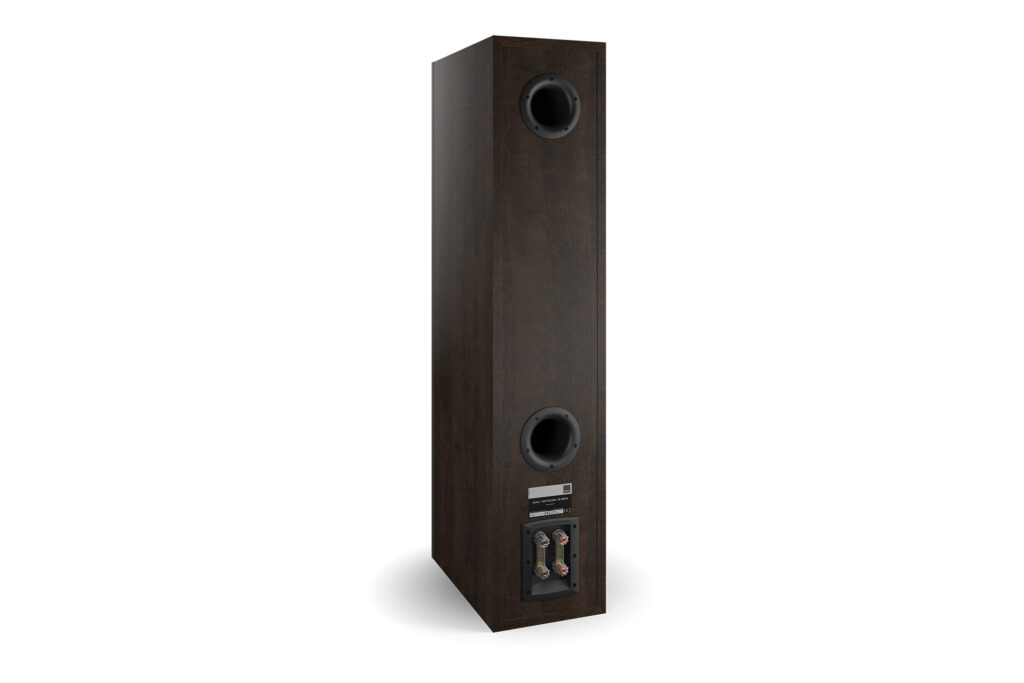
I’m going to draw a parallel to an automobile here. The Ford Mustang has been available for years in many configurations: Shelby GT 500, Shelby GT350, GT with the V8 and leather, a V6 loaded up, or stripped, or even a four-banger, and a whole assortment of others. But for the enthusiast without the big budget, you can order a GT with cloth, the V8, and the big brakes and maybe a suspension upgrade. It gives you 90 percent of the performance of the top-end models without the bells and whistles but at an attainable price. That is exactly what I thought about every time I listened to these speakers. The cabinet is vinyl-wrapped and is a basic box (though well-braced and inert). The colors are flat black, or essentially flat brown. The grilles are fine; the feet and spikes are functional. Hit play, though, and damn, it’s clear the drivers, tweeters, crossovers and well-braced cabinets perform really well. To me, that is what that speaker represents. It’s a “sleeper.” It very much performs like a speaker costing two to three times as much. Every once in awhile a speaker comes along that is a flat-out bargain. This is one of them. Well done, Dali.




I re read this review a few times and could not find the list price for the Dali speakers stated anywhere in the review.
$6000
Not sure how this didn’t get into the field in WordPress but I will fix now.
Thanks for the excellent question. Sorry for the oversights – Jerry
Really liked the review Doug. Never heard of Dali before reading it and am intrigued to listen for myself. Our musical tastes are aligned and the potential pun about Rush, think 2112, made me laugh. Keep up the good work!
Doug solid review! I think if you can look past the utilitarian aesthetic, you’re getting a world-class, Danish-made loudspeaker that offers deep, tactile bass and a silky high end. It is a flat-out bargain for the enthusiast who values sound quality above all else. Dali Opticon 8 are a sleeper powerhouse! Listening to Black Crowes, Zeppelin, Chains, PJ, SRV, Metallica, and some Tool, and pair these up w/ solid amp = rock and roll heaven!