
 By
By Every so often, a new company comes along and reignites a spark in the audiophile hobby, reminding us that it’s perfectly fine to challenge the status quo. Too often, speakers in the under-$1,000 per pair range look and sound more alike than different, offering only minor tweaks to familiar formulas. This price point is often considered the threshold between budget-oriented and higher-end, and attracts new and budget-conscious audiophiles alike, but rarely does it bring something truly revolutionary to the table.
Enter Chesky Audio. Founded by 18-year-old college student Lucca Chesky, the company recently made its debut with the LC1 bookshelf monitors. Instead of employing the usual MDF box with a glossy veneer, Chesky leaned into 3D printing technology to create something entirely different.The result is a pair of compact, affordable bookshelf monitors that don’t just stand out visually, but also have the engineering chops to compete with bigger names in this crowded section.
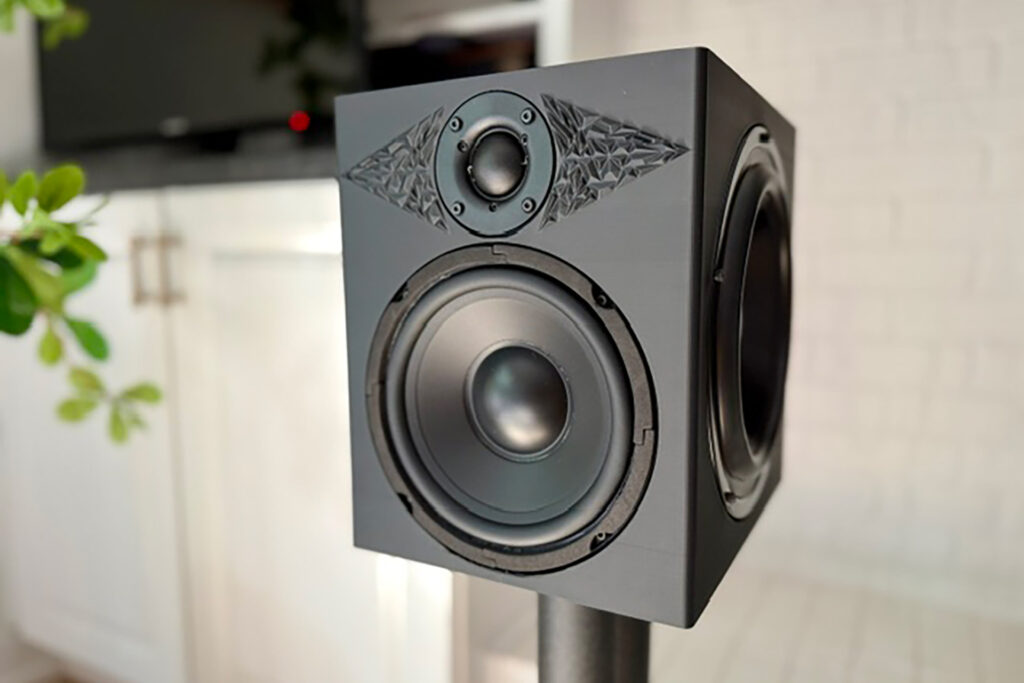
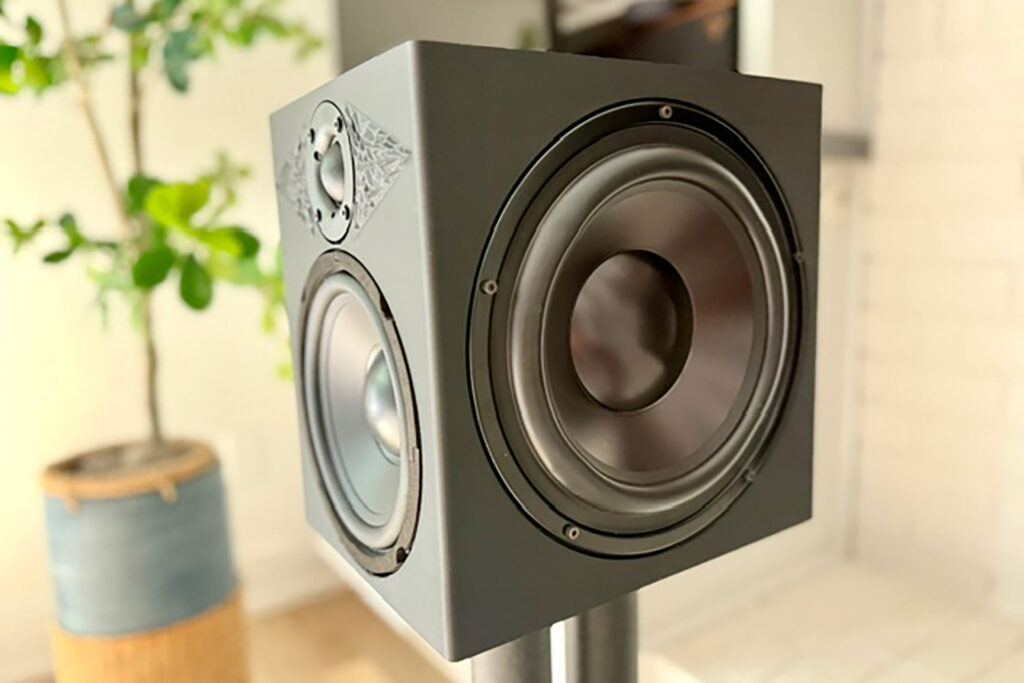
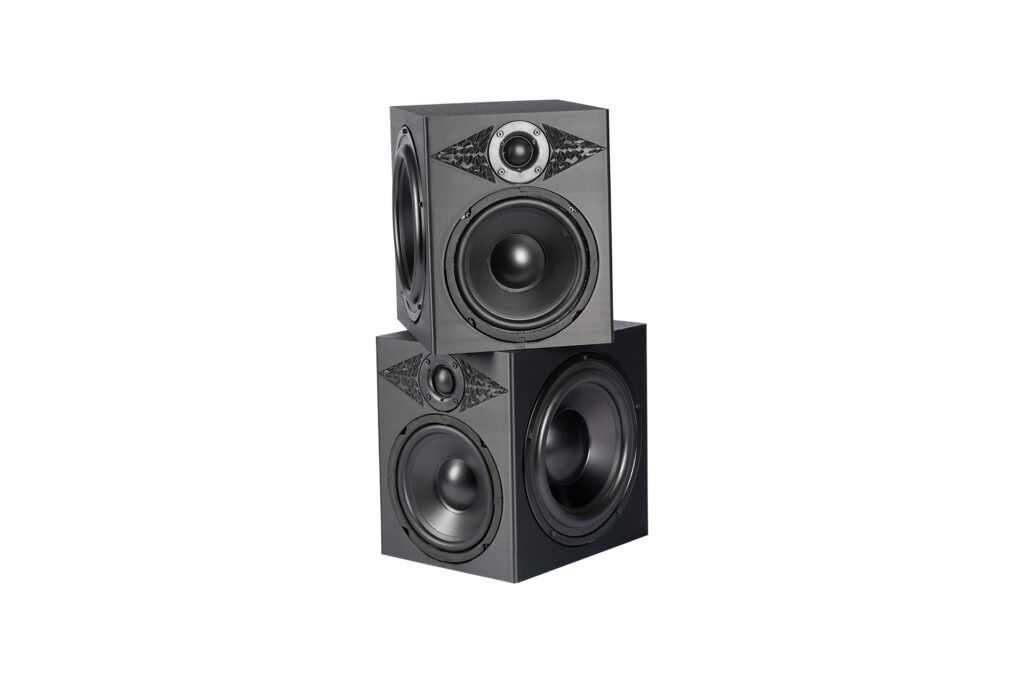
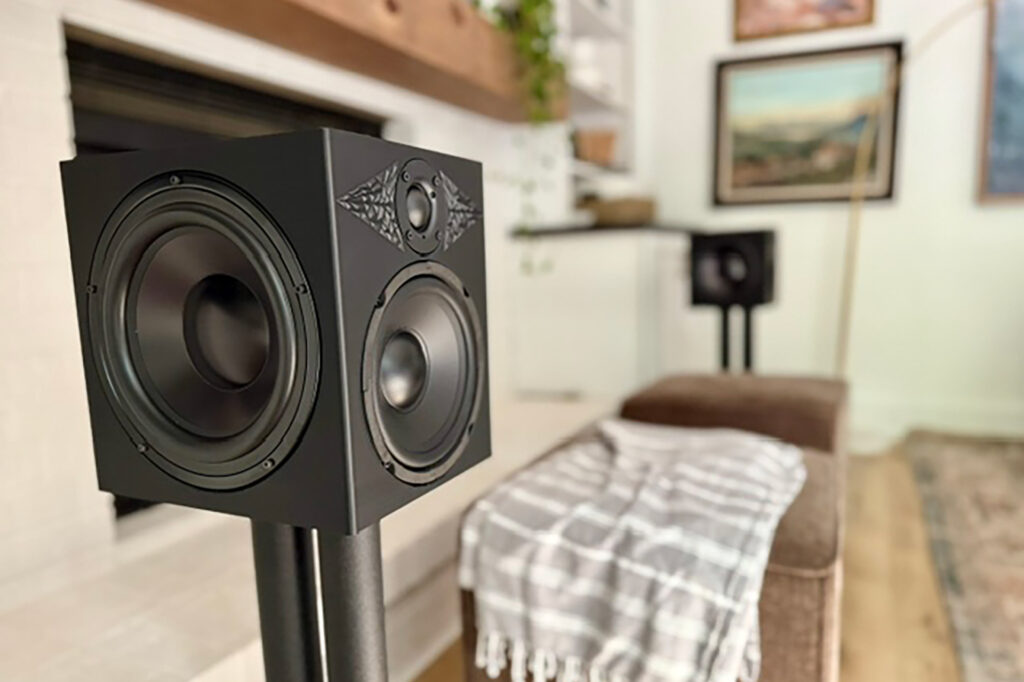
The Chesky LC1 monitors are far from traditional in many senses of the word, and that is evident as soon as they are removed from their neatly packed boxes. At 18 pounds each, the LC1s are hefty and well built, despite their modest size (10 inches deep, eight inches wide, and 10 inches tall), and employ a two-way design, coupled with dual side-mounted eight-inch passive radiators. The one-inch dome tweeter is adorned with an attractive, ornate pattern that not only looks cool but also serves as a means of tessellation diffraction control. It’s small but thoughtful design features like this that make these speakers quite unique and exciting.
There’s a lot to like about the Chesky Audio LC1s. But at just under $1,000 per pair, the real question is whether they can convince audiophiles to take a chance on a total unknown instead of a trusted, time-tested brand for around the same cost. Let’s answer this question and more in the review ahead …
What Makes the Chesky Audio LC1 Bookshelf Monitor speakers So Special?
- The Chesky Audio LC1 bookshelf monitors feature a 3D-printed cabinet comprised of high-mass, non-resonant polymer – something fairly uncommon at present in the world of speaker design. The results are impressive, as the cabinets are well built, airtight, and produce minimal to no resonance, even at high volumes.
- Chesky did not compromise when selecting components, choosing high-quality, hand-constructed crossovers and high quality film capacitors. No pre-printed or outsourced components here. The gold-plated, five-way binding posts are also extremely well-made – more evidence that no corners were cut in the design and production of these speakers. There is also Kimber Kable used internally.
- With a stated frequency response of 50Hz to 20kHz, the Chesky Audio LC1 bookshelf monitors extend surprisingly low for a speaker that is barely one cubic foot in size. The 6.5-inch bass/midrange driver, coupled with two inertially balanced passive radiators, combine to produce excellent bass reproduction that is clean, competent, and never muffled or excessively boomy. Kudos to young Chesky for squeezing this much bass into such a small box.
- While the look of the Chesky Audio LC1 monitors leans more utilitarian than flashy, they’re still attractive, well-constructed, and come in a few finishes to suit different tastes. The standard option is a clean, handsome matte black with a textured top, with red and brown variants available for about $250 more per pair. Chesky could have opted for a high gloss or luxury veneer option, but that would have driven up costs and priced the LC1s beyond the reach of their target audience. Sometimes simpler is better and, in this case, the LC1s achieve a smart balance of solid finishing, understated style, and thoughtful, appealing design.
- The Chesky Audio LC1 bookshelf monitor speakers play loud, clear, and lifelike. While some audiophiles might be scared off by the word “monitor,” as that assumes the speakers will be hyper-neutral and devoid of character completely, the LC1 bookshelf monitors are able to balance precision with personality. More on that later.
Why Should You Care About the Chesky Audio LC1 Bookshelf Monitor Speakers?
I was first introduced to the Chesky Audio LC1 monitors in early 2025 while attending Axpona Audio Expo near my home in the Chicago suburbs. Chesky’s room drew plenty of foot traffic and turned more than a few heads – not just because his speakers looked different, but because they sounded genuinely impressive, especially given their sub-$1,000 price tag.
Meeting Chesky became a brief highlight of my two-day visit. As a relative newcomer to audiophile social and press circles, I didn’t realize at the time that he was the son of David Chesky, the Grammy Award-winning musician, producer, and audiophile (a fact pointed out to me later by my editor and Future Audiophile founder Jerry Del Colliano). What struck me right away was Chesky’s enthusiasm. He was eager to talk about his debut speakers, and the pride he had in his work was unmistakable. That pride carries directly into the LC1’s thoughtful design, solid build quality, and performance that punches far above their modest asking price. It’s clear these aren’t just another set of budget monitors – they’re the product of serious technical knowhow and careful engineering.
Some Things You Might Not Like About the Chesky Audio LC1 Bookshelf Monitor Speakers
- The Chesky Audio LC1 bookshelf monitor speakers only offer a one-year warranty. This is on the short side compared to others in this price range, many of which have warranties for three to five years. For a new company trying to win over skeptical buyers, a longer warranty would go a long way.
- Despite having a nominal impedance of eight ohms, the Chesky Audio LC1 bookshelf monitors have a low sensitivity rating of 86 dB at 2.83V/1m. This means they’ll need more power than the average bookshelf speaker to really come alive, and budget amps or receivers may struggle to drive them to satisfying levels in larger rooms. Pairing them with a capable amplifier is a must if you want to hear what they can really do, which might be a tall task for those new to the hobby and/or on a strict budget.
- I absolutely love how these speakers look, but they do not come with grilles, nor is there a way to attach them to the front of the cabinet. For some listeners, that could be an issue if you prefer your speakers to visually “disappear” into the room, or if you prefer to protect your drivers from wandering fingers and/or dust. I wouldn’t be surprised if Chesky addresses this in future models, but for now, with the LC1s, it’s full frontal all the way.
Listening to the Chesky Audio LC1 Bookshelf Monitor Speakers
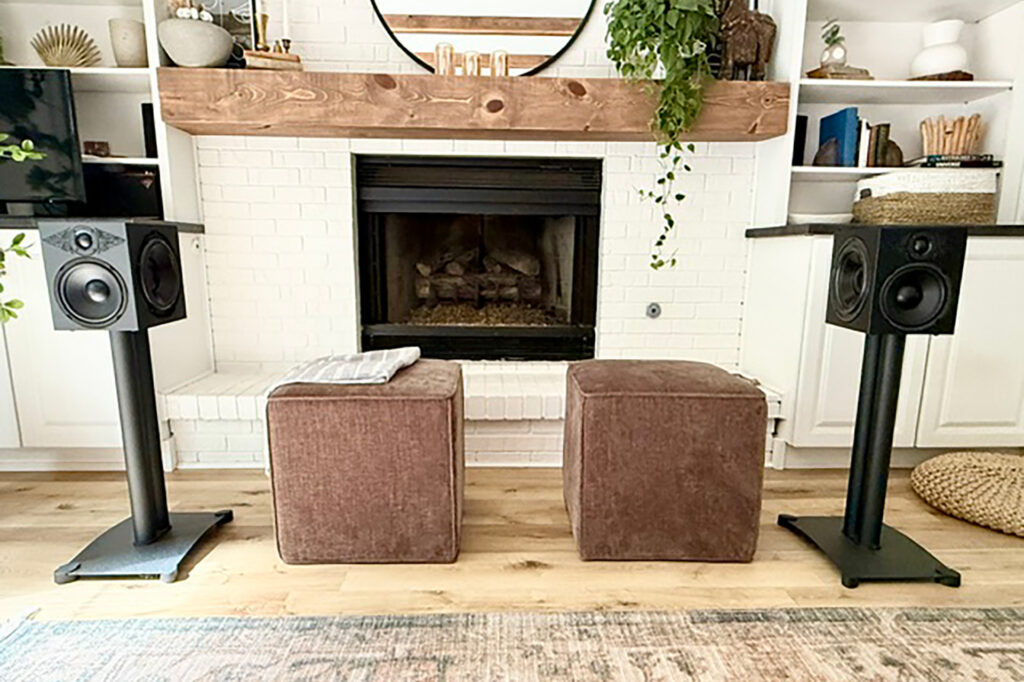
I took advantage of the Chesky Audio LC1 bookshelf monitors’ compact size and placed them in various positions and locations throughout my home. My goal was to maximize their versatility and truly test the best overall listening context for these unique bookshelf speakers. I placed them high on bookshelves, on ear-level stands, and even on a TV stand in my family room (being careful not to squeeze their side-mounted passive radiators in the process).
After a few test tracks, it was immediately evident that the Chesky Audio LC1s are well-balanced (bordering on neutral), with a wide soundstage and impressively accurate imaging, making them a natural fit for most musical genres. On “Inside Out” by Griff (with Zedd), there’s no shortage of punchy pop flourishes to dig into. This track reminds me of a demo track you’d find as a test option for headphones or Bluetooth speakers on display at Best Buy, in part due to its huge, fun dynamic range, depth, and bright, forward female vocals.
The Chesky Audio LC1 bookshelf monitors handled this track well. I was immediately struck by the LC1s’ ability to envelop my listening space, with a wide soundstage that at times bordered on three-dimensional. The silk dome tweeters handled higher and mid-high frequencies with accuracy and smoothness, while the 6.5-inch mid-woofers and side-mounted passive radiators combined to produce low mid and low frequencies that were punchy and authoritative. These are definitely monitors, in the sense that they reproduce music without adding too much color, but they still know how to have fun with a lively track like this one.
Going in a completely different direction, as I often do, I chose a track off Deftones’ latest album private music. On the song “my mind is a mountain,” the Chesky Audio LC1 bookshelf monitors did a fine job reproducing a relatively sonically challenging track. At first, I found the presentation a little flat, lacking some of the heft and weight I was looking and hoping for. To be fair, part of that can be attributed to the mix itself, but once I paired the LC1s with my REL T5 subwoofer (see future review or link to other REL reviews here), the track opened up dramatically. Any missing low end was immediately filled in, and the midrange gained presence and authority. Even the already-wide soundstage and imaging seemed to stretch further, transforming these modest monitors into something far more dynamic and engaging.
Will the Chesky Audio LC1 Bookshelf Monitor Speakers Hold Their Value?
This is a tricky question with a totally new brand, especially one just starting to build its reputation from the ground up. On one hand, Chesky Audio doesn’t yet have even a sliver of the market recognition of stalwarts like KEF, SVS, Focal, and others, which can make resale a challenge. The brand has yet to establish itself, and there is next to no market for obscure and little-known speakers on the resale market.
On the other hand, the Chesky LC1s are unique enough with their 3D-printed cabinets, thoughtful design choices, and Chesky’s pedigree and obvious passion for his product that they could age into something more desirable, especially if Chesky Audio continues to innovate and build a loyal following over time. The fact that they’re priced under $1,000 also works in their favor, as speakers in this bracket tend to move faster on the used market than higher-ticket gear. They also look really cool, which could help catch the eye of a potential audiophile searching for something specific on the open market. So, while you probably won’t flip them for a profit or even recoup much of your investment right away, the LC1s should hold their value reasonably well, especially as word spreads and the brand gains traction, which is a likely scenario given the amount of buzz they’ve already received since their debut.
What is the Competition for the Chesky Audio LC1 Bookshelf Monitor Speakers?
The Chesky Audio LC1 bookshelf monitors enter a crowded, highly competitive segment, and at just under $1,000 per pair, they’re up against some heavy hitters with proven reputations. One of the most direct comparisons I could find is the GoldenEar BRX ($1,500 per pair, see my review). Like the LC1s, the BRXs employ dual passive radiators to squeeze far more low-end performance out of a modest enclosure than you’d expect. The BRXs also boast GoldenEar’s legendary high-velocity folded ribbon tweeter, which is highly accurate and excels in producing detailed and precise high frequencies. At nearly 50 percent more expensive than the LC1s, the BRXs belong in a slightly higher tier, but they represents the type of competition that buyers will inevitably weigh against the LC1s, especially if they are specifically seeking modern-looking, compact bookshelf speakers with passive radiators as a distinguishing feature.
When I think of sleek, sexy, black bookshelf speakers, the first that come to mind are the $1,200 per pair SVS Ultra Evolution bookshelf speakers (buy at Crutchfield). SVS is a household name among both home theater and HiFi enthusiasts, with a longstanding reputation for delivering high-value gear at ridiculously competitive prices. The Ultra Evolution series builds on that pedigree with refined looks and engineering touches like a reworked diamond-coated tweeter, a time-aligned concave cabinet design, and other thoughtful features rarely seen at this price point. For around $1,200, the sheer amount of R&D packed into these speakers is impressive (check out my review of the Ultra Evolution Bookshelf and Nano speakers). The Chesky Audio LC1 bookshelf monitors are similarly unique, though they don’t quite have that glossy showroom presence – or the decades of brand reputation – behind them. That said, in terms of sonic performance, they aren’t far behind the Ultras, which speaks volumes about just how much potential Chesky has baked into these debut speakers.
Another interesting competitor comes from Hsu Research, a company far better known for their reference-quality subwoofers than for speakers. Their CCB-8 bookshelf speakers ($778 per pair) are quite unique in their design, employing a concentric driver design that Dr. Hsu calls a “constant directivity horn.” Each hefty 22-pound, eight-ohm CCB-8 houses a large eight-inch woofer with a tweeter hidden in the center (technically mounted behind the woofer). It’s about as unconventional as bookshelf speaker design gets (even with Hsu discontinuing the bright yellow cone that gave them their signature cyclops look), but the results are surprisingly impressive. The CCB-8s deliver excellent time alignment, meaning all frequencies and audio information arrive at your ears simultaneously, no matter where you sit, creating a coherent and immersive listening experience. If you’re looking for unconventional bookshelf speakers, these should definitely be on your shortlist.

Final Thoughts on the Chesky Audio LC1 Bookshelf Monitor Speakers …
The Chesky Audio LC1 bookshelf monitors feel less like a first draft and more like the confident debut of a company with something to really prove. They’re not just another pair of sub-$1,000 bookshelf speakers – they instead represent a fresh perspective in a hobby that, too often, plays it safe. With their incredibly unique-looking 3D-printed cabinet, high-end components and internals, dual passive radiators, and accurate, neutral sound, it’s clear that Chesky Audio isn’t here to blend in. They’re here to make their mark, and I’m excited to see where Chesky takes his brand next.




I heard the Chesky speakers at a show this past Spring – I totally agree with your assessment and even told David I thought they were “breakthrough”.
They are THAT good
Based on all the praise these speakers have garnered, I must be in the minority. I heard them at the Florida Audio Expo last year and thought they sounded “good”….not gaga great like so many other reviewers seem to be saying…but good enough that I’m looking forward to the new model, the 2….hopefully at the Florida show in February.
Its great that they are 3d printed…and I like that they have color options….and I really like the size….but as noted…no grills…which for many homes means no sale…..and I see that the model 2 which is on their website has no grills either.
No doubt, the hobby needs new players, fresh ideas and affordable prices and for that I say “thank you Lucca”.