
 By
By Despite what you might see in the news – with celebrities and athletes reverting back to wired headphones for whatever reason – true wireless earbuds are more popular than ever and here to stay. Improvements in battery life, DSP, noise cancellation, and advancements in Bluetooth itself have made true wireless earbuds incredibly versatile and sonically capable, even for the pickiest audiophiles.
After Onkyo debuted the groundbreaking W800BT true wireless earbuds in 2015, Apple brought the AirPods to the masses one year later, and it’s been an arms race ever since. Premium audio brands like Sennheiser, Bowers & Wilkins, and even Devialet entered the space with high-end designs aimed squarely at audiophiles. Established consumer audio brand heavyweights like Bose, JBL, and Sony scaled the category with a multitude of options spanning every price tier. The result today is a market that is densely saturated, with options ranging from disposable to legitimately audiophile-grade, with the best of the best competing sonically with some of the most premium over-the-ear headphones.
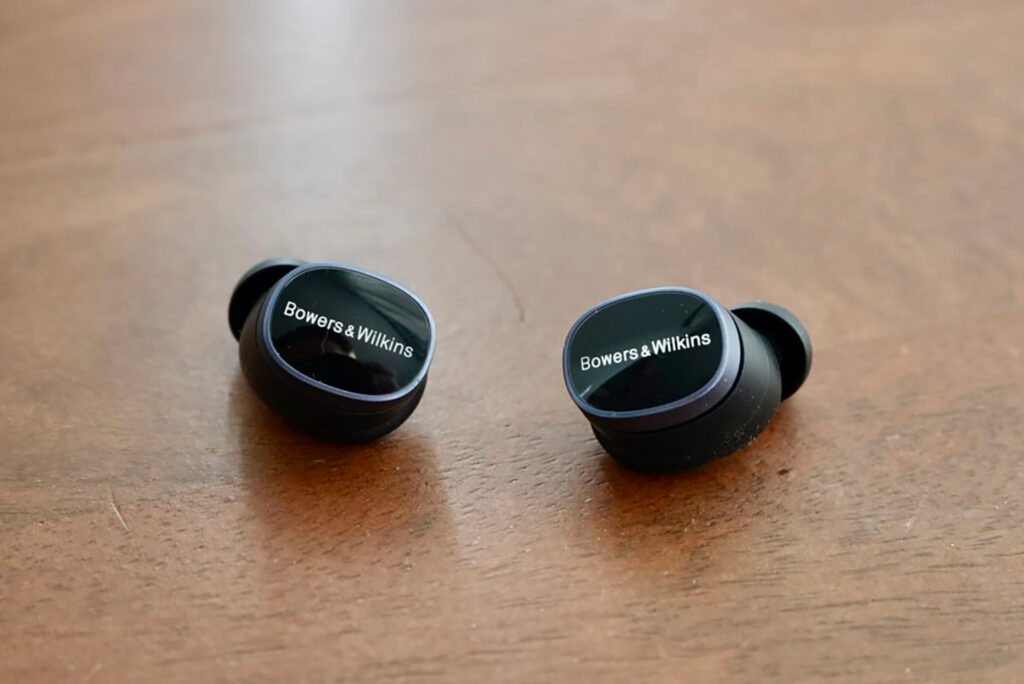
Fast-forward a few years, and Bowers & Wilkins released the premium Pi7 true wireless earbuds in 2021 to strong critical acclaim, followed by the Pi8 (buy at Crutchfield) in 2024 (with a few other variants in between). I finally got my hands on a pair for some long-term listening and real-world use before eventually giving them away to a lucky Instagram follower (follow us on Instagram, if you haven’t already). The Bowers & Wilkins Pi8 true wireless earbuds are a handsome-looking pair of earbuds that sound incredible, come in a variety of finishes, offer solid ANC, and have all the modern bells and whistles one could want from a pair of true wireless earbuds. But do they do enough to separate themselves from the endless competition in this space, especially at their $499 price tag? Let’s answer this question and more in the review ahead.
What Makes the Bowers & Wilkins Pi8 True Wireless Earbuds So Special?
- The Bowers & Wilkins Pi8 true wireless earbuds utilize 12mm carbon cone dynamic drive units, a material trickled down from the company’s higher-end over-ear designs like the PX8 S2 headphones. Aside from its 12mm Carbon Cone drive units, the Pi8 also benefits from a dedicated DSP, DAC and headphone amplifier (all from ADI) rather than using generic off-the-shelf on-chip components. The carbon construction increases stiffness-to-mass ratio, which helps minimize flex and improves overall transient speed and precision. In practice, this translates to cleaner high-frequency extension, tighter low-frequency control, and audibly lower harmonic distortion at higher listening levels (though I don’t recommend listening to any headphone at high volumes; see my article on preserving your hearing). Resolution and detail are notably better than many competitors, and the overall voicing follows Bowers & Wilkins’ signature sound: neutral-leaning, open, and realistic.
- The Bowers & Wilkins Pi8 supports a 24-bit wireless connection, allowing it to handle higher-resolution audio than most typical Bluetooth earbuds. This equates to better detail, improved dynamics, and a presentation that feels as close to the original recording as possible.
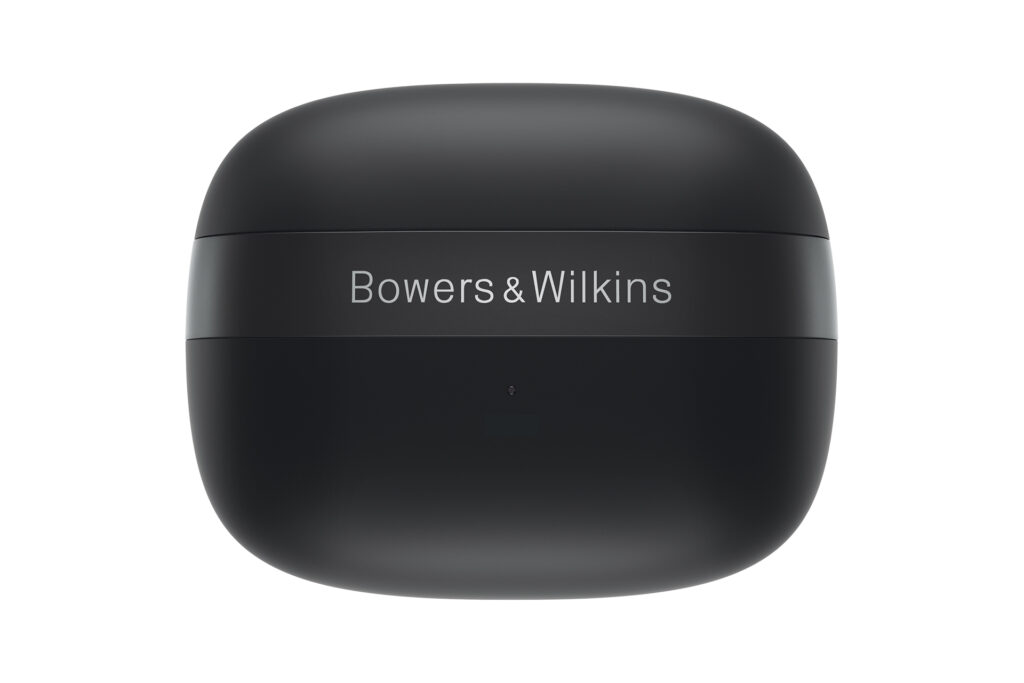
- One of the more clever features of the Bowers & Wilkins Pi8 wireless earbuds is the charging case’s ability to double as a wireless transmitter. Connect it directly to a source via cable – laptop, in-flight entertainment system, or television, et cetera – and it rebroadcasts the signal to the Pi8 over aptX Adaptive. This connection can pass 24-bit/96kHz audio to the earbuds, effectively bypassing the usual Bluetooth limitations. I really liked this feature and found it to be quite useful, giving the Pi8 more flexibility and usability compared to other true wireless competitors.
- The Bowers & Wilkins Pi8 true wireless earbuds are IP54 rated. That means, while you can’t swim with them, they should survive reasonable bursts of sweat and dust and be just fine.
- Active Noise Cancellation (ANC) is strong, blocking out the majority of ambient noise in most listening scenarios. It isn’t the class-leading ANC found in over-the-ear options like the Sony WH-1000XM6 headphones, but it is more than adequate. Sound quality remains virtually the same with ANC on or off, which is also a plus.
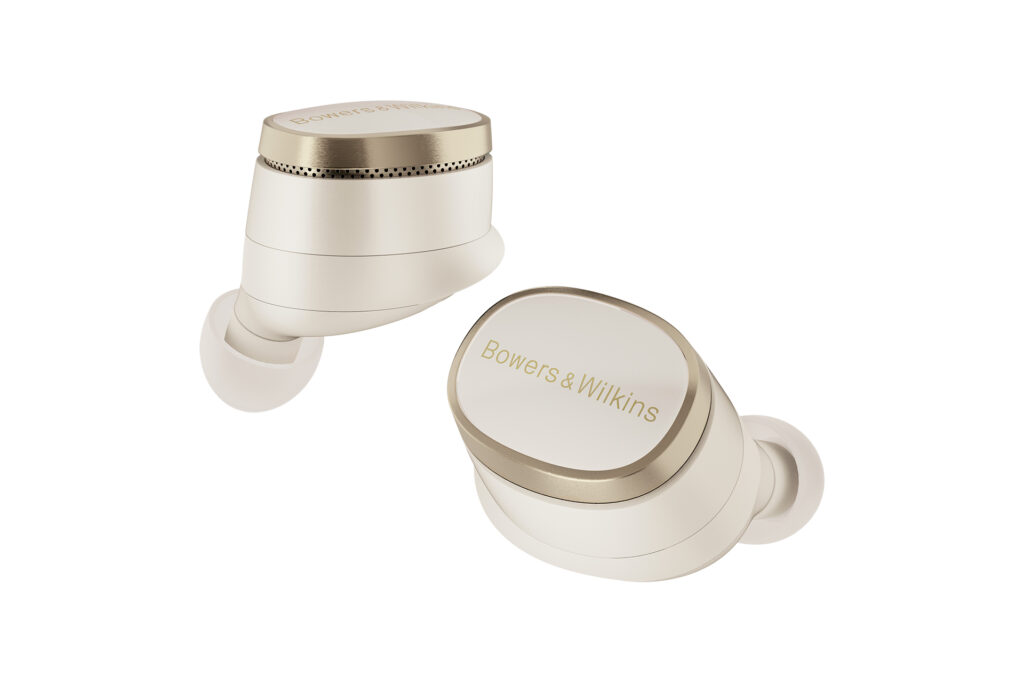
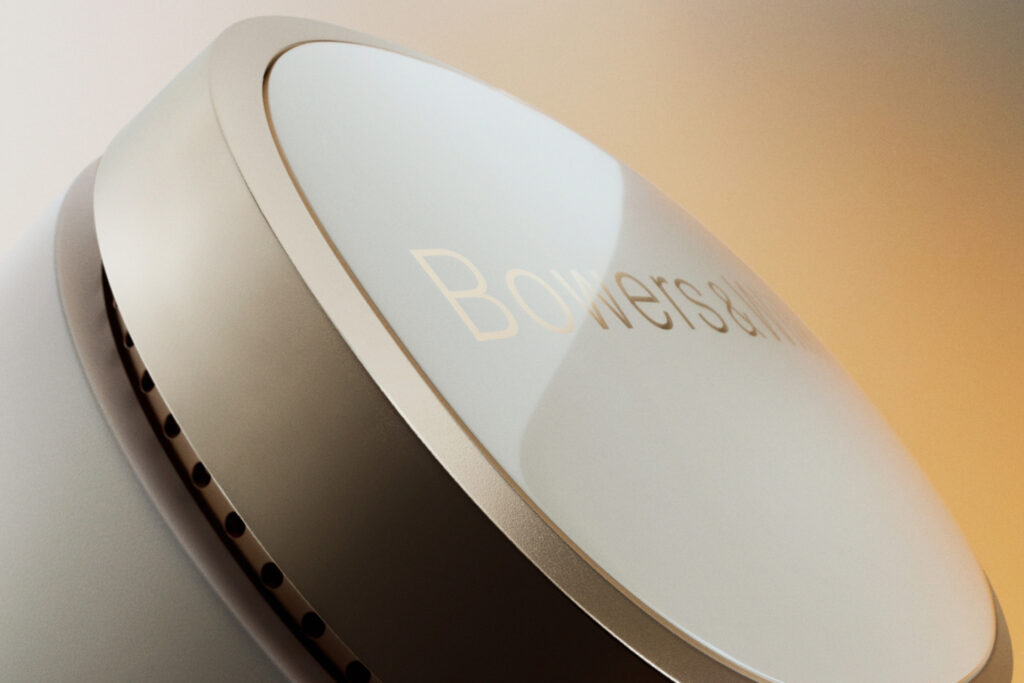
- The Bowers & Wilkins Pi8 true wireless earbuds come in several unique high-end finishes, including Anthracite Black, Midnight Blue, Jade Green (my personal favorite), and Dove White. High-end design touches, such as matte finishes with metal accents, definitely give off luxurious vibes and are sure to turn heads. There’s even a limited release McClaren edition ($100 more), which features a Galvanic Grey/Papaya supercar-inspired finish.
- The Bowers & Wilkins Pi8 true wireless earbuds also support aptX Lossless and aptX adaptive, Qualcomm’s latest high-quality Bluetooth codecs. AptX Lossless automatically adjusts on the fly to maintain the best possible sound quality while keeping the connection stable, whether you’re streaming music, watching a movie, or gaming. This is a much-appreciated feature for audiophiles like myself who also like to use their earbuds in a variety of contexts.
- Bowers & Wilkins manages everything through its Music app, which handles setup, firmware updates, EQ adjustments, and listening preferences. It also integrates directly with several streaming services, including TIDAL, Qobuz, Deezer, Pandora, and others, so you can control playback from one place instead of bouncing between apps. The layout is clean, logical, and easy to navigate.
Why Should You Care About the Bowers & Wilkins Pi8 True Wireless Earbuds?
As mentioned in my intro, there are so many earbud options on the market that it can be difficult to differentiate which models are worth your time and the precious real estate inside your ear canals.Even the best brands produce the occasional overpriced clunker, so it’s important to invest in models that are proven and well-reviewed.
At $499, the Bowers & Wilkins Pi8 true wireless earbuds sit squarely in the premium category, costing roughly twice as much as mainstream options like Apple’s AirPods Pro 3s. That pricing clearly positions the Pi8s not as casual, toss-in-your-work-bag earbuds, but instead as an in-ear solution for listeners chasing maximum sonic performance, who may not want to deal with the weight and size of over-the-ear cans. To justify the premium price, Bowers & Wilkins has packed the Pi8 true wireless earbuds with a ton of technology aimed squarely at audiophile-grade sound quality rather than just mass-market appeal and flashy marketing.
Some Things You Might Not Like About the Bowers & Wilkins Pi8 True Wireless Earbuds
- The fit of the Bowers & Wilkins Pi8 true wireless earbuds might not be for everyone. The housings are slightly larger than average to accommodate the internal hardware, which can make long-term comfort and seal quality dependent on ear shape and tip selection. They are also more likely to work their way out of the ears during physical activity compared to lighter options, though few high-end wireless earbuds fit perfectly while also producing this level of high-fidelity sound. Pi8 does come with extra sizes of ear tips for the buds in the package to better fit for different size ears.
- Battery life is solid, but not class-leading, at about 6.5 hours of listening time with ANC enabled. Given the Bowers & Wilkins Pi8’s premium labeling and impressive feature set across the board, I expected Bowers & Wilkins to push battery performance a bit further. Perhaps we’re still a generation or two away from reliable 10-hour, uninterrupted earbud listening with ANC on, but it would have been nice to see Bowers & Wilkins move the needle more meaningfully in this area with the Pi8s. The charging case houses 13.5 hours of reserve charging power. Charge time is generally about two hours with a 15 minute Fast charge getting you about two hours playback in short order.
Listening to the Bowers & Wilkins Pi8 True Wireless Earbuds
I was immediately impressed by the Pi8s’ dynamic range, articulate midrange clarity, and overall tonal richness, particularly with female vocals. I queued up a stripped-down acoustic cover of “House of the Rising Sun” by Lizzie McAlpine, whose voice has a distinctive texture and emotional intimacy that can quickly reveal weaknesses in lesser drivers. Right away, the Pi8s conveyed an impressive sense of space, with McAlpine’s voice presented slightly forward in the mix against a wide, well-defined stereo image. The plucked and strummed acoustic guitar accompaniment sounded natural and harmonically rich, with excellent definition and heft. As the track built toward its conclusion, the Pi8s maintained composure and separation, avoiding congestion or distortion even as the arrangement peaked. McAlpine’s rich vibrato and vocal flourishes filled the soundstage, and the Pi8s captured every bit of it. It was a strong reminder of how far premium true wireless earbuds have come in their ability to reproduce music with both clarity and musicality, with the Pi8 true wireless earbuds pushing some impressive boundaries here.
Next, I spent time listening to “The Funeral” by Band of Horses, off their debut album Everything All of the Time, which will be getting a 20-year reissue in 2026. This is a track that gradually builds from sparse instrumentation into a dense, emotionally-charged wall of sound. This is one of my favorite songs ever, and the Pi8s handled its dynamic, explosion progression exceptionally well. The opening guitar line sounded spacious and atmospheric, with a convincing sense of depth that allowed the reverb trails to linger naturally across the stereo image. When lead singer Ben Bridwell’s piercing vocals were introduced into the mix, the Bowers & Wilkins Pi8s kept them slightly forward but wide, maintaining clarity and a sense of openness without overshadowing or competing with the surrounding instrumentation.
As the track swelled into its climactic apex and conclusion, the Pi8s demonstrated impressive control and separation for a pair of wireless earbuds. The layered, distorted guitars, cymbal crashes, and driving percussion remained distinct rather than becoming muddled together, even at decent volumes. The overall performance highlighted the Pi8s’ ability to reproduce a wonderful sense of scale and dynamics, preserving both the emotional intensity and the structural detail of this beloved recording. The Bowers & Wilkins breathed new life into one of my all-time favorite indie rock tracks, which is no easy feat.
Will the Bowers & Wilkins Pi8 True Wireless Earbuds Hold Their Value?
Earbuds and in-ear monitors (IEMS) in general don’t retain their value the way traditional audiophile components tend to do. There are several reasons for this, chief among them simple lifespan limitations: integrated batteries degrade over time, internal components aren’t user-serviceable, and rapid advances in wireless standards and DSP mean even expensive models can feel outdated within a few product cycles. Realistically, we’re not passing our $499 ANC earbuds down to our grandkids as family heirlooms.
There’s also the simple matter of hygiene. True wireless earbuds are inherently personal devices. You’re placing them directly into your ears, which makes the secondhand market smaller than it is for amplifiers, speakers, or even over-ear headphones. Many buyers understandably hesitate to use something that’s been centimeters deep in someone else’s external auditory meatus (look it up).
That said, products from established, performance-driven brands tend to fare better than most. The Bowers & Wilkins Pi8s benefit from the company’s long-standing reputation for build quality, engineering credibility, and strong enthusiast demand, which gives it more staying power and likely better resale prospects than the average true wireless competitor.
What is the Competition for the Bowers & Wilkins Pi8 True Wireless Earbuds?
The Devialet Gemini II true wireless earbuds (buy at Crutchfield) are identically priced at $499 and position themselves as a direct competitor to the Bowers & Wilkins Pi8s. They use 10mm titanium-coated dynamic drivers and support Bluetooth 5.2, with aptX Adaptive and AAC codec compatibility. Devialet also employs several proprietary technologies in the Gemini IIs, most notably Ear Active Matching (EAM), which uses algorithmic modeling of the listener’s ear geometry to optimize frequency response and minimize acoustic leakage. Battery performance, build quality, and aesthetics are comparable to the Pi8s, and both provide excellent sonic performance, so it is truly a matter of subjective listener preference when comparing the two.
The Noble Audio FoKus Prestige Encore True Wireless IEMs are an interesting competitor at $699. Noble is an artisanal brand that produces some incredible, uber-high-end in-ear monitors (such as the flagship wired $4,500 Kronos). The FoKus Prestige Encores feature a bold visual design and feature a three-way hybrid driver configuration, including an eight-mm dynamic driver and a nifty six-mm planar magnetic driver designed for speed and detail. The FoKus Prestige Encore are Noble’s most expensive in their true wireless earbud lineup, and support the latest generation of high-resolution codecs, including aptX Lossless, aptX Adaptive, LDAC, AAC, SBC, and Bluetooth 5.4. They have a wide, immersive soundstage and excellent bass. These are definitely a gateway product into the ultra-premium segment of the earbud market, and are showstoppers in their own right – perfect for listeners looking for something a little more boutique, but with true audiophile chops.
The Sennheiser MOMENTUM True Wireless 4 Earbuds with ANC (buy at Crutchfield) are a more affordable option at $300, but look great and sound rich, balanced, and natural. They feature impressive technology as well, including Sennheiser’s TrueResponse dynamic driver platform, Bluetooth 5.4, aptX, aptX Adaptive, aptX Lossless, AAC, SBC, and LC3 for LE Audio readiness. Battery life is good, with roughly seven hours of playback per charge and about 28 to 30 hours total with the case. Sennheiser is generally considered a solid, reliable headphone brand, and while they may not have the legendary driver materials or industrial design flair of the Bowers & Wilkins Pi8, they remain one of the safest and most complete high-end true wireless options on the market.
Final Thoughts on the Bowers & Wilkins Pi8 True Wireless Earbuds …
The true wireless space is crowded with products that promise audiophile sound, but relatively few actually deliver it. The Bowers & Wilkins Pi8 true wireless earbuds (buy at Crutchfield) are one of the rare examples that do. Bowers & Wilkins clearly prioritize true audiophile performance, tuning, and overall sonic refinement with the Pi8s, and that definitely pays off in both everyday and critical listening. The fact that they implemented their most premium headphone driver materials into these earbuds speaks volumes, and the results speak for themselves in the form of crisp, detailed highs, firm, realistic midrange, strong bass performance, and incredible dynamic range and imaging.
For audiophiles who want the freedom and flexibility of true wireless earbuds without giving up the musical engagement that we demand out of our audiophile products, the Pi8 stands out as one of the most satisfying options currently available. The Bowers & Wilkins Pi8 true wireless earbuds aren’t just good for earbuds – they’re good, period.



