
 By
By “Because things eventually wear out and need replacing…” This simple answer to a presumably simple question – why I should replace something audiophile – carries a bucketful of stipulations and conditions. There is no one perfect answer, despite the nearly endless supply of reasons why something old should be replaced by something new. Mainly, things break or stop working correctly. Or perhaps, something no longer operates properly and completely performs a desired task. These are not the only reasons to replace a possession. Maybe the design is no longer current with modern technology. And lo and behold, there are times, as consumers, when we just get tired of an existing something and want the new, the shiny, the improved, and the exhilaration born from a new toy. One central question is: where do our beloved audiophile systems fall into this equation? Let’s look at this not as a total system replacement, because doing so is a pretty rare occurrence, but rather, in terms of individual items. For no particular reason, let’s start with analog source components.
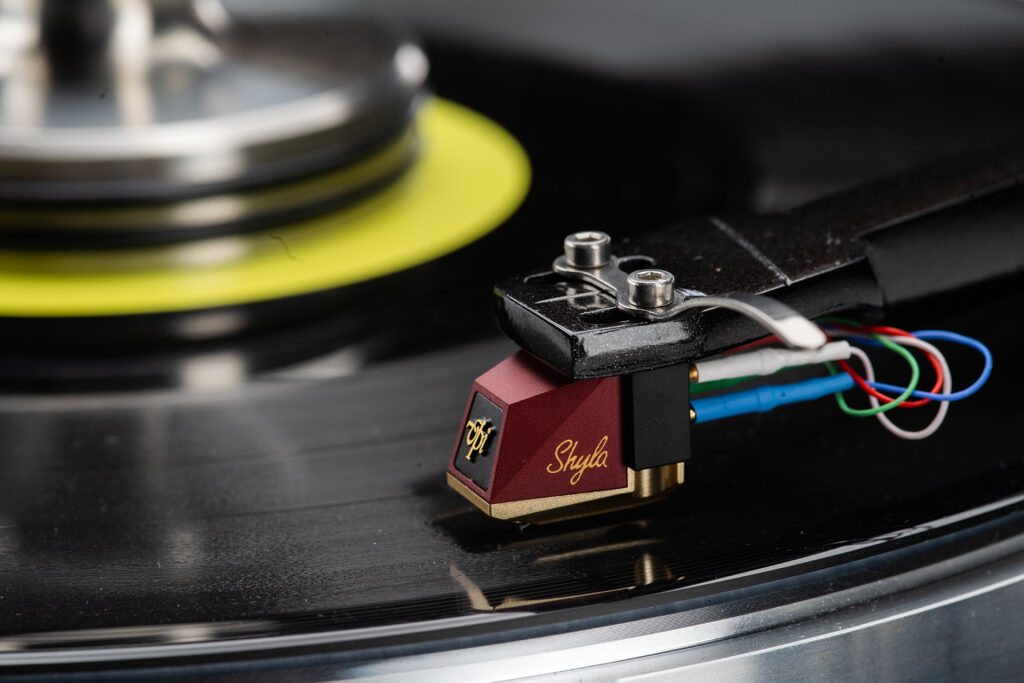
When is the Best Time to Replace a Turntable and Cartridge?
Turntables, by and large, employ a more than 100-year-old technology. The governing mechanics behind how a round rotating disc, and the null points of a tonearm tracking across said rotating disc, have not really changed since the advent of the technology itself. Regardless of the cost of a turntable, we must still align the tonearm and cartridge to ideally track from the beginning of the record to the end. Likewise, this tracking function is done on every turntable, regardless of price. The benefits of a better turntable are applied extend to how it is built, how well it dampens vibrations, how quiet is the motor, how much mass does the turntable possess, and how precisely it controls the speed of the platter.
Concurrent considerations center around the platter design, what technologies are used to stabilize its speed, and how the central bearing, which provides support, is implemented. Any of these conditions are a preeminent deciding factor in cost, not necessarily an answer to the question of when a new turntable is in order. That said, turntables should last many years, if not decades. If you are happy with your current turntable, there is no real need to make a change unless you want to improve or advance any of the design factors that govern a turntable’s operation. An expected service life of 20 years or more is not unreasonable.
As far as the cartridge is concerned, and depending on whether the stylus is elliptical, conical or Shibata, a new stylus every 300 hours to 500 hours (or as much as 1,000 for a Shibata) is a good plan. In most cases, the manufacturer will have recommendations on when the stylus is at its end. The cartridge body itself may last for years, so long as the suspension has not deteriorated, or the sonic quality of the cartridge has not depreciated to an unacceptable level. Another relevant factor is whether a cartridge body even allows retipping and, if so, how does the cost to do so compare to a new cartridge? Maybe a good stylus timer might be in order?
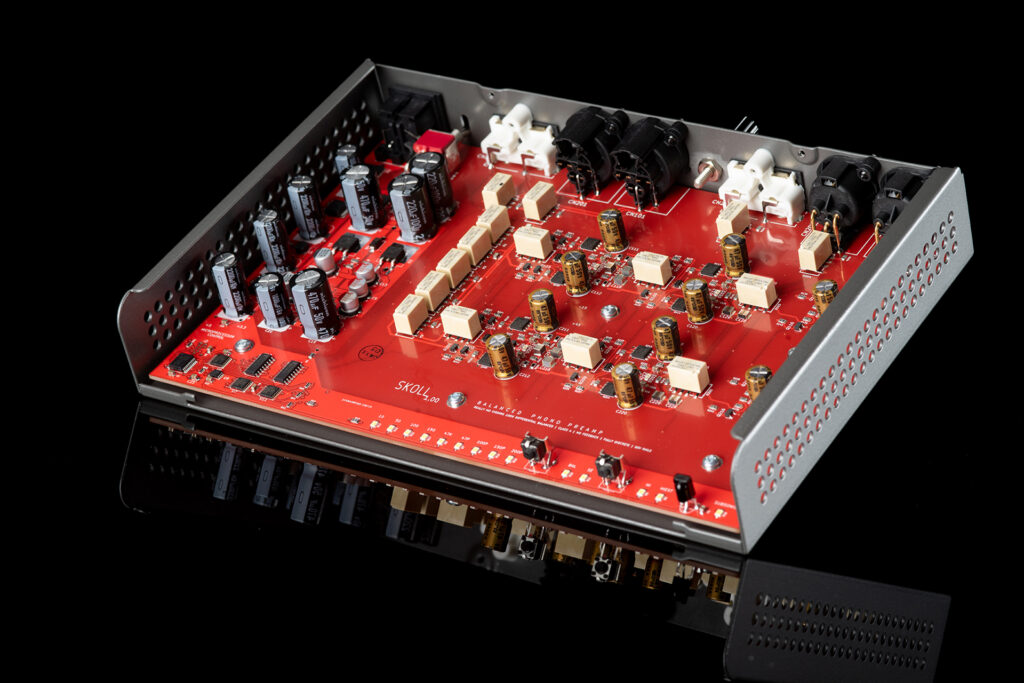
When is It Best to Replace an Audiophile Phonostage?
A Phonostage, like the turntable itself, should last for many years of continued enjoyment. In this case, technology does change, and there are phonostages with variable RIAA filters that may become appealing. For instance, if music with different recording techniques than modern music are of interest, it may be advantageous to have different RIAA curves. An analog purist may want an available selection of RIAA settings to accommodate a particular recording style. Maybe a newfound desire for the phonostage to accommodate two tonearms could prompt a search. Maybe a phonostage with both capacitive and resistive loading would be a welcome upgrade. There are both tubed and solid state phonostages, and perhaps the sound of one or the other is no longer pleasing. And, something that actually happened to me, the combination of a new cartridge with a very low millivolt output and the lower gain options of my existing phonostage left me having to radically increase the amplitude of my preamp to hear any music. I had several choices: a step-up transformer, a new cartridge with higher output, or replacing the phonostage. In the end, the choice I made was a new phonostage, one, I might add, with much more moving coil gain than its predecessor. Bottom line: unless significant changes are made to the turntable, the phonostage should last for many years.
When Should a Digital Audiophile Component Be Replaced?
Unlike an analog turntable, the entire umbrella of digital audiophile technology has seen consistently rapid changes and improvements. It was not so long ago we did not even have streaming, at least as we know it today. In fact, in the last five years, the quality of streamed music has significantly improved. And what about higher resolutions than the 44.1/16 sample rate and word length, the digital design of a standard CD? How many of us prefer higher resolutions, up to as much as a 192 sample rate, and even DSD in our digital choices? How many physical SACDs are being played in SACD players? Conversely, how many audiophiles actually used Blu-ray audio? Not many, I suspect.
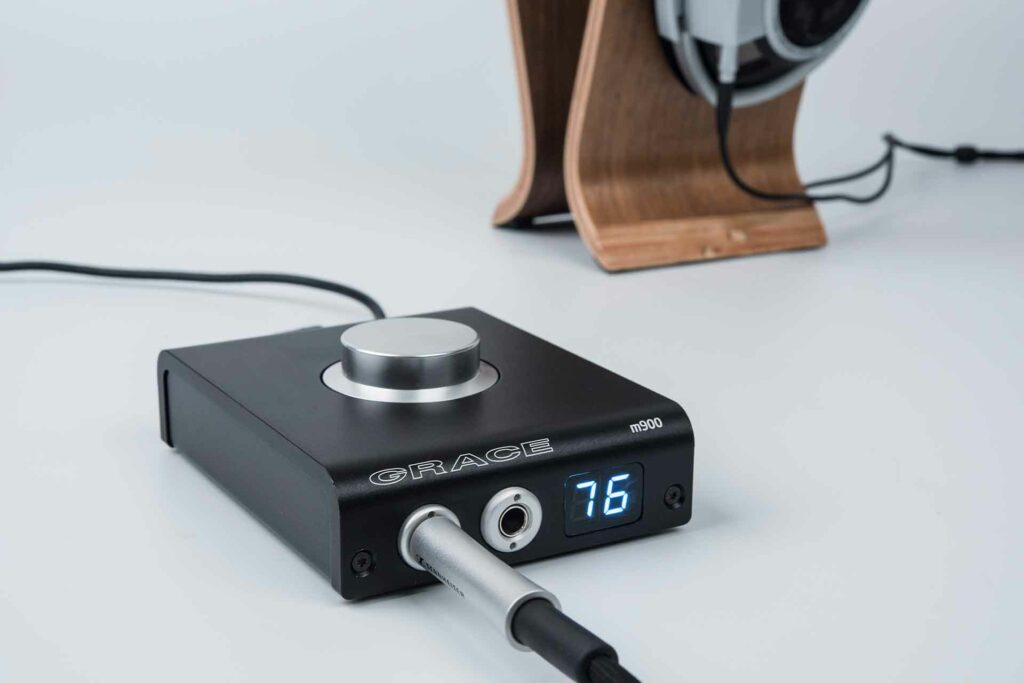
Digital technology, it logically follows, is constantly changing and warrants continued scrutiny. I remember a world-class DAC I once owned. It was about 10 years old at the time. I was tasked to do a review of four different DACs at four different price points, from low to high, to examine how they were different and, most interestingly, how they were alike. Prior to starting this evaluation, I was sent the Grace Design m900 DAC (read review here) just to “play around with,” due to the excitement some other Future Audiophile reviewers had towards this very impressive yet affordable device. Imagine my total and complete shock to discover it sounded almost as good as my once best-of-the-best DAC. When I began my four-component review, I could immediately see, and hear, how far outdated my DAC had become and, more importantly, how much digital technology had changed. Even the entry-level DAC of the four was better than my once-proud version.
I wound up buying the one I liked the best, the Bricasti M21 Platinum Edition (read review here). It still sounds excellent and has outstanding features. However, I keep waiting for digital technology to pass by my current DAC. Bottom line, plan to replace digital components based on how quickly, and how completely, digital technology itself changes. As a suggestion, I would give any digital component a serious challenge every three to five years. And if you find a new digital component suddenly renders an existing one as little more than yesterday’s technology, don’t be too surprised.
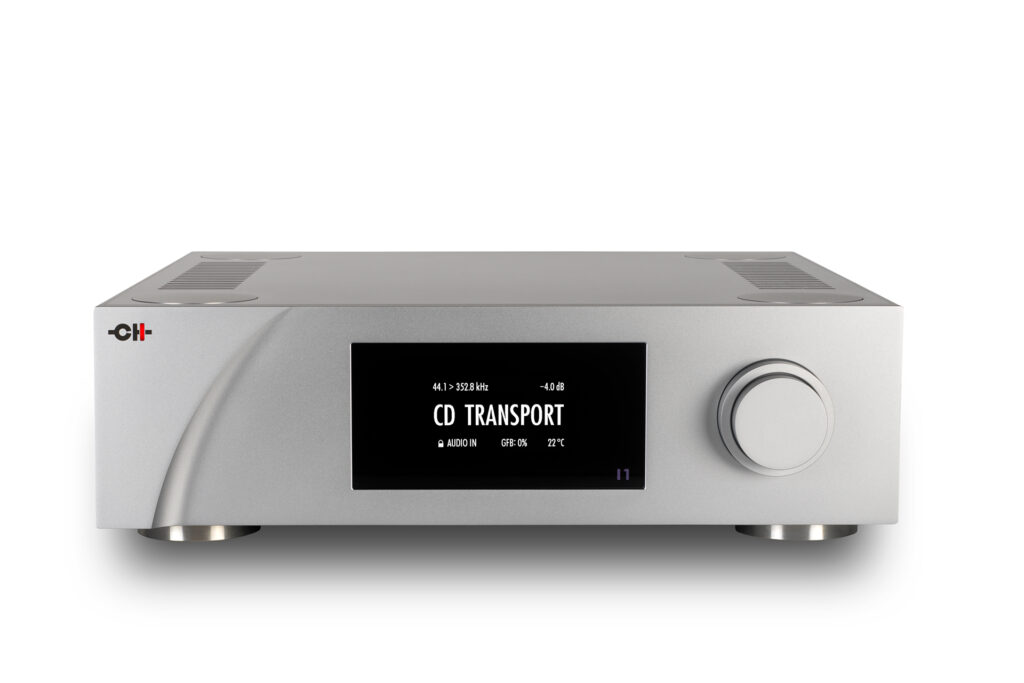
Consolidation Motivates Many Audiophiles in Today’s Market
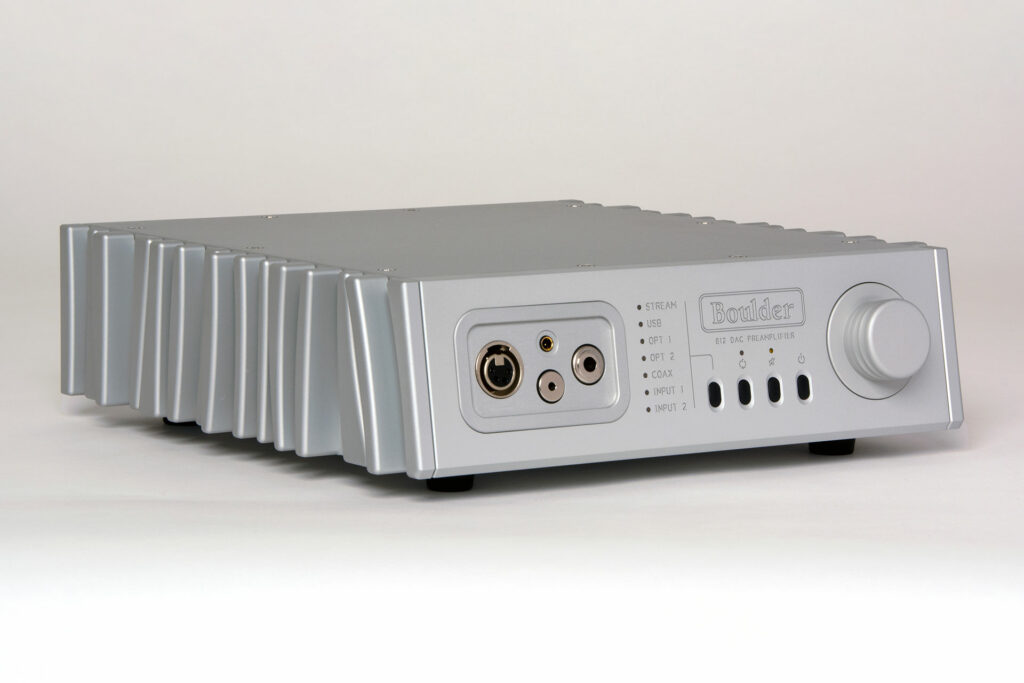
Another consideration in digital music is component consolidation. Because streaming has become the predominant method of digital playback, most manufacturers are releasing new designs with multiple functions. Maybe a once-standalone DAC has been reimagined as a DAC/streamer? Maybe it might be of interest to explore a preamp with streaming capabilities? Not an integrated amp, mind you, just a preamp in the traditional sense except for streaming capability. Embracing these types of components is more convenient than a technological breakthrough. Even so, such newly designed pieces of equipment are not only available today, they are thriving, and the assortment of available choices continues to become more widespread. Should we one day soon expect to see a bathroom mirror with streaming capabilities? Don’t look now, they already exist. As for our audio systems, expect digital to continue to evolve. The question then becomes to what degree will any one audiophile try to stay on the cutting edge of technology?
When to Upgrade Your Audiophile Amplifiers and Preamplifiers? When Are Your Electronics Ready for Change?
Generally speaking, an amplifier is a long-haul audiophile investment. We have had tubed amps since the hobby’s inception in the 1950s (and well before, with products like AM radios), and solid state since the early 1960s. In more modern times, we saw the advent of Class-D architecture and its more recent offshoot, Gallium Nitride amplification (learn more here). In a global sense, the classifications with which we are all very familiar, among those being Class-A, Class-AB, SET (single-ended triode) tube amps, and so on have not changed all that much. This is not to say there have not been technological improvements, because there have. However, it is not unreasonable to expect a service life of 10 to 15 years out of an amplifier. What are some warning signs of an amp nearing its end?
While typically designed for years of use, capacitors do eventually begin to wear out. When they do, expect to hear a reduction of dynamic presence, clarity or a much different tonal character than what would be considered normal. If your amplifier has problems with providing the same sonic quality at higher volumes as it does at lower volumes, the amplifier may be developing issues. Bottom line: as long as an amplifier still sounds normal, still delivers a pleasing sound, and displays no obvious problems in recreating a recording, if your favorite music still sounds the same, the amp is probably still doing pretty well. It is not unreasonable to expect 15 years on a solid state amp and 10 years or more on a tubed or Class-D amplifier. In fact, build quality, better components inside the amplifier, increased wattage and/or gain, moving from a stereo amp to monoblocks, and generally speaking, wanting a new toy are among the more popular reasons for replacing an amplifier.
As far as a preamp is concerned, they also have an excellent service life – chiefly because they are handling low-level signals, rather than higher currents, as does an amplifier. Even so, capacitors for preamps will eventually wear out as well. And once this happens, it may be cost-prohibitive to replace the caps, as opposed to replacing the entire preamp. Depending on what type of volume attenuation is being used, if the sound begins to crackle when the volume is turned up or down, or if the music sounds lifeless and noticeably different than before, it might be a sign the volume controls are going out, capacitors are dying, or some other age-related issue is taking place.
Perhaps one of the more popular reasons to replace a preamp is for new and better capabilities.These would include having the availability of more sources, going from an unbalanced configuration to balanced or, once again, just wanting something new. Bottom line, most preamps should last for a pretty long time.
And for those who prefer an integrated amp, essentially the same rules for amps and preamps also apply. Here again, a well-designed and -manufactured integrated amplifier should last 15 years at a minimum.
When to Upgrade Your Audiophile Loudspeakers?
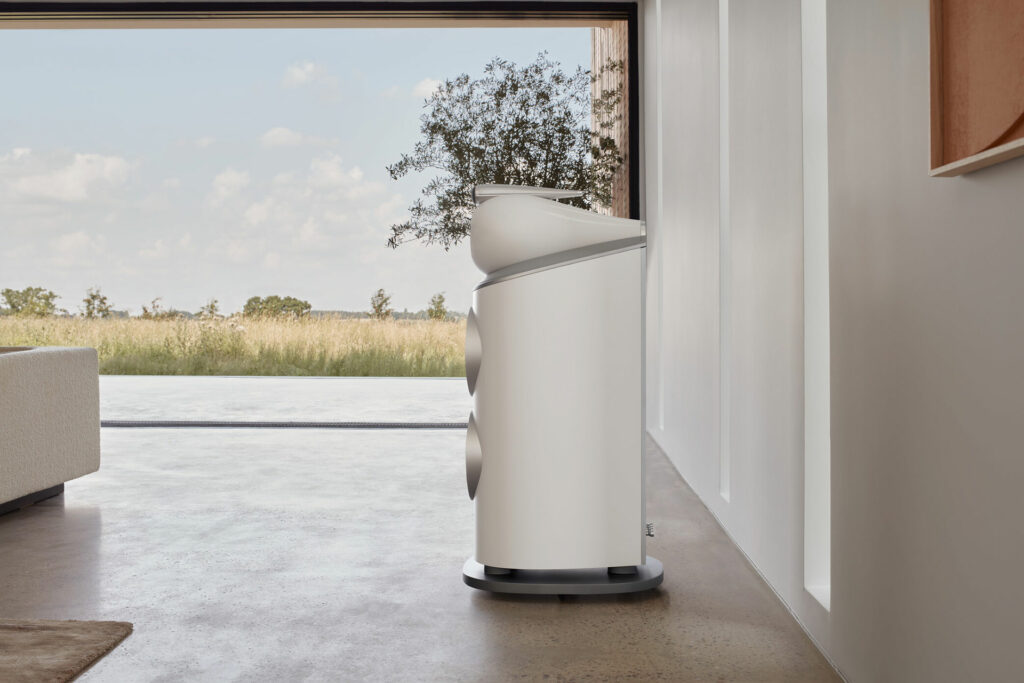
Well, we now come to the part of the program where logic and common sense are often completely thrown out the window. Speakers are very unique in an audio system. Speakers alone convert an electrical signal to music. And how this magic occurs is not the principal issue. Only what they do matters. Generally speaking, a speaker system, when properly implemented and not abused, can easily last 20 years or more. Are there qualifiers for this lifespan projection? Absolutely.
For speakers with dynamic drivers, the paper, foam or even rubber surround may deteriorate with age. My bookshelf speakers, purchased in 1972, are almost certainly be in need of rebuilding. I feel sure the paper surrounds on the cones have been destroyed by time. But maybe not. Either way, age tends to wreak havoc on dynamic drivers. Crossover networks also contain capacitors and, eventually, they will wear out. Internal wiring in a speaker may become brittle and terminals can develop oxidation, thus reducing sonics. In most cases, planar and electrostatic speakers will last slightly longer than dynamic speakers. Perhaps, although not as likely, speakers may be damaged by small children and pets. And by all means, if a small child is present in the home, be sure and take proper safety precautions to be sure the speaker cannot topple over. No one wants a 200-pound floorstanding speaker accidentally falling on a child.
Answering the question as to why speakers are replaced is vastly complex. Making the decision to replace current versions is not an easy one to answer. Perhaps a new sonic character may be desired. Maybe the listener has developed a significant interest in moving from an existing technology to something different. Think about replacing a dynamic speaker with a planar or electrostatic version. Maybe a new home, and a much larger space, requires a larger speaker system capable of handling higher power from an amplifier to ensure a room-filling sound. And maybe, just like a lot of audiophiles I know personally and, if I’m being fair, myself included, speakers are replaced just because we want something new. Call it the shiny new toy syndrome. After all is said and done, a speaker system, when used as designed, can last 20 years or more. Will technology have changed in the intervening years? Again, absolutely. And because audiophiles can occasionally be quite restless, my guess is a speaker system will be replaced long before 20 or more years have passed.
Final Thoughts on When is the Best Time to Replace an Audiophile Component …
How many among us will realistically keep the same audiophile system for two or three decades? A few certainly will, but I suspect most will develop a undeniable wanderlust long before such time has passed. And perhaps the most consistent reason for a new anything is one of my favorites – just because. I do not in any conceivable universe need a new whatever. I want one just because. Many of us are trying to satisfy some unknown, unrealized itch we are having over the sonics of our system. When settings and placement changes fail to impress, the most expedient thing to do is replace the old with the new. Just because …
Most of us will probably not keep a component long enough to have it physically wear out with age. But some will. Oddly enough, as components grow older, sonic deficiencies occur gradually and may not be even recognized for many years. Once they are, however, it prompts the need for something new. Another option is rebuilding or repairing something, which is certainly one way to go. We all hope our audiophile gear will last until it is no longer needed. But there are times when something breaks, begins to wear out and, in general, can no longer meet our minimum-requirement sonic benchmark. When this happens, it is time for something new. How and when this happens is different for almost everyone. But it will happen. The only question is when.
What are some of your big upgrades historically? What do you plan to upgrade next in your current system? What component category(ies) do you upgrade the most frequently? Share with us your thoughts on your upgrade patterns and we will quickly moderate your comments to make them live.




I’ve been at this for about 50 years. The only component I’ve ever replaced because it was broken/worn/degraded was a cartridge with a broken cantilever (don’t let anyone dust your turntable, not even yourself 😔)
It has always been either a quest for “better sound”, or quest for something different and new-to-me. I average one or two new additions or replacements each year. I’ve been assembling my (seemingly mythical) “end-game” system. In the past two years I have added Piega C8Ltd and Magnepan 1.7i speakers, Cary CAD-SA-V12 power amp, and Sound-Smith MCP2 phono preamp. Also rebuilt or modded several vintage pieces.
I think it is questionable what gets to “the end” first – the system or me 😁
Don’t know how to edit first post … forgot the Marantz SA-KI Ruby (my last shiny disc spinner) was in that time window.
Tim,
My guess is your actions – vis-a-vi new gear, is surprisingly representative of most audiophiles. For my own part, my history with audiophile component replacement is very similar to yours.
Thanks for the reply and enjoy your system!
Paul