
 By
By I have been keeping an eye on the new Arcam lineup over the past year or so. Harman, Arcam’s parent company, has been showing off the brand’s gear at their CES and CEDIA booths in recent years. The traditional Arcam lineup, while solid, was not the center of attention at either show. The new Radia lineup had people, including myself, quite excited, so I was looking forward to getting my hands on some of these components to try out.
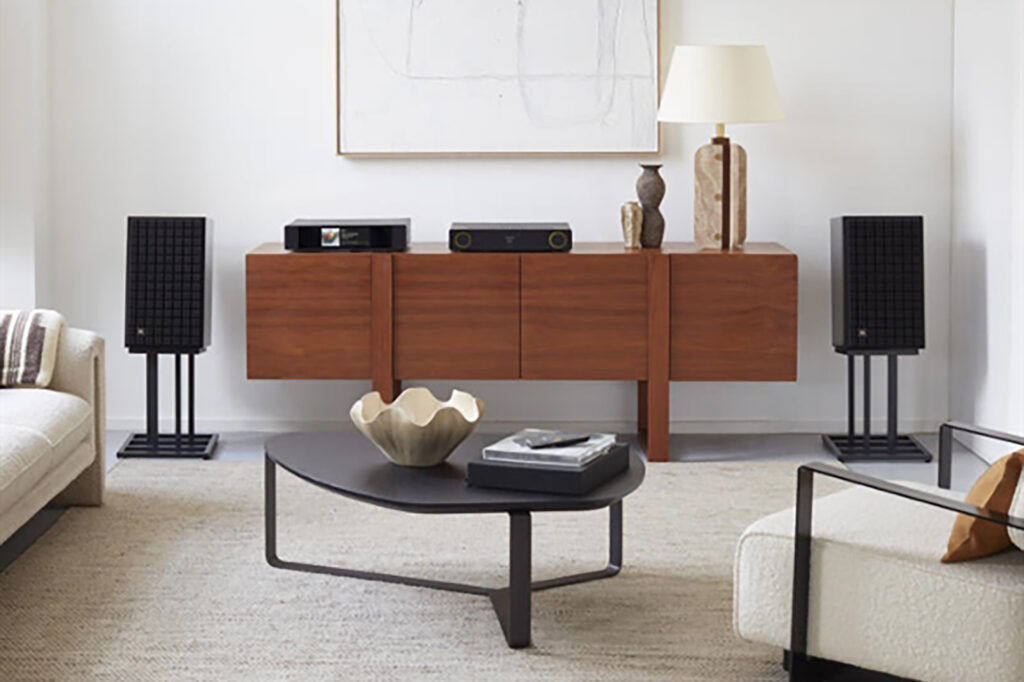
The ST25 is part of Arcam’s Radia series, a new lineup that blends sleek industrial design with the strong audio engineering Arcam is known for. The Arcam ST25 (buy at Crutchfield) slots into Arcam’s lineup as a mid-tier network streamer and DAC, positioned to complement the A25 integrated amplifier, though it plays well with a wide variety of systems. Visually, it maintains the Radia aesthetic – a matte black chassis accented with Radia yellow accents and a modern, full-width layout.
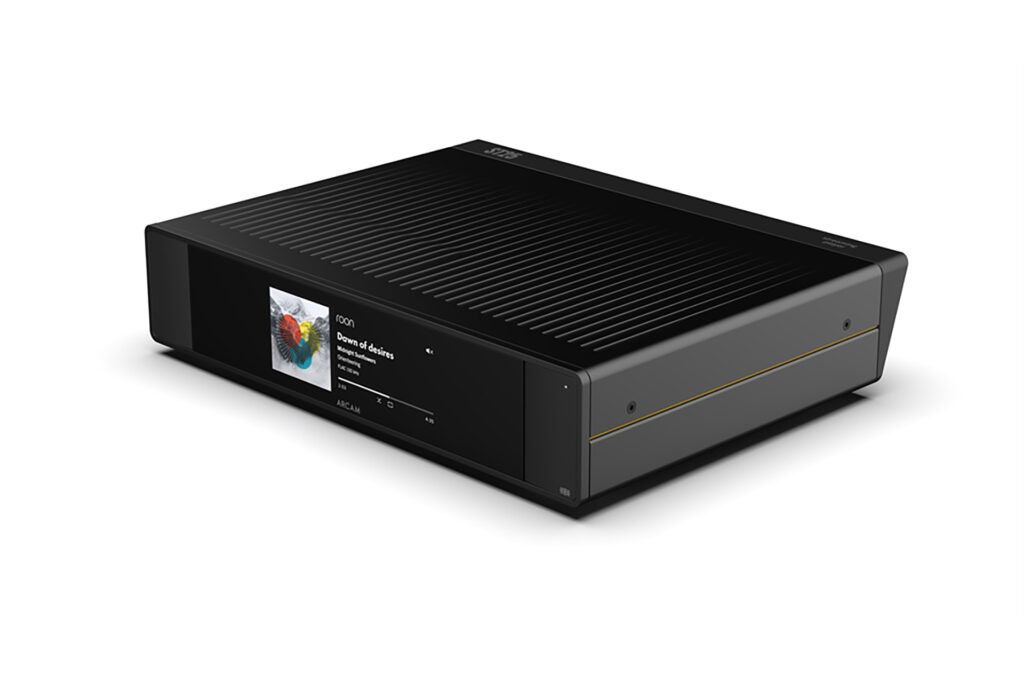
What Makes The Arcam ST25 Streamer Special?
- The Arcam ST25 is powered by an ESS Hyperstream IV DAC, a 32-bit chip known for low distortion and a high dynamic range. It supports PCM up to 32-bit/384kHz and DSD256. While it doesn’t decode MQA, it does support Tidal Connect, Spotify Connect, Apple AirPlay 2, Roon Ready (learn more about Roon from my article here), and UPnP, meaning you’re not locked into a proprietary ecosystem.
- Balanced XLR and single-ended RCA outputs are provided, along with optical and coaxial digital outputs. On the output side of things, the Arcam ST25 should be able to feed 95 percent plus of the systems out there. If you are one of the very few that rely upon I2S or AES-EBU, you are out of luck here.
- Building upon the last point, the internal functional design is done with performance in mind. Internally, the Arcam ST25 has careful circuit layout, power supply shielding, and jitter reduction technologies that Arcam has refined over the years.
- Streamers need connectivity and the Arcam ST25 has the basics covered with wired Ethernet and dual-band Wi-Fi support. There is a mid-sized remote for basic functional control. As to be expected, there is also an app that can control the ST25.
- The Arcam ST25 streamer chassis was designed to be a step above the mass-market audio gear. Now would be a suitable time to tell you that the entire streamer is a diminutive 17 inches wide by 13.7 inches deep by four inches tall and weighs in at 11 pounds. The anodized aluminum panels mean that not only does the streamer look good when you take it out of the box, but that the finish should hold up for years to come.
Why Should You Care About the Arcam ST25 Streamer?
The Arcam ST25 is for listeners who want high-end digital audiophile performance without overpaying for frills. It delivers an audiophile-grade signal path, a clean user interface (with or without the native app), and topnotch build quality. The inclusion of digital outputs lets the listener experiment with other DACs or simply stream music while utilizing their favorite DAC already in their system.
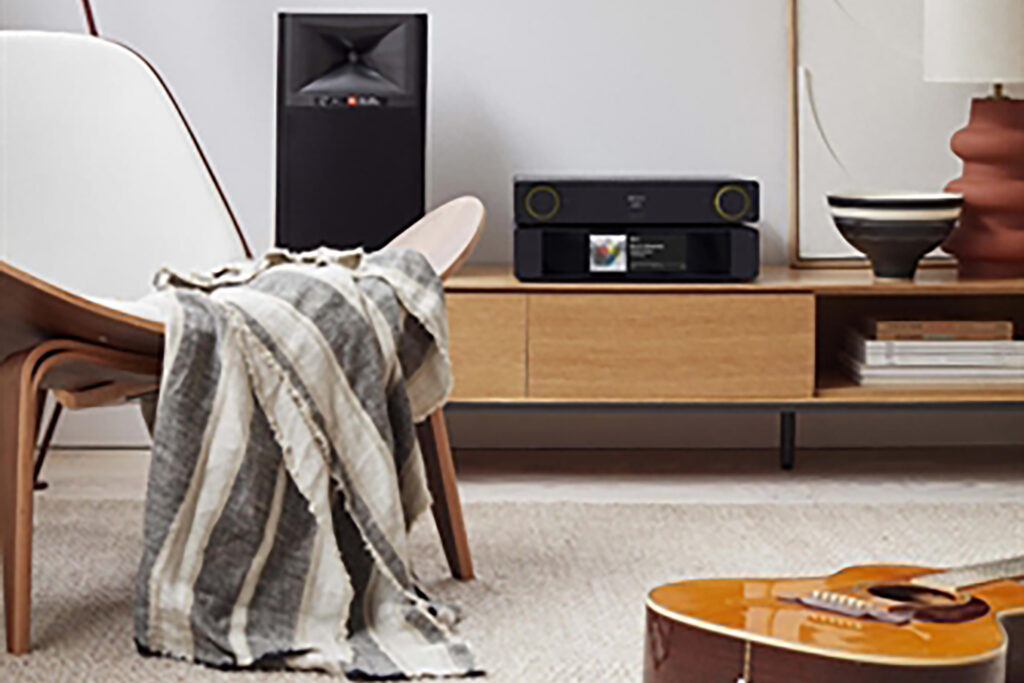
Some Things You Might Not Like About the Arcam ST25 Streamer …
- The Arcam app is not as polished or comprehensive as others in the space. The native MusicLife app is a bit behind the competition in terms of polish and responsiveness. It functions, but those used to BluOS or Lumin’s software will find it a step down. Roon users will be happy to know the Arcam ST25 is Roon Ready, so they can simply use their Roon app instead.
- Also, no MQA support means Tidal users won’t get the full decoding experience, but this may be a moot point, given MQA’s uncertain future.
- The unit also lacks a headphone output or USB DAC input. If you’re looking for an all-in-one digital hub or headphone solution, this may not be it. However, for its intended use – as a high-quality digital source – it excels.
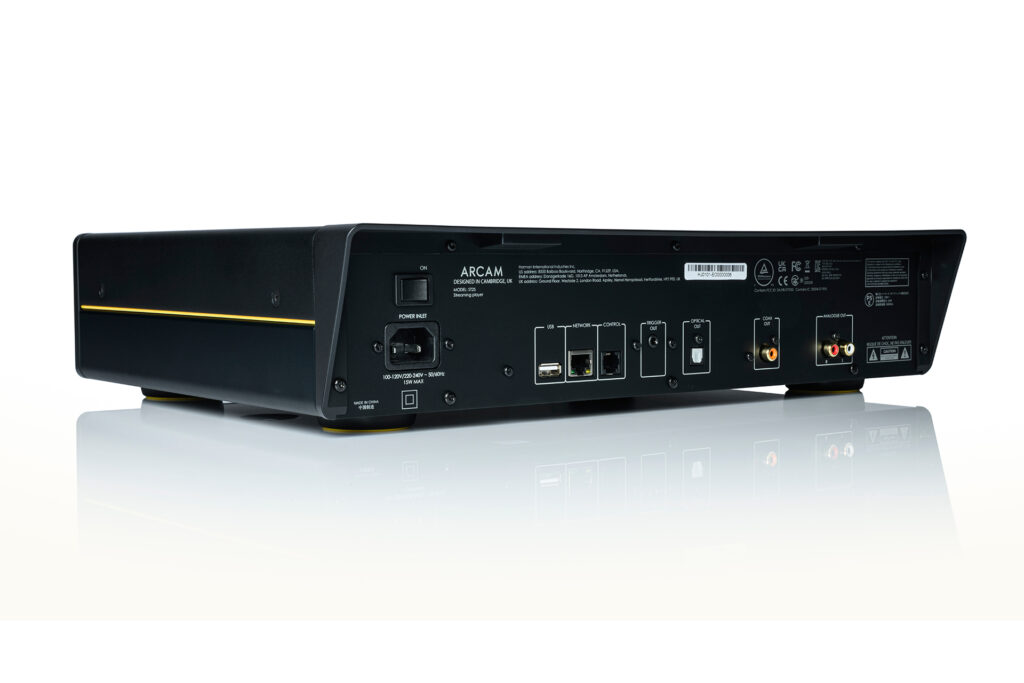
Listening to the Arcam ST25 Streamer …
I connected the Arcam ST25 Streamer to my Krell Phantom III preamplifier, feeding a ArgentPur DUO (read my review). The DUO was driving my Revel F328Be speakers (read my review). ArgentPur sent along some of their cabling, so I used ArgentPur power and speaker cables and a pair of their balanced cables between the preamplifier and amplifier. I connected the Arcam ST25 to the Krell preamplifier via Wireworld single-ended cables.
Starting with Patricia Barber’s “The Thrill is Gone,” the Arcam ST25 delivered a dark background with wonderfully resolved detail. Barber’s voice was rendered naturally, with no etch or glare, and the acoustic bass had texture and authority. Cymbals had air and extension without sounding brittle. The placement of these individual components portrayed the intimate soundstage of a jazz club. There was little to no missing resolution, as compared to a Compact Disc, which we all tend to expect these days from streaming, but let’s not make any assumptions, right?
Radiohead’s album In Rainbows (16/44 ALAC via Roon) was another standout. The track “15 Step,” on other streamers that I own and/or tested, can sound a bit congested, but through the Arcam ST25, each electronic blip and rhythmic hit was distinct and appropriately spaced. The Arcam ST25 didn’t add color, but it didn’t sound clinical, either. I was really enjoying the accurate but not too clinical sound.
Mahler’s Symphony No. 1 (DSD 64), this version was from my hard drive, performed by the San Francisco Symphony under Michael Tilson Thomas. This piece gave the Arcam ST25 a chance to show dynamic finesse. The quiet opening passages had impressive low-level detail, while the big brass climaxes of the fourth movement had scale without harshness. Imaging was excellent, portraying a large soundstage with the ability to listen into it for specific sections and instruments.
Finding Mahler to sound impressive via DSD, I then listened to Nat King Cole’s album Love Is The Thing, as I have this album in my library in both DSD64 and FLAC 44.1 kHz/16-bit. Listening to both to see if there would be much of a difference, the DSD version sounded significantly better to me. This was no surprise, as I found the same to be true when reviewing the T+A DAC200 (read my review). The DSD version, again, had a wider soundstage with the instrument placement more clearly delineated.
Will the Arcam ST25 Amplifier Hold Its Value?
Streamers and DACs are often thought to depreciate quickly, but the Arcam ST25 is built around proven technologies and a physical design that isn’t tied to short-lived trends. It’s not dependent on a closed app or ecosystem, which means it’s likely to remain compatible with major streaming platforms for years.
Its solid build and balanced outputs also incrementally help its resale potential – many buyers looking for a high-quality DAC/streamer will find these features attractive. While digital audio tech always moves forward, the Arcam ST25’s focus on quality fundamentals over gimmicks bodes well for its longevity. In other words, it should remain relevant longer than many other streamers, but no streamer will have the longevity of an old-school amplifier.
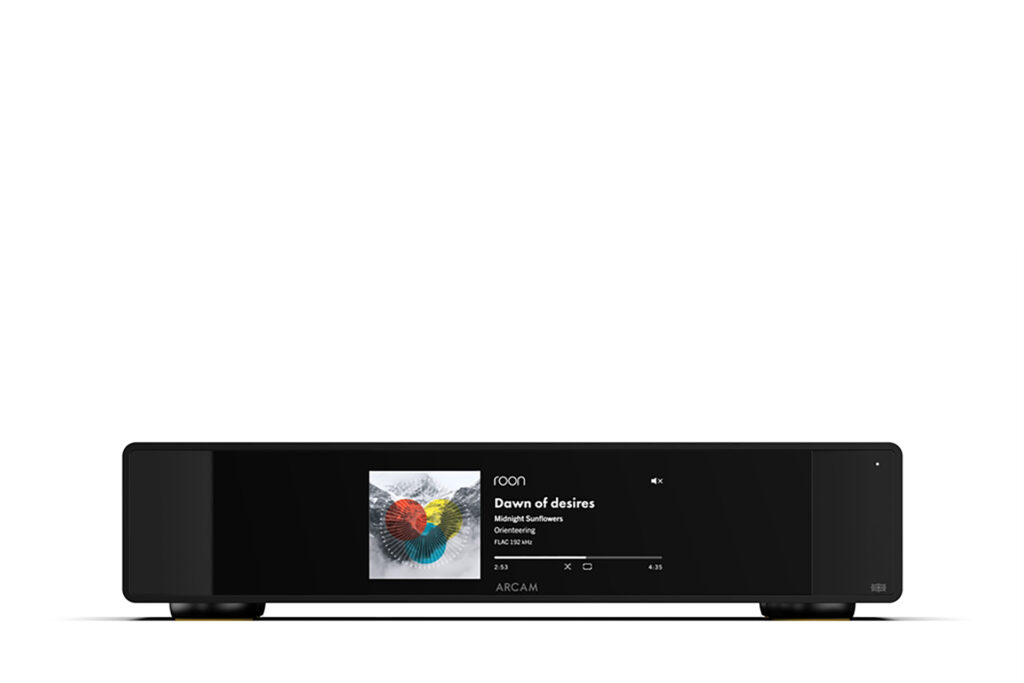
What Is the Competition for the Arcam ST25?
The Bluesound NODE 2024 ($749 – buy at Crutchfield) is a popular alternative with a better native app and more robust smart integration but, in my limited hands-on experience with this unit, the Arcam seemed to provide a more refined sound. With that said, many reviewers on staff here at FutureAudiophile.com use the Bluesound Node streamers as their platform of choice. Publisher Jerry Del Colliano uses a Bluesound Node ICON (buy at Crutchfield for $1,199) in his $150,000 reference system as his most trusted source component, feeding a $12,000-plus Bricasti M1 S2 DAC (read the review).
The Cambridge Audio EXN 100 V2 ($1,599 – buy at Crutchfield) utilizes Cambridge’s more polished StreamMagic interface and comparable features, as well as an HDMI eARC output. I have not had a chance to listen to this unit, so I cannot opine on how it compares in operation.
Lumin’s D2 ($2,300) is a step up in price and offers native DSD128 5.6 MHz and MQA support. The Lumin also has digital outputs to complement its fully-balanced architecture. What the Lumin does not seem to have is a native app for control, but it is Roon Ready, as well as compatible with numerous other app-based playback systems.
Final Thoughts on the Arcam ST25 Streamer …
The Arcam ST25 proves that there’s still room in the digital audio space for products that focus on sonic integrity first and foremost. It’s a modern streamer that doesn’t feel like disposable tech. Arcam avoids the temptation to pack in unnecessary features and instead delivers on what matters: excellent audio performance, reliable connectivity, and compatibility with the platforms most people already use.
For those building a system around the Arcam Radia lineup, the ST25 and A25+ form a natural pairing – but it’s also a great source for users who just need a DAC/streamer with great analog output. Its slightly neutral-to-warm sound signature and clean channel separation make it a versatile digital front end.
If you’re shopping for a streamer in the $1,000-$2,000 range and care more about reliable sound quality than expansive apps and super-tricky functionality, the Arcam ST25 is an easy recommendation. The component looks sharp, sounds better than its price suggests, and integrates seamlessly into a serious HiFi setup. It’s a quietly confident product from a brand with deep engineering roots.




Interesting review. You have a great system to test this (or any) streamer with, and I have no doubt the room is ideal for an evaluation. However, you failed to mention how you control the ST25. Over a year ago Arcam stopped supporting it’s proprietary iPhone application, rendering my ST-60 inoperable with my chosen music service, Finding a UPnP app was simple, but I find these interfaces are often primitive and unintuitive. Please make this vital connection a part of future streamer reviews.
Are you sure the D2 doesn’t have the Lumin ap? That would be strange as the company certainly has an app. The app is even used on certain Esoteric and I believe Teac digital products.