
 By
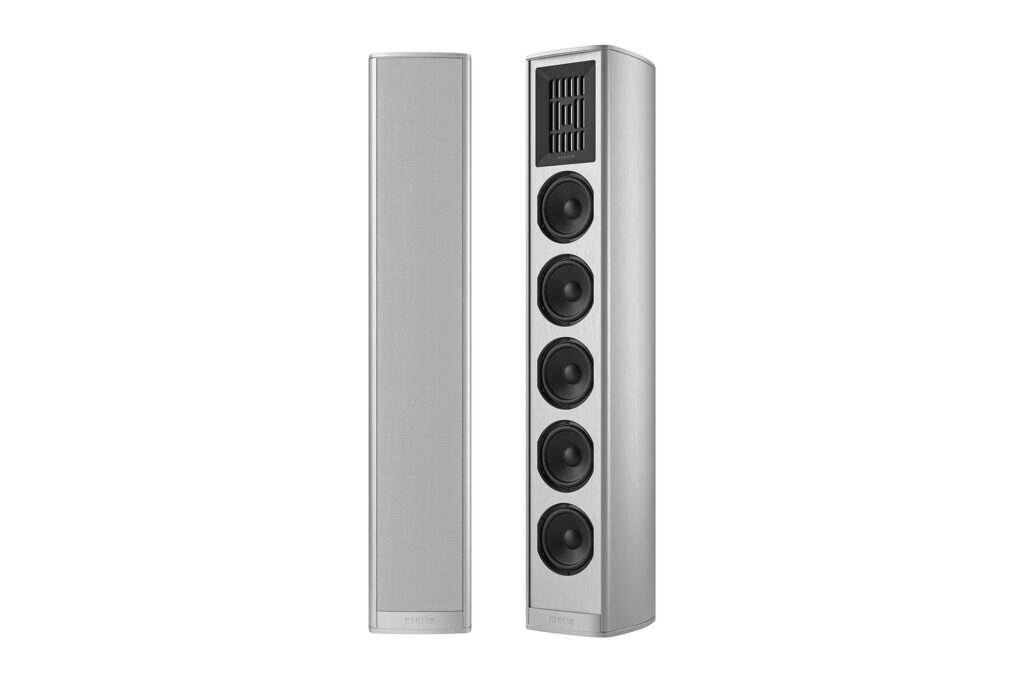
By The Piega Coax GEN2 611 is a $21,995 Swiss-made floorstanding loudspeaker built around a proprietary coaxial ribbon driver and an aluminum enclosure. The Piega Coax GEN2 611 model sits approximately in the middle of the current Coax product line. As the model’s name suggests, this is the second generation of the product line, released in 2022, where every aspect of the speaker has been enhanced.
Let’s explore the new design, construction, and overall audio performance of the Piega Coax Gen2 611.
What Makes the Piega Coax GEN2 611 Floorstanding Speakers
So Special?
- The Piega Coax GEN2 611 uses an extruded aluminum enclosure from top to bottom, machined with internal contact points for bracing supports that fit into place, increasing enclosure stiffness, thereby limiting cabinet vibrations. The design, referred to as Tim2, is part of the Gen2 makeover. The enclosure limits lateral seams, with joints only at the top and bottom plates of the enclosures. Additionally, the extrusion process allows for a front-to-back curved shape, not easily achieved with wood or MDF.
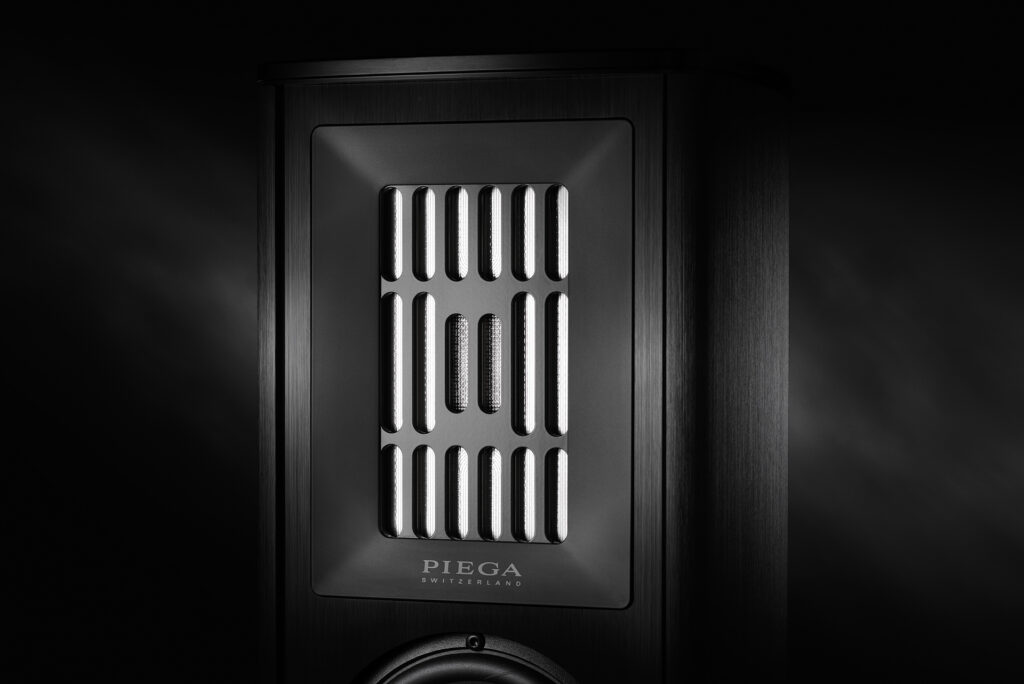
- The Piega Coax GEN2 611 uses a proprietary ribbon midrange and tweeter transducer, which has become all the rage in the last few years, yet has been part of the Piega trademark since 1983. Piega manufactures the coax ribbon and handles frequencies from 450 Hz to 50 kHz. As part of the GEN2 rework, the midrange ribbon uses a newer foil coating, while the tweeter receives an additional neodymium magnet.
- While the Piega Coax GEN2 611 has two 6.30-inch front-facing bass drivers, there are three additional drivers of the same size that act as passive radiators. The drivers are proprietary and referred to as UHQD (Ultra-High-Quality Drivers) by Piega. The cones use an aluminum membrane and titanium coil mounts with a sophisticated suspension system.
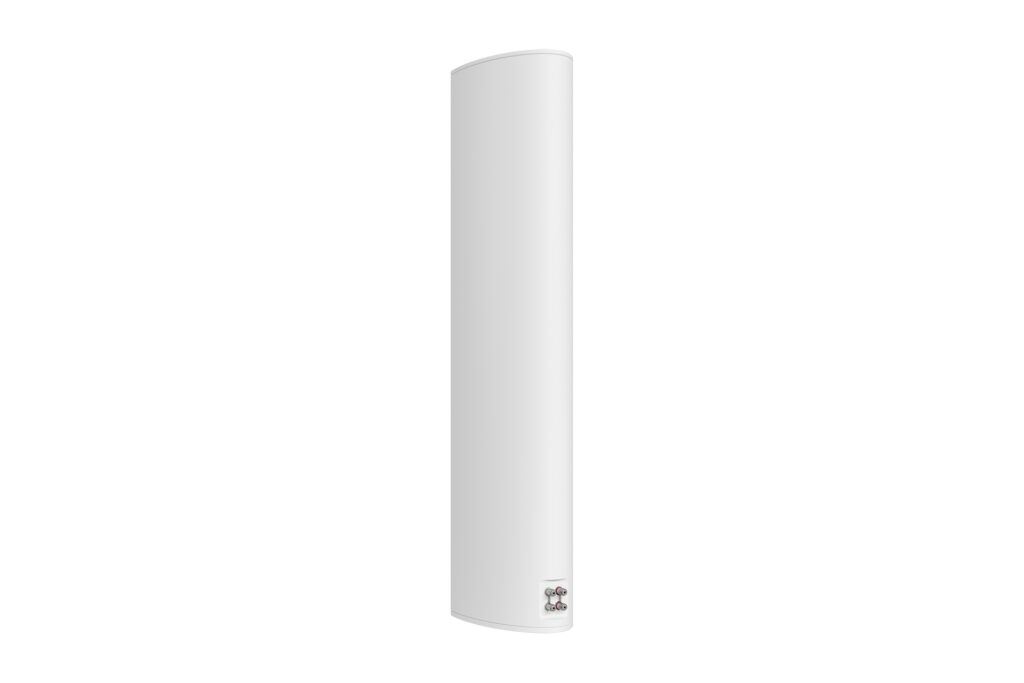
- The Piega’s Coax GEN2 611 can be bi-amped. With two sets of speaker inputs and removable jumpers that separate the bass drivers from the coax midrange tweeter, it’s a nice feature if you have an extra amplifier.
- Standard colors are raw aluminum, anodized black, and lacquered white. There are eight upgraded anodized colors available on their website for an additional charge.
Why Should You Care About the Piega Coax GEN2 611 Floorstanding Speakers?
The Piega Coax GEN2 611 floorstanding speakers will strongly appeal to listeners who value the speed, clarity, and resolution that ribbon drivers are known for, paired with exceptional industrial design and build quality. For audiophiles new to ribbon midrange and tweeter technology, the Piega Coax GEN2 offers an inviting and accessible introduction without sounding overly aggressive or clinical. When you hear “Made in Switzerland,” expectations of precision engineering and meticulous execution naturally follow, and the Piega Coax GEN2 611 lives up to that reputation in both construction and performance – qualities that absolutely matter at this level.
Some Things You Might Not Like About the Piega Coax GEN2 611 Floorstanding Speakers
- The Piega Coax GEN2 611 is a highly revealing speaker, and its coaxial ribbon midrange and tweeter do not gloss over upstream issues or less-than-ideal recordings. For listeners who prefer a forgiving, warm, or laid-back presentation, this level of honesty may feel analytical or even unforgiving.
- Despite its 99-pound weight, the slim cabinet makes the speaker easier to tip than some competing designs, particularly in rooms with foot traffic, pets, and/or children. Piega’s optional wider plinth bases significantly improve stability, but they add close to $1,000 to the already substantial purchase price.
- The Piega Coax GEN2 611 rewards careful system matching, particularly with amplification and source components, and will sound only as good as what is feeding it. Listeners with mid-tier electronics may not hear the speaker’s full potential without additional upstream investment.
Listening to the Piega Coax GEN2 611 Floorstanding Speakers
The Piega Coax GEN2 611 floorstanding speakers were evaluated in my reference system, which for this review included the HiFi Rose RS130 network transport and RD160 digital-to-analog converter. From there, a Pass Labs XP-22 stereo preamplifier (read the reviews) fed a Lyngdorf MXA-8400 multichannel Class-D amplifier using Purifi Eigentakt modules, with two channels in use. WireWorld Generation 10 interconnects and speaker cables were used throughout. All told, this is a highly resolving and revealing system.
My reference Estelon Aura Floorstanding Speakers (read my review) were swapped in and out during the evaluation, allowing for direct comparisons over an extended listening period. I spent significant time with the Piega speakers and cycled through a wide range of familiar recordings, with the following selections best illustrating their sonic character.
On the 2021 remastered version of “Wild World” by Cat Stevens (Qobuz FLAC 192 kHz/24-bit), the acoustic guitar immediately stood out, offering exceptional clarity and articulation. I could not recall this track sounding quite this resolved before. There was a notable sense of layering in the upper frequencies, making it easier to distinguish individual instruments within the mix. Some listeners might describe this presentation as analytical, but I found it engaging and captivating. Imaging was precise, locking performers into a stable and convincing center stage. The midrange was coherent, clean, and finely detailed, with a slight sense of forwardness that enhanced engagement without inducing listener fatigue. Coming from the Estelon Auras, which strike a neutral balance between laid-back and forward, the Piega’s subtle midrange emphasis served as a reminder that speakers can energize a room in different, equally valid ways.
Bass performance further highlighted the differences between the two designs. The Piega Coax GEN2 611 delivered a bottom end that was robust, controlled, and revealing, with slightly more perceived thrust than the Estelon Aura, though only incrementally so. I attribute much of this to the Piega’s reduced sensitivity to placement. In my relatively small 14-by-15-foot room, the Aura’s downward-firing 10-inch woofer benefits from additional space away from the front wall to fully develop low-frequency output. The Piega, with its two front-firing bass drivers and three forward-facing passive radiators per speaker, proved more forgiving of room constraints while still delivering satisfying bass weight and control.
To challenge the Piega Coax GEN2 611s with a more complex recording, I turned to “Say Goodbye” by the Dave Matthews Band (Qobuz FLAC 44.1 kHz/16-bit), a longtime reference track of mine. With its dense mix and wide array of instruments, this song can overwhelm lesser speakers. Like the Estelon Auras, the Piega Coax GEN2 611 handled the opening percussion with authority, exhibiting excellent control, detail, and dynamic slam. The combination of tight bass performance and a highly resolved coaxial ribbon midrange and tweeter allowed the Piegas to maintain composure through the busiest passages, presenting a cohesive and immersive soundstage that made it easy to forget you were listening to a recording rather than a live performance.
Will the Piega Coax GEN2 611 Floorstanding Speaker Keep Its Value?
During my time with the Piega Coax GEN2 611, its timeless industrial design, exceptional build quality, and long-term performance potential stood out as meaningful contributors to value. Piega loudspeakers are rarely seen on the secondary market and, when they do appear, they tend to hold their prices rather than being discounted aggressively. Based on brand reputation, construction quality, and owner retention, the Piega Coax GEN2 611 should retain its value better than most loudspeakers in its price class.
What is the Competition for the Piega Coax GEN2 611 Floorstanding Speakers?
My reference Estelon Aura Floorstanding Speakers represent a logical point of comparison. While the Aura and Piega Coax GEN2 611 share a similarly sculpted, continuous enclosure concept, the execution and underlying philosophies differ significantly. The Estelon Aura uses a proprietary manmade stone and resin composite enclosure with no removable top plate, housing a downward-firing 10-inch woofer at the base. In contrast, the Piega employs an extruded aluminum enclosure with front-firing bass drivers and passive radiators. Beyond their unconventional enclosure designs, the similarities largely end. The Aura is a sealed design featuring a high-quality dome tweeter in a traditional MTM (midrange tweeter midrange) configuration, while the Piega’s coaxial ribbon driver defines its sonic identity. Both speakers perform at a high level, but they approach sound reproduction differently, each offering a distinct presentation and set of strengths.
The Bowers & Wilkins 802 D4, priced at $31,000 and reviewed by our Editor-in-Chief Jerry Del Colliano, is another compelling alternative. Like the rest of the 800 Series, the 802 D4 uses layers of bent wood formed with specialized furniture-grade tooling to create its signature curved enclosure while minimizing internal resonances. The latest D4 generation further integrates aluminum into the front, rear, and top panels to improve rigidity. While my direct experience with the 803 D4 is limited, I did review the smaller 805 D4 stand mount and was impressed by its performance. For buyers willing to stretch their budget beyond the Piega’s $21,995 price point, the 803 D4 would be a worthy audition.
Also worth consideration is the Stenheim Two.Five, retailing at approximately $23,500, and also hailing from Switzerland. Though more traditional in appearance with its boxlike form factor, the Two.Five features an all-aluminum enclosure similar in concept to the Piega. The Stenheim is known for being relatively easy to drive, making it compatible with a wide range of amplifiers. While I have not personally auditioned the Two.Five, its strong reputation and positive review history suggest it is a serious contender in this segment.
Final Thoughts on The Piega Coax GEN2 611 Floorstanding Speakers …
The Piega Coax GEN2 611 Floorstanding Speakers proved to be a rewarding and engaging listening experience. Loudspeakers are asked to reproduce multiple instruments simultaneously, and complex musical passages quickly expose a design’s strengths and limitations. The Piega rises to that challenge with exceptional midrange and treble resolution, paired with bass performance that is tight, connected, and well-controlled. While its high-frequency presentation differs from that of my reference Estelon Auras, which lean slightly more toward my personal preference, it serves as a clear reminder that loudspeakers approach music reproduction in different ways, and listener taste ultimately plays a decisive role.
That said, the Piega Coax GEN2 611 and the Estelon Aura share meaningful similarities. Both deliver a large, immersive soundstage with convincing depth, precise imaging, and a strong sense of realism. For listeners shopping in the $20,000 range who prioritize speed, transparency, and the unique strengths of ribbon-driver technology, the Piega Coax GEN2 611 would sit squarely on my short list of speakers to audition.



