
 By
By The French audiophile brand Metronome was founded in 1987 and is known for building some of the finest digital components available. Historically, this has been a company that has only made very, very high-end audiophile components. Luckily, this is changing with the introduction of the Digital Sharing (DS) range of components. The DS range includes the DSC mini DAC, which I am reviewing, the DST Compact transport, which I will be reviewing soon, the DSS 2 network player and streamer, and the DSC, which is a DAC, streamer and preamp all-in-one.
These new products have the DNA of the higher-end Metronome equipment at prices that younger audiophiles can afford. Smart move by Metronome, as we are all aware of the aging demographic of traditional audiophiles and their continued decrease. Will these new products uphold the Metronome reputation of outstanding sound quality? Let’s find out.
What Makes the Metronome DSC mini DAC So Special?
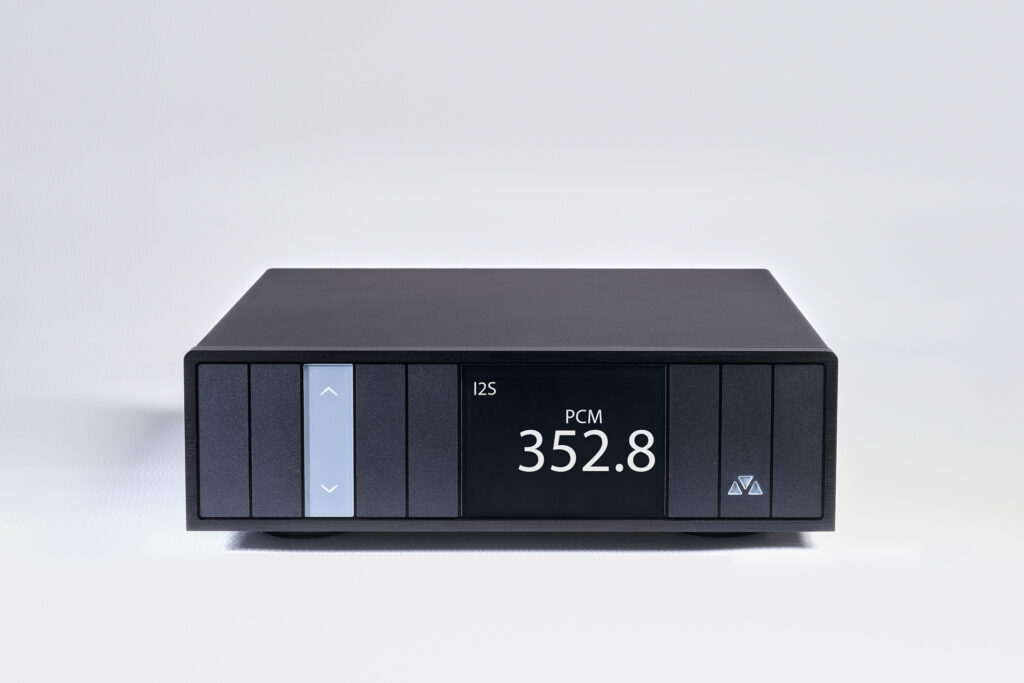
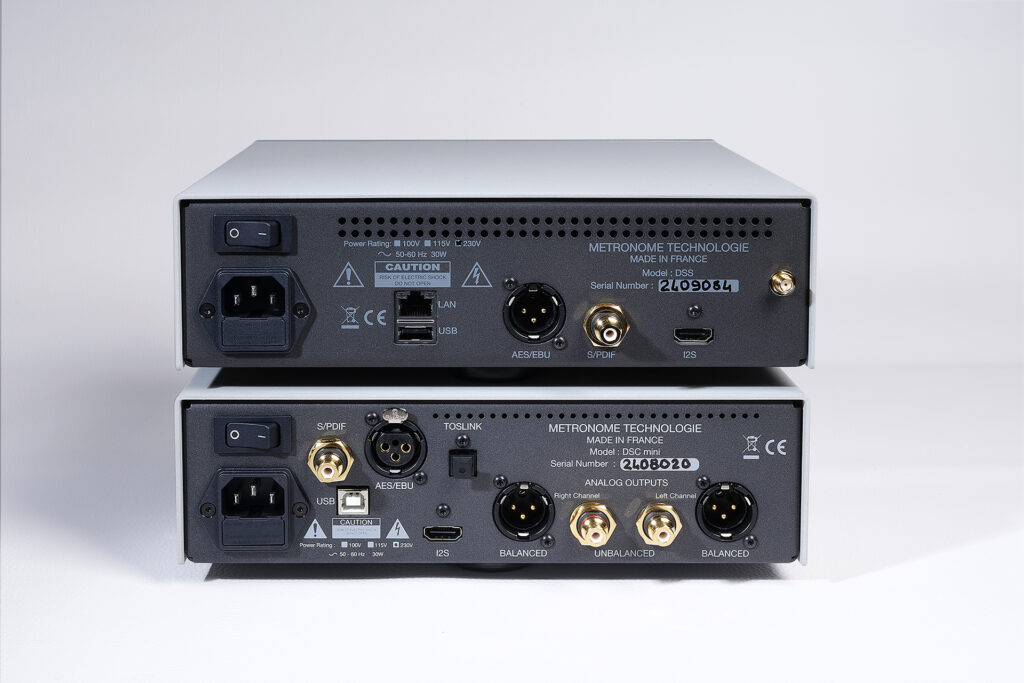
- The Metronome DSC mini DAC has every digital input you may need. These include S/PDIF, AES/EBU, Optical, USB and I2S. It’s an ideal companion to the other DS sources, but works just as well as a standalone DAC.
- The Metronome DSC mini DAC can process almost any digital signal you can throw at it.On the S/PDIF input, it accepts standard 44.1 PCM up to 32-bit/384 kHz, and DSD64 to DSD128. I2S is the same, except it supports up to DSD256, USB up to DSD512. AES/EBU, which I used, is primarily limited to DSD128. While 768kHz seems to be the sexy new spec everyone is chasing, I didn’t miss it.
- The Metronome DSC mini DAC uses the same Sabre ES9026PRO chip as does their more expensive Le DAC 2. Rather than use a lesser-quality audiophile DAC chipset (read about audiophile DAC chips here) in the DS line, Metronome kept quality high.
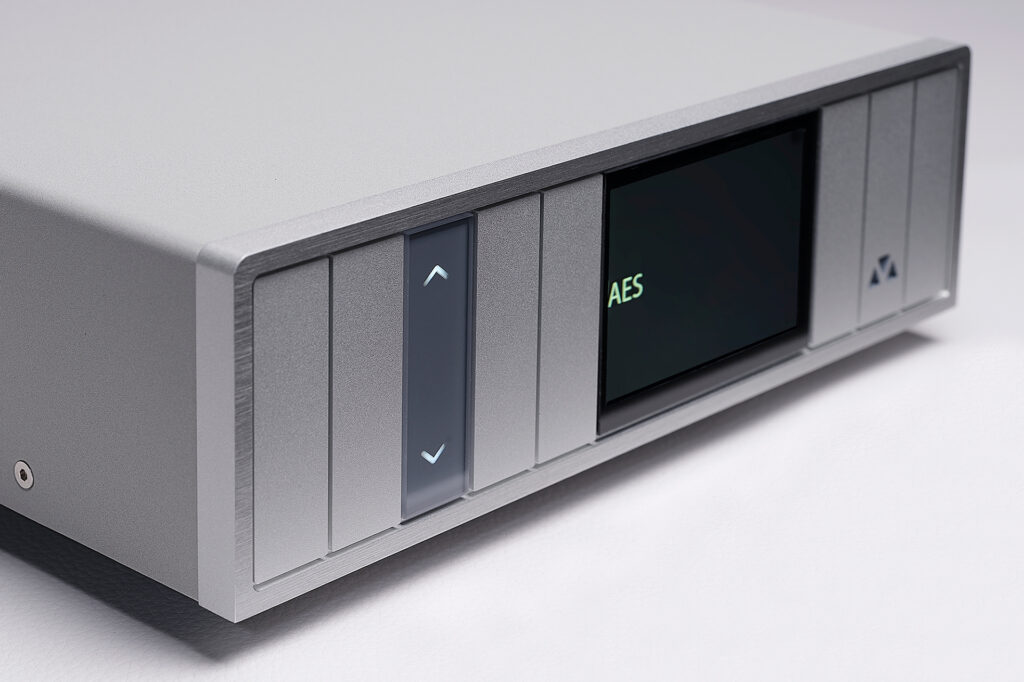
- The Metronome DSC mini DAC is well-built and boldly styled. I was surprised when picking it up that it had considerably more heft than I expected from a component this size. It also has styling that stands apart from the dozens of nondescript DAC boxes it competes with. To my eye, it looks like a RAID memory storage unit, with vertical rectangles mimicking the individual storage drives. It’s very industrial/sci-fi and much more interesting than the standard smooth face you see on competing products.
- The Metronome DSC mini DAC is 100 percent made in France. In a world where almost every electronic seems to be manufactured in China, it’s great to see a company that builds its equipment in their home country. Many audiophiles prefer not to support China for a variety of reasons. Metronome can be added to their shopping list.
Why Should You Care About the Metronome DSC mini DAC?
The Metronome DSC mini DAC is for the audiophile who wants something unique in a market flooded with Chi-Fi clones. It is decidedly up-market and offers performance worthy of the Metronome name. What I find most appealing is that the Metronome DS ecosystem is designed to work together seamlessly for all your digital music needs. The DSC mini DAC is the heart of the system. The DSS 2 network player and streamer supports JPLAY, Roon Ready, Qobuz Connect and Audirvana. I’ve grown to appreciate products that are designed to work together from the same manufacturer. This almost always results in a better experience without compatibility headaches. If you still have Compact Discs, the DS transport is a no-brainer to add to the DSC mini DAC. Soon to be released is a network storage device for all your downloaded or ripped music. All this is to say that the Metronome DS system is ideal for the sophisticated audiophile who doesn’t want to fuss with mixing and matching components. They want the easy button from a company with a long history of top-performance digital. However, even if you already have a streamer and transport, the Metronome DSC mini DAC is still worthy of consideration. It has an open and transparent presentation with outstanding bass that kept me listening in front of my system.
Some Things You Might Not Like About the Metronome DSC mini DAC
- If you’ve read my other audiophile equipment reviews (check out my profile), you know that I am not a fan of components that are not standard width, like the Metronome DSC mini DAC. I won’t belabor the issue, other than to point it out in case it bugs you, too, as a potential buyer. The good news is that the rest of the DS product line shares the same chassis as the DSC mini DAC, so they look good when stacked.
- The Metronome DSC mini DAC does not include a remote control. For those of us with multiple digital sources, it’s a hassle to have to walk to the DAC to change the input. First-world problems, I know, but I can’t think of another competitor at this price point that doesn’t include one and/or an app.
- The Metronome DSC mini DAC does not include any DSP or filters. While this may be a negative to some, others will see it as a positive. Sometimes too many options can overwhelm the user and take away from the listening experience. Based on my listening experience, I would not want to alter anything that I heard.
Listening to the Metronome DSC mini DAC …
My current reference system consists of a Lumin U1 mini streamer, Weiss Helios DAC, CH Precision L1/X1 Preamp, CH Precision M1.1 Amplifier and Rockport Avior II loudspeakers. The Metronome DSC mini DAC was connected to the preamplifier using Wireworld Platinum Eclipse 10 XLR cables and a Wireworld Starlight 10 Balanced digital cable to the Lumin U1 mini.
“Life Without You” from Stevie Ray Vaughan & Double Trouble from the Soul to Soul album is an excellent test for any system. It’s bluesy, emotional and slow enough to let the listener focus on individual pieces of the music with a microscope. It should be no surprise that my ears started with the guitar. This song offers ample time and space to let each chord fully develop in the soundstage without fighting other instruments. What did I hear from the Metronome DSC mini DAC? Two words kept coming to mind: purity and openness. Each string, each note, each chord had wonderful clarity and bloom. Bloom is one of those audiophile terms that I hate because it just sounds so pretentious and snobbish, but sometimes it’s necessary. The guitar of Vaughan bloomed into my room, meaning each note started from a single point in space and got bigger as it moved towards me, then past. This is a hallmark of a great DAC, in my experience. It means the DAC creates a very black, low-noise background that lets each instrument stand out. None of these attributes matter if the sound of the guitar isn’t right, however. The Metronome DSC mini DAC did not disappoint. The guitar tone had a touch of smoothness that was just right and utterly realistic. The drums were also noteworthy, particularly the rimshots, which were fast and sharp, but never harsh.
“Comfortably Numb” from Pink Floyd’s The Wall is a classic demo track and somewhat “forced hit” that we all know and have heard hundreds of times if not more. It’s textbook Pink Floyd with the ethereal voice of David Gilmour, Roger Waters’ trademark dark monologue, and arguably the greatest guitar solos of all time – I believe it has two of them. What first stood out to me was the bass performance from the Metronome DSC mini DAC. Nick Mason’s kick drum, along with Waters’ bass, played deep and was easily felt in my chest, even at moderate levels. In stark contrast were cymbals, which were light and airy with loads of decay and shimmer. The first of Gilmour’s two guitar solos had the same sense of purity, realism and attack as what I heard with Stevie Ray Vaughan. The second solo is darker and more aggressive. Both sounded excellent. Vocals were centered and clearly in front of the rest of the band. The soundstage had good depth and even better height. I did detect a slight congestion between the two solos when the orchestral components come in, along with Gilmour’s vocals. It was very subtle, but I noticed the vocals lost a bit of isolation while riding on top of the string arrangement. I went back and forth between the Metronome and my reference Weiss Helios DAC (read the review) to confirm. Now, keep in mind that my Weiss DAC is more than three times the cost of the Metronome, so it’s a completely unfair comparison. However, it showed me the Metronome punches far above its price point.
Will the Metronome DSC mini DAC Hold Its Value?
Metronome is a high-end audiophile brand that has a lot of cachet, even if it may not be one of the first manufacturers that comes to mind. It is a boutique brand that has a strong following and makes great products. While $5,799 is still a large sum of money for a DAC, it falls well within the same level of the audiophile spend pyramid and stands toe-to-toe with products costing significantly more. The Metronome DSC mini DAC has high-end performance and can serve as the centerpiece of a very high-performance system well into the future.
What is the Competition for the Metronome DSC mini DAC?
The first DAC that I think of as a competitor to the Metronome DSC mini DAC is the $6,500 Bricasti M3 DAC (Check out Jerry’s review here). The Bricasti is more expensive than the Metronome, but it also uses different converters for PCM and DSD, while the Metronome uses the Sabre ES9026PRO for both. The Bricasti also includes a volume control so that it can drive an amplifier directly, which the Metronome cannot, not to mention it includes a handy remote control. Build quality of the Bricasti is topnotch, with engineering and manufacturing all taking place here in the United States.
Next would be the $4,995 Madison LE streamer/DAC from Swiss manufacturer Wattson.Wattson was recently acquired by fellow Swiss manufacturer CH Precision and promises to offer some of the secret sauce that CH Precision is known for. As the name implies, it includes a streamer, which the Metronome DSC mini lacks. The Wattson Madison LE does not have all the inputs that the Metronome DSC mini does, offering only coax and Toslink. The idea is that most users are now streaming content or accessing it from local storage. I can’t argue with that, as it reflects my personal usage. The Wattson Madison LE also performs preamplifier functions and has an app for control of the unit.

Final Thoughts on the Metronome DSC mini DAC …
The Metronome DSC mini DAC occupies a compelling space in the marketplace. It is a throwback, no-frills audiophile DAC from a high-end boutique manufacturer and has a price that puts it against some stiff feature-laden competition. More features, however, don’t always equate to a better-performing unit. All those features take development budget and may actually end up reducing performance in exchange for gimmicky options that may never get used.
The Metronome DSC mini DAC is a purist’s DAC. Feed it a digital stream and wonderful sounds come out of it, no fuss or tinkering required. Its solid build quality should keep it humming along for decades without headache. The Metronome Digital Sharing ecosystem is something that may or may not interest the potential buyer, but I like the concept of adding more capabilities from the same manufacturer, even if they are separate boxes.
All of this is irrelevant if the Metronome DSC mini DAC doesn’t sound great, but it does. I’ve heard DACs that cost significantly more, which I did not enjoy listening to nearly as much as I did the Metronome DSC mini DAC. It has a very transparent and open sound, with great bass performance. It creates a large, rich soundstage that I never, ever got tired of listening to. At this price range, it is worth seeking out a Metronome DSC mini DAC, as it is a top-level competitor.




Hello,
This DAC is out of may range, but I appreciate the review.
Have you all written, explained or illustrated “the audiophile spend pyramid” in any of your articles? I would like to see it it explained.
Thank you and keep up the excellent work.
Cheers and happy holidays!
Hi Pierre,
First of all – thank you for reading and commenting!
What does the spend pyramid mean to you? If you’re asking where to spend your money my belief is below in descending order of spend. Others may disagree and everyone has their own idea of what they want from their system.
Speakers – nothing has more of an impact to overall sound of your system
Source – you can’t recapture missing information downstream
Preamp – poor preamps will choke your amplifiers and flatten your sound
Amplifier – I use to think this was much higher up the pyramid, but now put the preamp above
Hope this helps!
Jim