
 By
By MartinLogan has carved out an impressive place in the audiophile hobby. They are, at present, the likely leading and perhaps best-known manufacturer of electrostatic speakers in business today. Ranging in cost of up to nearly $120,000 per pair, their speakers are highly praised and popularly purchased. MartinLogan therefore needs little in the way of an audiophile introduction. When it comes to subwoofers, they also have a wealth of experience. Practically all their electrostatic speakers come equipped with a sub. Yet they also make a very serious line of standalone subwoofers, which may be used in any system with any brand or type of loudspeaker.
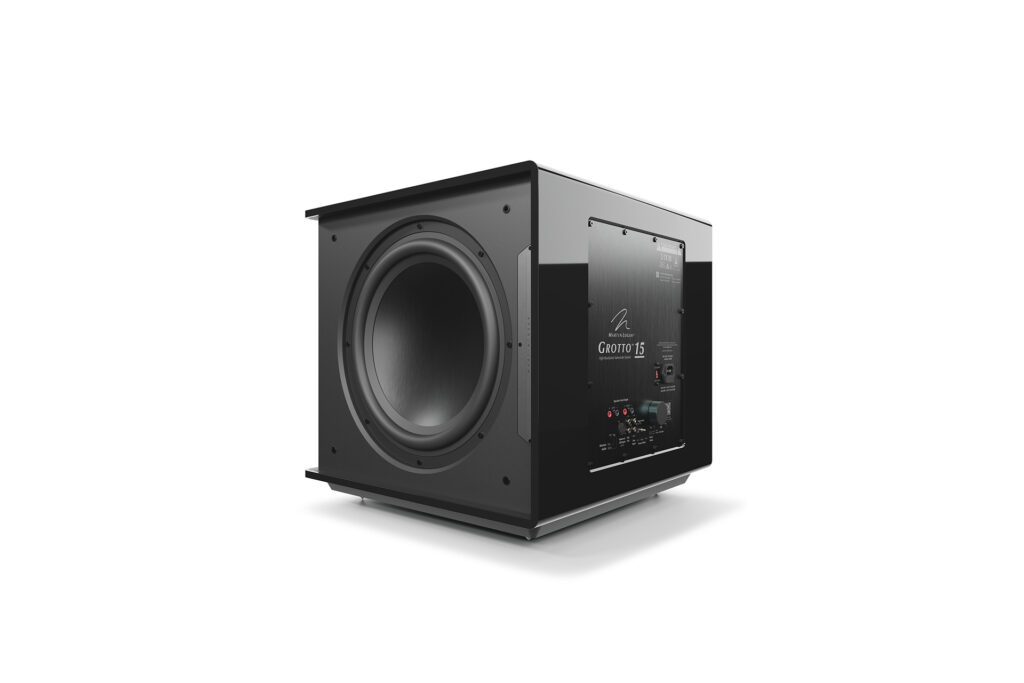
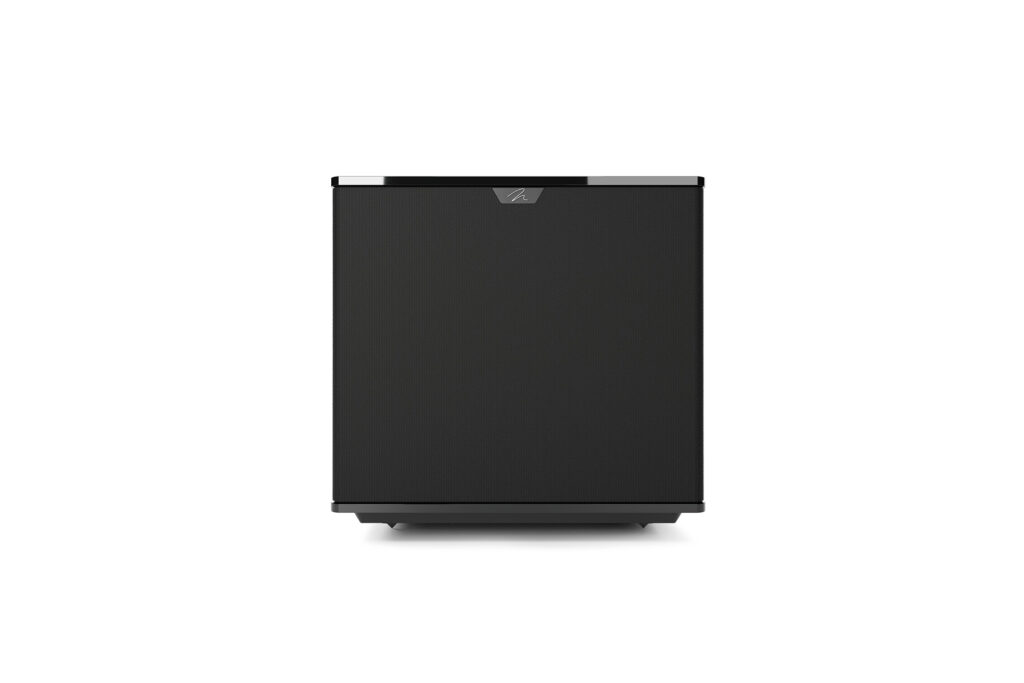
In this review, we will take a detailed look at the MartinLogan Grotto 15, which is one step removed from their flagship subwoofer. It is rather large, rather heavy, and has a variety of options. This Grotto design actually existed as an earlier version. MartinLogan completely reimagined the design, brought modern technology into the mix, and has created a very worthy standalone subwoofer. In this review, we will look more closely as to why.
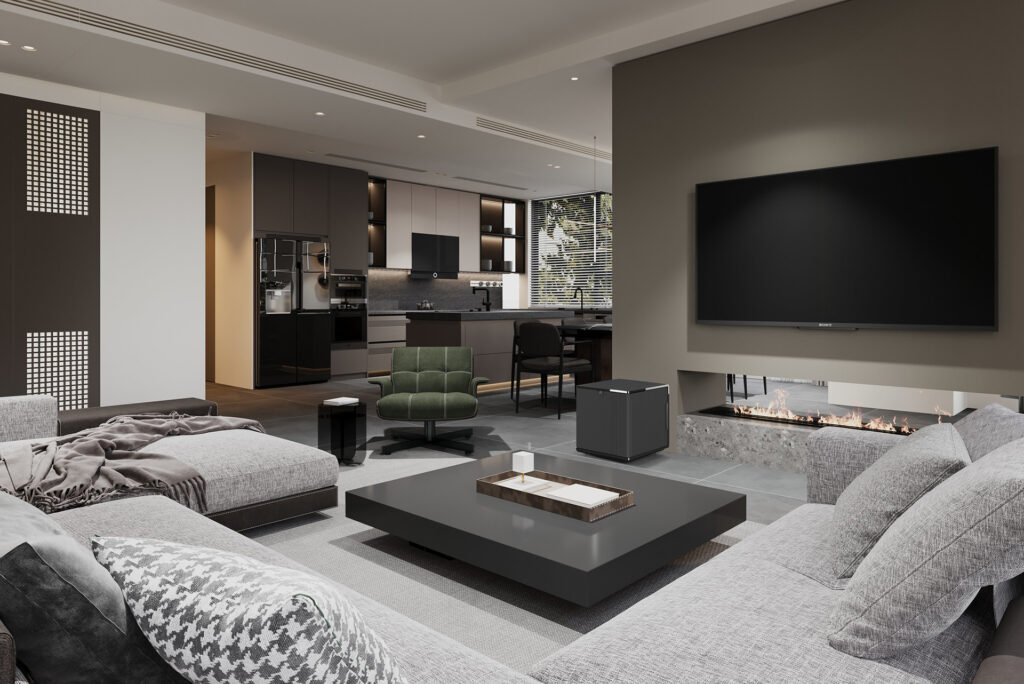
What Makes the MartinLogan Grotto 15 Special?
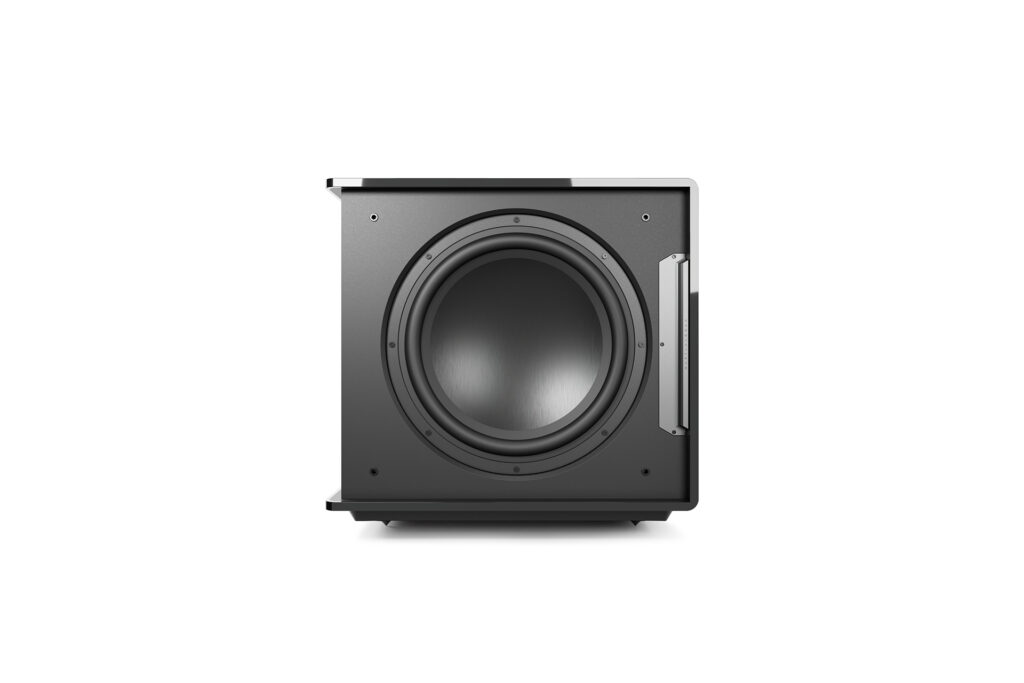
- The MartinLogan Grotto 15 utilizes a 15-inch aluminum cone woofer, paired with two side-mounted 15-inch passive radiators. The purpose of a passive radiator is to simulate a bass reflex port. They are claimed to enhance the low-frequency extension typically found in a ported subwoofer, yet also provide the tight, controlled bass a sealed design will deliver.
- As this is a powered subwoofer, the Grotto 15 is powered by a Class-D amplifier with 1000 watts RMS, up to 2000 watts peak. This significant amount of power will enable it to recreate lows with significant dynamic authority. It is easily at home in both two-channel audio and home theater applications.
- The rated frequency response is 20 Hz to 120 Hz. This range will allow the MartinLogan Grotto 15 to peek into the low midrange frequencies.
- The processing capabilities have been updated and are now rated at 500 MHz with 64-bit processing. This allows for real-time control, through the MartinLogan app, of each subwoofer function.
- Room correction is included and is actually twofold. On the simpler side, three preset modes are available – music, movie and night. Because my system is two-channel, I used the music setting.
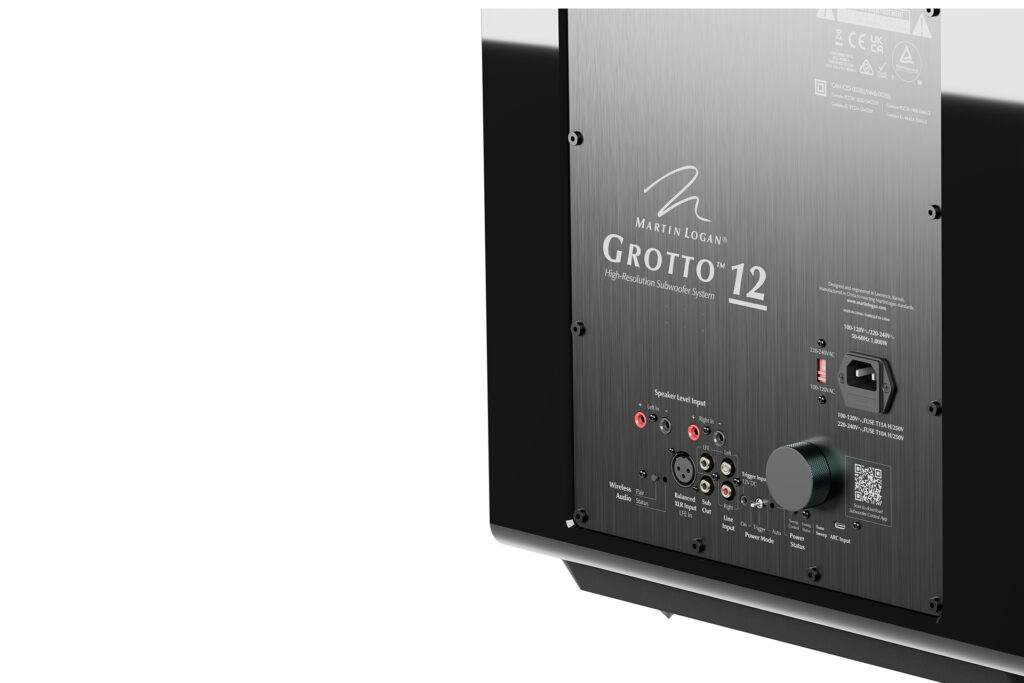
- On the more complicated side, the MartinLogan Grotto 15 is equipped with ARC Genesis room correction software. A separately-purchased calibration kit, which includes a microphone and the various cables needed, allows the Grotto 15 to be connected to a Mac or PC for room correction frequency sweeps.
- There are three very convenient connection methods on the MartinLogan Grotto 15. One is an LFE connection, using a single RCA or XLR cable. This connection is dependent on the control device having its own subwoofer controls. The second is a stereo left and right set of line-level RCA jacks. This connection is designed to be connected to the output of a preamp, integrated amp or a similar product. The control app is fully compatible with this connection option. This is the connection method I used for my review. Lastly, and frankly my preferred connection option, is a speaker-level connection. This allows the MartinLogan Grotto 15 to be directly connected to the same terminals on an amplifier as the mains. However, only cables with banana terminals on the subwoofer end are compatible.
- Probably somewhat unique in high-performance audio, MartinLogan includes a wireless connection with the Grotto 15. A separate wireless transmitter may be connected to the system to provide wireless subwoofer control. Wireless also enables significant freedom in subwoofer placement. All the requisite cables are included. I tried this connection method and found it to be a seamless option for a wireless connection.
- An app which may be downloaded to a handheld device or computer will allow the user to control the various sonic functions. These include, but are not limited to, volume (gain), low pass filter, DSP modes, and phase. It is compatible with both IOS and Android. I had no problems whatsoever in downloading and setting up this app. In fact, once I plugged the sub into the AC power outlet and opened the app on my iPad, an immediate connection was made and I was good to go.
- Four specially-designed rubber feet are bottom mounted to help reduce vibrations. These rubber feet are reported to reduce the transfer of energy from the subwoofer to the floor, thus providing a tighter, more controlled low-frequency performance. Four carpet spikes are also provided.
Why Should You Care About the MartinLogan Grotto 15?
To really answer this question, I suspect it would be necessary to believe in the use of a subwoofer in the first place. What subs can do for a two-channel system is undeniable – certainly well beyond simply making the room thunder. Prices for subs are quite wide-ranging. Purchasing a subwoofer may be done for less than $1,000 or for as much as $50,000 – or even more. What MartinLogan has in the new version of the Grotto 15 is a sub with a wide variety of connection options, including wireless, and the ability to not only provide a solid foundation for low frequencies, but also to help ameliorate the low midrange. And of course, the mids are where a significant portion of the musical presentation lives. To facilitate all these improvements for less than $3,000 is a very appealing attribute. Not budget-priced but, then again, this is not an entry-level-performing product.
Some Things You Might Not Like About the MartinLogan Grotto 15 Subwoofer
- This is a rather large, heavy subwoofer. It is an almost 22-inch cube and weighs 118 pounds. It also is best at home with some space around it. It is not a one-person, carry-under-one-arm and stick-in-a-corner product. Thoughtful planning and a friend to assist with moving are both highly recommended when obtaining this subwoofer.
- There is no separate physical remote control. Then again, we live in a remote world and, while many champion the increased use of apps to replace the remote, anyone who prefers a handheld remote must settle for the app. However, the app I downloaded to my iPad worked flawlessly.
Listening to the MartinLogan Grotto 15 Subwoofer …
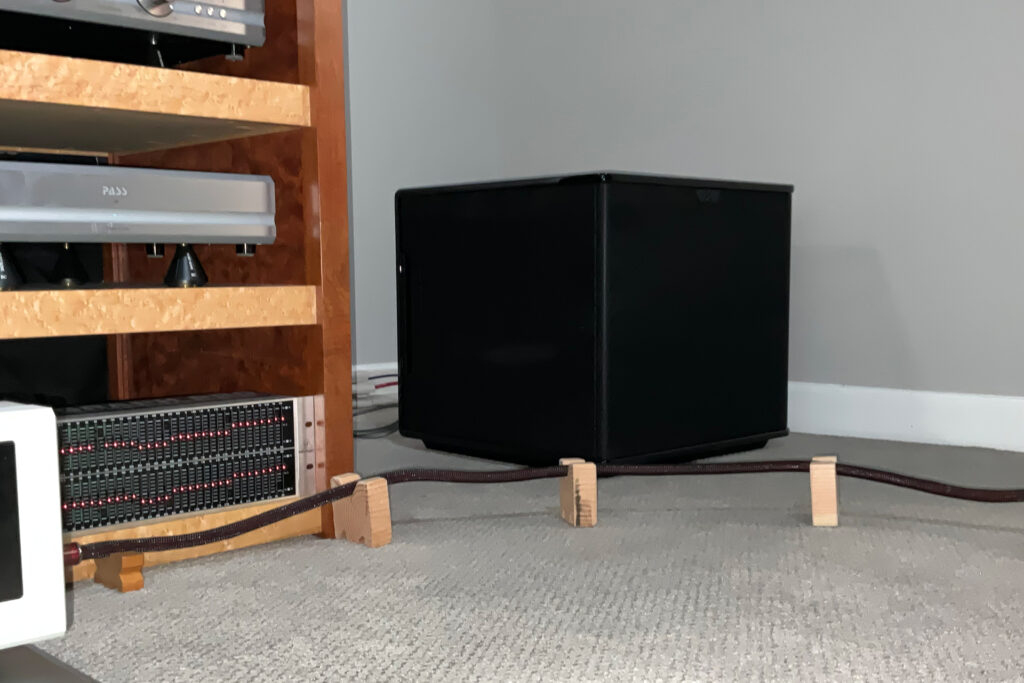
MartinLogan recommended 50 hours of break-in before the Grotto 15 would sound its best. I abided by this rule and, after the requisite allotted time, I set about dialing in all the settings and making adjustments in positioning. At MartinLogan’s suggestion, I placed the Grotto 15 in the front right corner (either front corner would be acceptable) of my audio room. While it was almost a foot from the front wall, it was only about a half-inch from the right side wall. As I listened, I kept getting the feeling something was not right. The bass should be tighter and more refined, with less congestion, I kept telling myself. I then remembered the Grotto 15 has two passive radiators, one on each side. When I moved it about eight inches away from the side wall, things really improved. Over the next few days, I dialed in the settings, based on a wide variety of music.
What I discovered was a far greater sonic capability and presentation than I had anticipated. I have always believed in a stereo pair of subs and have always followed this path. I was therefore somewhat suspicious about how one single subwoofer would perform in my system. Perhaps most surprising was the impressive capability of the MartinLogan Grotto 15 as a single unit. I never felt like the bass presentation was unbalanced. The lows were tight and very accurately rendered. I was able to easily distinguish the difference, depending on the recording, of the snap of a snare drum from the more lower-pitched, resonant sound of a tom-tom. Instruments like drums and a bass guitar were completely and separately identifiable. Only once did I hear a slight amount of resonance, but that was with a very low 30 Hz-neighborhood musical note on one song. This is also very likely due to the positioning of the sub in my audio room. Otherwise, the MartinLogan Grotto 15 performed extremely well in my system.
Most providentially, the lower midrange became livelier and was more recognizable than before. I found this to be a very welcome attribute. Subwoofers, it is worth mentioning, should also help with the lower midrange, in addition to the more relevant low frequencies. Even the imaging, depending on the recording, sounded as if it was in better focus. All throughout my time with the MartinLogan Grotto 15, I kept wondering if I would hear more and better improvements with a stereo pair of subs.
For the record, I am not a huge fan of Taylor Swift. A “Swifty” I am not. However, regardless of whatever my own thoughts may be about her music, I find the overwhelming amount of her work to be well recorded. On “The Fate of Ophelia” from the Life of a Showgirl CD, what I heard, inundated in the pop-oriented style, was a catchy tune with unmistakable upbeat drum programming. The drums were very cleanly presented and had dynamic weight and authority. Separate and apart from the drums, the bass guitar was also distinctly identifiable. Despite not being a Swift fan, I thought this track, and particularly the lows, were excellently rendered on my system with the MartinLogan Grotto 15.
It seems only fitting to use a song with prominent drum and bass tracks when judging the sonic accomplishments of a subwoofer. I was listening to music randomly and when the track “The Incredible Machine” by Sugarland, from the CD The Incredible Machine, came up, I knew this song would be a worthy test. Right from the start, this track sets the tone with a pounding, driving drum track. The kick drum and snare are prominently at work, followed by a guitar, then piano. Add in the powerhouse vocals by Jennifer Nettles and this track, while something of a departure from a typical Sugarland arrangement, is a large-scale production. It is layered with dynamic crescendos and is more rock/pop-influenced than country-oriented. This track has a big sound and, from start to finish, the pounding drum work of Travis McNabb, along with Nettles’ commanding vocals, sets the tone for what is a tune infused with powerful dynamics. Easily noticeable was the snap of the snare drum with an attack and decay. The bass was also cleanly reproduced. Even the lower notes on the guitar sounded excellent. This track is an excellent test for a subwoofer, and the MartinLogan Grotto 15 passed with flying colors.
Will the MartinLogan Grotto 15 Subwoofer Hold Its Value?
I suspect most subwoofers will be replaced less often than, say, a pair of floorstanding full-range speakers. I also suspect there are brands of subwoofers with intrinsic value that remains in the good to better than good category. Because this is a brand-new design for MartinLogan, and because of their impressive reputation in audio components in the first place, my expectation would be that there would be a very fair and reasonable resale price should the subs ever need to be replaced. A resale value of 40 percent to 60 percent of retail price, depending on age and condition, is therefore not unreasonable.
Who is the Competition for the MartinLogan Grotto 15 Subwoofer?
First to mind is the SVS SB17 Ultra REvolution (review pending by me – buy at Crutchfield). At $2,699, nearly the nearly identical cost of the MartinLogan Grotto 15, the SB17 shares many of the same attributes with the Grotto 15. However, the SVS SB17 features a single 17-inch woofer with dual eight-inch voice coils, an amplifier with a massive 2,800-watt RMS amplifier and 6,000 watts peak power output, a 15 Hz to 320 Hz frequency range, a switch mode power supply, and a manual or fully automated DSP, app-controlled room correction capability. The SVS SB17 is also non-ported and is a similar size to the Grotto, about a 20-inch cube that weighs just over 100 pounds.
Slightly more expensive is the REL S/550 at $3,299. This subwoofer is primarily designed for a two-channel audio system but will function in a home theater or dual-system application. In fact, the main connections of a .1/LFE and high-level outputs allow the use of both connection methods to run together, so both music and movies may be enjoyed without connection alterations. The S/550 utilizes a 10-inch front-facing driver and a 12-inch downward-firing passive radiator. It does not feature room correction, a separate remote or a downloadable app.
There are literally dozens of worthy subwoofer brands in the $3,000 price range and below. However, I suppose I should mention the pinnacle of MartinLogan’s effort on subwoofer technology: the Depth Series of subs and, specifically, the Depth 212, retailing for $5,499 each. I realize this is nearly double the price point of the Grotto, but subs seem to be a product category where an increased price very often yields a significant leap forward in technology and performance. The Depth 212 features two side-firing 12-inch force-canceling (mounted back to back) woofers made from a specially designed three-layer, carbon aerocore cone material. This material is reported to be very strong, but also lightweight, thus delivering enhanced detail. The Depth 212 is powered by an 1,100-watt RMS/2,200-watt peak amplifier. To ensure that the amplifier does not overheat, MartinLogan incorporates a convection cooling technology – air flows into several slots on the cabinet bottom and out of similar slots on the top. Wireless connection is built in, so no separate boxes are necessary. This subwoofer and its big brother, the Depth 215 at $6,999, each represent the best in what MartinLogan can produce in the subwoofer category.
Final Thoughts on the MartinLogan Grotto 15 Subwoofer …
I have been using my reference REL GI Mark II subs for quite a while. Long enough, in fact, for REL to discontinue them. I support new technology but also try to make an existing product work as long as reasonably possible. Besides, after getting my mains and subs to work together, and being able to time align my Laufer Teknik Grand Note (read the review) speakers, my subs have sounded glorious. Technology moves ever onward and my nearly 15-year-old current subs have served me well. This does not guarantee a newer technology will bring about a significant step forward. I believe, however, the MartinLogan Grotto 15 is precipitously close to this technological leap forward in my audiophile system.
Subwoofers have, as their main goal, boosting low frequencies and allowing the main speakers to recreate bass more efficiently. When set up properly, they enrich music’s lower octaves for a more natural sound, and can also enhance the lower midrange, resulting in an enhanced audio experience. I found the MartinLogan Grotto 15 accomplished these goals very easily. In fact, once set up in my system and room, I enjoyed its sonic capabilities from start to finish.
Given the features compared to the retail price, and the performance in my system, I have little hesitation in recommending the MartinLogan Grotto 15 subwoofer. Whether used as a single, or the likely highly advanced sonics of a stereo pair of subs, the Grotto 15 is a subwoofer the owner of a system priced mid-level or up may use and enjoy for years to come.




I have a Martin Logan powered sub. Similarly it comes with Anthem Genesis and a wireless option. Just wanted to add that the Anthem setup can be accomplished with an iphone app and the phone’s mic. Works well enough, although I did invest in the calibrated mic etc. Anthem is easily compettitve with Dirac Live. I have tried both.
I think most systems benefit greatly from the addition of subwoofers. I had a pair of entry SVS 1000 sealed to match with modified Klipsch LaScala/s and the additional weight and actual low bass combined with the folded 15 inch horn blended beautifully and was very involving and enjoyable to this ok boomer
Have a pair of ML 15a/s and do not feel the need or desire for subs as the bottom end is fulsome, deep, and articulate. Although being ate up I sure would like to hear a pair added to my system to check.
Congratulations to anyone scoring one or two of these subs.