
 By
By The audiophile hobby is many things to many enthusiasts. For some, the first goal is all about the glorious reproduction of recorded music, sonic excellence being the end result. For others, it is the thrill of the chase for new and better equipment to accomplish goal number one. We love to debate all manner of equipment preferences, listening habits, music and other subjects almost too numerous to list. Cables, speakers, amplifier classifications and more – it matters not, most of us are always up for a good-natured disagreement on how best to proceed in making goal number one happen more effectively.
One subject never far from any audiophile’s thoughts is equipment cost. Newly-released components are always more expensive than the previous versions the new gear was designed to replace. There also exists, to some degree, anyway, a dichotomy in the wisdom of audiophiles in spending ever-increasing amounts of money on audiophile gear. Non-audiophiles almost universally believe any person with a $500,000 audio system is completely delusional. This opinion is even shared by some who do, in fact, promote the audiophile hobby. And lurking around in the shadows of the “what does it cost” debate is the always interesting “Law of Diminishing Returns.”
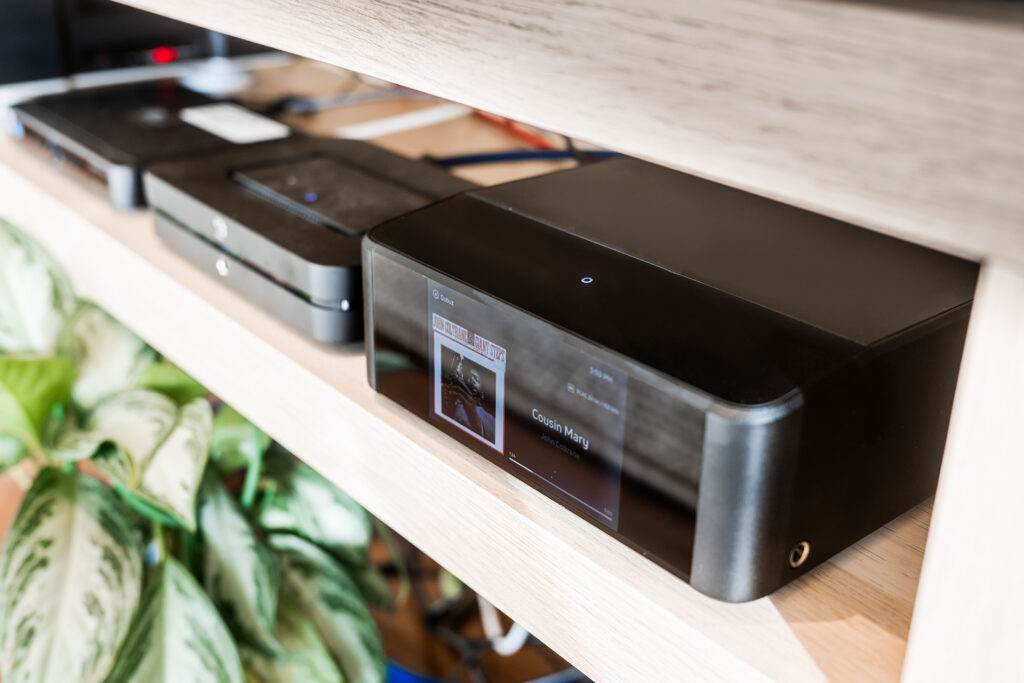
What Is the Law of Diminishing Returns?
- In manufacturing, the Law of Diminishing Returns (dig deeper at Wikipedia) is defined as “the decrease in the marginal output of a production process as the amount of a single factor of production is increased, and while all other factors of production remain constant.” What this basically means is, in the typical production line, there is a point at which additional workers on the line will not increase production, yet the product being produced does not change in terms of quality or numerical output. In fact, more workers may even cause production output to decrease.
- In high-performance audio parlance, the Law of Diminishing Return is usually defined as the point at which spending more will not deliver an equal, or proportionally equivalent, level of improved sonics, based on additional expense, therefore making the purchase a waste of money.
- Our ability to afford an audio system varies. For some hobbyists, a $500,000 audio system is a complete waste of money. A very good-sounding system may be obtained for a fraction of this enormous sum of money. And guess, what? Today’s equipment sounds better at a lower cost point than probably at any other time in the history of the audiophile hobby. This almost begs the question: is a $500,000 system even necessary? I see this as a “beauty is in the eye of the beholder” question. Ask someone with a $2,000 system and the answer will almost always be “No.” Such an expensive system cannot ever make music sound so magnificent as to justify the huge cost. Ask the person with a half-million-dollar system, and the answer might be quite different.
What Significance Does Cost Really Play in Audio?
- Take, for example, an audio system worth a total of $2,000 all in: integrated amp, speakers, cables, the whole shooting match. This system will be able to stream a service such as Qobuz or another similar provider, and will likely accept other inputs, such as a turntable (or phonostage), a CD player, and other ancillary add-ons. But for the initial investment of $2,000, the user can stream practically any song ever recorded and enjoy the luxury of a vastly improved sound signature over something bought on Aisle 26 at the big box store.
- What about the enthusiast with a $500,000 system? In their world, the system sounds otherworldly. The feeling of being there live is a constant perception. Soundstage, imaging, dynamics, clarity – it’s all there to be fabulously enjoyed. Even in the darkened solitude of the listening room, an incalculably magnificent musical experience is the just reward for such a huge expense. I wonder, however, cannot the person with the $2,000 audiophile system have the same experience? Does it actually require a half-million-dollar system to enjoy the sound? In all honesty, no, it does not.
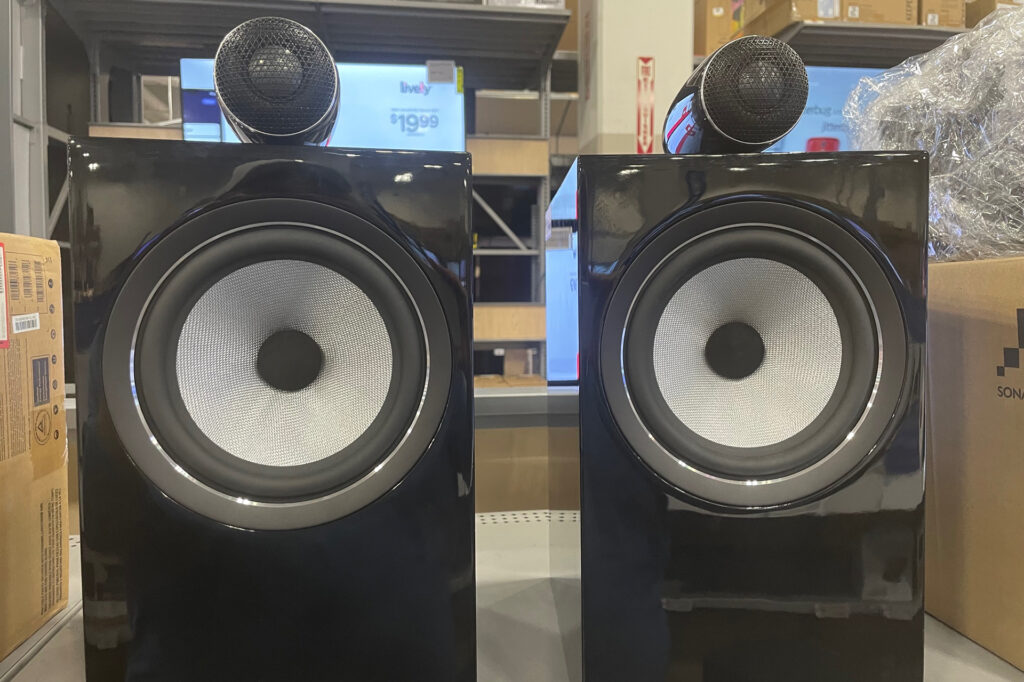
Is the Law of Diminishing Returns Constant Across All Purchase Levels?
- Take, for example, a person with our theoretical $2,000 audio system. Suppose this enthusiast feels there is something missing in their musical experience and changes are now required to deliver the requisite sonic advancements. Maybe a new component, new speakers, a revised placement – whatever. Changes are required for the desired improvements to occur. Let’s suppose this audiophile trades in their two $500 speakers for a speaker system costing $2,500. This effectively more than doubles the system cost. If the result is a vastly improved musical presentation, then the purchase was certainly justified.
- Now let’s consider the person with the $500,000 system. If they make a $2,500 change, it is very likely no discernable acoustical difference will even be noticed. In fact, it actually may make the system sonics worse. So, does this mean a proportional spend is required, as compared to the entry-level system? Is it actually necessary to double the cost of a $500,000 audio system to notice a meaningful improvement?
- Suppose the person with the $2,000 system traded in, replaced and raised the bar on their audiophile system, and now the total value is $16,000. Will this system sound eight times better than the lower-cost version sounded? If it only sounds marginally better, was the increased cost a waste of money? For most audiophiles, a spend of an additional $14,000 on an audio system is far easier than shelling out a half-million more, above and beyond the half-million already spent, for practically any level of sonic improvement. The question then becomes, did the expense faithfully achieve the desired results?
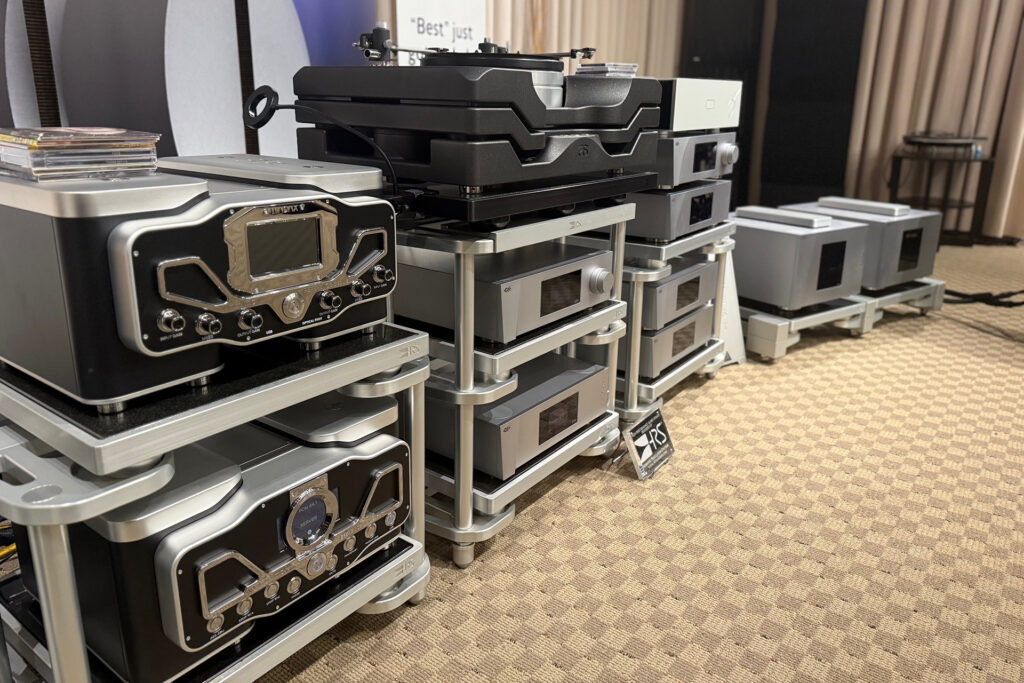
Is the Law of Diminishing Returns Actually Based on Perception?
- In a manufacturing production line, the Law of Diminishing Returns is a factor with quantitively measurable results. If it costs X number of dollars to have 10 people in an assembly cell, then increasing the number of workers to 15 has quantifiable results – not only in the cost of the workers, but also in the volume of product being produced on an hourly basis. It is measurably simple to calculate the cost of whether the additional five people on the line was worth the cost.
- Audio is different. A change in total system cost of an additional $2,500 in a system where the initial cost was $2,000 may sound different to different people. Some may feel the bass is vastly improved. Others may wholeheartedly disagree. Is the imaging really wider on a linear basis, and are there now layers of instruments, whereas before there were not? Does everyone who has heard the system before, and the new and improved version after, hold the same opinion? Are the changes, if there are any, substantially based on personal preference?
- Think about the difficulty the person with the $500,000 system must go through. Not only is it very likely necessary to spend a much larger percentage of the original total system cost to achieve any reasonable sonic improvement, it is also quite probable the additional spend will not yield an equal percentage of improved sonics. In other words, increasing the total system cost by $50,000 may not actually equate to a 10 percent increased level of sonic excellence. Which makes sense – a $500,000 system sounds pretty amazing to begin with. However, if spending an additional $50,000 for improvements is found by the owner to deliver a much more pleasing sonic signature, and the improvement costs were affordable, was the spend now worth the effort? Do Diminishing Returns now apply, whereas with the $2,000 system they quite possibly did not?
- And for anyone who may notice, how does one actually measure the percentage of improvement, or for that matter, the percentage of a reduction in sonics? If three listeners each hear a different percentage of improvement, is this nothing more than a subjective analysis?
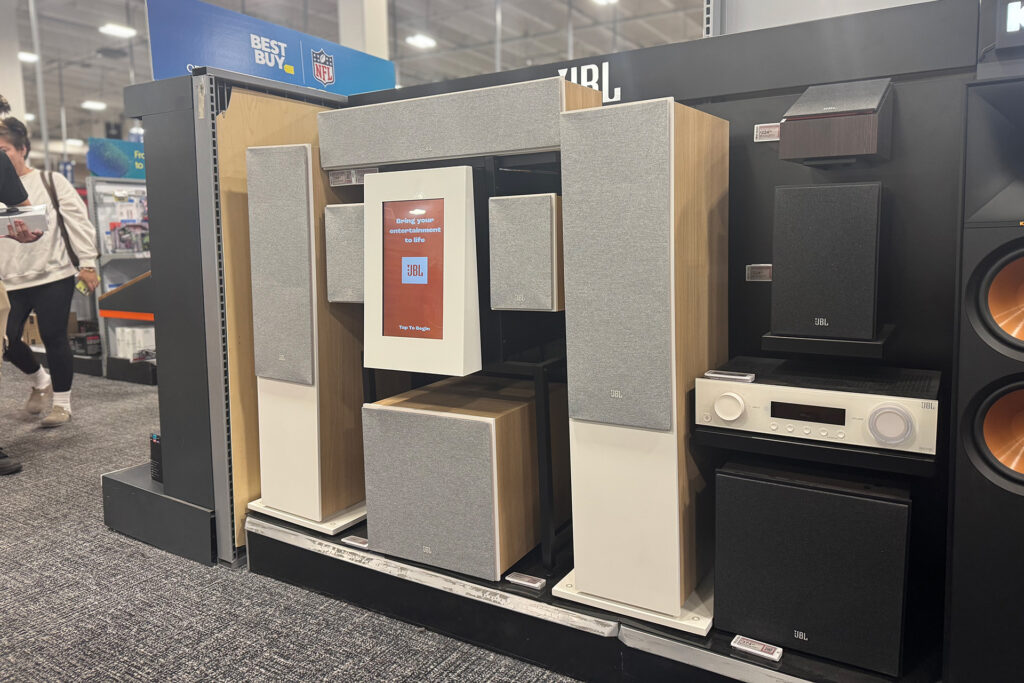
Are Blind A/B Listening Tests Really Valid and Do They Apply to This Question?
Now we really open a can of worms with this question. There are those who wholeheartedly believe in and accept a blind A/B test (our publisher being one of them). There are even double-blind A/B tests. So, realistically, if the behind-the-curtain System One is valued at $2,000, and System Two is valued at $500,000, is the curtain really necessary? Would it not be very simple to tell which system sounded better?
Okay, so maybe this is too great of a cost difference. Compare, then, a $2,000 system to an $8,000 system in a blind A/B test. Think a noticeable sonic difference will be more or less obvious? It really depends on the system, the venue, the music, the skill of the listener, the recording quality and the audio psychoacoustic properties of the listener. Maybe they will detect a difference and maybe not. What about different test subjects on different days? What if the test venue was moved for each new test? Are blind tests therefore more or less subjective than the system cost and the provided sonics themselves? And if blind A/B tests are deemed as largely subjective, how relevant do they then become?
Final Thoughts on the Law of Diminishing Returns …
My friend Doug has a system valued at a full retail cost of about $4,000. He loves his system and derives great joy in listening to music. He has a footlocker full of old BluNote LP jazz releases, many of which are live recordings from New York City jazz venues. I have absolute certainty in saying he loves his system equally to how much I do mine. Yet my system is vastly more expensive and has a sonic presentation far superior to my friend’s. When Doug comes over for a listening session, he remarks how incredible my system sounds. And yet, he still is extremely overjoyed by his own system. And, not surprisingly, Doug has no immediate plan to improve his system, because he genuinely enjoys what he hears when he presses play or the needle drops.
This complete enjoyment is the one negating factor in any discussion of the Law of Diminishing Returns. It is quite difficult to talk about returns with someone who is not planning on spending any money on something new. And, for the rest of us, myself included, I suspect making a change to an audio system is more of a matter of want than need. I want my system to sound better and, if it takes a 20 percent spend to give me 10 percent improvement, then the decision becomes less about finances and more about sonic quality. For my own purposes, I have paid very little attention to even the most remote concept of the Law of Diminishing Returns. I have always followed the “do I want it and can I afford it” system-building model. Are there components I would love to own but cannot afford? Absolutely. And my system did not reach its current level of value overnight. In fact, it has been about an eight-year process. I have made changes very incrementally and with a clear goal in mind.
I see the ultimate value of an audio system as how much joy it brings the listener. If I genuinely like what I hear, if my system brings me hours of listening pleasure, if I am left almost speechless when listening to my system, then how much I spent in the effort is something I basically ignore. If I absolutely enjoy my audio system, then cost and whatever the Law of Diminishing Returns may mean are of little value. I will, of course, spend within my means and only use disposable income to fund my audiophile purchases. I tend to be very deliberate in my audiophile purchases. I am looking to create a highly pleasing sonic signature. And if making purchases of a certain dollar value are required for me to be happy when I play music, then so be it. How much I enjoy the music is job number one. Purchase cost is not. As my friend Rick once said, “You can’t put a price on pleasure.”



