
 By
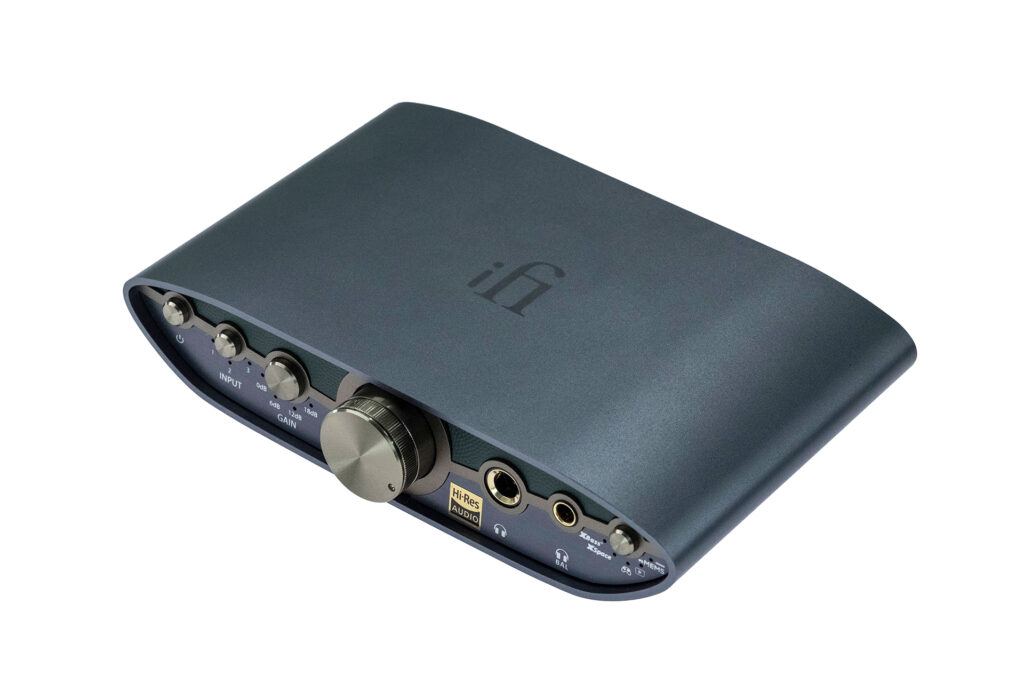
By iFi audio has established itself as brand that loves to produce smaller form factor audiophile equipment. As a reviewer, I have reviewed close to half of a dozen pieces of their components, and I don’t believe any of those items were even half-rack width. Some people will read that and think, “Well, that doesn’t work for me,” while others will love that the size of their equipment will allow them to place it anywhere that they might want to listen to music, which provides a lot of flexibility. The ZEN CAN 3 is no different, measuring at just 6.4 by 4.6 by 1.4 inches. For reference’s sake, that is smaller than my hand (and I don’t have big hands).
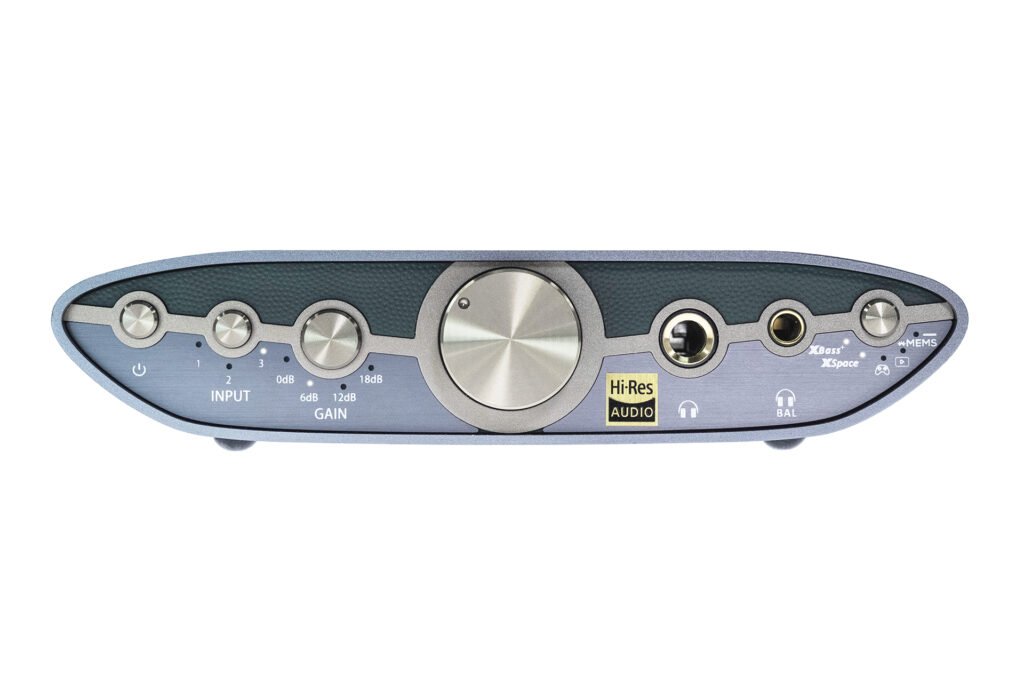
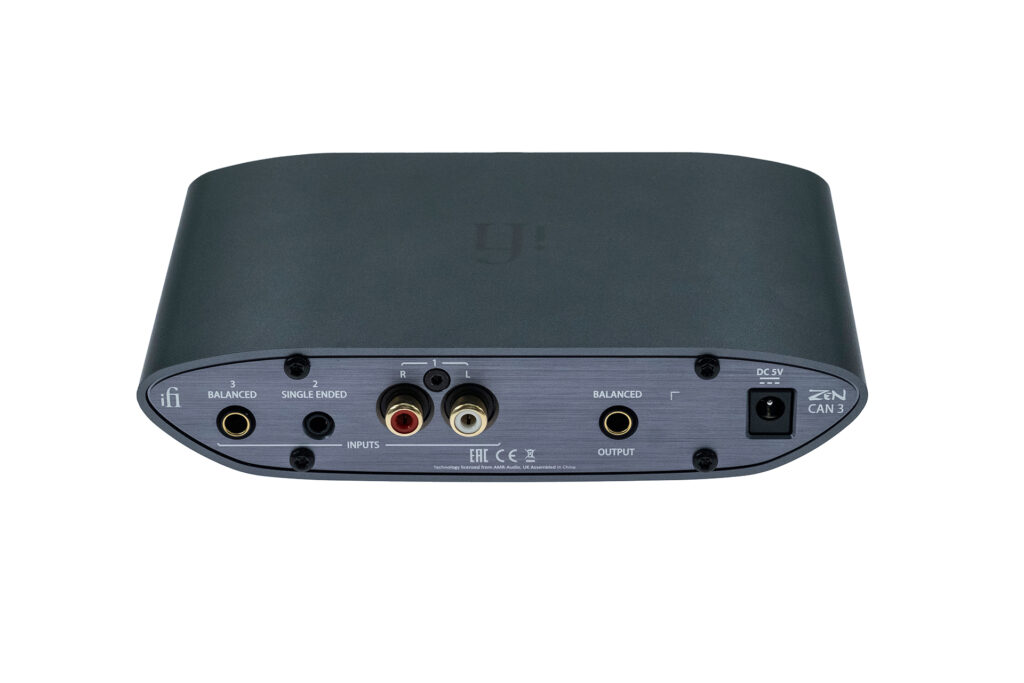
Now, the size doesn’t take away from its might, as it is capable of putting out 15.1 volts/385 milliwatts at 600 ohms to its balanced 4.4 mm socket, and 7.6 volts/98 milliwatts at 600 ohms with the SE socket. That should be enough to power most modern sets of headphones, and it also has support for xMEMS drivers, which only helps future-proof the headphone amplifier. The setup of the iFi audio ZEN CAN 3 is very simple, with a balanced 4.4-millimeter input, a singled-ended 35-millimeter input, an RCA analogue input and a balanced 4.4-millimeter output on the back, and power, input selection, gain selection, volume control, EQ selection buttons on the front, along with milliwatts. Let us get into it and see if this could be the right headphone amplifier for your set-up.
What Makes the iFi audio ZEN CAN 3 Headphone Amplifier So Special?
- There are four easy-to-use gain choices on the front. Having the gain in an easy-to-reach position makes it easy for you to pick the right gain for your headphones.
- The iFi ZEN CAN 3 doesn’t use DSP. iFi chose to use pure analog circuitry in this device to ensure minimal distortion and to allow frequency adjustments to sound a little more natural.
- You can choose from four gain settings. More power-hungry headphones will need a boost in the gain, so with four different steps up in gain, you can get the setting that works best for you and the headphones you are using.
- EQ settings allow you to customize the sound. The iFi ZEN CAN 3 allows audiophiles to customize the sound for their headphones. You can use XBass+ to add bass, which is intended for IEMs and open-back headphones, or you can use XSpace, which is intended to help expand the soundstage. It also has a game and video setting, if your primary use is to play video games or watch movies or television shows through your headphones.
- You get both single-ended and balanced headphone options. Having both these options gives newer audiophiles the potential to use most headphones, and they can keep the ZEN CAN 3 with them as they try different flavors of headphones along their journey.
Why Should You Care About the iFi audio ZEN CAN 3 Headphone Amplifier?
If you’re like me, and you’re looking for better sound quality while listening to music at your desk, having a headphone amplifier like that iFi audio ZEN CAN 3 can provide a real boost without breaking the bank, as it comes in at just $229. This can also be a sound investment for anyone who has kids or grandkids who are going back to school and are going to be spending countless hours working from their desk, as it is small enough to fit on any desk, especially one in a dorm room, as you have a solution that only requires a source, whether that be digital or analog.
Some Things You Might Not Like About the iFi audio ZEN CAN 3 Headphone Amplifier
- There are no XLR connection options. If your headphones use a balanced XLR end, then this headphone amplifier won’t fit your needs. If you are looking to use the headphone amplifier with a balanced source, you don’t have that option, either.
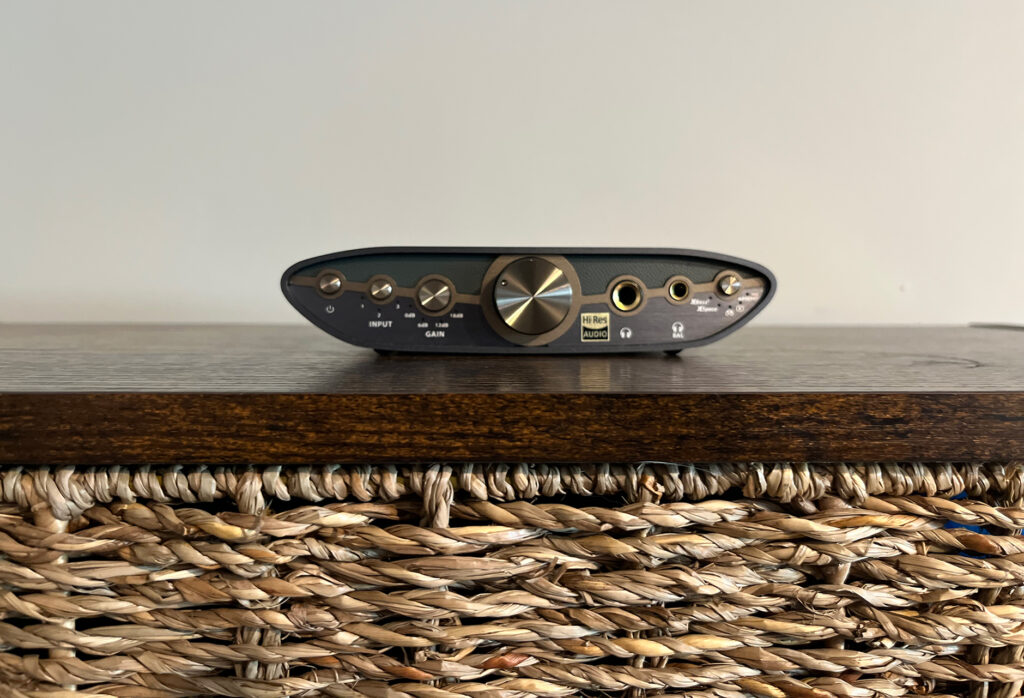
- You do not get any color options. While I love the dark blue and gold styling of the iFi audio ZEN CAN 3, there will certainly be someone who is looking for a silver or black option to match what they already have. Black is boring
Listening to the iFi audio ZEN CAN 3 Headphone Amplifier …
I tested the iFi audio ZEN CAN 3 headphone amplifier with both the Benchmark DAC B and the iFi audio ZEN One Signature DAC as sources. Audio was streamed from my MacBook Pro using Qobuz into the DACs, using a Wireworld Chroma 8 USB-B to USB-C cable. Additionally, I used theMeze Liric closed-back headphones (review pending), which are a 61-ohm impedance headphone, in all listening. As a form of comparison, I used the FiiO K15 headphone amplifier (review pending).
When testing headphone amplifiers, one of the tracks I enjoy playing is the classic rock anthem “Refugee” (Qobuz 44.1 kHz) from Tom Petty and the Heartbreakers. This is the live version of the track found on the 2009 album The Live Anthology, which consists of 48 tracks and three hours of music, which picks out highlights of the band between 1978 and 2009. When I had the iFi audio ZEN CAN 3 in the signal chain, I found that the soundstage with this track was very clear. The crowd sounded real, and you could hear the different cheers and whistles. Additionally, during the performance and the chorus in particular, you could easily place the backing, vocals differentiating them from left to right. Petty’s vocals also came through clearly, however, not as clearly as they came through with the FiiO K15.
Another track that is great for testing out speakers is Radiohead’s “Packt Like Sardines in a Crushd Tin Box” from their studio album Amnesiac (Qobuz 44.1 kHz). The album is made up of tracks that came from the same studio sessions as the band’s legendary album Kid A. When listening to this track, all the electronic elements came through clearly, and it was easy to separate all the sounds. The bass response was very good on this track as well. It sounded both deep and full. You could also easily pick up the reverberation that starts to play into the track around the one-minute mark as the sounds start to get denser. In comparison to the FiiO K15, I found that the ZEN CAN 3 sounded a bit warmer on this track, but the track sounded great on both devices.
Another good demo track that I used was “It Never Goes Away (Woman)” by Jazz at Lincoln Center Orchestra (Qobuz 44.1 kHz). This track gives you a feel for how well the iFi audio ZEN CAN 3 headphone amplifier handles both female vocals and the dynamics of an orchestra. The female vocals were reproduced beautifully and placed centrally in the headphones. The soundstage was reproduced well here also, as it was easy to place all the different instruments. The only negative I would note is that the bass response wasn’t as good on this track as with the FiiO K15, which allowed the standup bass to be both deeper and more notable in the mix.
Will the iFi audio ZEN CAN 3 Headphone Amplifier Hold Its Value?
The thing about products in this price range is that your investment is so low that you don’t have too much investment to lose. I know I say this a lot, but often the best thing to do with something in this price range is to find someone who might enjoy it and pass it along to them. You can certainly get some value back from a sale, but the joy you could bring someone else, especially a student, is likely a much better value.
What is the Competition for iFi audio ZEN CAN 3 Headphone Amplifier?
If you’re looking to add a DAC with the headphone amplifier, the FiiO K15 DAC and headphone amplifier ($600) is a strong contender. This package uses two AK4497SVQ DAC’s and Class-AB amplification to provide up to 2290 milliwatts of balanced power. It also features a host of input options and touchscreen. With all that said, it also comes in a much larger form factor, which may not fit as well if you are looking to place your headphone amp on your desk.
If you’re looking for an option that is made in the USA, you need to consider the Schiit Asgard X ($399). Schiit gives you the option to buy this unit as just a headphone amplifier, or you can add their Mesh DAC to the unit for an extra $150. Schiit is always a strong option at these price points, and is well known for delivering both quality and value. The Asgard X is slightly larger than the ZEN CAN 3, but it should still be easy to fit on almost any desk.
Lastly, if you really want something that is more portable, the iFi audio GO Bar Kensei ($450) is a strong option. This headphone amplifier and DAC combination can easily fit into your pocket for a just add-a-source solution (typically your phone). It only has a USB-C input, but for most audiophiles, that won’t be an issue now that all phones use USB-C for charging. It also has balanced and single-ended options, so the only question is if it has enough power for your headphones but, at 229 milliwatts at 32 ohms for single-ended and 477 milliwatts for balanced headphones, it will likely be enough for most users. I reviewed the original iFi Go Bar a couple of years back and I was certainly impressed.
Final Thoughts on the iFi audio ZEN CAN 3 Headphone Amplifier …
Over the course of a few months, I safely used this headphone amplifier for at least 200 hours, and there was never a moment where I found that I wasn’t impressed with the quality of the product as a whole. I found myself loving how I was able to slide it under one of the monitors on my desk, and it was like the amplifier was never there. The upgrade in sound, over using just the headphone jack on my laptop, was also leaps and bounds better, as it enabled me to use higher-quality headphones and ultimately have the desktop set-up that I desired and at a price that is not hard to justify. I strongly recommend the iFi audio ZEN DAC 3 to anyone who is search of a similar upgrade, as I am sure you won’t be disappointed.



