
 By
By Every so often, FutureAudiophile.com likes to revisit a featured news story subject because of its major importance to the audiophile hobby. Because speaker placement is so important, and so unique to the room, we thought it might be interesting to look at some various practices in speaker positioning. Please note: some of the opinions expressed herein may be well-known. Others may not. I feel sure not everyone will be in complete agreement with the expressed views.
There are many ways music enthusiasts use an audiophile stereo system. Some place the system in the family room and use it both for music and home theater. In these instances, a loudspeaker placement that is visually attractive in the room may easily be far more important than enhanced acoustics. For ease and convenience, not to mention length and complexity, this article will outline practices in a dedicated audio room. Not all of the ideas expressed herein will be applicable to everyone. The main goal is to express some proven ideas and, we hope, create a scenario whereby someone’s music ultimately sounds better and more realistic.
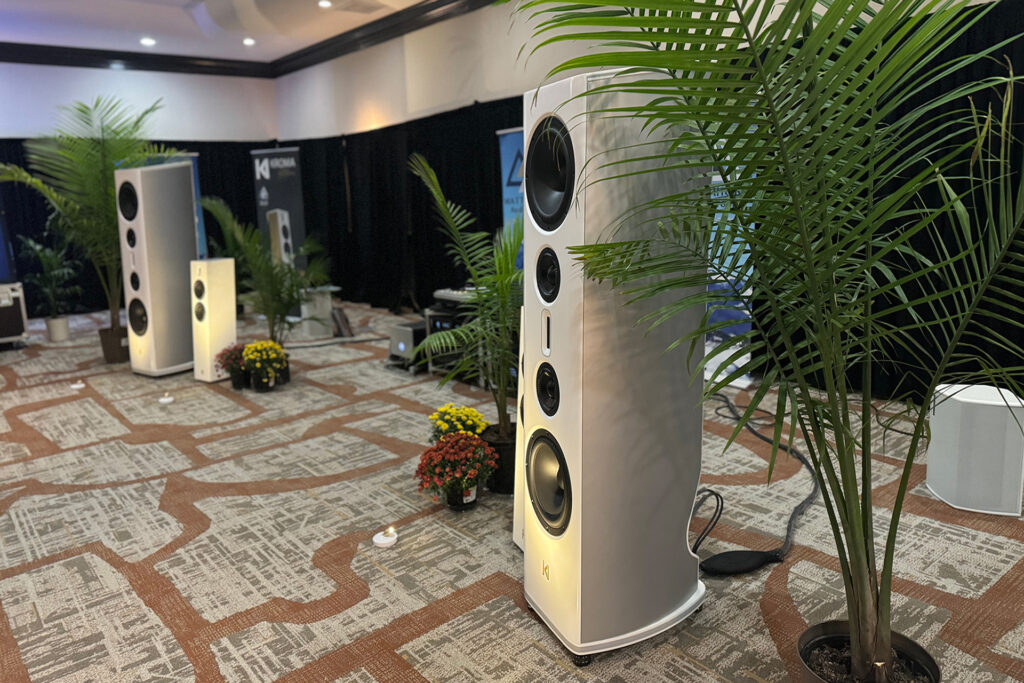
Where To Place an Audiophile System: in a Square or Rectangular Room?
I’m going to get my favorite audio saying out of the way right now: “Play the system, hear the room.” Our audio rooms are a major contributing factor to the sonics we hear when we press play. This saying is fundamental to how well our audio system interacts with the space where it is located. Unfortunately, most home architects do not design a house with a two-channel audio system in mind. If anything, possibly they consider a home theater setup. Builders also like to design spaces to simplify construction and, in a lot of cases, this means square rooms – especially bedrooms, where a dedicated audio room may wind up being located.
In a square room, the principal problems are standing waves and imaging corruption. Square rooms have four equal side wall dimensions, so room modes, also called standing waves, are more easily created. Room modes of similar frequency may reinforce a specific tone or diminish its magnitude. This may make the audio signal, especially low frequencies, far too boomy or barely recognizable. It may also make them sound sublime. And if two similar frequencies in opposite phase meet, the potential result is something audiophiles humorously call “bass suck out.” Basically, this condition sounds like a sharp inhalation of air, because the two frequencies cancel each other out and the note is simply eliminated. It is almost impossible not to notice this when it happens. Fortunately, revised speaker placement may go a long way towards eliminating the problem.
A rectangular room, by contrast, has two different dimensions, so the standing waves are more spread out and do not cause nearly as many problems. Bass tends to be more smoothed out, there are fewer peaks and nulls, and there is typically greater consistency than in a square room. It should be noted that the same sonic issues common to a square room can occur in a rectangular one; they are just not as easily created or likely to occur.
Imaging also can suffer in a square room. Our audio systems are very heavily influenced by reflections and, in a square room, how these reflections behave tends to blur the center image and the soundstage may collapse. Bass tends to get stuck in equally dimensioned corners, so square rooms, by their very nature, degrade bass performance. For these reasons, a rectangular listening room is always recommended.
In a Rectangular Room: Which is Better – Long or Short Wall Speaker Placement?
Most acousticians agree placing speakers along the short wall is optimal. Frequencies vary in length. A 40 Hz tone is about 28 feet in length. By contrast, a 1000 Hz tone is less than two feet in length. Having the speakers positioned on the short wall enables the lower frequencies to develop more naturally and with fewer reflections. The entire musical spectrum, therefore, may spread down the long wall more naturally and fill the space with sound. Speaker placement on a long wall in a rectangular room has a much greater chance of compromising the system’s sonics. “Play the system, hear the room” is inviolate.
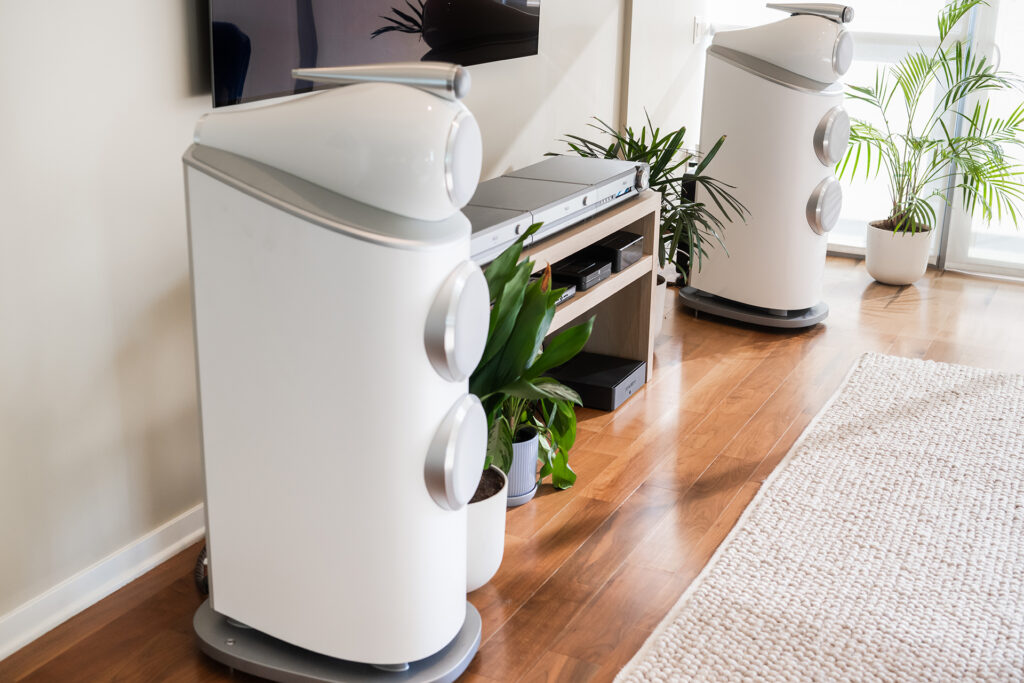
Why a Live Room, Dead Room Configuration Works
About 12 years ago, I made a trip to Atlanta, GA to meet with one of the engineers at GIK Acoustics. I knew room treatments were mandatory and I liked the variety of products GIK offered. After discussing my goals, the GIK engineer made his recommendations and I placed the order then and there. When my purchases arrived and I mounted them in my audio room, I was amazed at how much better things sounded. Unfortunately, I couldn’t leave well enough alone. I ultimately wound up with so many panels that the sonics of my system sounded like someone was speaking into a large bath towel. This was entirely my fault. I knew a radical change was necessary.
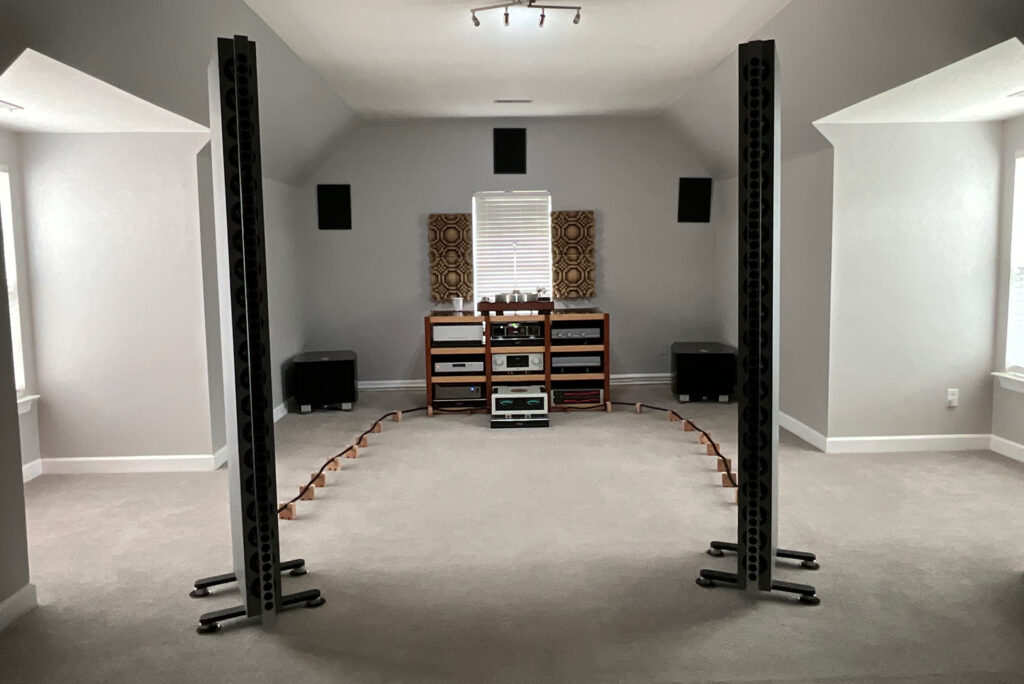
Live Room/Dead Room is an interesting take on room setup. When the system is properly implemented, image placement takes place behind the speakers. This would be in the live room. This area should be as empty as possible. No furniture and, if any room treatments are used, only use a minimal number. Why? In the live room, the music should be energetic and be able to breathe and expand – just like in live music. The reflections are shorter in wavelength and do not cause time smear or energy spread over time. It also tends to reduce comb filtering, which is peaks and dips in the frequency response.
In the Dead Room, the reflections are longer in wavelength and there is a greater probability of time smear and comb filtering. This area of the room should therefore be acoustically removed. In my audio room, the listening position is in the dead room, and all imaging takes place in the live zone. The speakers are located very close to the imaginary dividing line between the two rooms. Once I adopted this room configuration, I was amazed at how magnificent the sonics suddenly became. It sounds like I am sitting in the audience and listening to a band perform on stage. I have enjoyed this placement practice ever since.
How an Audiophile Listening Room May Be Compromised
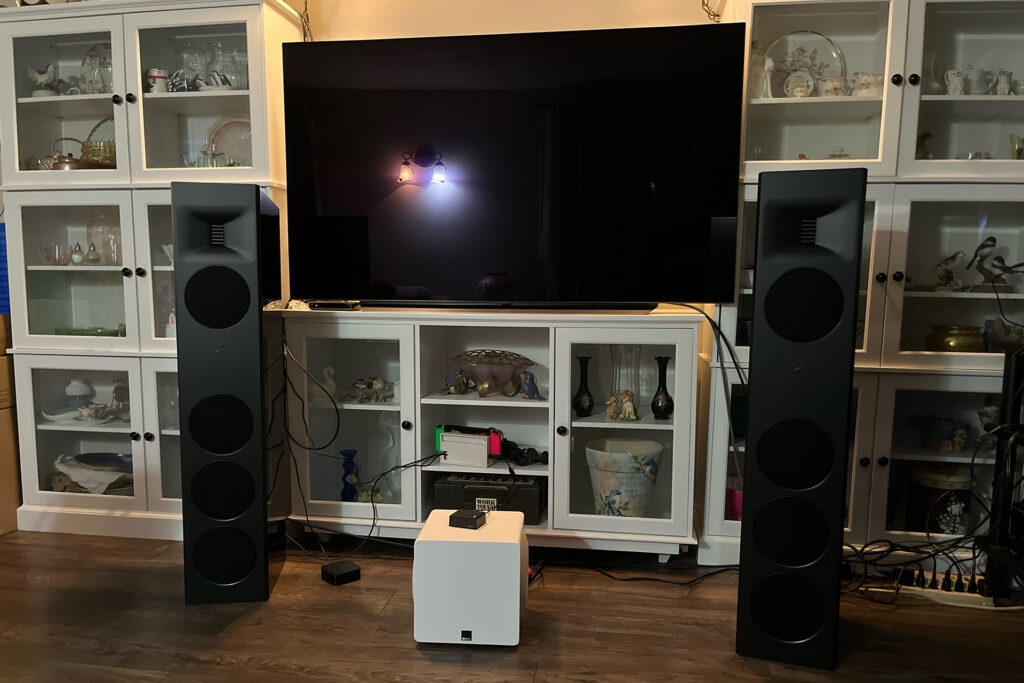
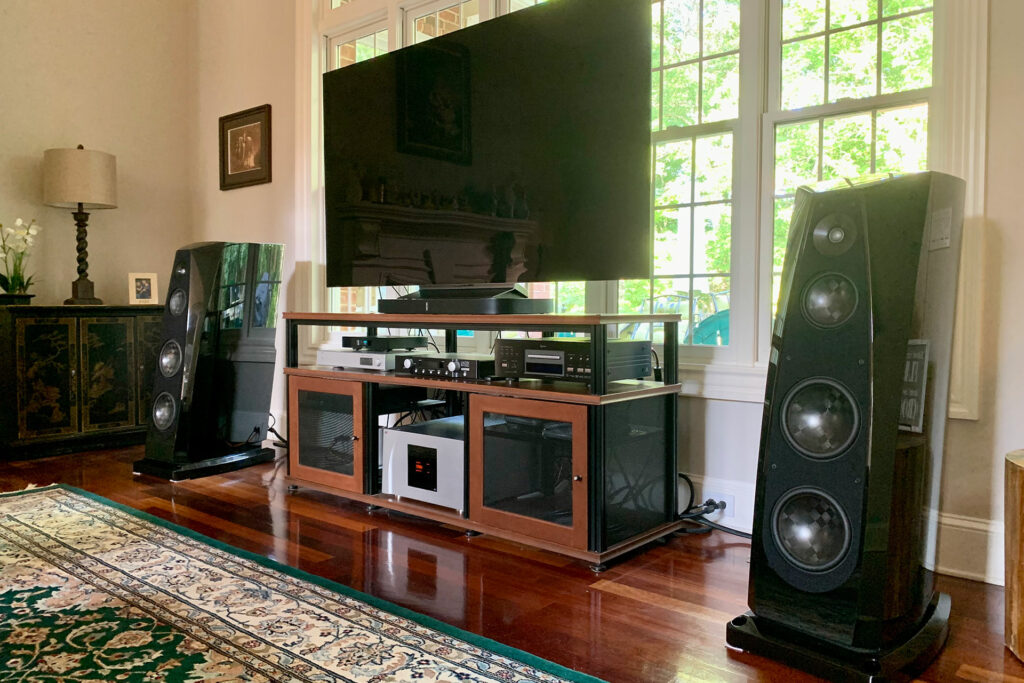
Many of us enjoy a finely appointed home. Furnishing a home is largely dependent on personal preference. Art, furniture and all manner of decorations make a house feel like a home. I know this statement will be vilified, but an audio room for a high-performance audiophile stereo system should be devoid of just about everything. There are not many absolutes in the audiophile hobby, but here is one: imaging cannot take place where furniture sits. When an audio room is full of furniture and glass-framed pictures on the wall, televisions hanging right above the system on the front wall, and plants and bookshelves in the area of image development, increased reflections and sonic degradation is the likely result.
Yes, I realize I have stirred up a hornet’s nest. Fine, so be it. Each audiophile needs to balance the enjoyment of the practice of listening to music with the quality of sonics the room projects. Many enthusiasts take great joy in listening to music while watching the game on TV. And honestly, I see great value in doing so. Others, like myself, prefer the highest level of sonics the system and room can provide. For this reason, I have removed all the furniture and wall-mounted pictures in my audio room except for three chairs, the audio rack and the speakers. And always remember, glass causes the normal reflections to be altered, thereby changing the sonics of the room. Things like coffee tables, especially glass-topped ones, placed in between the listener and the speakers cause a sharp increase in altered and quite possibly diminished sonics. It is therefore advised, for the highest level of sonics, to remove all unnecessary furniture and art from the room. It is also a good idea to cover hard floors with an area rug if carpet is not an option. Tile and hardwoods reflect sound as well.
Loudspeaker Placement and Some Common Myths …
One very popular method for speaker placement is the “Rule of Thirds.” Basically, this mandates the speakers should be placed at one-third of the distance of the long wall, and the listening position two-thirds of the way into the room. So, if the room is 18 feet long, the speakers should be six feet in from the front wall and the listening position 12 feet from the front wall. Many audiophiles take this as gospel, and precisely and exactly use this for speaker placement. This is further enhanced by the practice of having the speakers and the listening chair in an exact equilateral triangle.
At best, this is only a starting point. Rarely is this placement ideal for your speakers. Rooms are not dimensionally accurate, walls are not parallel and very often not even plumb. As such, highly accurate and equal placements from each wall rarely works. The same can be said about all of the many placement ideas available – and there are a lot of them.
Generally speaking, when reflections are short in wavelength, it is an asset. Shorter reflections tend to fool the brain into thinking the sound is larger than it really is, so the image seems to expand. The longer the reflections become, the more sonic degradation occurs. It is therefore not advised to strictly adhere to speaker placement where both are exactly equal to the side and front walls. It will almost certainly take some dialing in to achieve the best sonic performance. If the dimensions to the side and front walls are not exactly the same, but your system sounds better, then you are on the right track.
Tuning a Stereo System to Its Audiophile Room (Time Alignment)
When speakers are time-aligned, everything will snap into place and the room’s sonics will be near their best. Most audiophiles never even consider time alignment, so let’s take a little closer look into this phenomenon. The goal in speaker time alignment is for the bass, midrange and treble signals to all reach the ear at the same time. Imagine a sine wave. It will have peaks and nulls. When each frequency band arrives at the listener’s ears at the peak of a wave, then the low, mid and high frequencies combine much better, vocals suddenly become very precise, imaging will be far more delineated and defined and, in general, the entire presentation will be far more natural-sounding. This is like tuning a guitar. If five strings are perfectly tuned and one is not, the guitar sounds wrong. Only when all six strings are tuned does the guitar sound natural.
When speakers are not time-aligned, the entire frequency spectrum sounds disjointed. Bass tends to cancel mids, and mids tend to cancel highs. These cancellations are far more obvious to the ear than is a properly-timed signal. Time alignment also improves dynamics because here, again, each part of the frequency band is reaching your ear at the same time.
Actually achieving this level of accuracy is difficult. One way is to start with a placement method, something like the Rule of Thirds, and then start moving one speaker at a time until its sonics sound best, then apply the same principles to the second speaker. Move each speaker a few millimeters at a time. Take into consideration distance to the front and side walls, as well as toe-in. I usually move a speaker just one or two millimeters at a time, pause to listen through several recordings, and then make another small adjustment. Always remember: speakers project sound with surprisingly precise angles and consistency. Even changing the angle of projection by a millimeter or two can have a profound effect over distance. So, it helps to hear various recordings of well-known music to determine how each placement change will alter the sonics. This is, unfortunately, not a five-minute process. I was finally able to time-align my speakers after an eight-month effort – not a 24/7 effort, mind you, but I would work on it sporadically. The result is nothing short of spectacular. My bass no longer overwhelms the mids on bass-heavy recordings and everything blends together so well it is almost magical.
Another method of time-aligning speakers is to hire a professional acoustician, who will come in with meters and calibration equipment to perfectly align your speakers to the room. Cost aside, this is the most accurate and expedient method of ensuring optimal speaker placement.
Some Placement Ideas of the More Popular Speaker Types
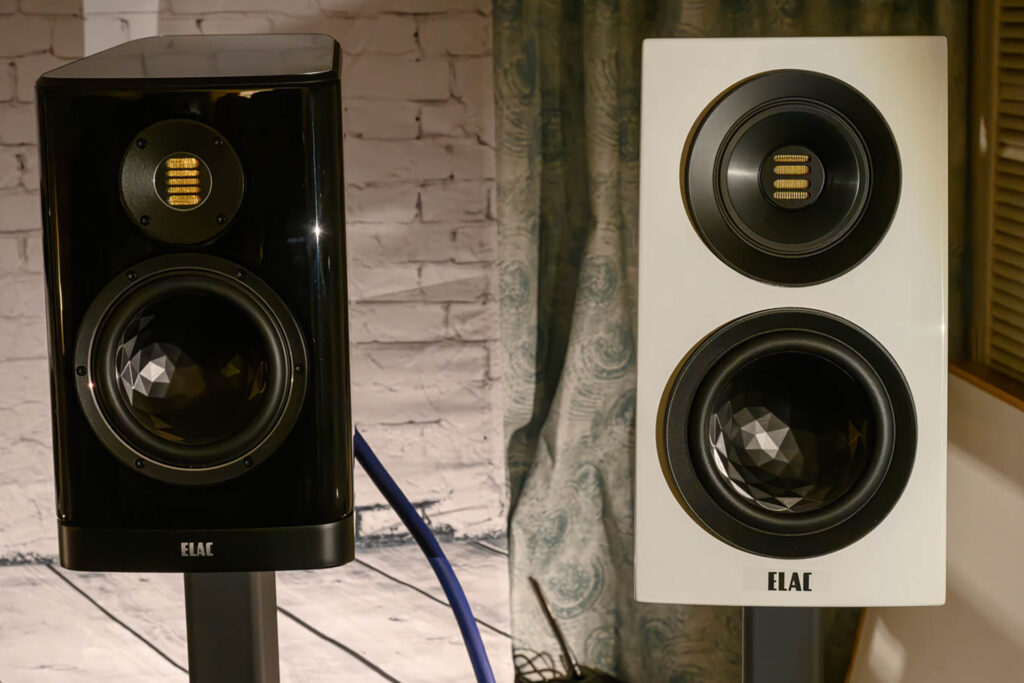
Let’s begin with the most popular speaker design in use today: the dynamic speaker. This design radiates sound both directly and conically. They are usually the easiest to place for an enjoyable sound. Generally speaking, the closer to the front wall a dynamic speaker is placed, the more dynamic the bass, and the greater the reduction of the image depth. The further away from the front wall the speaker is placed, the better the image depth, but this reduces bass response. In many cases, dynamic speakers are placed quite close to the front wall and, very often, just marginally in front of the audio rack.
I took a different route. My speakers are 16 feet into the audio room, which is 32 feet long. They are about 60 inches apart. They are positioned almost in front of two dormers on both long walls, which places them anywhere from two to eight feet from the side walls. However, the left speaker is closer to the left side wall than is the right speaker, and the right speaker is closer to the front wall than the is left one. These discrepancies allow me to tune the speakers to the room, thus providing time alignment and the most enhanced sonics I feel my room can provide. Anyone who is feeling a little adventurous might try moving the speakers and repositioning the listening chair as reasonably far into the room as space allows. You might be surprised at the result.
Planar and electrostatic speakers are typically bipolar, which means they radiate from the front and the back. These types of speakers like to be well into the room. They also are slightly less forgiving, because they tend to be more directly radiating than a wide dispersion pattern. Off-axis imaging therefore suffers. It is highly advised to have these speakers as much as halfway into the room, so they can operate more efficiently. Having planar or electrostatic speakers placed very close to the front wall will typically compromise the sonic capabilities of these speaker designs.
If subwoofers are being used, a characteristic starting position is the front corner of the room, well behind the speakers. If two subs are being used, place them in both front corners. This basically allows the room to be used as a bass horn. Bass frequencies have large wavelengths, so using the walls in this case makes sense. Of course, there are many placement methods, so something different may wind up as the optimal placement.
Digital Signal Processing (DSP) and Room Treatments May Help
DSP is the wonder drug of the audiophile world. It has been around for quite some time but has become more advanced in the last few years. Many components have it as a standard feature. It is now very often quite seamless to implement. DSP can effectively correct anomalies or electrical signals sent through the speakers by the system. DSP works well in frequency equalization, phase coherence, and crossover and bass management. It is not really adept at improving reflections and many problems created by the playback sound in the room itself.
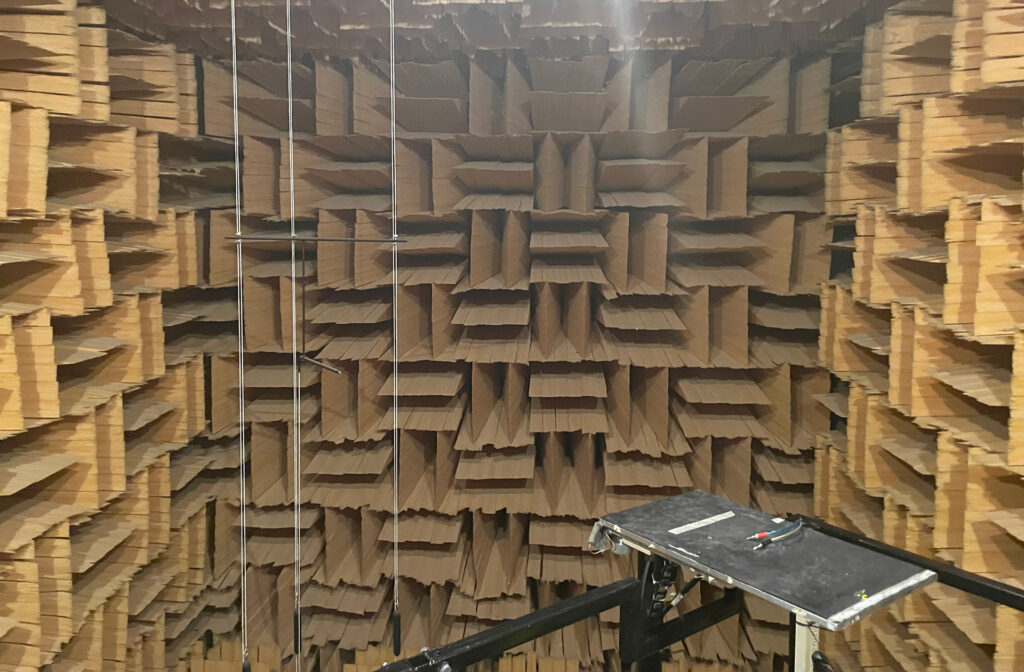
Acoustical panels, on the other hand, can aid in managing reflections, thereby reducing time smear and comb filtering. Imaging may also be improved. They operate in an analog fashion and follow the rules of the Conservation of Energy. The sound from the speakers is energy, and acoustical panels convert this energy to heat, which is harmlessly dissipated.
Oddly enough, what DSP is best at providing, acoustical panels largely cannot give us. Conversely, acoustical panels provide improvements unaffected by DSP. It is therefore advised to use both.
Final Thoughts on Audiophile Speaker Placement …
While there are guidelines, where speakers are located in an audio room is largely a very personal choice. We all have a certain sound and, when it speaks to each of us, it will be easily recognized and become the standard. Ours is an individualized hobby and, while some placement methods may go against the grain, by no means are they completely wrong. If a certain speaker placement sounds highly pleasing, then consider your goal accomplished.
However, don’t be afraid to try various ideas. Move things around to see if a different idea, even a radically different one, might work. When I first adopted the Live Room Dead/Dead Room placement idea, I did so convinced I was wasting my time. It was only when I discovered the amazing improvement it made in my audio room that I fully appreciated the effort.
While this article does not outline a significant level of detail, my goal is to profile some options so our readers may do research on their own. The Internet is full of highly-reasoned articles on speaker placement. AI, if you use this feature, should also be helpful in gaining increased knowledge. Bottom line: do not be pigeonholed into following the tried and true and “how it’s always been done” concept. Ours is a hobby filled with experimentation and, sometimes, a unique idea may bring about a positive change. Do some research on your own. Talk to some other audiophiles to see how their audio rooms are configured. Ask a dealer for their ideas. When you have a game plan to try out, have some fun with experimenting. If it fails, you’ve lost nothing. Just put things back where they were. But if you find a remarkable improvement, relish the effort and the enhanced sonics of your audiophile system.
Tell us about your speaker placement journey. How did you get the best performance? What did you do to get to the sound that you want? Post your comments and we will approve them ASAP.




When I was single my first house had a Maxell listening room, just a single chair 2/3 into the room & no furniture. Friends used to kid me about it but I spent whole winter weekends listening to opera etc there. When I married 30 years ago, we built a new house & my inexpensive consessions to sonics were: all walls & ceilings were stuffed with fibre glass insulation & the listening room had an extra heavy coat of plaster. The listening room has large openings on two sides that may help too. I’ve recently gone from bookshelf to tower speakers (with better bass), I spent a month optimizing listening & speaker locations using pipe organ & acoustic bass recordings & I’m happy with the results. The speakers are located at different distances to primary reflecting surfaces. In the end it’s how you perceive your music that is most important. Good luck.