
 By
By The old curmudgeon was right. I am eating my hat right now, because some visionary from the days of antiquity has decided that all we need are $200 DACs and anything beyond that is akin to investing in wooden nickels. Okay, perhaps it was a bit much to start this evaluation of the $179 Fosi Audio ZD3 Balanced DAC so tongue-in-cheek but this is going somewhere, I promise. The reality is that if it were that easy to get all the performance one needs from a DAC, I could end this article here. What’s worse is how foolish I am to own a Bricasti Design M1 Series II (check out the review) DAC that has a retail price 67 times greater than the Fosi ZD3. So why then, my dear reader, read on if there is such little difference between a $179 DAC and a $12,000 one? The answer is simple. Both you and I know that thin-slicing complex topics in a feeble attempt to oversimplify is not the mark of a sane mind, or representative of what we do here at Future Audiophile. When we bring things back to reality, what I was able to uncover in the Fosi Audio ZD3 may not turn out to be groundbreaking (at least to me) in terms of accessible high-fidelity value for all, but the ZD3 is worth the webspace to explore in detail, since no audio component, at any price, is perfection. There are always careful considerations when choosing any audio equipment and selecting the ZD3 is no exception. Let us dig into this cool little desktop DAC: there is a lot to discuss.
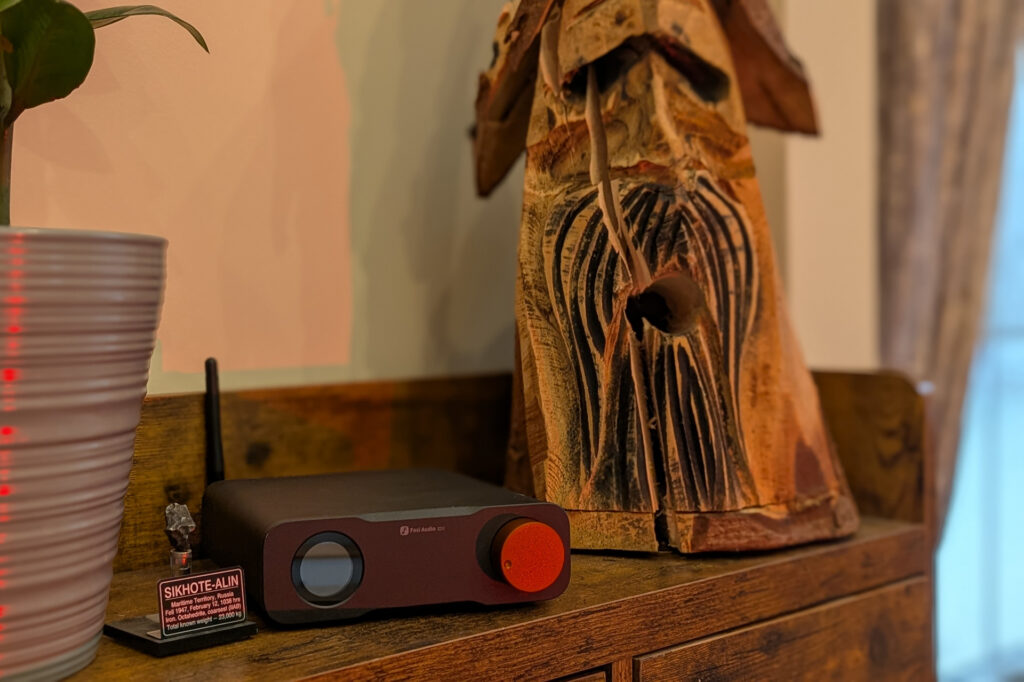
What Makes the Fosi ZD3 Dac So Special?
- The Fosi ZD3 has one serious and complete chipset. It is one thing to brag about using a high-end DAC chip. It’s another thing to have all the supporting hardware to be of high-end quality, too. The Fosi ZD3 uses the ESS ES9039Q2M DAC chip, which allows for crazy high resolutions like PCM up to 32-bit/768 kHz and DSD512. If we frame the ESS DAC chip as the engine in a sports car, the processor chip that works with the DAC is the rest of the drivetrain and suspension. Both the DAC and processor must work in harmony to create a well-balanced experience. There are a lot of inexpensive DACs that forego a truly exceptional processor in favor of cost savings, but not the Fosi ZD3. The Fosi ZD3 includes a processor from XMOS that is on the same level, and works in perfect harmony, with the ESS DAC. Fosi did not end there. Included with the ZD3 is a Qualcomm wireless audio processor that allows the ZD3 to receive high-resolution wireless Bluetooth streaming in aptX HD, aptX, AAC, and SBC formats. The quality DAC, processor and wireless process ensure that no matter what path the digital signal takes in the ZD3, it will be high-quality.
- The ZD3 has a balanced output stage. What happens after the digital stuff is converted to analog stuff? The analog stuff needs to be made ready for the next component in the audio chain. Enter the after-DAC part of a DAC, called the output stage. Within the ZD3, the output stage is fully balanced. Balanced amplifiers amplify both the positive and negative aspects of the sound waves separately. Doing so allows a balanced output stage to contain extremely low noise born from the age-old technology called Common Mode Rejection. My $12,000 Bricasti M1 Series II utilizes the same tech, which then is sent to my Bricasti Design M30 Amplifiers (read the article here), which are also balanced. Balanced technology is more expensive, requiring more components, since there are two signal paths per audio channel instead of one. Pair the balanced output of the ZD3 with the Fosi ZA3 balanced power amplifier, and the result approaches a world-class, low-noise floor, as documented in Fosi’s published specifications. The Fosi ZD3 has a dynamic range greater than 123 decibels, and a signal-to-noise ratio of less than 0.00008 percent. Very impressive.
- The Fosi ZD3 has a bypass switch that removes the ZD3’s internal preamplifier section if it is not needed. I love this, because the more one simplifies the signal path, the lower the distortion. When using the ZD3 with an integrated amplifier like the Fosi ZA3, or a dedicated preamplifier, operating the ZD3 in bypass mode is the way to go. Kudos to Fosi for putting such a simple but meaningful feature into the ZD3.
- The op amps in the Fosi ZD3 are user-swappable. Ops Amps are the frontline workhorses of solid-state electronics. Geeky tweakers sometimes like to change op amps out for different brands, which have subtle but noticeable effects on the overall sound. Swapping op amps is a level of tuning that resembles tube rolling in vacuum tube amplifiers. While op amp swaps can take serious surgery in most DACs, Fosi encourages this, and has made it simple in the ZD3 to customize the sound exactly as you wish.
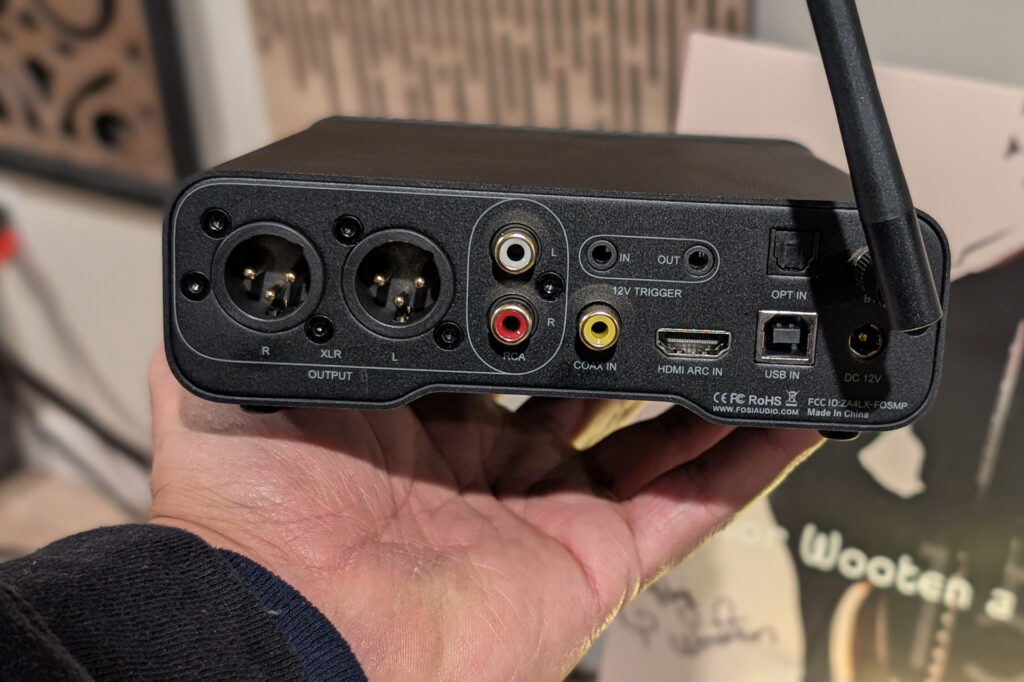
- The Fosi ZD3 has a host of useful inputs. Digital coax (SPDIF), optical, and USB inputs are included, which is great to see on a budget component. The icing on the cake, however, is the included HDMI input with HDMI CEC, making the ZD3 far more compatible with today’s integrated audio/video systems.
- The Fosi ZD3 is compact and maintains the Fosi family aesthetic. The ZD3’s compact size is at home in both a dedicated audiophile system and on a desktop. The aluminum chassis has a rich feel to it and, when paired with the Fosi ZA3 amplifier, the pair makes one sexy mini-component stack.
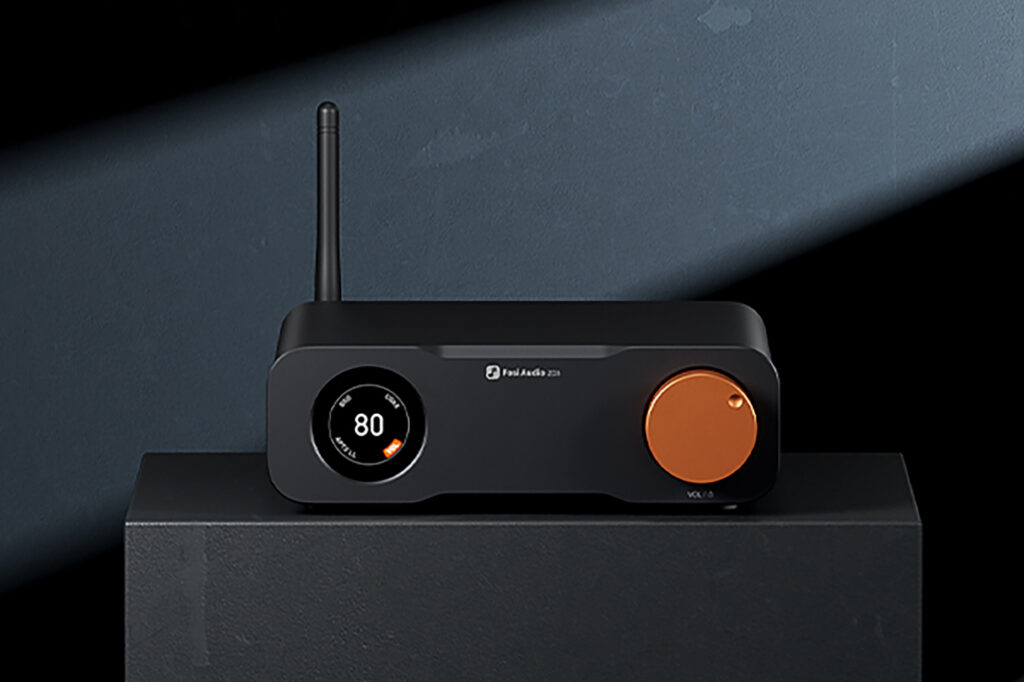
Why Should You Care About Fosi Audio ZD3 Balanced Stereo DAC?
Too many budget DACs are trying to jam too many features into them and end up doing nothing really all that well. The Fosi ZD3 bucks this trend and stays true to Fosi’s belief that sound quality comes first. Sure, it will decode any digital format that anything these days will decode, but the real magic of the ZD3 lies in its balanced output stage. A signal-to-noise ratio (SNR) of >126 dB and a total harmonic distortion plus noise (THD+N) so low I am too lazy to type it – okay, it’s <0.00008% – are the kind of impressive numbers that a DAC costing as much as an entry-level luxury car was touting just a decade ago. The ZD3 just makes sense with its fantastic technical performance, handful of inputs, defeatable volume control, and enough connectivity to keep it relevant for some time.
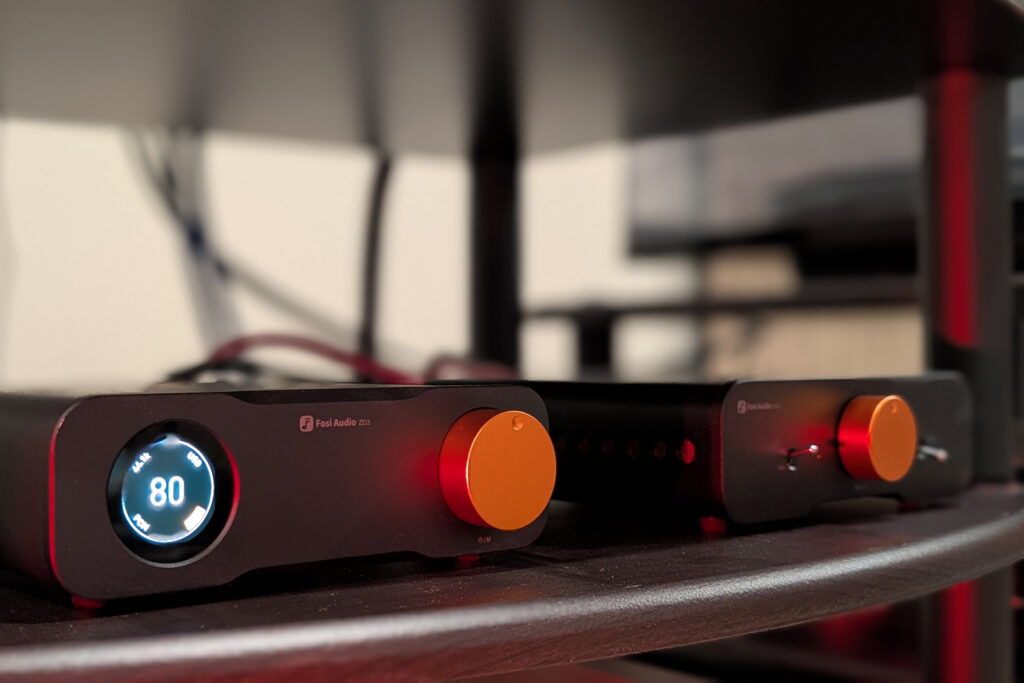
Some Things You Might Not Like About the Fosi Audio ZD3 Balanced Stereo DAC
- The Fosi ZD3 manual could be clearer and easier to understand. As I was on my knees playing the game Twister with my AV rack to shoehorn the Fosi ZD3 into place through a jungle of cables, I powered up the ZD3, only to find it on the wrong input. My right arm was still tangled in vines and like a Rubik’s Cube champion, I started fiddling with the singular giant knob on the front of the ZD3. After accidentally powering the Fosi ZD3 on and off several times, it occurred to me that the remote was required to change inputs. I did not recall anything in the manual alluding to the ability to change inputs from the front panel. This was my mistake, because one can change inputs from the front panel; the volume knob just needs a short press, not a long press. As my heart sank, I began the process of untangling my 6’3” frame, which was folded into a shape nature did not intend to secure the remote. Once the remote was in hand, my heart sank further when I found there were no batteries in the box. So began the mission to find two AAA batteries. Ultimately, all is well that ends well, but if there was some distinct clarity or quick start guide in the manual of the ZD3, my quality of life would have been significantly better, even if I own some (or all) of the misinterpretation of the manual.
- The small display is difficult to read from a distance. I would not imagine this to be much of an issue in a desktop system, since the OLED display has plenty of resolution, but in a listening space where one may be feet from the ZD3, the display is a tough read.
- The remote Bluetooth antenna makes the ZD3 difficult to wedge into tight spots. An integrated antenna would have suited the Fosi ZD3 better and provided more sex appeal. The antenna on the ZD3 is akin to the large pole Mom and Pop shops put on their shopping carts so they cannot be taken outside the store. It’s just in the way.
- The Fosi ZD3 does not have a headphone amplifier. I think the decision to leave out a headphone amplifier in lieu of better-quality components and design was a good one. However, those looking to use the ZD3 with headphones are out of luck. This is far more of an FYI than a major critique.
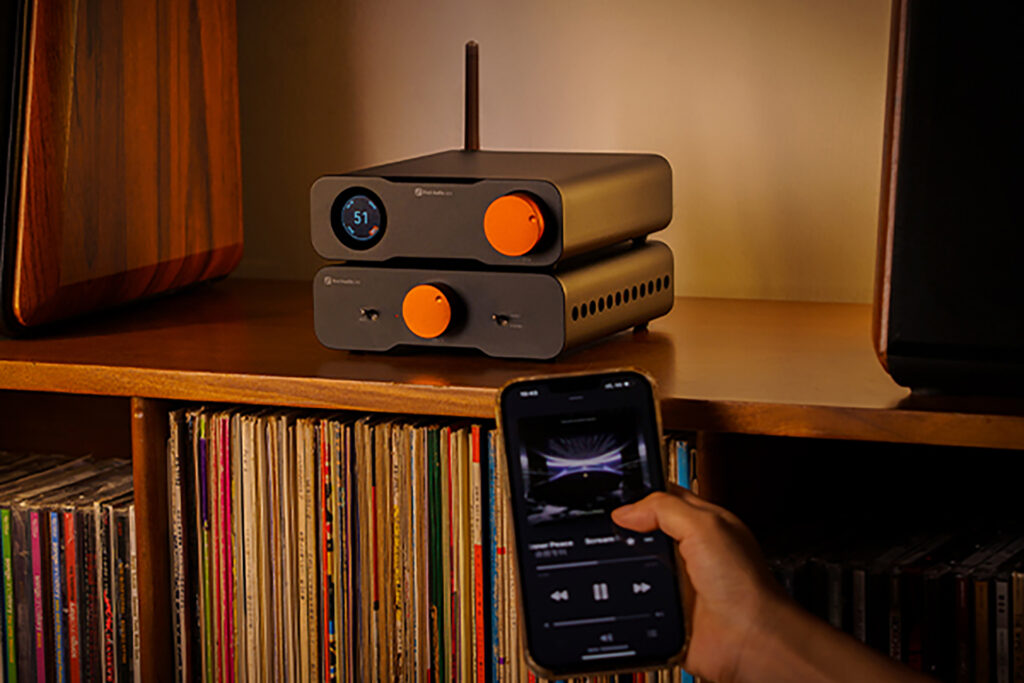
Listening to the Fosi Audio ZD3 Balanced Stereo DAC
For listening evaluations, I primarily used the Fosi Audio ZA3 balanced amplifier with the Polk Audio Reserve 200 Anniversary Edition loudspeakers (check out the article). I ran the whole system balanced with XLR cables and fed my loudspeakers with AudioQuest Robin Hood loudspeaker cables.
I have heard many budget DACs with integrated wireless over the past several years, and they all have one thing in common: the Bluetooth is always okay. Just okay. Bluetooth is nothing I would use for serious listing of any kind until I heard the first few notes of Hozier’s cover of “Do I Wanna Know,” originally written and performed by the Arctic Monkeys. Qobuz has this recording streaming at 16-bit/44.1 kHz. There was an immediacy to the sound with an endless reverb to the drums that caught my attention. The guitar matched by a solo violin was separated well, with good attack on the leading note, and all instruments were firm in the soundstage. Hozier’s voice was well-resolved, but may have not had as much texture as listening with the Grace m900 DAC (read the review). Hozier’s twist on the powerful lyrics was not lost. “Do I Wanna Know” was a great listen with the ZD3.
There is nothing better on a cold, rainy New England evening than a Negroni paired with the listening pleasure of blues. I have always enjoyed, and am intimately familiar with, Eric Clapton’s live album One More Car, One More Rider. “Have You Ever Loved a Woman” is a track that has a little bit of everything you want in blues. Clapton’s screaming guitar and distinguished vocals, solo piano, Hammond B3 organ, and huge drums. So much fun. Qobuz was delivering “Have You Ever Loved a Woman” in 16-bit/44.1 kHz resolution. This time I was fully hooked into the Fosi ZD3 via USB. I found the resolution to be above average, even if the Fosi ZD3 was $1,000, and all the instruments were separated well against an extremely quiet background. When the time came, the cymbals rang above the music with extension and finesse. I did find, with the extra complexity of this track, the Fosi ZD3’s soundstage was not quite as three-dimensional as I like. Otherwise, the ZD3 rocked hard without ever losing the music’s message or dynamic finesse. The resolution of the ZD3, paired with the Fosi ZA3 amplifier, even had me breaking out my air-drum kit for the big finale. One cannot get much more into the music than that.
Huh, I guess I should up the resolution a bit for this final track. I pulled out “Round Here” off the Counting Crow’s August and Everything After. This melancholy but incredibly well-written track takes advantage of what high resolution has to offer in its remastered 24-bit/96 kHz form: subtlety on display. There are many small dynamic changes, tempo pauses, and inflections from all the instruments and vocals and this musical story marches on. On the best DACs, when these qualities of “Round Here” are all in place, they portray the song’s message in a manner that can take the listener’s breath away. I was impressed when the Fosi ZD3 resolved “Round Here” well enough to pause my breath, even if it was not a full hold, since this meant the ZD3 was an exceptional listen. The Fosi ZD3 painted a musical picture using the extended dynamic range and added resolution available in a 24-bit/96 kHz recording very well for a budget component. The ZD3’s tonality was a little lean, but not distractingly so. Out of the budget DACs I have heard under for $500, the ZD3 was the first to present a distinct difference between high-resolution and 16-bit/44 kHz resolution. Impressive.
Will the Fosi Audio ZD3 Balanced DAC Hold Its Value?
The ZD3 is $179. There is not a large used market/deprecation concern here. At these budget levels, components are practically consumable with no used market. Who cares? Omakase sushi for two is far more than this extremely capable audiophile DAC.
What is the Competition for the Fosi Audio ZD3 DAC?
The first competitor for the ZD3 that pops into my mind is the $149 Schiit Modi 5. I had the pleasure of evaluating the Modi’s more mature sibling, the Schiit Yggdrasil+ OG (read the review here), and own their wee li’l Schiit Mani 2 Phono Preamp (read the review here). Guess I like their Schiit. The Modi does not have as much connectivity; however, it packs some serious technology and resolving power into its small frame.
At $199 lies the Topping DX3pro+ (buy at Amazon). Topping paved the way for the budget DAC shake-up and arguably was the first to prove affordable DACs can be high-performance. The Topping DX3pro+ offers very similar capabilities to the ZD3, but the user does lose the HDMI port and balanced architecture for the addition of a headphone amplifier.
Final Thoughts on the Fosi Audio ZD3 Balanced Stereo DAC …
For $179, it seems the Fosi Audio ZD3 has been able to take the raw audio performance of entry-level DACs to the next level. Its fully-balanced architecture and premium components are features that are relatively new to this category of entry-level gear, since more complex and expensive features are typically cut to make the budget level, well, affordable. Minor nits aside, I feel the ZD3’s performance is good enough that anything 10 times its selling price needs to be highly aware of its existence and performance. In this sense, the old curmudgeon mentioned at the beginning of this article is not so wrong. Paired with the Fosi Audio ZA3 balanced amplifier, one can have an entire system front end for less than $400 that, again, would be hard to beat for 10 times its meager price. Fosi is most definitely moving the needle in the right direction of affordable high fidelity for all. This is an absolutely relevant and powerful audiophile product that demands respect and a little admiration from even the most jaded of high-end audiophiles.
No AI was used in the writing of this article.




The newer Schitt Mimir is a good comparison. I have one with Forkbeard and it’s great.