
 By
By When a British loudspeaker manufacturer with a five-decade legacy decides to look backward for inspiration, you know something interesting is about to happen. Monitor Audio’s latest offering pays homage to the culturally explosive 1980s with the Monitor Audio Studio 89, a compact bookshelf speaker that channels the aesthetic of their iconic 1989 Studio 15 while packing in cutting-edge technology borrowed from their flagship lineup.
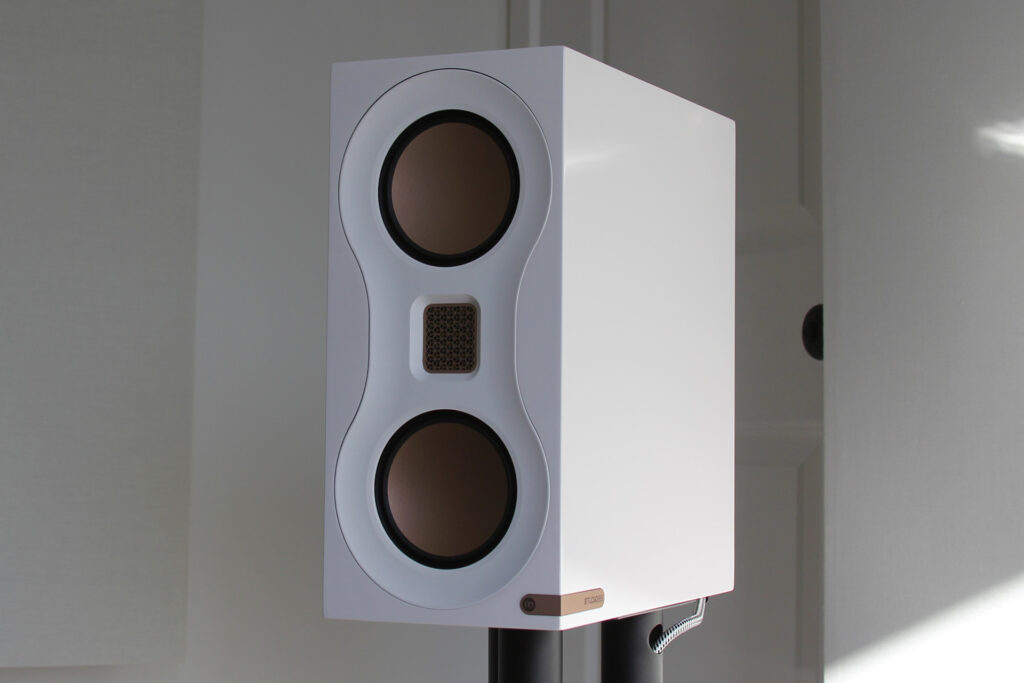
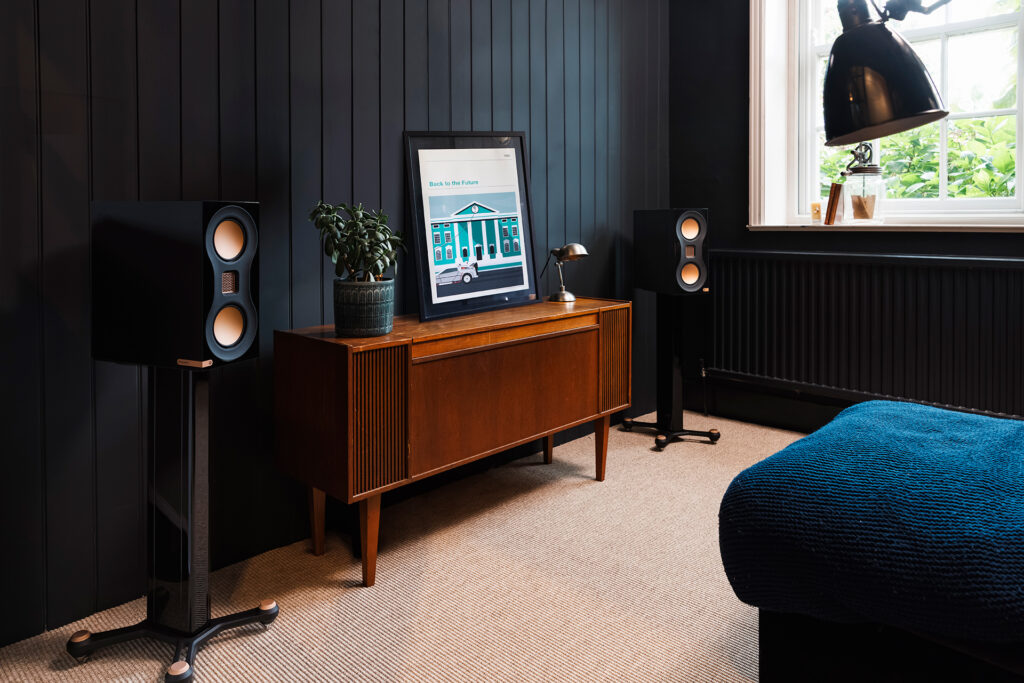
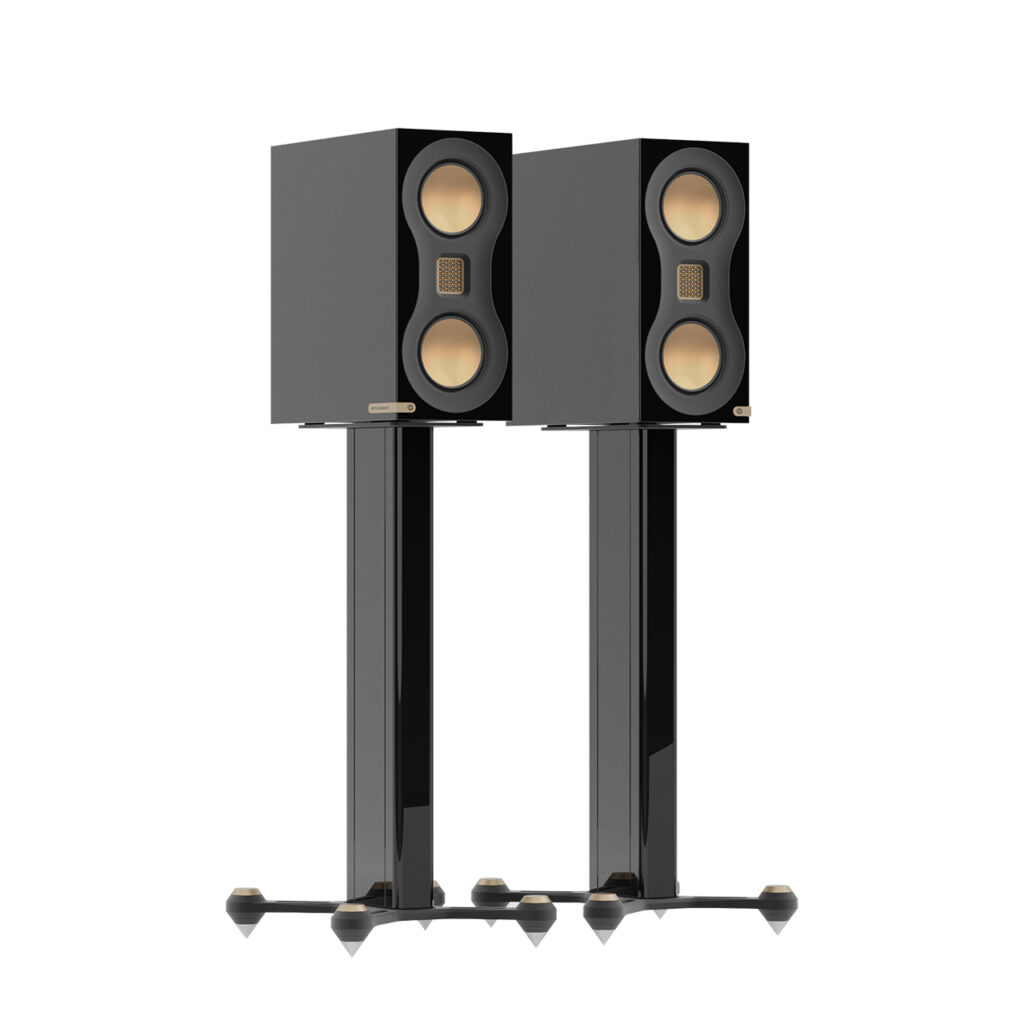
The Monitor Audio Studio 89 is available in a striking high-gloss black or a clean, glossy white finish with gold-anodized drivers, making it one of the most visually distinctive speakers in Monitor Audio’s current lineup. At $2,058 per pair, these diminutive speakers measure just over six inches wide yet promise studio-monitor-quality sound for the home. Having dual RDT III C-CAM mid-bass drivers flanking a sophisticated MPD III (Micro Pleated Diaphragm) high-frequency transducer in an MTM configuration suggests Monitor Audio is serious about delivering big sound from a small package.
What Makes the Monitor Audio Studio 89 Bookshelf Speakers Special?
- The Monitor Audio Studio 89 MTM driver configuration creates an acoustical point source that delivers remarkably even sound dispersion throughout the listening room. By placing the MPD III tweeter between two identical mid-bass drivers, Monitor Audio achieves vertical symmetry in a way similar to a single full-range driver configuration. This does wonders for how well the speakers can provide imaging to the listener.
- The Monitor Audio Studio 89 MPD III high-frequency transducer represents the third generation of Monitor Audio’s in-house Air Motion Transformer design. Unlike conventional dome tweeters that push air, the pleated diaphragm moves in a concertina-like fashion, squeezing air out from between its folds. This design delivers exceptionally low, measured distortion and extends frequency response all the way to 60 kHz, well beyond the range of human hearing but beneficial for harmonic accuracy. The carefully-shaped waveguide ensures even dispersion characteristics, creating a seamless soundstage that extends well beyond the physical boundaries of the speakers.
- The Monitor Audio Studio 89 RDT III C-CAM mid-bass drivers feature an advanced three-layer composite construction that’s trickled down from the Hyphn flagship. Each cone consists of a ceramic-coated aluminum magnesium outer skin, a Nomex honeycomb core, and a woven carbon fiber backing. This sandwich construction delivers exceptional rigidity while remaining remarkably lightweight, enabling piston-like movement with minimal cone breakup even during demanding passages.
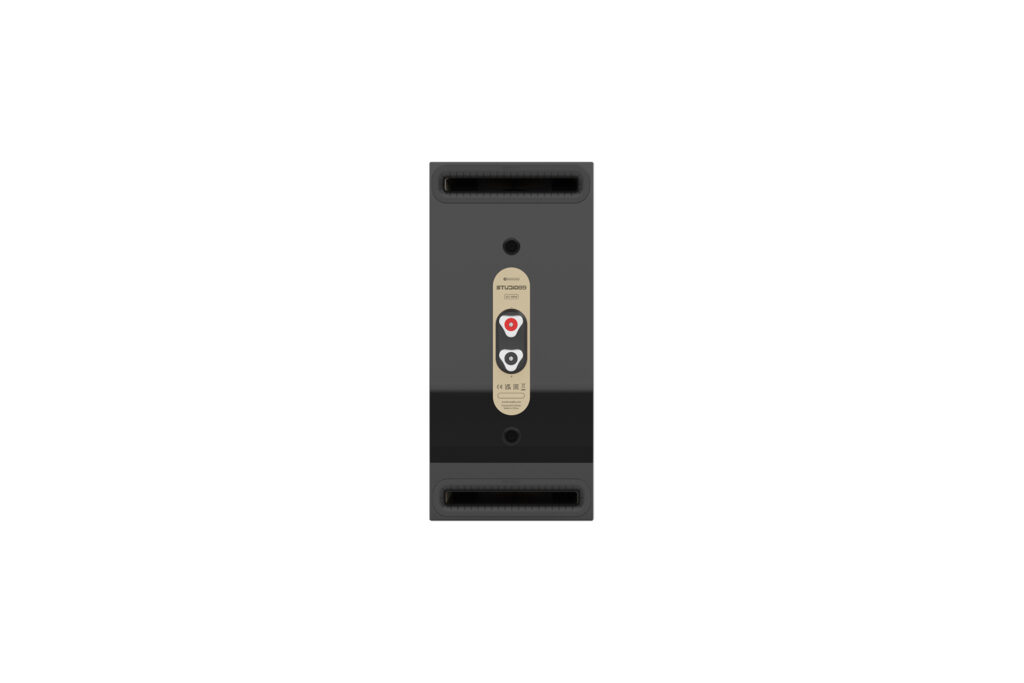
- Twin HiVe II slot ports positioned on the rear of the cabinet are engineered to minimize port noise and turbulence on the Monitor Audio Studio 89s. These high-velocity ports feature rifled edges that help funnel air smoothly, reducing the chuffing sounds that plague many ported designs. The ports work in conjunction with carefully calculated internal bracing to tune the bass response down to 48 Hz in-room, impressive for a speaker measuring just 13.4 inches tall. This thoughtful port design allows the Studio 89 to deliver clean, controlled bass that belies its compact dimensions.
- The isolated aluminum front baffle is a great feature we don’t see on many speakers in this price range. By housing the twin DRT III bass-mid drivers in the baffle, separated from the speaker cabinet by a layer of dense foam suspension, interference is minimized and the drivers are left to operate in complete sonic isolation.
- The cabinet construction on the Monitor Audio Studio 89 balances aesthetic appeal with acoustic performance in a uniquely narrow profile. The rigid die-cast aluminum front baffle eliminates visible fasteners for a clean, sophisticated appearance while providing exceptional stiffness. The 15mm side walls and 18mm front face are carefully braced internally to control resonances. At just 6.2 inches wide, these are among the slimmest bookshelf speakers available, yet the 14.2-inch depth ensures adequate internal volume. The deep, lustrous high-gloss finish creates a mirror-like surface that makes a bold visual statement.
Why Should You Care About the Monitor Audio Studio 89 Bookshelf Speakers?
The audiophile drawn to the Monitor Audio Studio 89s is someone who values both substance and style. These speakers appeal to listeners who want great sound quality in a visually distinctive package that doesn’t dominate their living space. The Studio 89 takes design cues from an era when form followed function but updates the concept with thoroughly modern acoustic engineering.
For the detail-oriented listener who wants to hear deep into recordings, the Studio 89 delivers fantastic resolution and transparency. The advanced driver technology and carefully engineered crossover reveal all the details in any given track and lay them bare to behold. These are speakers for people who value clarity and precision, who want to hear recordings as the artists and engineers intended them to sound. The MTM configuration’s wide and even dispersion means these speakers work well in real-world rooms where listeners move around, not just in idealized audiophile setups.
Some Things You Might Not Like About the Monitor Audio Studio 89 Bookshelf Speakers
- Despite their compact size, the Studio 89 speakers are a little particular about amplification and perform best with a quality power amplifier that can deliver a solid amount of current. With a sensitivity of 86 dB and a nominal impedance of six ohms dipping to 4.2 ohms at certain frequencies, these speakers require more power than their diminutive size might suggest. Modest amplifiers in the 50-watt range will drive them to adequate levels, but the Studio 89s truly come alive with amplifiers delivering 100 watts or more with robust current delivery. Budget-conscious buyers might need to factor in amplifier upgrades to fully realize these speakers’ potential.
- The high-gloss finish on the Monitor Audio Studio 89 bookshelf speakers, while stunning, is a fingerprint magnet and requires regular maintenance to keep pristine. The mirror-like surface shows every speck of dust and every fingerprint, necessitating careful handling and frequent cleaning. Additionally, the lack of included grilles means the delicate drivers are exposed to potential damage from curious pets or children. The uncompromising aesthetic comes with practical maintenance considerations that more forgiving finishes wouldn’t require.
Listening to the Monitor Audio Studio 89 Bookshelf Speakers …
I tested the Monitor Audio Studio 89s with a Yamaha A-S301 integrated amplifier fed by a Topping E30 DAC, streaming lossless files via Roon (learn all about Roon from Brian Kahn). My listening room has two-inch GIK Acoustic panels at the first reflection points. The speakers sat on stands about two feet from the rear wall with slight toe-in.
Peter Gabriel’s “Sledgehammer” from the SO album was an appropriate starting point for speakers inspired by the 1980s. The track’s iconic bass line came through with good weight and definition, likely benefiting from the 85mm magnets and 4.5mm linear excursion that allow the small 4.25-inch drivers to move substantial air. The horns had appropriate bite without harshness, which I’d attribute to the MPD III tweeter’s accordion-style operation – it squeezes air rather than pushing it, reducing the distortion that can make brass sound fatiguing. Gabriel’s vocals remained anchored in the center, even during the busy horn sections, demonstrating the MTM configuration’s ability to create a stable phantom center image. The various percussion elements – the shake, the programmed drums, the funk groove – each occupied distinct positions in the soundstage. The foam isolation between the aluminum baffle and cabinet seemed to pay off here; there was little cabinet coloration muddying the complex midrange information.
Norah Jones’s “Don’t Know Why” from Come Away With Me tested midrange reproduction and imaging. Her voice was natural and precisely located between the speakers, with no sense of the sound coming from the cabinets themselves. The piano had realistic weight and decay – each note bloomed and faded naturally, suggesting the third-order crossover’s 2.4 kHz transition point sits well below the piano’s critical harmonics. The brushed drums were positioned behind and slightly left of the vocals, with the acoustic bass providing foundation without bloat. I moved around the room during this track and found the tonal balance remained consistent off-axis, a characteristic of the MTM array’s controlled vertical dispersion. The 58 Hz port tuning kept the bass tight on the upright bass notes rather than adding false warmth. This is a speaker that lets you hear the recording rather than imposing its own character.
To test the speakers’ handling of large-scale orchestral works, I played Mahler’s Symphony No. 5, the famous Adagietto movement, conducted by Leonard Bernstein. This achingly beautiful piece requires speakers capable of revealing delicate string textures while maintaining proper tonal balance across the frequency spectrum. The Monitor Audio Studio 89s reproduced the massed strings with gorgeous warmth and natural sweetness, never veering into brightness or harshness despite the extended high frequencies. The layering of the orchestra was exceptional, allowing me to hear into the depth of the soundstage and follow individual string sections. Dynamic gradations from the softest pianissimos to fuller passages were rendered with impressive nuance. While no bookshelf speaker can fully reproduce the scale and physical presence of a full orchestra in a concert hall, the Studio 89s conveyed the essential character and emotional power of the music with remarkable authenticity. The speakers’ wide dispersion created an enveloping soundfield that filled my room with sound
Will the Monitor Audio Studio 89 Bookshelf Speakers Hold Their Value?
Monitor Audio enjoys strong brand recognition worldwide, particularly in European and North American markets, which bodes well for the Studio 89’s value retention. The company’s reputation for build quality and performance, combined with their extensive dealer network, creates confidence among potential used buyers. The Studio 89’s unique aesthetic and limited finish options actually work in its favor for resale, as it’s instantly recognizable and attracts buyers specifically seeking its distinctive look. At a certain price, there is somebody who needs small loudspeakers like these, thus there will always be a market for Monitor Audio Studio 89s in the marketplace.
What is the Competition for the Monitor Audio Studio 89 Bookshelf Speakers?
The Focal Aria Evo X No. 1 (buy at Crutchfield for $2,699) brings French flair to this competitive category. Focal’s signature inverted dome beryllium tweeter delivers exceptional clarity and extension, while the Slatefiber cone mid-bass driver provides excellent damping and natural midrange reproduction. The Aria Evo X No. 1 offers a slightly warmer, more forgiving presentation than the Studio 89, with deeper bass extension thanks to its larger cabinet. The Focal comes in attractive wood veneer finishes that appeal to traditional tastes, and a glossy black option offering greater décor flexibility.
The Dynaudio Evoke 20 (buy at Crutchfield for $2,195) offers Danish engineering excellence at a slightly lower price point. These compact two-way speakers feature Dynaudio’s legendary Cerotar silk dome tweeter and Esotec+ woofer with a proprietary magnesium silicate polymer cone. The Evoke 20 delivers rich, full-bodied sound with exceptional bass performance for its size, though it requires substantial amplifier power to reach its potential. While not as visually dramatic as the Monitor Audio Studio 89, the Evoke 20 comes in multiple attractive finishes and offers slightly warmer tonal balance. Listeners who prioritize emotional engagement and full-bodied sound over ultimate detail retrieval might prefer the Dynaudio approach, though the Studio 89 counters with superior high-frequency extension and more sophisticated driver technology.
The Wharfedale AURA 1 (buy at Crutchfield for $2,000 per pair) is a compelling British alternative that shares some design philosophy with the Studio 89. Both speakers use AMT-style tweeters, Monitor Audio’s MPD III and Wharfedale’s own AMT derived from their flagship Elysian series. Both prioritize low-distortion high-frequency reproduction through folded diaphragm designs that squeeze air rather than push it. The AURA 1 uses a five-inch glass fiber matrix cone woofer, versus the Studio 89’s dual 4.25-inch C-CAM drivers in MTM configuration. Choose the Wharfedale for traditional two-way performance and finish options, or the Studio 89 for distinctive styling and the MTM configuration’s imaging advantages.
Final Thoughts on the Monitor Audio Studio 89 Bookshelf Speakers …
The Monitor Audio Studio 89 succeeds admirably in its ambitious goal of delivering flagship-level technology in a compact, visually distinctive package. These speakers prove that serious performance doesn’t require massive cabinets, though they do demand quality electronics to fully realize their potential. The combination of advanced driver technology, meticulous crossover design, and rigid cabinet construction creates a speaker that punches well above its weight class in terms of both resolution and soundstaging.
What sets the Monitor Audio apart is its unique combination of cutting-edge technology, British audio heritage, and that eye-catching retro-modern aesthetic. These speakers are for listeners who want something distinctive, who appreciate the marriage of form and function, and who value transparent, revealing sound that doesn’t sacrifice musicality. The Studio 89 represents one of Monitor Audio’s most compelling bookshelf speakers to date, a thoroughly modern design that successfully channels the innovative spirit of the 1980s while delivering sound quality that’s firmly planted in the present.




I first heard these puppies in Monitor’s large room last year at AXPONA. I was shocked by their prodigious dispersive energy, predicting they would give their Silver 2-ways a serious run for the money. The lads in attendance certainly seemed proud of their accomplishments. Bravo, chaps. At the time the MSRP was to be about $1800/pr. Let’s hope that tariffs/taxes and shipping costs don’t kill this golden goose. They join the Phil Harm MDR as my affordable faves for wide dispersion apps.