
 By
By There is no one category with more controversy in the audiophile hobby than cables. Noel Lee, the founder of Monster Cable and the genius behind the Beats brand of headphones that would ultimately would be co-opted by Dr. Dre and record producer Jimmy Iovine, taught the audiophile industry how to sell cables – and why. In the 1970s, a well-made, highly-insulated cable with good connectors was a clear audiophile upgrade over “lamp cord” options. From a business perspective, the profit margin on traditional copper cables was insanely good. A spool of Monster Cable could be paid for in the first few days, leaving gigantic profit margins for the retailer if they were mindful. Over time, retailers and manufacturers got greedy, as human nature often dictates. Audiophile cables became subject to adding EQ and all sorts of voodoo. Voodoo that, respectfully, is very off-putting to people who love music and would invest in a good music playback system, but don’t believe in anti-science.
Are all audiophile cables voodoo bullshit? Absolutely not. There are many companies that use real science and research to create audiophile cables, connectors and accessories designed to make the best, most soundless connection between component A and component B. Those are the companies that we allow to advertise on FutureAudiohile.com. There are plenty more that are trying to sell a “house sound” or a flavor that the cables bring to your system, when that is inherently the wrong approach – regardless of price or industry politics.
In my reference system, I use Wireworld cables almost exclusively. David Salz is an industry friend who I’ve worked with since the first time the Consumer Electronics Show went to the Alexis Park Hotel in the mid-1990s. We both did active demos at that show (one of my worst ideas as a publisher – I was young, dumb, and couldn’t hang on to my money if someone super-glued it to my hands), but somehow we survived. David is an engineer and inventor in the audiophile space and beyond. He is a scientist and a no-bullshit guy, which I love. He has made some really compelling advances in Ethernet cables, power cables, overall AC power, and more. His traditional analog and digital cables are designed with the idea that the more you spend (and they aren’t always stupid-expensive, either), the less coloration, noise and distortion you get. That’s a philosophy that I can and did buy into. Today in our hobby, it is popular to bash audiophile companies for making snake oil products, and there is a case for that anger and distrust, but not with all audiophile cable companies. There are many that make really great products that help make our music sound more like the recording, and that is our main goal.
Making Audiophile Cables Fit Into a Real-World Stereo System
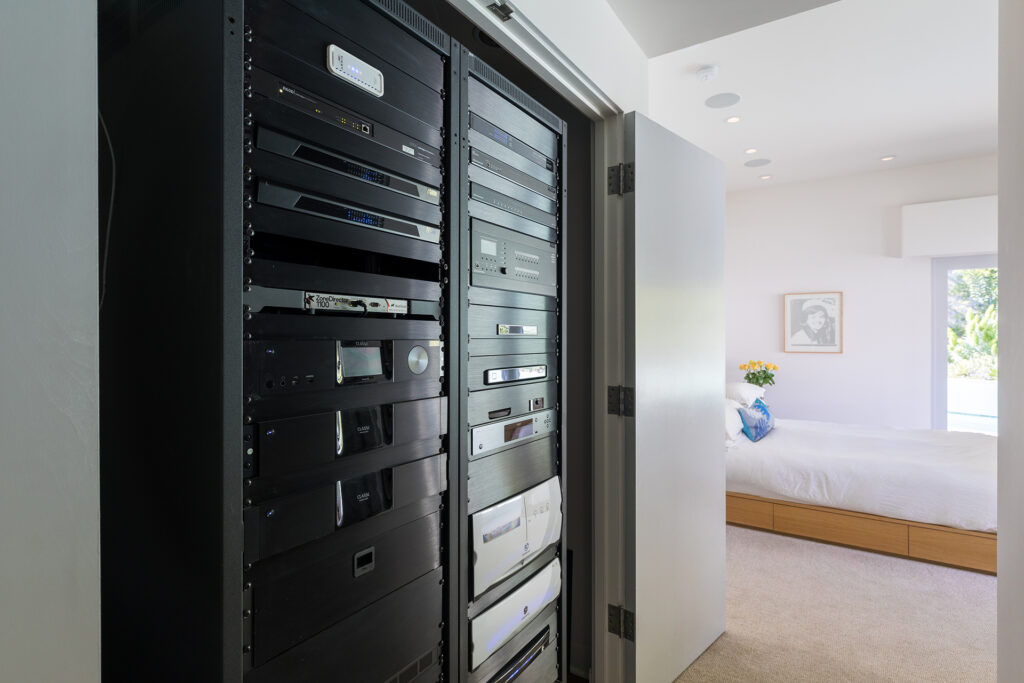
David Salz and I are personal friends, but we don’t always agree on matters of audiophile cables. It is easy to forget, if you watch enough cable news, that friends can disagree about things and still be friends. Where David and I lovingly get into it is over how to present audiophile cables. My roots are in ultimate-level audiophile systems, dating back to my retail days selling a lot of Wilson Audio speakers, as well as Mark Levinson’s insanely cool Cello Music and Film Systems. In the past 30 years, and having built seven homes in and around Los Angeles, I have become much more in tune with my inner custom AV installer. What does that mean? For starters, I like to install equipment into Middle Atlantic racks (the kind you see in those TV ads with rows of eight-foot-tall servers all neatly installed). Gear goes into a rack, installed on a custom-made shelf, and cables are neatly installed, wire-tied, and show zero mess.
Is this CI “custom installer”-type installation common in the audiophile world? Nope, it isn’t, but most very high-end homes have some sort of mechanical room for their smart home, home theater and other control systems. Even if you are not at this level of labor-and-parts-intensive AV installation (I am not there myself right now, so don’t feel bad, as there is no shame, folks), there are lessons for us more traditional audiophiles. One of the most important ones is cable management.
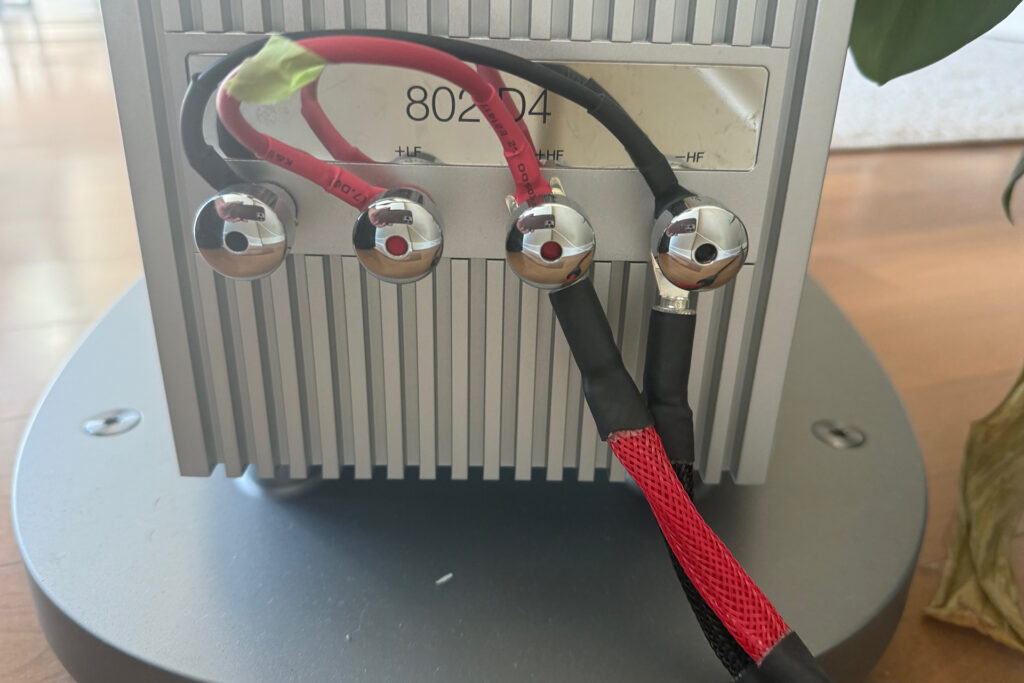
The biggest issue with audiophile cables isn’t their sound: it is their flexibility or lack thereof. I love the Nordost cables that Paul Wilson (check out his reference system here) uses in his reference system, as they are American-made, thin and super-flexible. This is where I get into it with my friend David (and he’s not the only one in the cable world who makes stiff cables). You see, in order to make, say, a pair of super-well-shielded speaker cables, a designer often wants to insulate the copper from external factors and environmental issues. That often requires the use of a lot of physical shielding on the cables, which many times results in a very rigid cable. Can you break in a cable? Sonically, I sure as hell can’t hear it. I know multiple former presidents of the Audio Engineering Society (here’s a list of them, and it is impressive in who’s served here) say you can’t measure a cable breaking in sonically,in but physically, a cable can uncoil and lie more flat. This helped me a lot with my current Wireworld speaker cables when I got them a few months back, as they now lie flat on the floor and look perfectly neat when connected to my Pass Labs XA 160.8 mono power amps (review pending)and Bowers & Wilkins 802 D4 speakers (read my review).
How Can Audiophile Power Cables Help Make My System Look Better?
Many audiophiles rave about the performance boost that comes from aftermarket power cables. David is one of the engineers who feels this is a place for solid audiophile performance improvements. I’ve done my own “audiophile Pepsi challenge,” and I don’t always hear a big difference, but I respect those who do.
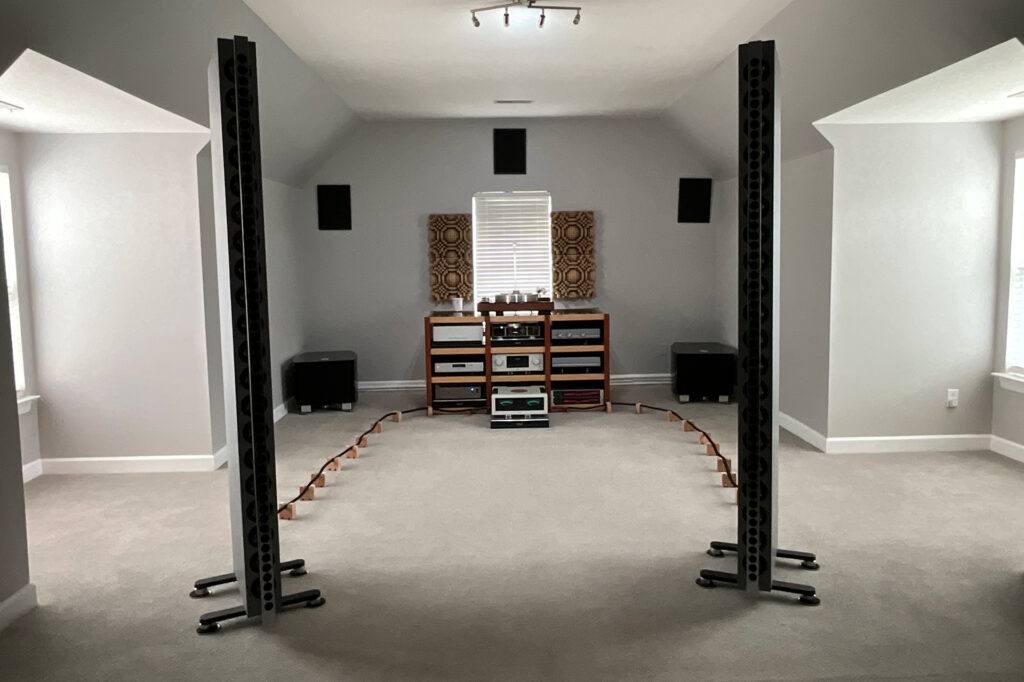
What I like about well-engineered, well-made aftermarket audiophile cables is that you can make a very solid connection with a highly-shielded cable but, for me, the custom length is the real draw. In my racks, I like to use cables that are flexible enough to do actual physical cable management. I also like to not have extra bulk of cables around, and using just the right length of power cord makes that possible. Sometime a one-foot power cable is just the right length. Other times, as with my monaural power amps, you need something longer.
Velcro Wire Ties Are the Best and Cheapest Solution to Audiophile Cable Management
For $11 on Amazon, you can buy Velcro wire ties (buy here) in a rainbow of colors (if you like; I prefer white and black), which allows you to start to get your cables following your plan for how you want them presented in your system. Why is Velcro important? Plastic wire ties are dirt cheap, but can’t easily be reused, so when you need to swap something out for an A/B test, you have to snip the plastic ties with a wire cutter. That’s no good, as it makes a mess with plastic clippings, as possibly damaging the shielding of your often expensive cables. That is no good.
These very affordable Velcro cable ties are great, in that you can make your cables adhere to your rack shelves/poles, and it really cleans up the look of your cables and overall system. There is nothing sexy, luxurious or cool about a mess of audiophile cables. I am sorry, but there just isn’t. The cables are a very important part of any good audiophile system, but they don’t have to be on messy display, and the solution is less than $11 from Amazon and easy to do.
Ray Kimber’s Solution is Cheap and Super-Easy, Too
A year or two ago, I was lucky enough to go to Utah and spend time with audiophile icon Ray Kimber. His cables are very good and he is a great guy who is not just successful, but truly kind and generous (read about Ray’s legacy here). We toured the Kimber Kable factory and one of the products that Ray makes a fortune from is not really an audiophile concept. He makes custom wraps for all sorts of cables that are simple plastic wrappers that can neatly organize and present cables in a meaningful way. Think about how a car or an airplane might have a bundle of cables for the manufacturing process. That’s kinda what Ray’s company is doing with many more applications outside of the audiophile world.
I will have moved six times in less than 15 months since the Palisades Fire became the largest natural disaster in United States history. I love the building that I am living in here in Marina Del Rey as it is a glass tower with views of thousands of boats, the ocean, Catalina Island and more with those “valet park my EV SUV”-level Park Avenue full-service building amenities. I am moving into a smaller and much less expensive unit, where I will have a more traditional Solidsteel audiophile equipment rack around the corner from my speakers, sub and 77-inch LG OLED TV. That means in my modern beachy bachelor pad, I will have a long XLR cable from the back of my Pass Labs XP-32 three-chassis stereo preamp (read the review) into the Pass Labs amps between the speakers. That cable isn’t white by design at Wireworld, but they feel me. They are making the new cable wrapped in simple white plastic or fabric material, so that the cables will blend in with my white baseboards. This custom request barely comes with a cost, but it is one more little trick that can make an audiophile system look more like a luxury goods product than a recording studio the morning after Mötley Crüe was in for an all-nighter. That’s the look that turns off women, younger people and more mainstream music lovers.
What is EasyPlant.com and Why Do I Need to Buy Their Stuff?
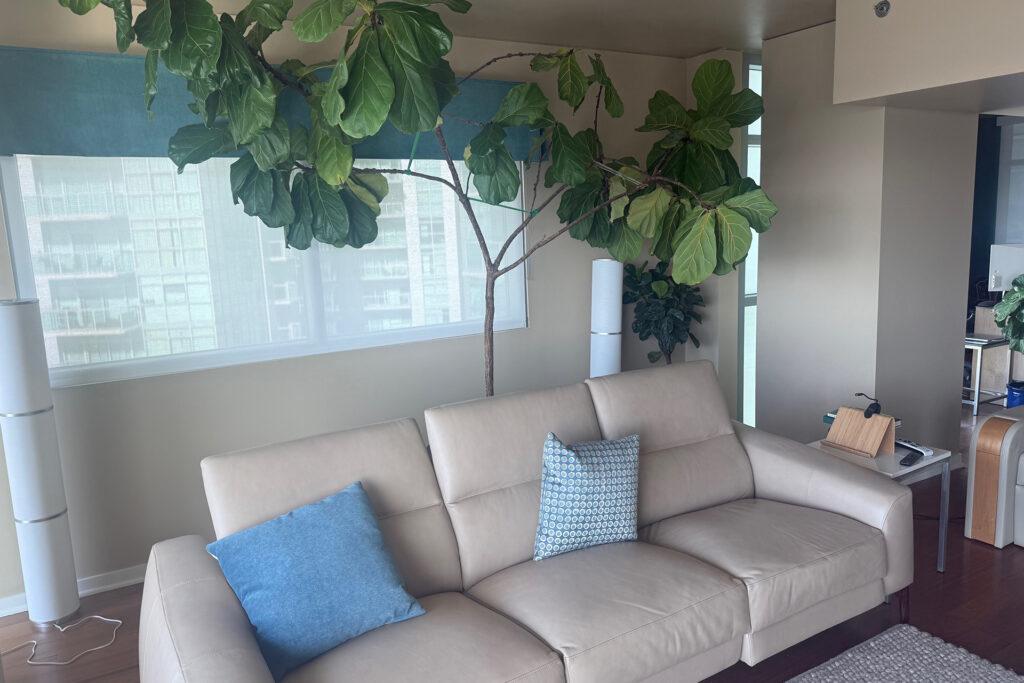
House plants are supe- trendy these days with the Millennial set, and I can see the appeal of analog greenery myself. Plants are look good to audiophiles, as a nicely-sized houseplant (or two or many more) can provide a bit of physical diffusion, which an organic form of acoustic treatment. Adding a few plants provide a little audio tweak, but a nice living green plant brings a sense of life and vitality to a living space – specifically, one with an audiophile system in it.
Many well-designed rooms at audiophile shows are loaded with rented plants, and the effect is really appealing, even if stuffed into a small repurposed hotel room with a ton of stereo equipment packed in to make big sound in a small place. This can be done in your home and, if you steal a trick from me, they can help hide cable mess. In my new system, I will have my Pass Labs amps installed on modern, simple amp stands. Beside them will be even more plants from Easyplant.com. They will be modern in their look and small to mid-sized, so as not to overpower the look of the organically-designed 800 Series Bowers & Wilkins speakers. My super-cool Wireworld cables will wind their way through the plants from the amps to speakers in a presentation that is designed to look more like my interior designer is Christian Liaigre than Mark Levinson.
I mention EasyPlant.com here, and they deserve a major shout-out, because they have solved a big problem for me, which is that I kill off most houseplants. Easyplant.com ships you your potted plants in a big-ass box. You crack them open, place them and fill the reservoir in the pot water once a month. That’s it and, no, you can’t f**k it up. Trust me, if anybody could screw this up, it would be me. But let me go one further with EasyPlant.com as a company. When the Palisades Fires ruined my home, my family, my life and my audio system, we ordered more plants from them for the rental house in Laguna Beach that I lived in for much of 2025. EasyPlant.com sent a whole bunch of plants for us and refused to charge for them. They aren’t the only company that showed this level of love, but it feels relevant to give them yet another heartfelt thank you. I have been able to rescue some of the EasyPlant.com plants from the fire-damaged home in the Palisades, but I am going for a full greenbelt vibe in my new condo and they are my no-fail partner in greenery.
Some Final Thoughts About Hiding Your Audiophile Cables …
The hobbyist pendulum has swung so hard against the audiophile cable industry because of the evildoers (and yes, a few of them are pure evil) that sell $35,000 speaker cables that use actual bald eagle semen as a liquid conduit between your spade connectors and your speakers. These are the same companies that want you to believe that you need a $4,000 aftermarket electrical fuse. This level of My Pillow Guy con artists are just that – con artists – and you need to avoid them like a hooker with ocular herpes.
With that said, don’t go running to Home Depot to get lamp cord for speaker cables to connect to your $20,000 floorstanding speakers. There a happy place in the middle, and each of us needs to find that with our audiophile budgets and logistics. Only you know where that is for you. What I am encouraging you to do is to take less than $100 of money for accessories and a little sweat equity to celebrate the jewelry elements of your audiophile system, especially as it grows in scope over time in your journey. Audiophile gear is super-cool. You deserve to be proud of your system, and presenting it as the gem that it is helps promote the hobby to people who care about music, design and who might have the financial wherewithal to start investing in our passion the way we do. We need more people living in their art as we do with our music. Let’s set a good, yet affordable, example for them.
How do you manage your audiophile cables? Do you care how your system looks? Do you ever display your system to guests in your home? What do they think of it? Do you use plants as Jerry does? Tell us about your successes. Tell us about your upcoming plans and we will post your comments below ASAP.




I hate to disagree, but you will not hear any difference between two different copper cables of the same gauge. Anyone who pays for a name cable vs lamp shade cable is a fool. One may be more flexible or look better, etc but you will not hear any difference. I remember when name-brand cable first started appearing and it was such a load of BS.
It is actually pretty easy to prove when demonstrating on higher end audio gear and speakers. *However, if you’re still using your 1980’s Technics rack system, you probably shouldn’t waste your money on cable upgrades. Over the years, I’ve successfully shown clients how to experience the difference (although slight, honestly) in good cables. Not once has a customer (unless high or something) said they can’t tell the difference. Then, their excuse is “Well, look how much it costs!” They’re not our customer, because our customers typically own great audio gear. That’s okay, though. Not everybody is into this hobby…
I cannot prove scientifically a certain cable sounds better than another, but I have heard differences in cables, even in car installations, where I was very familiar with the tonal quality of the system.
You are correct.
Cables with EQ built-in for example, have a “sound” the question is – do you want your cables to have a sound? I do not. Some do and I am not shaming them but I don’t see how you get closer to the master recording when the cable is adding to the sound between you and the recording.
Excessive capacitance or inductance in a speaker cable may cause power amplifier peaking or oscillation. Excessive capacitance in a signal cable when driven from a high impedance source will cause treble rolloff. Some speaker cable insulation can react with bare copper creating verdigris (green muck) slight reducing copper gauge. Thorough cleaning of the copper end strands followed by soldering will mitigate this.
I poo pooed Monster Cable until BB were selling their unidirectional RCA cables at good prices (3ft $15?) about twenty years ago. I bought a pair, disassembled them, they had: good quality connectors, excellent solder joints, fat gauge twisted pair wires with low capacitance & an overall shield connected at one end. I went back to BB & bought more pairs, I still use them. Cheers!
P.S. It’s a good idea (peace of mind) to clean your audio signal connectors (both cable & equipment inner & outer with a Q-Tip+alcohol) every few years to remove tarnish etc. To clean the equipment RCA inner you may have skinny down the Q-Tip.