
 By
By Spend any time whatsoever perusing the wealth of technical information on the audiophile hobby, and the importance of a low noise floor will be prominently discussed. Simply put, noise, aka distortion, is the enemy of an excellent-sounding audiophile musical reproduction system. Formally called Signal to Noise Ratio, or SNR, this term refers to the ratio of the amount of noise, or distortion, to a musical signal in an audio system. The more noise in the circuit, it logically follows, the worse the sonic quality. Distortion makes listening to music, especially at higher amplitudes, grating or irritating, and the natural tendency is to turn down the volume, or maybe even leave the room. Music with little to no audible distortion is more easily enjoyed, even at higher levels, because the lack of distortion doesn’t bother our ear/brain process as much.
We all strive, which seems obvious, to create as clean and pure a signal as possible from the source to the speakers. Unfortunately, distortion is sneaky, and perhaps our best ally in raising the SNR may well be the circuitry of our gear itself. And this is where both balanced and unbalanced equipment may make dramatic differences in our musical enjoyment.
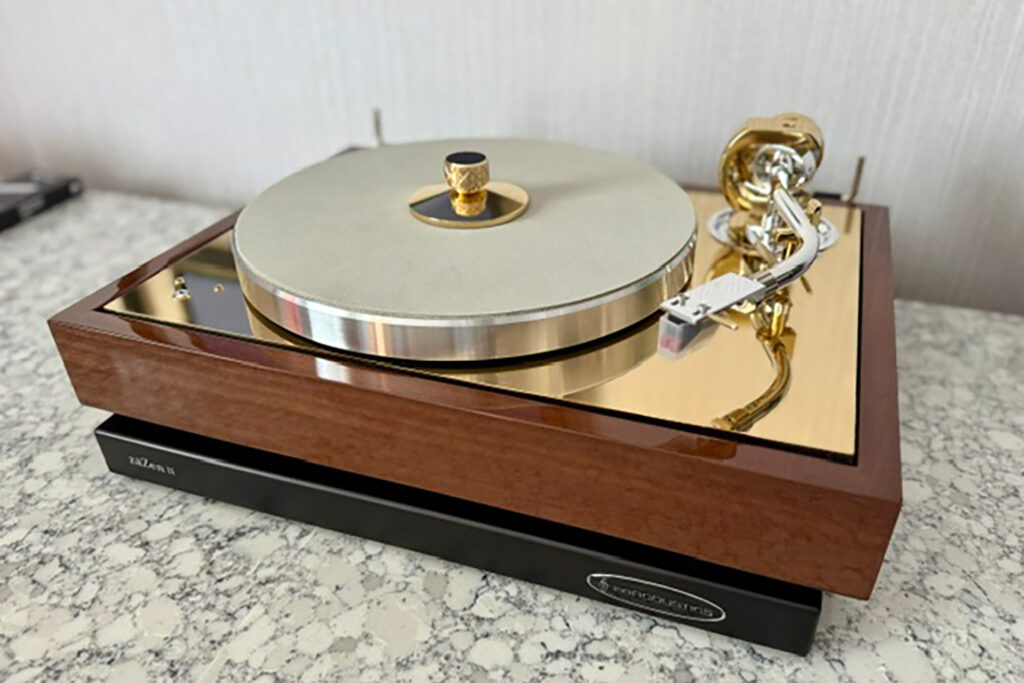
What is an Unbalanced or Single-Ended Circuit?
Unbalanced circuits, also called single-ended, or RCA (this design was invented by RCA in the 1930s), is always a two-conductor circuit. The “hot,” or positive, part of the circuit carries the signal itself. The second conductor, usually called the negative, serves as both a ground and the return path for the signal to make a complete circuit. “Single-ended” refers to the type of connector on each end of the cable.
In a single-ended, or unbalanced, circuit, the signal is referenced directly to ground. There is voltage on both the hot, or signal, part of the circuit, and the ground/negative part of the circuit. When the input stage of the device sees a signal, it measures the difference in the amount of voltage between the positive and the negative. Because the negative and the ground are the same, any distortion created anywhere, whether internally or externally, is transmitted through the entire audio circuit and projected through the speakers. If you have ever heard non-balanced equipment sound congested or somehow noisy, especially a smearing or boominess in the lower frequencies, distortion is very likely the reason why. And because of the circuit design, this distortion flows freely along the signal path and is not impeded or eliminated in any way whatsoever. This type of circuit is normally used in less costly, or more budget-friendly, audio gear.
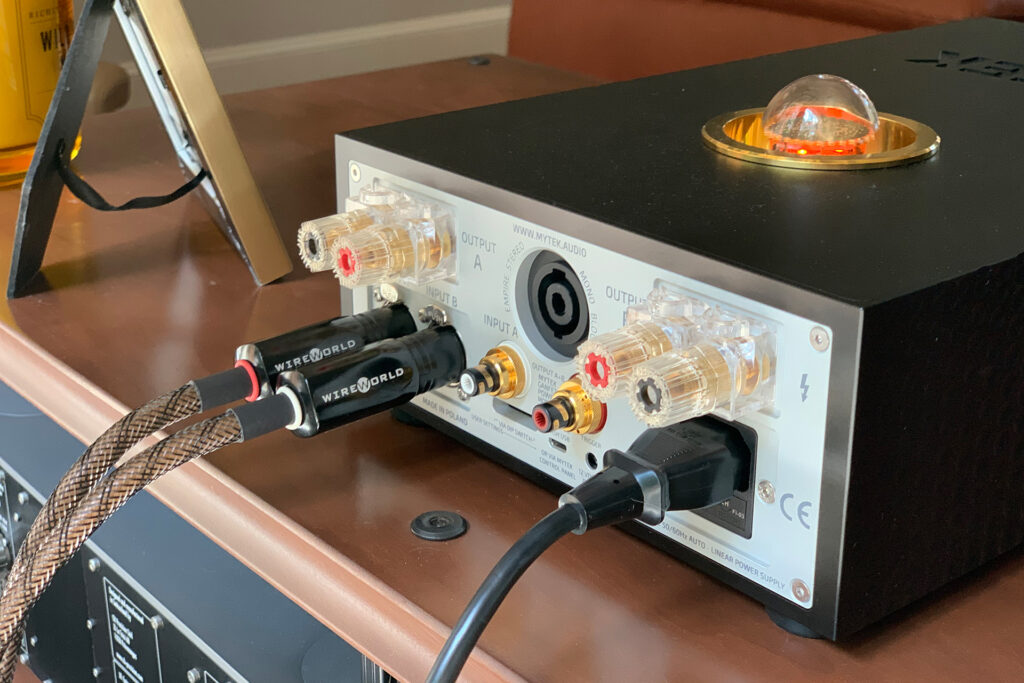
What is a Balanced or XLR Circuit?
In a balanced circuit, there are three conductors as opposed to two in an unbalanced design. One is a positive, or hot, conductor, one is a negative, or cold, conductor and one is a separate, isolated ground. Rather than utilizing one signal carrying conductor, as does an unbalanced circuit, balanced circuitry carries the signal along both the positive, or hot side, and the negative, or the cold side. The musical signal is propagated along the hot circuit in its original polarity or phase. A 180 degree inverse of this same signal is carried by the cold, or negative conductor. As such, the signal, originating at the source (Compact Disc player, streamer, music server, turntable), is carried along these two paths in 180-degree opposite phase from each other. This signal is passed along the various devices until reaching a component, like a preamp or integrated amplifier, where the component’s differential stage converts the hot and cold conductors into one signal. A preamp takes this signal and boosts it to line level. The amplifier boosts (or amplifies) the line level signal to a speaker level signal. The amplifier’s output stage then sends the signal to the speakers. A balanced circuit, therefore, simply transports the music in a clean, less congested manner, seeks to eliminate distortion, and allows the preamp and amp to more efficiently create the music we hear and enjoy. Balanced gear, utilizing an XLR connection method, is used in professional audio, as well as better and higher-priced home audio systems. Are balanced circuits and their components a foolproof deterrent for distortion? No, they are not. But they are a very good start.
What is Common Mode Rejection and How Does It Help?
As previously described, an unbalanced circuit has one hot and one neutral/ground conductor. Distortion from any source, whether internal or external, presents the musical signal and distortion as one unified signal. In a balanced circuit, because the signal is carried by both a hot and a cold conductor, and the phase across these two conductors is a polar opposite, 180-degree inverse of each other, Common Mode Rejection becomes a very helpful part of the equation.
In all balanced electrical circuits, only the signal in complete opposite polarity, or phase, across two conductors is allowed to pass. Any signal in the same polarity across both conductors, which is how distortion moves along a balanced signal path, is eliminated and therefore does not influence the musical signal. Common Mode Rejection therefore refers to the elimination of any signal on a balanced circuit that is in the same phase on both the hot and cold conductors. This results in a much lower SNR and the fortuitous outcome is a cleaner, more enjoyable musical experience.
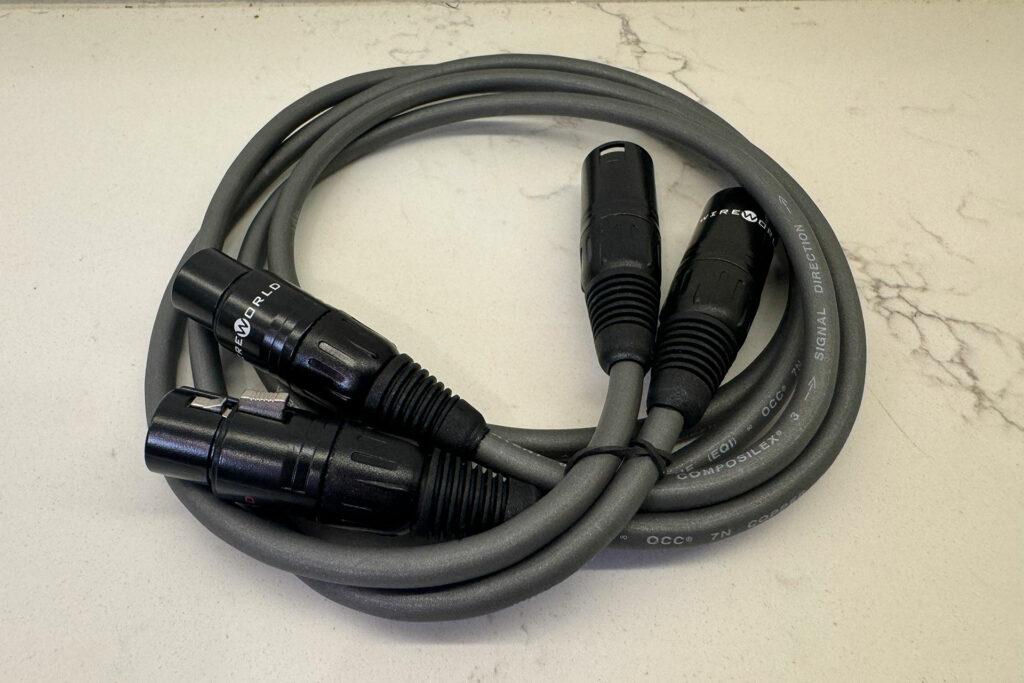
How Can I Tell the Difference Between Balanced and Unbalanced Gear?
The simple and most expedient method is to examine the type of connections on the rear of the component. Unbalanced equipment will have RCA connections and will not normally have three-pin, or XLR, connections. Balanced gear will have the three-pin XLR connections and usually RCA connectors as well.
Most commonly, the term “dual mono” will be used in conjunction with balanced gear. Dual mono is any component with identical but separate left and right channel circuitry in one enclosure. This can apply to virtually any audio component, but is especially popular in amps, preamps, DACs and phonostages. Dual mono and balanced circuitry used in conjunction with XLR cabling will normally offer the highest level of sonics and the best-sounding musical presentation.

The Exception To the Balanced Component Rule
There are manufacturers that may make an unbalanced component but install XLR connectors on the rear of the cabinet. You may very easily be fooled into thinking the piece of equipment is balanced because it has XLR connections. when it is only an unbalanced design.
How can you tell the difference? Look for terms like “dual mono” and “fully-balanced from input to output” in the product literature. It is also a good idea to look online for a picture of the inside of the cabinet – the best view being from the top down. If you see identical electronics on the left and right side with a metal divider down the middle of the enclosure, this usually means the product is dual mono. Balanced circuitry will almost always be the case as well. If not, and especially if you see one large, round transformer in the middle, it is almost certainly unbalanced.
Be careful not to be fooled into thinking a budget-priced piece of gear is balanced just because of a rear-mounted XLR connection. This is best verified with the seller well before purchase. Also, keep in mind that for a true balanced circuit to exist, all components throughout the entire signal chain must be balanced and use three-wire XLR-type cables. If anywhere along the path from the source component to the speakers a single-ended component or cable is used, the entire circuit will unfortunately be compromised.

What About Turntables – Why Are They Not Balanced?
All modern audiophile turntables, whether moving iron, moving magnet or moving coil, have phono cartridges that deliver very low levels of output voltage. Most often, the output of a cartridge is in millivolts (thousandths of a volt). In order for the cable from a tonearm to a phonostage to be balanced, it would need to have two completely separate left and right channels – each with its own signal conductors and ground. This would mean four separate conductors and a ground. Add to that the need for an XLR cable configuration, the inherent increased cost to manufacture the phono cartridge, tonearm cable and all the associated electronics, not to mention the very low output voltage – the end result is that balanced turntables are just not a worthwhile proposition. Besides, the phonostage is perhaps the more important part because its job is to amplify the extremely weak signal from the cartridge into a line level signal, and something the preamp can recognize. True to form, better phonostages are balanced and have XLR connections on the output stage.
What are Some Advantages of Balanced Cables?
As previously discussed, balanced cables offer a much higher level of noise abatement, which translates to an increased SNR. The advantages of balanced connectors do not stop there. Additionally, XLR cables may yield better channel separation and, because they do an excellent job of maintaining signal integrity, hum and buzzing sounds are often reduced or eliminated. This may not apply, however, to an analog phono setup. Normally, XLR cables have a slightly higher output voltage, which means the music may have increased dynamics. Clarity is sometimes improved as well. And where long lengths are required when connecting one component to another, XLR cables work exceptionally well over longer distances. In fact, for any long-length requirement, an AES/EBU is generally regarded as the best overall cable choice.

What Are Some Differences Between Expensive and Budget Audio Cables?
Any discussion of audio cables needs to begin with one single premise – audio cables will not make any stereo system sound better. Period. The best thing an audio cable can ever do for sonic quality is to do less harm. The goal of any cable is to have the input equal the output in every respect. Put differently, the signal should be exactly the same when leaving the cable as it was when it entered. Standing in the way of this achievement are three primary roadblocks: resistance, capacitance and inductance.
Resistance is an opposition to the flow of electrons through a wire. Higher resistance can negatively affect the damping factor of amplifiers, reduce amplifier efficiency and, when taken to the extreme, may cause an amplifier to overheat. Capacitance is the ability to store a charge. Obviously, this is not a function we want our audio cables to perform. The degree to which this happens can cause phase shifts in the signal, smearing in the signal output and a loss of detail. Inductance is related to a cable’s magnetic field, altering current flow. Increased inductance may attenuate certain frequencies, while accentuating others. Depending on the signal being attenuated or accentuated, the listener may actually discover a more pleasing sound. While such a signal may sound better, it is still a compromised signal and losses somewhere else are almost a certainty.
Another important factor in cables is time alignment. The concept of time is a huge part of our audio systems, but it is rarely discussed in cables. The goal is for all three frequency ranges – bass, midrange and treble – to enter the cable and exit the other end in the same time signature. In fact, dynamics are at their peak when all bands in the frequency spectrum arrive at the listener’s ears at the same time. Standing in the way are factors like capacitance, inductance and resistance. Hardly anything in audio is not affected by time, and the greater the time signature in a cable is compromised, the more degraded the sonics. It’s all a matter of physics.
More expensive cables, therefore, do a much better job with the goal of making sure the input equals the output and therefore delivers a cleaner sound. Anyone who has ever purchased an audio cable, regardless of type or brand, and heard a sonic improvement, is not hearing an enhancement because of the cable itself. Essentially, you are hearing the elimination of problems typically associated with audio cables. When you remove all the nonsense, the typical condescension surrounding cables may be summed up in a very simple manner: higher-quality, generally more expensive, cables convey overall system improvements because they do a better job of delivering an unaltered signal than less expensive cables will.
What About the Cost of Cables for an Audio System?
When it comes to the cost of audio cables, be forewarned: they can be very nominally priced or excessively expensive. In fact, a really top-flight speaker cable made to the highest level of design and manufacturing excellence may cost as much as a pretty nice luxury automobile. I’ve seen prices for speaker cables retail for as much as $80,000. And guess what? Someone is buying them because companies are still making them. They may also retail for less than $100 and can be quite affordable. Generally speaking, most businesses charge the same price within a specific cable family for almost any termination. An analog interconnect, normally used between, say, a preamp and an amplifier, will typically cost the same for an RCA termination as an XLR. However, analog cables are typically more expensive than digital cables because they are sold in pairs. Digital cables are generally one single cable – like an AES/EBU digital interconnect. USB and TosLink also fit this same model – one cable for one specific purpose. This is why it is important to use the proper cable for the application.
Most cable companies have levels of quality in their cable products. The entry-level cables will be the most economical, and the world-class best-of-the-best will be the most expensive. The real benefit to this business model is it allows the consumer to match the cable product to their system. Obviously, choosing a cable based on the level of the system makes sense. It would be quite unnecessary to use the finest cable in a manufacturer’s lineup on a budget-priced, entry-level audio system. I have always believed in having cables that match the level of the equipment. My recommendation is to be judicious in cable choices. If possible, demo a few different brands to verify if the cable is sonically pleasing. If the sonics are not suitable, try a different one. Cable companies do not typically share technical information or performance specs. Most will outline the basics of how their product is made but, beyond these revelations, most users will need to rely on a time-honored method of evaluating a cable – by listening. If it sounds pleasing in your audio system, there is a good chance it is the correct cable, regardless of the cost.
Final Thoughts on Balanced and Unbalanced Audio Equipment …
The concept of balanced and unbalanced circuitry in an audiophile system is not as sexy as speakers, not as mainstream as an amplifier with a massive power output, and not as controversial as whether or not cables matter. However, having the very real prospect of improving sonics is a worthwhile concept. It is therefore worth the time it takes to make decisions on how an audio system can and should be assembled.
It is always advisable to better understand how balanced and unbalanced circuits work. The Internet is a huge resource and will help explain how these concepts may make music sound better. Never discount the importance of cables and using the correct cable for the application. It is also advisable to have all aspects of an audio system – sources, DACs, amplification and speakers – all be on the same level of quality and performance. Our one unified goal is to make the music we most enjoy sound better and more like a natural performance in a real space. We all value those times when we are rendered speechless by an impossibly impressive-sounding song. We want a jaw-drop moment. Most importantly, realize the absolute best audio system to have is one you really enjoy, regardless of the cost. Because at the end of the day, this is what the audiophile hobby is all about: having fun!




Balanced connections have migrated from the pro-audio world, where they are essential because of long cable lengths & the need to reduce induced noise, to consumer electronics where short cable lengths are encouraged. Audio electronics have traditionally been unbalanced for simplicity & economy, while providing sufficient performance. As the author pointed out most electronics sporting balanced connections are unbalanced internally with additional input/output stages added to perform the conversion. It becomes incumbent on the consumer to determine what type of equipment they are buying & why? This is typically beyond the technical capabilities of the average consumer.
I’m not sure where to start in providing useful constructive criticism of this article.
Instead, I refer you to a clearly written paper on the subject of ground:
https://www.hypex.nl/media/fa/d8/a3/1682342122/The%20G%20word.pdf
As for the reference to dual mono: both RCA and XLR can be dual mono, or dual-dual mono where four transformers/power supplies are used–one for each half of the sine-wave for each channel.